Airport Ground Operations Workwear: Sourcing Hi-Vis Safety Jackets & Construction Softshell Sets for Middle East Aviation Ground Handling
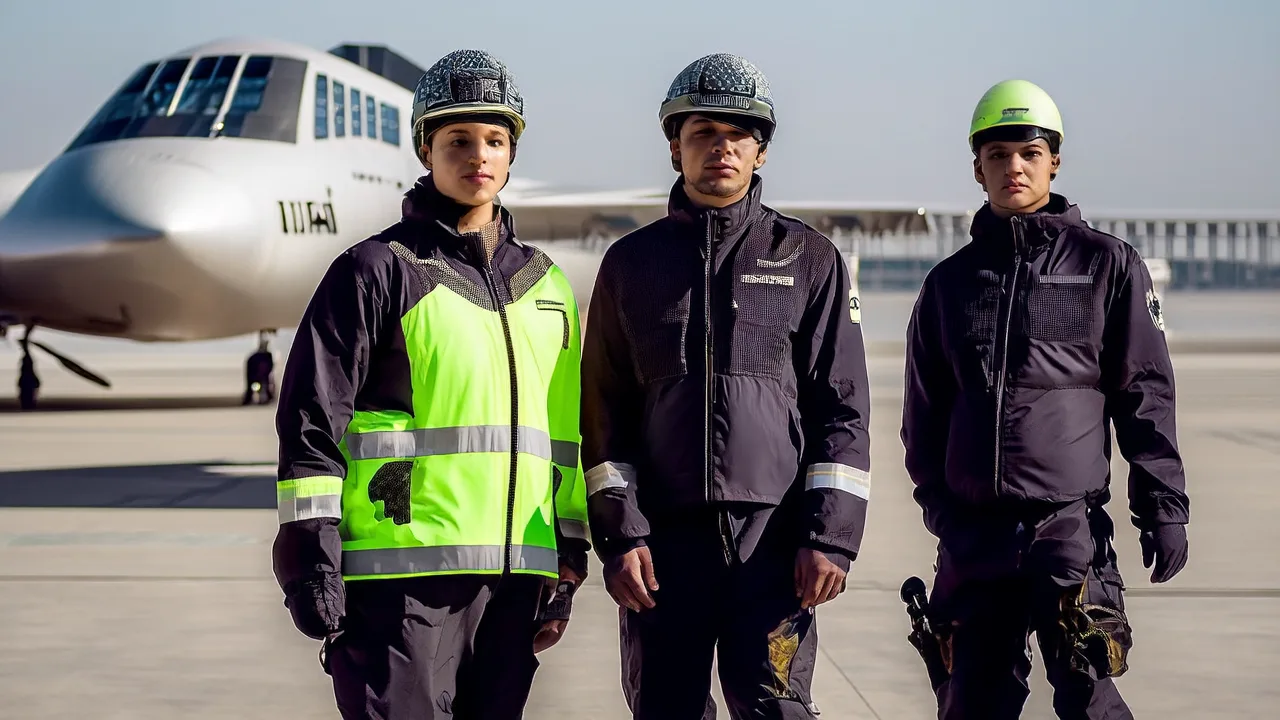
The Middle East is home to some of the world's busiest aviation hubs — Dubai International handled over 87 million passengers in 2024, Doha's Hamad International serves as the global hub for Qatar Airways' 170+ destination network, Riyadh's King Khalid and Jeddah's King Abdulaziz airports are undergoing multi-billion-dollar expansion programmes, and Bahrain, Oman, and Kuwait are all investing heavily in airport capacity. Behind every aircraft turnaround is a workforce of ramp agents, baggage handlers, aircraft refuelers, pushback tractor drivers, cargo loaders, de-icing crews, and ground support equipment operators who work on the tarmac in one of the most visibility-critical and thermally punishing environments on earth. This sourcing guide for Middle East B2B buyers covers EN ISO 20471 hi-vis safety jackets and construction softshell sets for airport ground operations, fabric specifications for tarmac conditions, role-based garment allocation, compliance considerations, and volume procurement from a Chinese workwear manufacturer.
Buyer context
What procurement teams run into
The Middle East's aviation sector is one of the fastest-growing in the world. Dubai International Airport is the world's busiest international airport. Hamad International is the hub connecting East and West for Qatar Airways' 170+ destinations. Saudi Arabia's aviation sector is targeting 330 million passengers annually by 2030 under the National Aviation Strategy, requiring massive airport capacity expansion across Riyadh, Jeddah, Dammam, and NEOM's planned airport. Bahrain's new terminal, Oman's expansion at Muscat, and Kuwait's Terminal 2 all represent major capacity additions. Every aircraft turnaround — whether a narrowbody A320 or a superjumbo A380 — requires a coordinated team of ground handlers working on the apron, at the gates, in cargo sheds, and around fuel farms. For B2B buyers procuring workwear for airport ground handling companies and airline ground operations departments, the challenge is specific because tarmac work combines extreme vehicle traffic, jet blast hazards, 24/7 operations across all weather conditions, and strict IATA and civil aviation authority safety requirements. **1. The airport tarmac environment combines jet blast, vehicle traffic, and extreme thermal exposure** An airport ramp presents a combination of hazards that few other industrial environments match: - **Aircraft engine jet blast and prop wash.** Workers on the apron stand within metres of operating jet engines. During pushback, taxi-out, and engine run-up, jet blast from CFM56, GE90, Trent, and LEAP engines creates wind speeds exceeding 150 km/h and temperatures of 200–600°C in the exhaust zone. Workers in loose or lightweight clothing face serious injury risk from blast force and heat. Garments must resist wind penetration and provide a thermal barrier. - **Ground support vehicle traffic.** Airport aprons see constant movement of aircraft tug tractors, belt loaders, cargo dollies, fuel tankers, water and lavatory service trucks, mobile stairs, pushback tractors, and follow-me vehicles. Workers on foot share these areas with vehicles that have large blind spots. High-visibility clothing is the primary defence against vehicle-pedestrian collisions on the ramp. - **Tarmac surface temperatures.** Airport aprons and runways are constructed from asphalt or concrete that absorbs and radiates solar heat. In Gulf summer conditions (45–55°C ambient), tarmac surface temperatures reach 70–85°C. Workers standing on tarmac for extended periods face radiant heat from below as well as from above. Garments must resist heat absorption while maintaining breathability. - **24/7 operations across all conditions.** Major Middle East airports operate around the clock. Night shift ramp workers face the same vehicle and aircraft hazards as day shift but with dramatically reduced visibility. Rain, sandstorms (shamals), and fog reduce visibility further. Hi-vis clothing is mandatory for all ramp access at all times. - **Fuel farm and refuelling operations.** Aircraft refuelers work with Jet A-1 fuel at fuel farms and directly at aircraft wings. Workers face hydrocarbon vapour exposure, fuel splash contact, and static discharge risk. Garments must resist hydrocarbon degradation and provide anti-static properties in fuel zones. - **Cargo handling and warehouse transit.** Baggage handlers and cargo loaders transition between outdoor tarmac areas and enclosed cargo sheds and warehouse areas. Workers face temperature transitions from 50°C+ outdoor heat to 22–25°C air-conditioned cargo warehouses. Garments must manage moisture across these transitions without causing worker discomfort. **2. Hi-vis safety jackets for ramp agents, baggage handlers, pushback tractor drivers, and all tarmac personnel** For every worker who accesses the airport ramp, the hi-vis safety jacket is a non-negotiable safety garment. Airport aprons have dense vehicle traffic — aircraft tugs, belt loaders, fuel tankers, and cargo dollies operate in close proximity to workers on foot. A worker in standard clothing against grey concrete apron surfaces and dark aircraft fuselages is extremely difficult to see for vehicle drivers and cockpit crews. Key specifications when sourcing hi-vis jackets for airport ground operations from a Chinese manufacturer: **Fabric weight and composition.** Specify lightweight polyester 210–240gsm with mesh lining for Gulf airport tarmac conditions. Airports in Dubai, Doha, Riyadh, and Jeddah face 45–55°C ambient temperatures combined with intense solar radiation on open aprons with no shade. Effective temperature on tarmac surfaces can exceed 65°C. Heavy hi-vis jackets are unbearable in these conditions — workers will remove them, defeating the safety purpose. A mesh-lined jacket allows air flow while keeping retroreflective tape visible. **EN ISO 20471 Class 2 or Class 3.** Class 2 is the minimum for ramp workers in daylight conditions. Class 3 is required for night shift workers, fog/sandstorm conditions, and workers in high-speed vehicle zones (pushback tractor routes, follow-me vehicle corridors). Confirm the jacket meets EN ISO 20471 minimum retroreflective intensity (330 cd/lx/m² for Class 3). **Fluorescent background and retroreflective tape.** Specify fluorescent yellow-green or fluorescent orange fabric. For airport ramp operations, fluorescent yellow-green is the most common choice — it contrasts strongly against grey concrete, dark aircraft fuselages, and blue sky. Retroreflective tape positioned to EN ISO 20471 geometry ensures visibility in aircraft landing lights, vehicle headlights, and apron floodlights during night operations. **Wind and jet blast resistance.** Airport hi-vis jackets face constant wind exposure from aircraft engines, rotor wash from helicopters (in some Middle East airports), and natural wind on open aprons. Specify fabric with wind-resistant properties — tightly woven polyester with a DWR finish that resists wind penetration while maintaining breathability. For workers in close proximity to operating engines (pushback crews, wing walkers), consider jackets with wind-resistant membrane lining. **Fuel resistance.** Airport hi-vis jackets in fuel farm zones and during refuelling operations face contact with Jet A-1 fuel, hydraulic fluids (Skydrol and equivalents), de-icing fluids (propylene glycol and ethylene glycol based), and engine oil. Specify fabric that resists hydrocarbon degradation — polyester inherently resists most aviation fluids better than cotton or nylon. Confirm retroreflective tape maintains performance after fuel and fluid contact. **Anti-static properties.** Airport ramp workers in fuel zones face static discharge risk. Specify hi-vis jackets with anti-static fibre (carbon filament grid woven into the fabric) that dissipates static charge and prevents spark generation near fuel vapour. This is critical for refuelers, fuel farm operators, and workers near aircraft fuel tanks. **Practical details for ramp work.** Two-way front zip for easy donning over other garments. Zipped or Velcro-closed pockets — loose items on the apron become FOD (foreign object debris) that can be ingested into aircraft engines. Adjustable cuffs that seal tight against wind and jet blast. Reflective piping on pockets and zippers for additional visibility. DWR finish with 3,000mm+ hydrostatic head for rain and sandstorm protection. **Durability.** Airport hi-vis jackets face constant abrasion from cargo dolly edges, baggage container corners, aircraft fuselage contact during close-quarters work, and frequent laundering. Specify reinforced shoulders and elbows, and confirm the retroreflective tape maintains performance after 50+ industrial wash cycles. **3. Construction softshell sets for supervisors, engineers, inspectors, and cold-weather ramp operations** While hi-vis jackets are mandatory for all ramp personnel, airport ground operations supervisors, maintenance engineers, quality inspectors, and cargo managers need a more versatile outer layer for transitional weather, early morning shifts, air-conditioned cargo warehouses, and the cooler months (October–March) when Gulf temperatures drop to 10–25°C. Key specifications when sourcing softshell sets for airport ground operations from a Chinese manufacturer: **Fabric construction.** Three-layer bonded construction: outer face of stretch-woven polyester with DWR finish (wind and water resistant), middle membrane layer (windproof and water-resistant), inner face of brushed polyester fleece (thermal insulation and moisture management). This construction provides warmth during early morning shifts (5–8 AM, when Gulf temperatures can drop to 8–15°C in winter) without bulk that restricts movement during physical ramp work. **Wind and water resistance.** Airport ramp supervisors and engineers work outdoors for extended periods during aircraft turnarounds, pre-flight inspections, and ramp safety audits. Softshell sets must resist wind penetration from aircraft engines and natural wind, and resist light rain and morning dew. Specify 5,000–10,000mm hydrostatic head for water resistance and breathability rating of 5,000g/m²/24h or higher to prevent sweat buildup during physical work. **Hi-vis integration.** For supervisors and engineers who access the ramp, softshell jackets should incorporate EN ISO 20471 compliant retroreflective tape on sleeves and torso. This eliminates the need to wear a separate hi-vis vest over the softshell — one garment provides both weather protection and visibility compliance. Specify fluorescent yellow-green or orange softshell fabric with retroreflective tape positioned to meet Class 2 requirements. **Pocket configuration for airport operations.** Chest pockets sized for radios and access badges. Internal pockets for inspection checklists, tablets, and phones. Zipped hand pockets for personal items. Pen pockets for inspection reports. All pockets must have secure closures — items dropped on the apron become FOD hazards. **Professional appearance.** Airport ground operations supervisors, engineers, and inspectors interact with airline crews, airport authority officials, civil aviation authority inspectors, and VIP passengers. Softshell sets provide a more professional, tailored appearance than coveralls or standard work jackets while maintaining full ramp-safety functionality. Specify clean lines, contrast stitching in airport or airline brand colours, and embroidered logos. **Layering system.** Softshell sets work as part of a layering system: moisture-wicking base layer (polo or t-shirt) + softshell jacket for cool conditions + hi-vis vest or hi-vis jacket for enhanced visibility when needed. This system allows workers to adapt to temperature changes across a shift — from cool early morning (10–15°C) to hot midday (45–55°C) — without changing garments entirely. **4. The hi-vis-jacket-and-softshell system for complete airport ground operations uniform** The smartest procurement approach treats hi-vis jackets and softshell sets as complementary layers within a unified airport ground operations uniform system: **Ramp agents and baggage handlers (all shifts):** Hi-vis safety jacket as mandatory outer layer for all ramp access. Worn over polo shirt or lightweight base layer in summer; worn over softshell jacket in winter. Hi-vis jacket provides visibility compliance; base layers provide comfort. **Aircraft refuelers and fuel farm operators:** Hi-vis safety jacket with anti-static properties as mandatory outer layer in all fuel zones. Worn over flame-resistant base layer for fuel fire protection. Anti-static hi-vis jacket prevents static discharge near fuel vapour. **Pushback tractor drivers and towbar crews:** Hi-vis safety jacket Class 3 as mandatory outer layer for all pushback operations. Pushback crews work in the closest proximity to operating aircraft engines — hi-vis jacket must resist jet blast wind and provide thermal barrier. In winter, softshell jacket under hi-vis jacket for warmth. **Cargo loaders and warehouse staff:** Hi-vis safety jacket for tarmac transit between cargo sheds and aircraft. Inside cargo warehouses, hi-vis vest (lighter weight) may suffice. Softshell jacket for cool-weather cargo yard work. **Ground operations supervisors and lead agents:** Softshell jacket with integrated hi-vis retroreflective tape for ramp access and supervisory duties. Professional appearance for airline and authority interactions. Hi-vis jacket available for enhanced visibility during night shifts, fog, or sandstorm conditions. **Maintenance engineers and quality inspectors:** Softshell jacket with integrated hi-vis tape for pre-flight inspections, ramp safety audits, and aircraft turnaround quality checks. Professional appearance for technical documentation and authority inspections. Hi-vis jacket for night shift inspections. **Follow-me vehicle operators and marshals:** Hi-vis safety jacket Class 3 mandatory at all times on the apron. Follow-me vehicles lead aircraft taxiing — operators must be maximally visible to cockpit crews. In winter, softshell under hi-vis jacket. This system means one colour palette for base layers, one hi-vis standard, one softshell specification, and one manufacturer covering every role across the airport ground handling operation. **5. Compliance and testing for airport ground operations workwear** Relevant standards for Middle East airport operations: - **EN ISO 20471** — high-visibility clothing. Class 2 minimum for all ramp personnel in daylight; Class 3 for night shift, fog, sandstorm, and high-speed vehicle zones. Insist on third-party test reports from accredited labs (SGS, TÜV, Intertek, Bureau Veritas) covering retroreflective performance after washing and fabric colour fastness. - **EN ISO 13688** — general requirements for protective clothing (ergonomics, sizing, ageing, marking). Applies to both hi-vis jackets and softshell sets. - **EN 1149-5** — anti-static properties for protective clothing. Applies to hi-vis jackets for fuel zone workers. Confirm anti-static performance after 50+ wash cycles. - **IATA Airport Handling Manual (AHM)** — IATA standards for ground handling operations. AHM Chapter 7 specifies PPE requirements for ramp personnel including hi-vis clothing, safety footwear, and hearing protection. Confirm garments meet IATA AHM requirements. - **ICAO Annex 19 / State safety programmes** — ICAO safety management requirements. Individual GCC civil aviation authorities (GCAA in UAE, QCAA in Qatar, GACA in Saudi Arabia, BCAA in Bahrain) enforce ramp safety PPE requirements. Confirm garments meet local CAA requirements. - **ISO 105-B02** — colour fastness to light (xenon arc). Critical for Gulf airports where garments face 8–10 hours of direct UV daily on open aprons with no shade. - **ISO 15797** — industrial laundering durability. Airport workwear is washed at 60–75°C in industrial machines. Specify dimensional change ≤ 3% after 50+ wash cycles. - **OEKO-TEX Standard 100** — restricted substances. Ramp workers in extreme heat sweat heavily; skin contact with harmful chemicals from fabric treatments is a real concern. - **Airport-specific FOD prevention requirements.** Garments must not shed fibres, loose threads, or components that become foreign object debris on the apron. Specify bonded seams, covered zippers, and secure pocket closures. **6. Procurement strategy for airport ground handling buyers** Airport ground handling companies and airline ground operations departments have distinctive procurement patterns: **Volume and frequency.** A mid-size Gulf airport ground handling company employs 500–5,000 ramp personnel across passenger handling, cargo handling, aircraft handling, and ramp services. Order hi-vis jackets in bulk (1,000–5,000 units) for initial fleet outfitting, then reorder quarterly for replacements. Order softshell sets for supervisors and engineers in smaller volumes (200–1,000 units) with annual reorders. **Consolidate orders.** Order hi-vis jackets and softshell sets in one shipment to reduce freight costs and simplify customs clearance at Dubai, Doha, Riyadh, or Jeddah airports. A Chinese manufacturer with in-house capability for both garment types can produce and ship them together. **Plan for seasonal timing.** Order hi-vis jackets and softshell sets 3–4 months before peak travel seasons. Gulf airports see peak traffic during Ramadan/Eid, Hajj season (Jeddah and Riyadh), and winter holiday periods (November–February). Avoid ordering for delivery during Ramadan production slowdowns. **Stock buffer.** Order 25–30% buffer stock above annual requirements. Airport workwear faces accelerated wear from jet blast, fuel contact, cargo abrasion, and constant laundering. Reordering small batches of custom-specified garments costs far more per unit than including buffer in the original production run. **Pilot before full volume.** Order 50–100 hi-vis jackets and 50–100 softshell sets for a trial fitting before committing to the full ground handling operation order. Adjust sizing, fabric weight, pocket placement, and anti-static specifications based on field feedback from ramp agents, refuelers, pushback crews, cargo loaders, and supervisors. **Standardise across all ground handling roles.** Whether your ground handling operation focuses on passenger handling, cargo handling, aircraft handling, or integrated services, the same hi-vis-and-softshell system works. Standardise on one hi-vis class and one softshell specification across all roles — this simplifies procurement, ensures consistent safety standards, and makes all ramp personnel instantly identifiable to vehicle drivers and cockpit crews. **Coordinate with airport authority procurement.** Many Gulf airports have centralised PPE procurement through the airport authority. Coordinate garment specifications with airport authority safety departments to ensure compliance with local CAA ramp safety requirements. A Chinese manufacturer experienced in GCC airport PPE specifications can provide documentation packages for airport authority approval.
Sourcing approach
How a factory partner can respond
The solution for Middle East airport ground operations is a layered workwear system — EN ISO 20471 Class 2/3 hi-vis safety jackets for all ramp personnel as mandatory visibility garments, paired with construction softshell sets for supervisors, engineers, inspectors, and cool-weather ramp operations — sourced from a single Chinese workwear manufacturer for consistent quality, consolidated shipping, and volume pricing. **For hi-vis safety jackets (all ramp personnel):** - Lightweight polyester 210–240gsm with mesh lining for Gulf airport tarmac heat (45–55°C ambient plus radiant heat from 70–85°C tarmac surfaces) - EN ISO 20471 Class 2 minimum for daylight; Class 3 for night shift, fog, sandstorm, and high-speed vehicle zones - Fluorescent yellow-green fabric with retroreflective tape on torso, arms, and shoulders (330 cd/lx/m² minimum for Class 3) - Wind and jet blast resistant — tightly woven polyester with DWR finish resisting wind penetration from aircraft engines - Fuel resistant — polyester fabric resisting Jet A-1 fuel, Skydrol hydraulic fluid, de-icing fluid, and engine oil contact - Anti-static properties (carbon filament grid) for fuel zone workers — dissipates static charge preventing spark generation near fuel vapour - FOD-safe design — bonded seams, covered zippers, secure pocket closures preventing items from becoming foreign object debris on the apron - Two-way front zip, zipped pockets (FOD prevention), adjustable cuffs sealing against jet blast, DWR finish (3,000mm+ hydrostatic head) - Reinforced shoulders and elbows for abrasion against cargo containers and aircraft fuselage contact - Third-party test reports from SGS, TÜV, Intertek, or Bureau Veritas **For construction softshell sets (supervisors, engineers, inspectors, cool-weather operations):** - Three-layer bonded construction: stretch-woven polyester outer with DWR finish, windproof membrane middle layer, brushed polyester fleece inner - 5,000–10,000mm hydrostatic head water resistance; 5,000g/m²/24h+ breathability - Integrated EN ISO 20471 Class 2 retroreflective tape on sleeves and torso — one garment provides weather protection and visibility compliance - Airport-specific pocket configuration: chest pockets for radios and access badges, internal pockets for tablets and inspection checklists, pen pockets, all with secure closures (FOD prevention) - Professional appearance with clean lines, contrast stitching in airport/airline brand colours, embroidered logos - Layering system compatibility: moisture-wicking base layer + softshell for cool conditions + hi-vis jacket for enhanced visibility **Procurement strategy:** - Treat hi-vis jackets and softshell sets as complementary layers within a unified airport ground operations uniform - Consolidate both garments into one shipment to reduce freight and simplify customs - Order 3–4 months before peak travel seasons (Ramadan/Eid, Hajj, winter holidays) - Stock 25–30% buffer for replacement cycles (airport workwear faces accelerated wear from jet blast, fuel contact, and cargo abrasion) - Pilot 50–100 units per garment type before full fleet commitment - Standardise one hi-vis class and one softshell specification across all ground handling roles - Coordinate with airport authority safety departments for local CAA ramp safety compliance
Recommended Products
Products that fit this use case
Safety Uniform
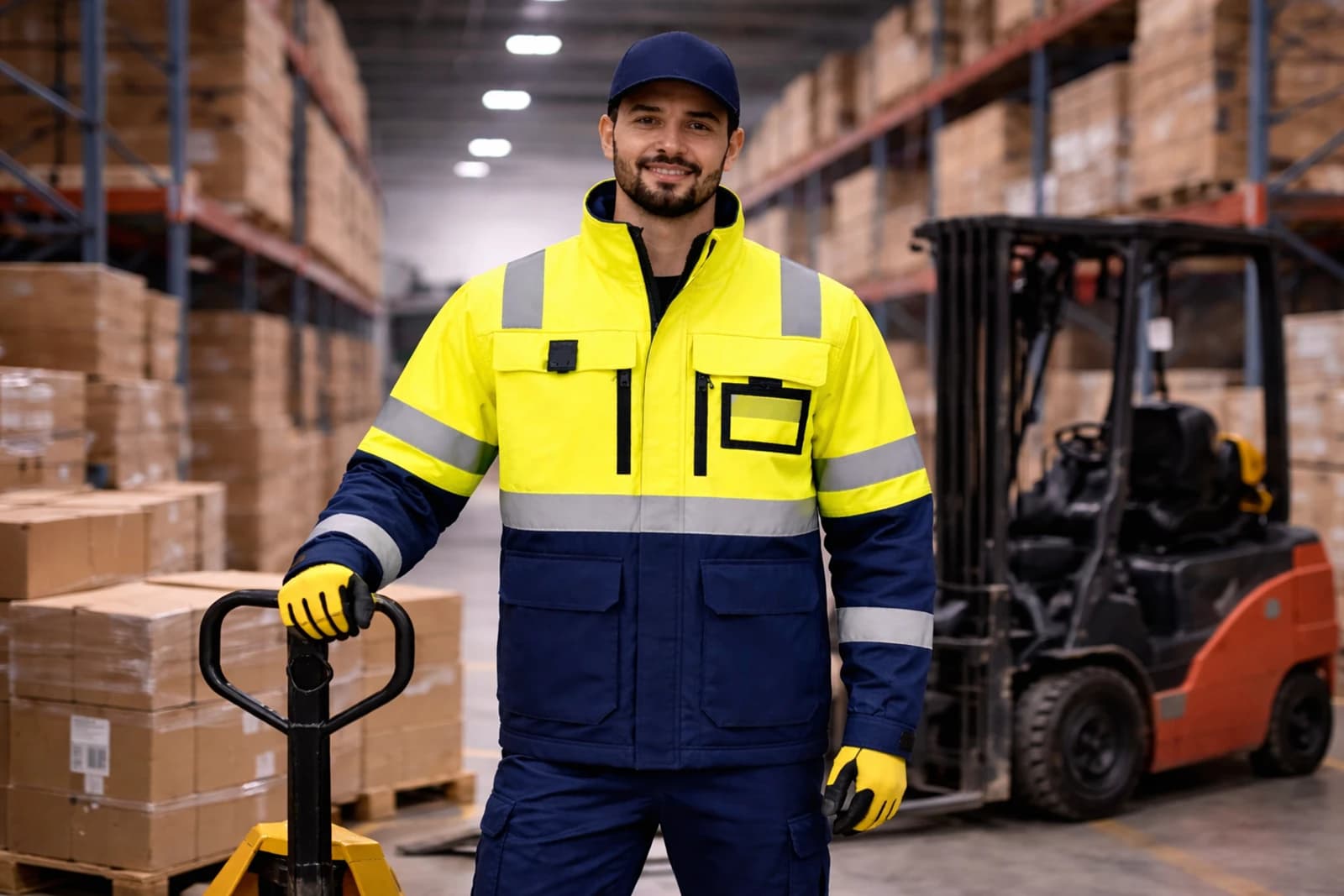
Hi-Vis Safety Jacket
Reflective safety jacket for high-visibility site operations and road work crews.
Construction Clothing
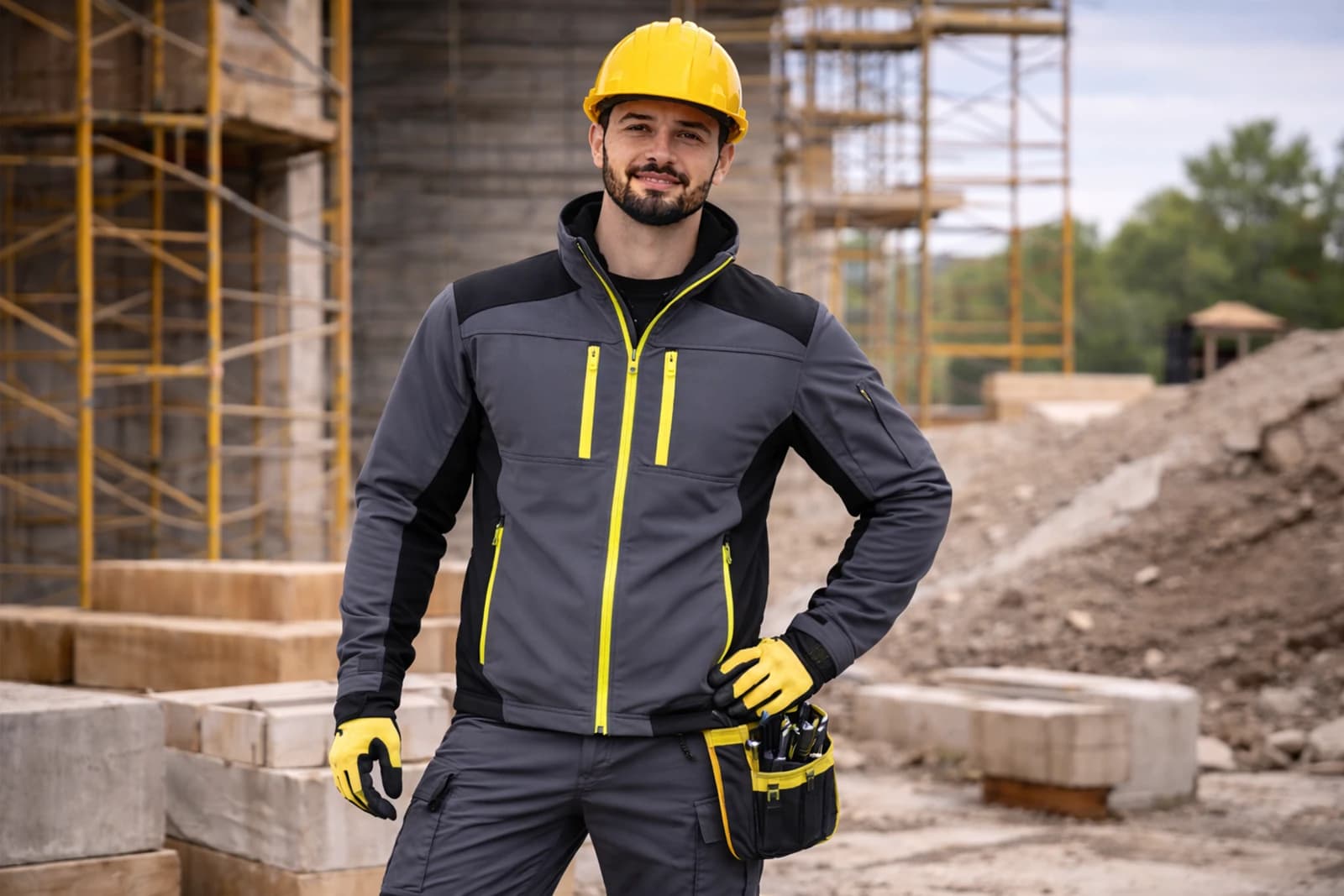
Construction Softshell Set
Flexible jacket and trouser set built for crews working across changing weather conditions.