Automotive Assembly Workwear Must Eliminate Snag Hazards on Moving Production Lines
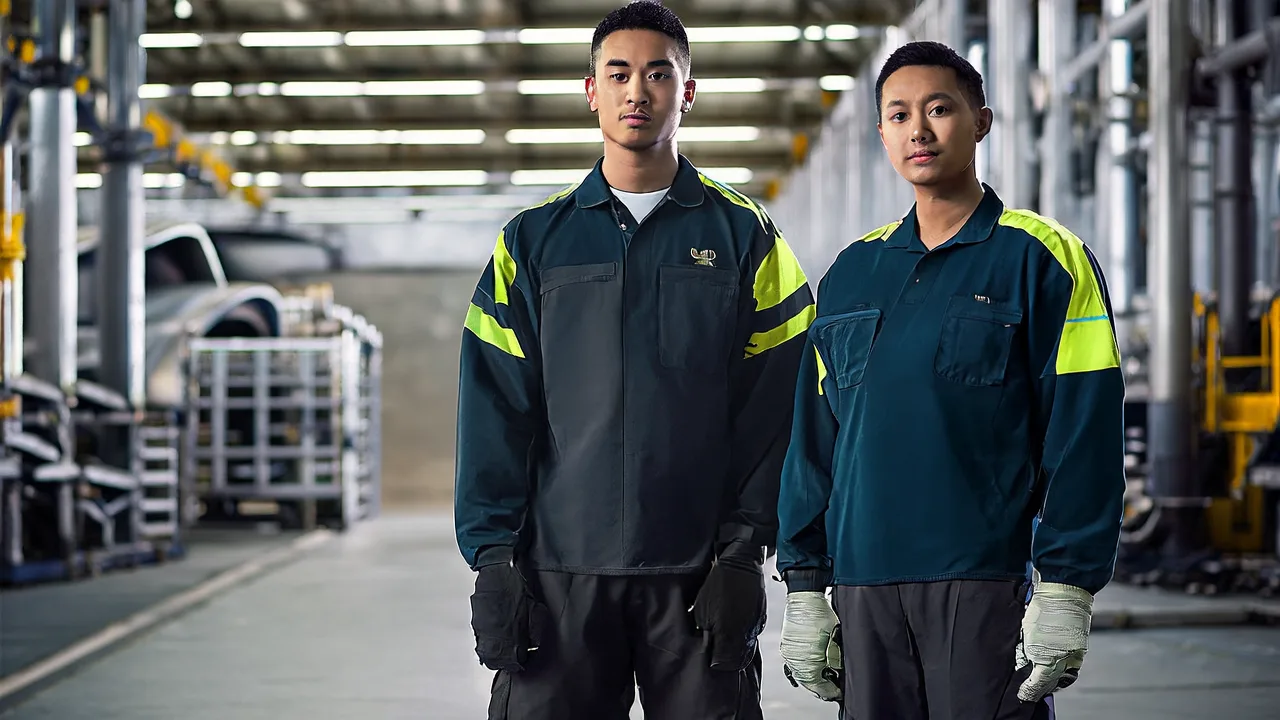
Automotive assembly lines present a specific workwear hazard that most specifications don't address: snag and entanglement risk from loose garment features interacting with conveyor systems, robotic arms, and rotating equipment. Standard workwear designs include pockets, flaps, drawstrings, and loose cuffs that can catch on moving parts, creating injury risk and production line stoppages. This article covers the garment design criteria that eliminate snag hazards, the zone-based specification that matches garment features to each area's entanglement risk, and the worker communication that ensures snag-free garments are worn correctly.
Buyer context
What procurement teams run into
Automotive assembly lines involve conveyor systems, robotic welding arms, rotating turntables, moving car bodies on assembly lines, and automated guided vehicles (AGVs). Workers perform assembly tasks in close proximity to moving equipment. The workwear specification must protect workers from workplace hazards (oils, greases, sharp edges, sparks from welding) while also eliminating snag and entanglement risk from the workwear itself interacting with moving equipment. The mechanism: **1. Standard workwear designs include features that create snag hazards** Standard workwear garments include design features that can catch on moving equipment: - **External pockets with flaps:** Pocket flaps can catch on conveyor edges, robotic arms, or moving car bodies. When a worker reaches or bends, the pocket flap opens and can snag on equipment. - **Drawstrings and adjustment cords:** Waist drawstrings, hood cords, and cuff adjustment cords can dangle and catch on rotating equipment. - **Loose cuffs and hems:** Loose fabric at cuffs and hems can catch on conveyor edges, tool handles, or moving parts. - **Loose shirt tails:** Two-piece workwear (shirt and trouser) creates loose shirt tails that can hang out and catch on moving equipment. - **External seams and topstitching:** Raised seams and topstitching can catch on rough surfaces or equipment edges. The root cause: standard workwear designs are optimized for utility (pockets for tools), adjustability (drawstrings for fit), and durability (reinforced seams) — not for snag-free operation in environments with moving equipment. **2. Snag incidents cause injury and production line stoppages** When a garment feature catches on moving equipment: - **Injury risk:** The worker can be pulled into moving equipment, causing crush injuries, entanglement injuries, or falls. A pocket flap catching on a conveyor edge can pull the worker's hand or arm into the conveyor. - **Production line stoppage:** The snag stops the production line while the worker frees themselves or the garment is cut away. Automotive assembly lines operate at takt times of 60-90 seconds per vehicle. A 5-minute line stoppage costs 3-5 vehicles in lost production. - **Garment damage:** The snag tears the garment, requiring replacement. The damaged garment is removed from service, and the worker must obtain a replacement garment before returning to work. The root cause: the workwear specification does not account for the interaction between garment features and moving equipment. The specification focuses on protection from workplace hazards (chemicals, sparks, sharp edges) but does not address the hazard created by the workwear itself. **3. Workers modify snag-free garments to add functionality** When buyers specify snag-free garments (coveralls with no external pockets, no drawstrings, no loose cuffs), workers modify the garments to add functionality: - **Adding external pockets:** Workers sew external pockets onto coveralls to hold tools, pens, or personal items. The added pockets create the snag hazards the coverall was designed to eliminate. - **Tying drawstrings:** Workers add drawstrings to cuffs or waist for fit adjustment, creating dangling cords that can snag. - **Rolling up sleeves:** Workers roll up sleeves to improve mobility or comfort, creating loose fabric at the cuff that can snag. The root cause: the snag-free garment does not meet the worker's functional needs (tool storage, fit adjustment, mobility). Workers modify the garment to meet their needs, reintroducing the snag hazards. **4. Different zones have different snag risk levels** Automotive plants have areas with different levels of moving equipment and snag risk: - **Assembly line (high snag risk):** Conveyor systems, robotic arms, moving car bodies, rotating turntables. Workers are in close proximity to moving equipment throughout the shift. - **Welding shop (moderate snag risk):** Robotic welding arms, moving fixtures, sparks. Workers are near moving equipment but at a greater distance than assembly line workers. - **Paint shop (moderate snag risk):** Conveyor systems, automated paint booths. Workers are near moving equipment but in a controlled environment. - **Quality inspection (low snag risk):** Static inspection stations, minimal moving equipment. Workers move around stationary vehicles. - **Logistics and warehouse (low snag risk):** Forklifts, AGVs, racking. Workers are near moving vehicles but not in close proximity to rotating or conveyor equipment. The root cause: a single snag-free garment specification applied to all zones over-specifies workwear for low-risk areas (paying for snag-free features not needed) and may under-specify workwear for high-risk areas (if the specification does not address the specific snag hazards of the assembly line). **5. The cost of getting it wrong** The buyer who specifies standard workwear for assembly line areas faces: - Injury risk from snag and entanglement - Production line stoppages from snag incidents - Garment damage and replacement cost from snag incidents - Worker compensation claims from snag-related injuries The buyer who specifies snag-free garments without addressing worker functional needs faces: - Garment modification by workers, reintroducing snag hazards - Worker rejection of garments that do not meet functional needs - Non-compliance with snag-free specification due to worker modifications
Sourcing approach
How a factory partner can respond
The solution is an automotive assembly workwear specification that eliminates snag hazards through garment design, matches garment features to each zone's snag risk level, and addresses worker functional needs so that workers do not modify garments. **Step 1: Specify garment design that eliminates snag hazards** For high-snag-risk areas (assembly line, welding shop, paint shop), specify garments with the following design features: - **No external pockets with flaps:** Eliminate external pockets that have flaps, buttons, or snap closures that can catch on moving equipment. If pockets are required for tool storage, specify internal pockets accessed through a sealed opening, or specify pockets with smooth, flush closures (zippered pockets with covered zippers). - **No drawstrings or adjustment cords:** Eliminate waist drawstrings, hood cords, and cuff adjustment cords. Specify garments with elastic waistbands or elastic cuffs that provide fit without dangling cords. - **Smooth, enclosed seams:** Specify flat-felled seams or bound seams that enclose raw fabric edges and create a smooth surface. Eliminate external topstitching that can catch on equipment edges. - **Fitted cuffs and hems:** Specify cuffs and hems that fit closely to the body, eliminating loose fabric that can snag. Specify elastic cuffs or knit cuffs that fit snugly around the wrist. - **One-piece coverall design:** Specify one-piece coveralls that eliminate loose shirt tails. The coverall's one-piece design has no loose fabric that can hang out and catch on moving equipment. - **Covered zippers:** Specify zippers with fabric flaps that cover the zipper teeth, preventing the zipper from catching on equipment edges. - **No loose labels or tags:** Specify printed labels or labels that are sewn flat against the garment, eliminating dangling tags that can snag. The garment design eliminates all features that can catch on moving equipment, creating a snag-free garment that protects workers from entanglement hazards. **Step 2: Specify a zone-based garment program that matches snag risk** Automotive plants have areas with different snag risk levels. Specify different garments for each zone: - **Assembly line (high snag risk):** Specify one-piece coveralls with the snag-free design features described above. The coverall provides full-body protection and eliminates all snag hazards. Specify the coverall in a durable fabric (polyester-cotton blend or 100% cotton) that withstands abrasion from contact with equipment and car bodies. Specify the coverall with FR treatment if workers are exposed to sparks from welding operations. - **Welding shop (moderate snag risk):** Specify one-piece coveralls with snag-free design features, plus FR treatment for spark protection. The coverall eliminates snag hazards and protects workers from sparks and hot metal shards. - **Paint shop (moderate snag risk):** Specify one-piece coveralls with snag-free design features, plus a smooth fabric finish that resists paint adhesion and enables easy cleaning. The coverall eliminates snag hazards and prevents paint from adhering to the garment. - **Quality inspection (low snag risk):** Specify two-piece workwear (shirt and trouser) with minimal snag hazards. The shirt should have a smooth design (no external pockets with flaps, no drawstrings) but can include functional pockets for pens and notepads. The trouser should have a standard design with pockets for tools. The two-piece design provides comfort and functionality for workers who are not in close proximity to moving equipment. - **Logistics and warehouse (low snag risk):** Specify standard workwear (polo shirts and trousers) for workers in logistics and warehouse areas. These areas have low snag risk, so standard workwear is appropriate and cost-effective. The zone-based specification matches garment cost and performance to the snag risk of each area. The buyer does not over-specify workwear for low-risk areas (paying for snag-free features not needed) and does not under-specify workwear for high-risk areas (creating snag hazards). **Step 3: Address worker functional needs so workers do not modify garments** Workers modify snag-free garments to add functionality (tool storage, fit adjustment, mobility). Address these functional needs in the garment specification so that workers do not modify garments: - **Tool storage:** Specify internal pockets, chest pockets with smooth closures, or thigh pockets with covered zippers that enable workers to store tools, pens, and personal items without creating snag hazards. Specify pocket placement that matches the worker's tasks: chest pockets for pens and notepads, thigh pockets for tools, internal pockets for personal items. - **Fit adjustment:** Specify garments with elastic waistbands, elastic cuffs, and adjustable closures (snap closures, hook-and-loop closures) that enable fit adjustment without drawstrings or dangling cords. Specify garments in multiple sizes and fits (slim, regular, relaxed) to match different body types without requiring fit adjustment. - **Mobility:** Specify garments with articulated sleeves, underarm gussets, and stretch panels that enable mobility without requiring workers to roll up sleeves or modify the garment. Specify garments in fabrics with mechanical stretch that enable movement without restricting the worker. The garment specification addresses worker functional needs, reducing the incentive for workers to modify garments and reintroduce snag hazards. **Step 4: Communicate the snag-free specification to workers** Workers need to understand why snag-free garments are specified, what features create snag hazards, and why garment modification is prohibited. Communicate: - **The snag hazard:** Explain how loose garment features (pockets with flaps, drawstrings, loose cuffs) can catch on moving equipment and cause injury. Use examples of snag incidents (without identifying specific workers) to illustrate the hazard. - **The garment design:** Explain the snag-free design features of the specified garments (no external pockets with flaps, no drawstrings, smooth seams, fitted cuffs) and how these features eliminate snag hazards. - **The prohibition on modification:** Explain that workers must not modify garments (sewing on external pockets, adding drawstrings, rolling up sleeves) because modifications reintroduce snag hazards. Explain the consequences of modification: injury risk, production line stoppages, and disciplinary action. - **The functional alternatives:** Explain the functional features of the specified garments (internal pockets, elastic waistbands, articulated sleeves) and how these features meet workers' needs without creating snag hazards. Encourage workers to use the functional features of the specified garments rather than modifying the garments. When workers understand the snag-free specification and the functional alternatives, they are more likely to wear the specified garments correctly and less likely to modify garments. **Step 5: Inspect garments for snag hazards before each shift** Implement a pre-shift inspection process to ensure that garments remain snag-free throughout their service life: - **Pre-shift inspection:** Workers inspect their garments before each shift for signs of snag hazards: loose threads, damaged closures, torn fabric, or missing components. A garment with signs of snag hazards must be removed from service and replaced. - **Supervisor inspection:** Supervisors conduct random inspections of worker garments during the shift to verify that garments remain snag-free and that workers have not modified garments. - **Garment replacement:** Replace garments that show signs of snag hazards (loose threads, damaged closures, torn fabric) immediately. Do not allow workers to continue wearing garments with snag hazards. The inspection process ensures that garments remain snag-free throughout their service life, protecting workers from entanglement hazards. **Recommended garments for automotive assembly workwear:** - **Industrial coverall-pro** — specify the coverall for high-snag-risk areas (assembly line, welding shop, paint shop). The coverall's one-piece design eliminates loose shirt tails and creates a snag-free garment. Specify the coverall with no external pockets with flaps, no drawstrings, smooth enclosed seams, fitted cuffs, and covered zippers. Specify the coverall in a durable polyester-cotton blend fabric for assembly line areas, with FR treatment for welding shop areas, and with a smooth fabric finish for paint shop areas. The coverall's design eliminates all snag hazards while providing protection from workplace hazards (oils, greases, sparks, sharp edges). - **Logistics polo uniform** — specify the polo for low-snag-risk areas (logistics, warehouse, administration). The polo is suitable for areas with low snag risk, where standard workwear is appropriate and cost-effective. The polo's polyester-cotton blend fabric provides comfort and durability for general site work. Specify the polo in a company-branded color for professional appearance.
Recommended Products
Products that fit this use case
Industrial Workwear
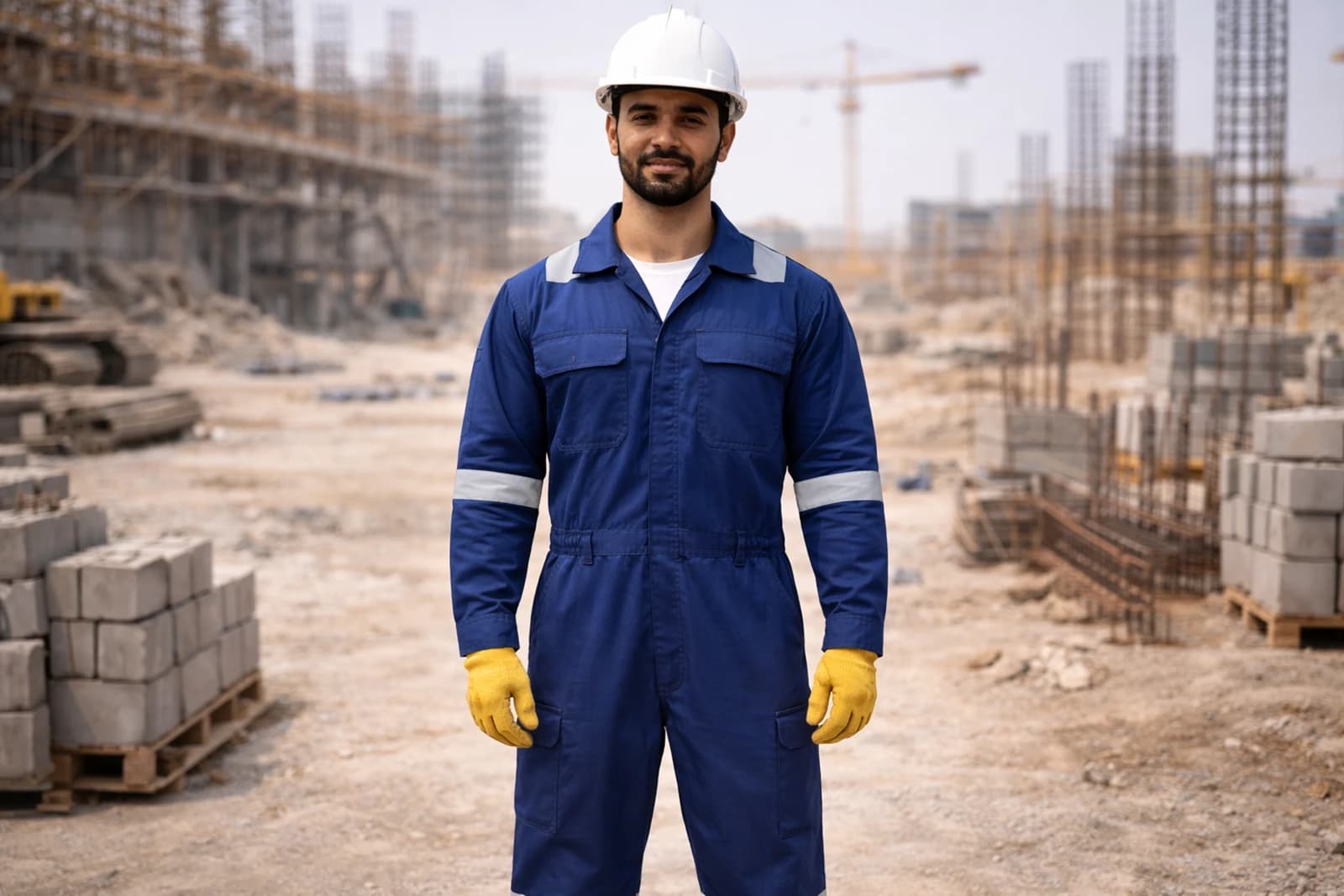
Industrial Coverall Pro
Hard-wearing one-piece coverall for plant, maintenance, and heavy-duty operations.
Logistics Uniform
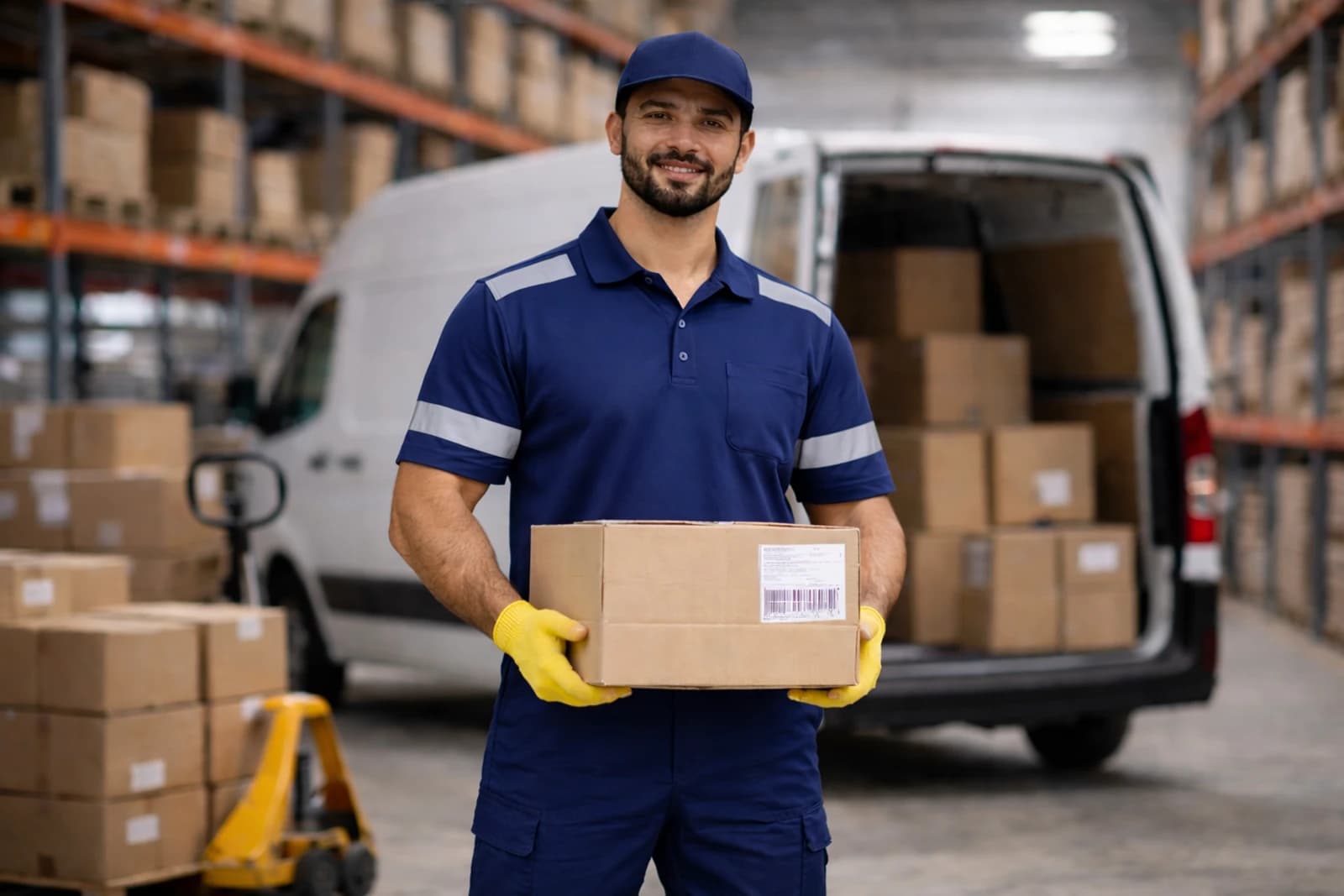
Logistics Polo Uniform
Breathable uniform polo for warehouse, delivery, and last-mile teams.