Automotive Assembly Workwear: The Dexterity Problem in Garment Selection
Automotive assembly workers perform tasks requiring fine motor skills and dexterity—handling small fasteners, operating precision torque tools, working in tight engine compartments—but standard workwear prioritizes durability over dexterity. Workers adapt by removing gloves, rolling sleeves, or wearing personal garments that don't meet safety standards, creating compliance gaps. This article covers the garment specification that addresses dexterity requirements without compromising protection.
Buyer context
What procurement teams run into
Automotive assembly workers perform tasks that require fine motor skills and dexterity: handling small fasteners (screws, clips, connectors), operating precision torque tools, routing wiring harnesses through tight engine compartments, installing interior components in confined spaces, and performing quality inspections that require tactile sensitivity. These tasks demand that workers can move their fingers and hands freely, feel small objects, and apply precise force without the garment restricting movement or creating bulk that interferes with the work. Standard workwear is designed for durability and general protection—not for dexterity. The fabric is heavy and rigid (280–320 GSM polyester-cotton), the cut is loose to allow layering and movement, the sleeves are long and wide, and the closures (buttons, heavy zippers) require gross motor skills to operate. The result is predictable: workers cannot perform dexterity-intensive tasks in the issued workwear, so they adapt in ways that create safety and compliance gaps. **1. The dexterity requirement in automotive assembly is task-specific and non-negotiable** Automotive assembly involves multiple task categories, each with different dexterity requirements: - Powertrain assembly: workers install engines, transmissions, and drivetrain components. These tasks require workers to reach into tight engine compartments, route wiring and hoses around obstacles, and secure small fasteners in confined spaces. Workers need full finger mobility and tactile sensitivity to feel fasteners and confirm proper seating. - Interior assembly: workers install seats, dashboards, door panels, and carpeting. These tasks require workers to handle large but delicate components, align mounting points, and secure clips and fasteners in tight spaces. Workers need arm and shoulder mobility to reach and position components, and finger dexterity to secure small clips. - Electrical assembly: workers install wiring harnesses, connect electrical components, and perform electrical testing. These tasks require workers to handle small connectors, route wiring through tight spaces, and use precision tools (crimpers, multimeters). Workers need fine finger dexterity and tactile sensitivity to feel connector engagement and confirm proper electrical contact. - Final inspection: workers perform quality checks, test vehicle systems, and identify defects. These tasks require workers to feel for surface defects, operate precision testing equipment, and access tight spaces to inspect hidden components. Workers need tactile sensitivity and finger dexterity to detect defects that visual inspection cannot identify. The dexterity requirement is not optional—it is inherent to the work. Workers cannot perform these tasks effectively if their garment restricts finger movement, creates bulk at the wrist or elbow, or reduces tactile sensitivity. **2. Standard workwear fails the dexterity requirement** Standard workwear is designed for general industrial environments where durability, abrasion resistance, and weather protection are the primary concerns. The fabric is heavy (280–320 GSM polyester-cotton), the cut is loose to allow layering and gross motor movement, the sleeves are long and wide to accommodate gloves and allow air circulation, and the closures (buttons, heavy zippers) are designed for durability rather than ease of operation. These design features create dexterity problems: - Heavy, rigid fabric: the fabric does not stretch, so workers cannot move their arms and shoulders freely without the garment pulling or binding. When workers reach into tight spaces, the fabric restricts movement and forces the worker to compensate with awkward body positions. - Loose cut: the loose fabric creates bulk at the wrist, elbow, and shoulder. When workers need to insert their hands into tight spaces, the loose fabric bunches up and interferes with the work. Workers must constantly adjust the fabric to prevent it from catching on components or tools. - Long, wide sleeves: the sleeves extend past the wrist and create excess fabric at the cuff. When workers need to use their hands for precision tasks, the sleeve fabric interferes with finger movement and reduces tactile sensitivity. Workers roll up the sleeves to clear the wrist and hand—but this exposes the forearm to abrasion, chemical contact, and impact hazards. - Heavy closures: buttons and heavy zippers require gross motor skills to operate. Workers wearing gloves cannot easily button or unbutton cuffs, so they leave cuffs unfastened (creating a snag hazard) or remove gloves to adjust the garment (creating a contamination or injury hazard). **3. Worker adaptations create safety and compliance gaps** When standard workwear fails the dexterity requirement, workers adapt in ways that compromise safety and compliance: - Removing gloves: workers remove gloves to gain tactile sensitivity and finger dexterity for precision tasks. This exposes hands to abrasion, chemical contact, impact, and cut hazards. The worker can perform the task more effectively—but at the cost of hand protection. - Rolling sleeves: workers roll up sleeves to clear the wrist and hand for precision tasks. This exposes the forearm to abrasion, chemical contact, and impact hazards. The worker can move more freely—but at the cost of arm protection. - Wearing personal garments: workers wear personal garments (lighter weight, tighter fit, stretch fabric) that enable dexterity but do not meet the employer's safety standards (no hi-vis compliance, no flame resistance, no abrasion resistance, no employer branding). The worker can perform the task effectively—but in a garment that does not meet the safety specification. - Skipping tasks: workers avoid tasks that require dexterity they cannot achieve in the issued workwear, or they perform the task poorly (e.g., not fully securing a fastener because they cannot feel it properly). This creates quality and safety defects that are not immediately visible but emerge later as warranty claims, recalls, or workplace injuries. These adaptations are not worker non-compliance—they are rational responses to a garment that does not meet the work's requirements. The worker's priority is completing the task effectively; if the issued garment prevents that, the worker will find a way to work around the garment. The employer's priority is safety and compliance; if the worker adapts in ways that compromise safety, the employer bears the liability. **4. The specification gap: dexterity is not defined** Most automotive assembly workwear specifications do not include dexterity requirements. The specification defines fabric weight, durability, hi-vis compliance, flame resistance, and branding—but not dexterity. The specification controls the garment's appearance and general protection but does not control whether the garment enables the worker to perform dexterity-intensive tasks. The result is a consistent pattern: workers receive workwear that does not meet the dexterity requirement, workers adapt in ways that compromise safety, and the employer bears the liability for injuries and quality defects that result from the adaptation.
Sourcing approach
How a factory partner can respond
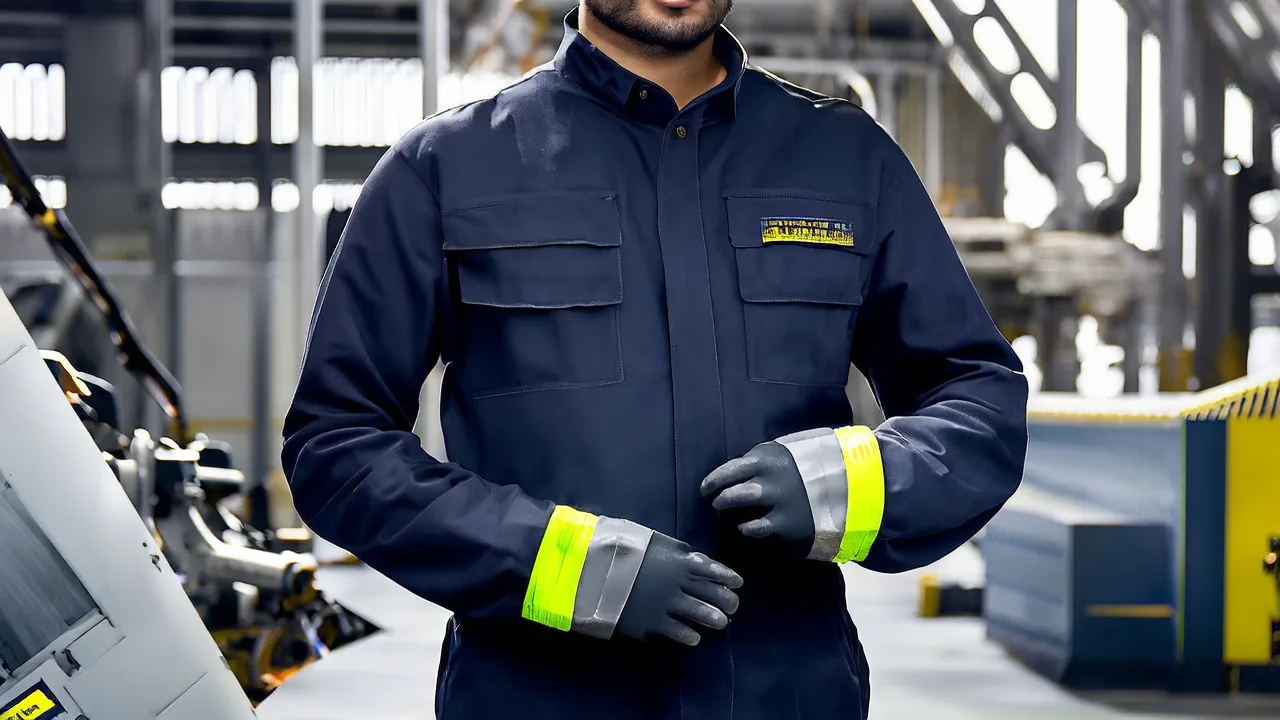
The solution is to add dexterity requirements to the workwear specification for automotive assembly workers—specifying fabric, garment design, and closure systems that enable fine motor skills and tactile sensitivity while maintaining the durability, protection, and compliance required for the work environment. **Step 1: Define dexterity requirements by task category** Not all automotive assembly tasks require the same level of dexterity. The first step is to identify which tasks require fine motor skills and tactile sensitivity, and which tasks can be performed in standard workwear: - High dexterity tasks: powertrain assembly (reaching into engine compartments, securing small fasteners), electrical assembly (handling small connectors, routing wiring), interior assembly (securing clips in tight spaces), final inspection (feeling for surface defects, operating precision tools). Workers performing these tasks require garments that enable full finger mobility, tactile sensitivity, and arm/shoulder movement without restriction. - Moderate dexterity tasks: chassis assembly (installing larger components, operating power tools), body assembly (welding, panel installation). Workers performing these tasks require garments that allow arm and shoulder movement but do not require fine finger dexterity. - Low dexterity tasks: material handling (moving components, operating forklifts), exterior work (vehicle transport, lot maintenance). Workers performing these tasks can wear standard workwear without dexterity features. Document the dexterity requirements by task category: which tasks require fine motor skills, which require tactile sensitivity, which require arm/shoulder mobility, and how frequently the tasks are performed. Use this documentation to determine which workers require dexterity-focused workwear. **Step 2: Specify fabric that enables dexterity** For workers with high dexterity requirements, specify fabric that enables finger mobility, tactile sensitivity, and arm/shoulder movement: - Stretch fabric: specify fabric with 2–5% elastane (spandex) content that provides mechanical stretch. Stretch fabric moves with the worker's body, reducing restriction during reaching, bending, and overhead work. The fabric returns to its original shape after stretching, so the garment maintains its fit and appearance. Stretch fabric is available in polyester-cotton-elastane blends (e.g., 63% polyester, 33% cotton, 4% elastane) that maintain the durability and abrasion resistance of standard workwear while enabling dexterity. - Lighter weight fabric: specify fabric in the 200–240 GSM range rather than 280–320 GSM. Lighter weight fabric is more flexible, less bulky, and enables better tactile sensitivity. The tradeoff is reduced durability and abrasion resistance—specify lighter weight fabric for workers who perform dexterity-intensive tasks but are not exposed to heavy abrasion or impact hazards. For workers who require both dexterity and abrasion resistance, specify reinforced panels at high-abrasion areas (knees, elbows) while using lighter weight fabric elsewhere. - Soft-hand fabric: specify fabric with a soft hand (smooth, flexible surface) that enables tactile sensitivity. Soft-hand fabric allows workers to feel small objects and detect surface defects through the fabric. Soft-hand fabric is achieved through fabric finishing (e.g., enzyme washing, peach finishing) that smooths the fabric surface without compromising durability. **Step 3: Specify garment design that enables dexterity** For workers with high dexterity requirements, specify garment design features that enable finger mobility, arm/shoulder movement, and tactile sensitivity: - Articulated sleeves: specify sleeves that are cut and sewn to follow the natural curve of the arm when bent. Articulated sleeves reduce fabric bunching at the elbow and enable full arm movement without restriction. The sleeve design includes a pre-curved pattern and gussets at the elbow that allow the sleeve to bend with the arm rather than resisting the bend. - Ergonomic fit: specify a fit that is closer to the body without being restrictive. The garment should allow full range of motion at the shoulder, elbow, and wrist without excess fabric that bunches or interferes with work. The fit is achieved through pattern design (e.g., raglan sleeves that allow shoulder movement, gussets at the underarm that allow arm elevation) rather than simply making the garment smaller. - Tapered cuffs: specify cuffs that are tapered to fit closely at the wrist without being tight. Tapered cuffs prevent excess fabric from bunching at the wrist and interfering with hand movement. The cuff should be adjustable (e.g., with a snap or elastic) to allow the worker to secure the cuff closely when performing dexterity-intensive tasks and loosen the cuff when performing gross motor tasks. - Short sleeve options: for workers who perform dexterity-intensive tasks in controlled environments (indoor assembly, climate-controlled facilities), specify short sleeve options that eliminate sleeve interference at the wrist and forearm. Short sleeves expose the forearm to abrasion and impact hazards—specify short sleeves only for workers who are not exposed to these hazards, or specify arm guards that protect the forearm without restricting wrist and hand movement. **Step 4: Specify closure systems that enable dexterity** For workers with high dexterity requirements, specify closure systems that can be operated with gloves or bare hands without reducing tactile sensitivity: - Snap closures: specify snap closures (rather than buttons) for cuffs, pockets, and front closures. Snaps can be operated with one hand, can be operated while wearing gloves, and provide a secure closure that does not come undone during work. Snaps are faster to open and close than buttons, reducing the time workers spend adjusting their garment. - Plastic zippers: specify plastic zippers (rather than metal zippers) for front closures. Plastic zippers are lighter, more flexible, and easier to operate than metal zippers. Plastic zippers do not conduct heat or cold, reducing discomfort when working in extreme temperatures. Specify zippers with large pulls that can be operated while wearing gloves. - Elastic waistbands: specify elastic waistbands (rather than button or zip fly closures) for trousers. Elastic waistbands provide adjustable fit without requiring the worker to operate closures, and they allow the worker to bend and reach without the waistband restricting movement. **Step 5: Pilot the dexterity-focused workwear before full implementation** Before committing to a full fleet order, pilot the dexterity-focused workwear with one group of workers (e.g., powertrain assembly workers) for 8–10 weeks: - Issue the dexterity-focused workwear to 10–15 workers who perform high-dexterity tasks. - Collect data on: worker comfort (survey), garment condition after 4, 6, 8, and 10 weeks (inspect for fabric degradation, seam failure, closure failure), worker feedback on the garment's dexterity enablement (can they perform precision tasks more effectively? do they feel less restricted? are they able to keep gloves on during precision tasks?), and whether the garment design creates any new hazards (e.g., stretch fabric that loses shape, tapered cuffs that are too tight). - Compare results to the previous standard garment: did worker adaptations (removing gloves, rolling sleeves, wearing personal garments) decrease? Did workers report better ability to perform dexterity-intensive tasks? Did the garment meet the durability and protection requirements of the work environment? Use pilot data to refine the fabric selection, garment design, and closure systems before full implementation across all workers with high dexterity requirements. **Recommended garments for automotive assembly workwear:** - **Industrial coverall-pro** — specify with dexterity-focused features for workers who perform high-dexterity tasks (powertrain assembly, electrical assembly, interior assembly, final inspection). Specify the coverall with stretch fabric (polyester-cotton-elastane blend, 200–240 GSM) that enables arm/shoulder movement and tactile sensitivity. Specify articulated sleeves and ergonomic fit that reduce fabric bunching and restriction. Specify tapered cuffs with snap closures that secure closely at the wrist without interfering with hand movement. Specify a front zipper with a large pull that can be operated while wearing gloves. The coverall provides full-body protection while enabling the dexterity required for precision assembly tasks.
Recommended Products
Products that fit this use case

Industrial Workwear
Industrial Coverall Pro
Hard-wearing one-piece coverall for plant, maintenance, and heavy-duty operations.