Automotive Paint Shops Specify Lint-Free Coveralls to Prevent Paint Defects
Automotive paint shop workwear must prevent fiber shedding that contaminates wet paint surfaces and causes defects requiring expensive rework. Standard workwear fabrics shed short fibers continuously throughout the shift — fibers become airborne in paint booths, land on wet primer, basecoat, or clearcoat, and create inclusions, fish-eyes, and surface roughness that force panel rework. Lint-resistant fabrics that prevent shedding often use tight constructions that trap heat in warm paint booths and cause operator discomfort. Breathable fabrics that keep operators cool shed fibers aggressively and create paint quality problems within the first hour of wear. This article covers the mechanism that makes lint-free performance and breathability conflict, the fabric and design criteria that deliver both, and the zone-based specification that matches garment properties to each paint shop area's contamination and thermal profile.
Buyer context
What procurement teams run into
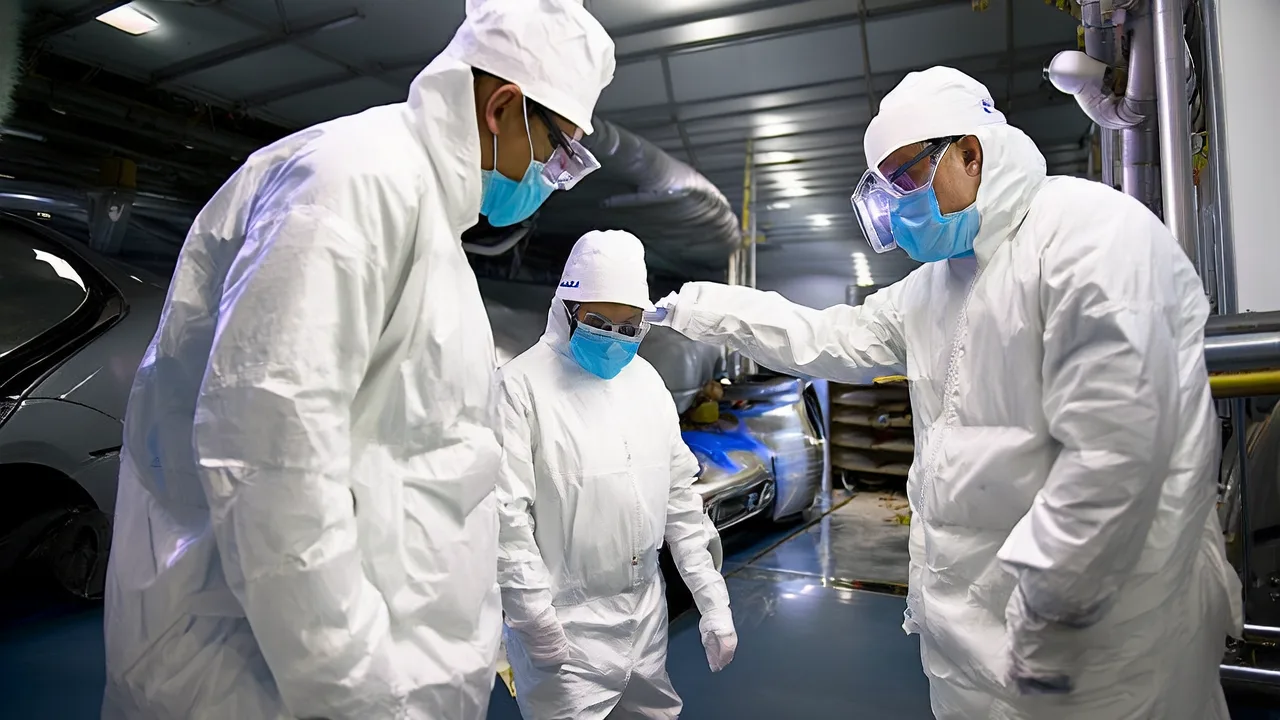
Automotive paint shops apply primer, basecoat, and clearcoat to vehicle bodies through a sequence of enclosed booth operations — pretreatment, electrocoat primer application, primer surfacer, basecoat color, and clearcoat topcoat. Paint booth operators, booth attendants, paint mix room technicians, and quality inspectors work in close proximity to wet paint surfaces throughout the painting and flash-off process. The work environment exposes garments to a specific constraint that directly affects production quality and rework cost: - **Fiber shedding contamination:** Standard workwear fabrics shed short fibers from their surface throughout the shift — fibers release from the fabric during operator movement, arm reach, bending, and contact with booth surfaces. These shed fibers become airborne within the paint booth airflow, land on wet paint surfaces, and create three categories of paint defects: fiber inclusions embedded in the paint film that create visible bumps and roughness; fish-eye defects where fibers disrupt paint wetting and adhesion; and surface contamination that requires the painted panel to be sanded, reprimered, and repainted. Each defect triggers a rework cycle that consumes labor time, paint material, and booth capacity. - **Warm paint booth environment:** Paint booths maintain controlled temperature (22–28°C) and humidity for optimal paint application and drying. Operators wear full-body coveralls with hoods, boot covers, and gloves throughout every shift. The warm, enclosed environment combined with full-body coverage creates heat stress risk — garments must enable heat and moisture vapor dissipation to prevent operator discomfort and heat exhaustion during full-shift wear. - **Daily washing and durability requirements:** Paint shop garments accumulate paint overspray throughout the shift and require daily washing to maintain appearance and function. The lint-free fabric construction must survive daily industrial washing without degrading — fiber shedding must not increase after repeated washing cycles, and the fabric must maintain its lint-free surface properties over the garment's usable life. The workwear specification must deliver three protections simultaneously: - **Lint-free performance:** fabric must not shed fibers that become airborne and contaminate wet paint surfaces - **Heat dissipation:** fabric must enable heat and moisture vapor to pass through the garment for operator comfort in warm paint booth conditions - **Wash durability:** fabric must maintain lint-free performance after repeated daily washing cycles These three requirements conflict in standard fabric constructions. The mechanism: **1. Tight, smooth fabric that resists fiber shedding traps heat** Lint-resistant fabrics achieve their performance through tight, smooth fabric constructions — high thread count, low surface texture, filament synthetic fiber content (continuous filament polyester or nylon rather than staple fiber), and calendered or heat-set fabric surfaces that lock fibers in place and prevent fiber release. The tight, smooth construction prevents short fibers from breaking free from the fabric surface — fibers remain anchored in the fabric structure and do not become airborne. But the same tight, smooth construction that prevents fiber shedding also traps heat: - **Tight weave structure has low air permeability:** Air cannot pass through the fabric easily. Heat generated by the operator's body and radiant heat from booth lighting cannot dissipate through the fabric. The operator experiences heat buildup under the garment within 30–60 minutes of work in paint booth conditions. - **Smooth synthetic fibers have low moisture vapor transmission:** Synthetic fibers that create smooth, lint-free surfaces do not absorb or transmit moisture vapor effectively. Sweat vapor generated by the operator's body cannot pass through the fabric and accumulates between the skin and the garment. The operator experiences clamminess and discomfort. - **Tight fabric has higher thermal insulation:** The dense fabric construction creates a thermal barrier between the operator's body and the environment. In paint booths where ambient temperature is maintained at 22–28°C, the fabric traps body heat and prevents it from escaping — the operator experiences heat stress, excessive sweating, and fatigue during full-shift wear. The result: a fabric that prevents fiber shedding causes heat stress for paint booth operators. Operators experience heat exhaustion, reduce productivity, and may seek relief by adjusting garments or taking additional breaks — creating potential contamination risk when garments are adjusted inside the booth. **2. Open, breathable fabric that dissipates heat sheds fibers** Breathable fabrics achieve their performance through open-weave constructions, lightweight fabric weight, and moisture-wicking fiber content. The open, light construction enables air circulation through the fabric — heat and moisture vapor pass through freely, keeping the operator cool and comfortable even during full-shift wear in warm paint booth conditions. But the same open, light construction that enables breathability also sheds fibers: - **Open weave structure has shorter fiber exposure at yarn surfaces:** The open weave creates more yarn surface area exposed to mechanical abrasion during operator movement. Short fibers at yarn surfaces break free during arm movement, bending, and contact with booth surfaces. The fabric sheds fibers continuously throughout the shift. - **Staple fiber content releases short fibers:** Natural fibers (cotton) and staple synthetic fibers (short-length polyester or viscose spun into yarn) have fiber ends that protrude from the yarn surface. These fiber ends break free during wear and become airborne. The fabric sheds fibers that land on wet paint surfaces. - **Lightweight fabric has lower fiber anchorage:** Lightweight fabrics have less fiber mass per unit area and lower yarn twist — fibers are less securely anchored in the yarn structure and release more easily during mechanical action. The fabric sheds fibers aggressively within the first hour of wear. The result: a fabric that dissipates heat effectively sheds fibers and creates paint contamination. Operators stay comfortable, but the garment becomes a source of paint defects that trigger rework throughout every shift. **3. The procurement mistake: specifying one fabric property and accepting the tradeoff on the other** The most common procurement error is to specify workwear for one requirement and accept the tradeoff on the other: - **Specify lint-free fabric and accept heat stress:** Operators in paint booths experience heat exhaustion, reduce productivity, and may adjust garments inside the booth to seek relief — creating contamination risk when garments are opened or adjusted. The paint shop faces operator discomfort, reduced productivity in booth operations, and potential contamination from garment adjustment. - **Specify breathable fabric and accept paint defects:** Operators throughout the paint booth experience fiber shedding that contaminates wet paint surfaces. Paint defects increase — fiber inclusions, fish-eyes, and surface roughness appear on painted panels. The paint shop faces increased rework rates, higher paint material consumption, and reduced first-pass quality yield. The buyer who chooses lint-free without breathability faces heat stress and operator rejection within hours. The buyer who chooses breathability without lint-free performance faces paint defects and rework cost throughout every shift. **4. The secondary driver: one garment specified for all paint shop zones** Many automotive paint shops specify one workwear garment for all paint shop workers — the same fabric, the same design — regardless of the worker's specific zone and its contamination risk profile. But automotive paint shops have distinct zones with different combinations of fiber shedding contamination risk and heat stress: - **Paint booths (basecoat and clearcoat application):** High fiber shedding contamination risk (operators work within centimeters of wet paint surfaces in enclosed airflow), high heat stress (full-body coverall with hood in warm booth). The primary garment requirement is lint-free performance with breathability. - **Pretreatment and electrocoat areas:** Moderate fiber shedding contamination risk (operators work near wet primer surfaces but at greater distance than booth operators), moderate heat stress. The primary garment requirement is moderate lint-free performance with general comfort. - **Paint mix room:** Low fiber shedding contamination risk (operators handle paint containers and mixing equipment, not wet painted surfaces), moderate heat stress. The primary garment requirement is chemical resistance to paint solvents with general comfort. - **Quality inspection and final audit areas:** Low fiber shedding contamination risk (inspectors view painted surfaces but do not contact wet paint), low heat stress. The primary garment requirement is professional appearance and general comfort. The buyer who specifies one garment for all zones must choose a compromise fabric that delivers moderate lint-free performance and moderate breathability — but the compromise fabric does not fully meet the primary requirement of any zone. Booth operators still experience heat stress or still shed fibers. The compromise satisfies no zone fully. **5. The cost of getting it wrong** The buyer who specifies only lint-free without breathability faces: - Heat stress for booth operators — operators experience heat exhaustion, reduce productivity, and may adjust garments inside the booth - Paint contamination from garment adjustment — operators opening or adjusting garments inside the booth releases fibers and skin particles onto wet paint surfaces - Operator complaints and high garment rejection — booth operators reject the garments and seek alternatives that do not meet lint-free requirements The buyer who specifies only breathability without lint-free performance faces: - Paint defects throughout every shift — fiber inclusions, fish-eyes, and surface roughness appear on painted panels at elevated rates - Increased rework rates — defective panels must be sanded, reprimered, and repainted, consuming labor time, paint material, and booth capacity - Reduced first-pass quality yield — the paint shop's first-pass yield decreases, increasing cost per painted unit - Operator complaints about appearance — garments look fuzzy and shed visible fibers that accumulate on booth surfaces
Sourcing approach
How a factory partner can respond
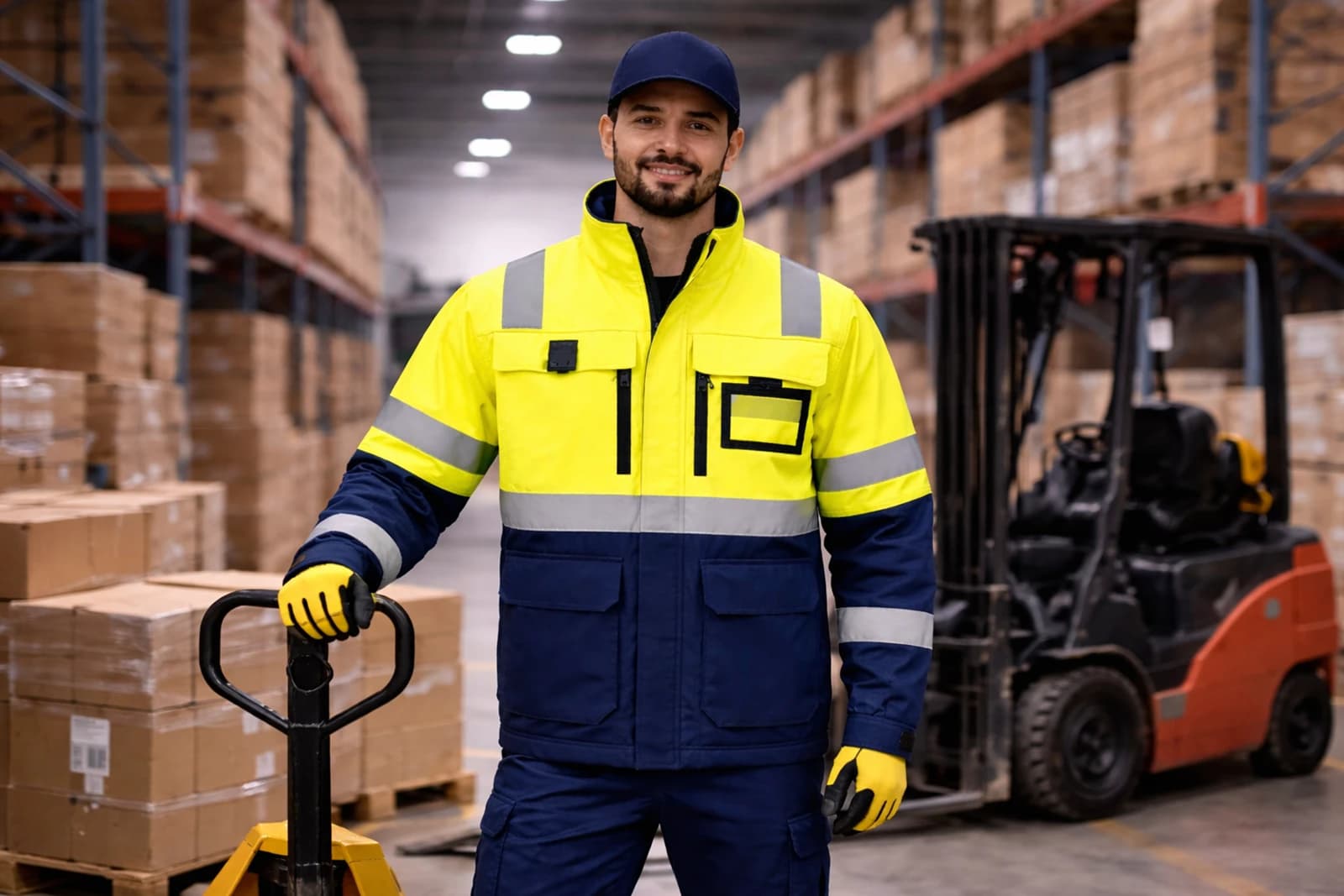
The solution for automotive paint shop workwear is to specify zone-based garment requirements — matching fabric properties to the specific contamination risk and thermal profile of each paint shop zone — and to specify fabric constructions that deliver both lint-free performance and breathability for booth operators where both requirements apply. **Step 1: Map paint shop zones by contamination risk and thermal profile** Before specifying workwear, map the paint shop's operational areas by their fiber shedding contamination risk level and heat stress level: - **High contamination risk / high heat stress:** Paint booths (basecoat and clearcoat application). Primary requirement: lint-free performance with breathability. - **Moderate contamination risk / moderate heat stress:** Pretreatment and electrocoat areas. Primary requirement: moderate lint-free performance with general comfort. - **Low contamination risk / moderate heat stress:** Paint mix room. Primary requirement: chemical resistance to paint solvents with general comfort. - **Low contamination risk / low heat stress:** Quality inspection and final audit areas. Primary requirement: professional appearance and general comfort. The zone mapping identifies which workers need lint-free fabric, which workers need breathable fabric, and which workers need both properties. **Step 2: Specify fabric constructions that deliver both lint-free performance and breathability** For booth operators who need both lint-free performance and breathability, work with the supplier to identify fabric constructions that deliver both properties. The fabric construction criteria: - **Continuous filament fiber content:** Specify fabric made from continuous filament synthetic fibers (filament polyester or filament nylon) rather than staple fiber. Continuous filament fibers have no short fiber ends to break free and become airborne — the fiber runs the full length of the yarn and cannot shed. This is the fundamental mechanism that prevents fiber shedding. - **Smooth fabric surface:** Specify fabric with a smooth, calendered, or heat-set surface that locks yarn structure in place and prevents fiber migration to the surface. The smooth surface does not generate fibers during mechanical abrasion from operator movement. - **Moderate fabric weight for breathability:** Specify fabric in the 150–190 GSM range — light enough to enable air circulation and moisture vapor transmission but structured enough to maintain fabric integrity and prevent fiber release. Avoid extremely heavy fabrics (which trap heat) and extremely light fabrics (which may have insufficient structure to prevent fiber release). - **Moisture-wicking treatment or construction:** Specify fabric with moisture-wicking capability — either through fiber cross-section design (channel-shaped filament that wicks moisture) or through fabric construction (knit structure or engineered weave that enables capillary moisture transport). The moisture-wicking capability enables sweat vapor to pass through the fabric and dissipate, keeping the operator cool and dry. - **Wash durability:** Specify fabric that maintains lint-free performance and breathability after repeated daily washing (minimum 50 wash cycles at 60°C). The fabric must not develop surface fuzz, fiber pills, or increased fiber shedding after washing. Require the supplier to provide wash durability testing data. The supplier should provide fabric construction data — fiber type (continuous filament vs. staple), fabric weight, air permeability, moisture vapor transmission rate, lint shedding test data (e.g., IEST-RP-CC004.3 or Helmke drum test), and wash durability data — and confirm that the construction achieves both lint-free performance and breathability. **Step 3: Specify zone-specific garment types** Based on the zone mapping, specify different garment types for different zones: - **Paint booth operators (high contamination, high heat stress):** Specify a coverall with lint-free, breathable fabric construction — continuous filament fiber, smooth surface, moderate weight, moisture-wicking capability. The coverall must include an integrated hood that is also lint-free (hoods are critical because head hair and garment hood fibers are the primary source of fiber contamination near wet paint surfaces). Require the supplier to provide lint shedding test data before approving bulk production. - **Pretreatment and electrocoat operators (moderate contamination, moderate heat stress):** Specify a coverall with moderate lint-free fabric construction — continuous filament or tightly constructed staple fiber fabric, smooth surface, general comfort. The coverall must resist fiber shedding at a moderate level sufficient for areas where operators work near wet primer but not in direct proximity to final coat surfaces. - **Paint mix room technicians (low contamination, moderate heat stress):** Specify a garment with chemical-resistant fabric construction — fabric that resists paint solvent splashes (thinners, reducers, hardeners) and enables comfort during mix room operations. Lint-free performance is secondary because technicians do not work near wet painted surfaces. - **Quality inspectors and audit staff (low contamination, low heat stress):** Specify a garment with appearance-focused fabric construction — smooth surface, professional appearance, comfortable hand feel. The garment must look clean and professional throughout the shift. Lint-free performance is secondary because inspectors view painted surfaces at a distance and do not contact wet paint. **Step 4: Specify design features that minimize fiber generation** In addition to fabric properties, specify design features that minimize fiber generation and fiber release: - **Bound or sealed seams:** Specify garments with bound seams (seam edges enclosed in tape or binding) or ultrasonically sealed seams. Cut fabric edges at seams are a primary source of fiber shedding — loose fiber ends at cut edges break free during wear. Bound or sealed seams eliminate exposed cut edges and prevent fiber release from seam areas. - **Minimal external pockets and features:** Specify garments with minimal external pockets, pocket flaps, and surface features. Each external feature creates additional fabric edges and surfaces that generate fibers during mechanical abrasion. A clean, simple garment design minimizes fiber generation points. - **Elastic or fitted cuffs:** Specify elastic or fitted cuffs that do not create loose fabric edges at the wrist. Loose cuffs create fabric edges that abrade against surfaces and release fibers. Elastic cuffs maintain a clean edge and prevent fiber release at the wrist. - **Integrated hood with lint-free construction:** For booth operators, specify an integrated hood that uses the same lint-free fabric as the garment body. The hood must fully cover the operator's head and hair — head hair is a significant source of fiber contamination. The hood should have a smooth, close-fitting design that does not create loose fabric areas that shed fibers. - **Smooth closures:** Specify smooth closures (concealed zippers, covered snaps) that do not create fabric edges or rough surfaces that generate fibers during operation. **Step 5: Evaluate samples under paint-shop-environment conditions** When the supplier submits samples, evaluate lint-free performance and breathability under conditions that replicate the paint shop environment: - **Lint shedding evaluation:** Subject the fabric sample to a standardized lint shedding test — IEST-RP-CC004.3 (for cleanroom environments) or Helmke drum test (for particle generation from garments). Measure the number and size of particles generated by the fabric during mechanical agitation. Confirm that the fabric generates fewer particles than the threshold acceptable for paint booth environments. - **Breathability evaluation:** Measure the fabric's air permeability and moisture vapor transmission rate — confirm that the fabric enables heat and moisture vapor to pass through. If possible, have booth operators wear the garment in paint booth conditions for a full shift and confirm that they do not experience excessive heat buildup or sweating. - **Wash durability evaluation:** Subject samples to repeated wash cycles (minimum 50 wash cycles at 60°C) — confirm that the fabric maintains lint-free performance, breathability, and color fastness after washing. Test lint shedding after washing — confirm that fiber shedding does not increase after repeated wash cycles. - **Paint defect evaluation:** If possible, conduct a trial in the paint booth — have operators wear the sample garment for a defined production period and monitor paint defect rates (fiber inclusions, fish-eyes, surface roughness) compared to the current garment. Confirm that the sample garment does not increase paint defect rates. If the sample passes lint shedding evaluation but fails breathability (fabric traps heat), request a second sample with enhanced breathability — lighter weight, moisture-wicking treatment, or engineered knit construction. If the sample passes breathability but fails lint shedding (fabric sheds fibers), request a second sample with enhanced lint-free performance — continuous filament fiber, smoother surface, or tighter construction. **Step 6: Implement replacement and wash tracking** Paint shop workwear replacement should be managed by actual garment condition, not by calendar: - **Booth operator garments:** Replace garments when lint-free performance degrades (fabric develops surface fuzz, fiber pills, or increased fiber shedding after washing) or when fabric integrity is compromised (tears, thinning, or damage). Track replacement by zone and by garment type. Do not replace on calendar basis — replace based on actual lint shedding performance. - **Pretreatment and electrocoat garments:** Replace garments when fabric integrity is compromised or when chemical resistance degrades (fabric degradation from chemical exposure). - **Wash tracking:** Implement a wash tracking system that records garment issue date, number of wash cycles, and replacement date. Use wash data to identify garments that degrade prematurely and adjust specifications or washing protocols accordingly. Confirm that the washing protocol (temperature, cycle, detergent) does not degrade lint-free performance. **Recommended garments for automotive paint shop workwear:** - **Industrial coverall-pro** — specify the coverall for paint booth operators who work in close proximity to wet paint surfaces and need lint-free performance with breathability throughout every shift. Specify the coverall with lint-free, breathable fabric construction: continuous filament synthetic fiber, smooth calendered surface, moderate weight (150–190 GSM), moisture-wicking capability, bound or sealed seams, integrated lint-free hood, and wash durability for daily industrial laundering. Request the supplier to provide lint shedding test data (IEST-RP-CC004.3 or Helmke drum test) and air permeability testing data before approving bulk production. - **Hi-vis safety jacket** — specify the hi-vis jacket for paint shop yard and logistics workers (paint delivery drivers, booth equipment maintenance technicians working outside booths, finished vehicle handlers) who work in outdoor or vehicle traffic areas of the paint shop facility and need visibility compliance with general durability. Specify the hi-vis jacket with visibility-compliant fabric construction and general durability for outdoor paint shop yard conditions. Request the supplier to provide visibility compliance certification before approving bulk production.
Recommended Products
Products that fit this use case

Industrial Workwear
Industrial Coverall Pro
Hard-wearing one-piece coverall for plant, maintenance, and heavy-duty operations.
Safety Uniform
Hi-Vis Safety Jacket
Reflective safety jacket for high-visibility site operations and road work crews.