Bakery Workwear Samples Must Pass Five Wash Cycles Before Bulk Approval
Bakery workwear buyers often approve samples based on visual inspection and initial feel, then place bulk orders. After the first industrial wash, the garments shrink, fade, pill, or fail at seams. The root cause: samples were never tested under actual bakery laundry conditions — high-temperature wash with caustic detergents designed to remove flour dough, sugar syrups, and fat residues. This article covers the wash-test protocol that bakery buyers should require before approving bulk orders, the specific failure modes that appear only after wash testing, and how to adjust fabric and construction specifications based on wash test results.
Buyer context
What procurement teams run into
Bakery workwear presents a wash environment that most buyers do not account for when approving samples. Industrial bakeries wash production garments at 70–75°C using caustic detergents designed to dissolve flour dough, sugar syrups, butter fat, and egg residues. These wash conditions are significantly more aggressive than standard industrial laundry (40–60°C with neutral detergents). A workwear sample that looks and feels acceptable when new can fail catastrophically after just 3–5 washes in bakery laundry conditions — shrinking, fading, pilling, or developing seam failures that were not visible in the unwashed sample. **1. Bakery laundry conditions are more aggressive than most industrial laundries** The wash chemistry required to clean bakery workwear is driven by the soils that must be removed: - **Flour dough:** Wheat flour mixed with water forms gluten, a protein-based adhesive that bonds to fabric fibres. Removing gluten requires alkaline detergents (pH 11–12) at elevated temperatures (70–75°C). Neutral or mildly alkaline detergents (pH 8–9) do not dissolve gluten effectively — the dough residue remains trapped in the fabric weave after washing. - **Sugar syrups and caramelised sugar:** Sugar dissolves in warm water, but caramelised sugar (from oven baking) forms a hard, glassy residue that requires alkaline detergents and mechanical agitation to remove. - **Butter fat and egg residues:** Animal fats solidify at room temperature and require hot water (minimum 60°C) and surfactant-based detergents to emulsify and remove. Egg protein denatures and bonds to fabric at temperatures above 65°C — if the wash temperature is too low, egg residue cooks into the fabric rather than being removed. The combination of high temperature (70–75°C), high alkalinity (pH 11–12), and aggressive mechanical agitation (commercial tunnel washers or heavy-duty extractors) creates a wash environment that accelerates fabric degradation: - **Cotton fibres swell and weaken** at 70–75°C in alkaline conditions. After 5–10 washes, cotton fibres lose 10–15% of their tensile strength. - **Polyester fibres resist alkaline degradation** but are susceptible to thermal shrinkage at 70–75°C if the fabric was not heat-set during manufacturing. - **Reactive dyes (used for coloured workwear) hydrolyse** in alkaline conditions at high temperature, causing colour fading of 15–25% after 5 washes. - **Cotton-polyester blend fabrics experience differential shrinkage** — cotton shrinks more than polyester, causing the fabric to pucker and distort after washing. A sample that passes visual inspection when new may fail all of these degradation mechanisms after 5 bakery washes — and the buyer only discovers the failure after the bulk order has been delivered and the first garments have been washed. **2. The failure modes that appear only after wash testing** The following failure modes are invisible in unwashed samples but appear consistently after 3–5 bakery washes: - **Dimensional shrinkage:** Cotton-rich fabrics (60% cotton / 40% polyester) shrink 4–7% after the first wash at 75°C. This shrinkage reduces garment fit — a coverall that fit correctly when new becomes tight across the shoulders and chest after washing. For bakery workers reaching into mixers or bending over ovens, a tight garment restricts movement and creates discomfort. The shrinkage is not uniform — sleeves and legs shrink more than the body, distorting the garment's proportions. - **Colour fading:** Reactive dyes on cotton fibres hydrolyse in alkaline wash conditions, causing visible fading. A navy blue coverall fades to a washed-out grey-blue after 5 bakery washes. A black coverall fades to charcoal. The fading is not just cosmetic — it affects the garment's professional appearance and may violate site dress code requirements for colour consistency across the workforce. - **Fabric pilling:** Cotton-polyester blends with short-staple cotton fibres develop pills on the fabric surface after 5–10 washes. The pills are caused by cotton fibres breaking loose from the yarn and tangling on the fabric surface. Pilling is accelerated by the mechanical agitation of tunnel washers. Pilled fabric looks worn and unprofessional, and the pills trap flour dust and sugar residue, making the garment harder to clean in subsequent washes. - **Seam failure:** Sewing thread (typically polyester or cotton-polyester blend) shrinks at a different rate than the garment fabric. After 5 washes, the differential shrinkage between fabric and thread creates tension at the seam, causing the seam to pucker or the thread to break. Seam failure is most common at high-stress points: shoulder seams, crotch seams, and pocket corners. A seam that held correctly in the unwashed sample fails after washing because the wash-induced shrinkage created tension that the seam could not absorb. - **Zipper and closure degradation:** Metal zippers corrode in alkaline wash conditions, causing the zipper to stick or jam. Plastic zipper teeth deform at 75°C if the plastic is not heat-stabilised, causing the zipper to separate during use. Snap buttons loosen as the fabric around the button hole shrinks and weakens. **3. The wash-test protocol that bakery buyers should require before bulk approval** The buyer should require the supplier to submit wash-tested samples — not unwashed samples — for approval. The wash-test protocol should simulate actual bakery laundry conditions: - **Wash temperature:** 75°C (matching the bakery's production laundry temperature) - **Wash chemistry:** Alkaline detergent at pH 11–12 (matching the bakery's detergent specification) - **Wash cycles:** 5 complete wash cycles (simulating 1–2 weeks of production use) - **Drying method:** Tumble dry at 70°C (matching the bakery's production dryer) After 5 wash cycles, the wash-tested samples should be evaluated against the following acceptance criteria: - **Dimensional change:** Maximum 3% shrinkage in any direction (chest, waist, sleeve length, inseam). If shrinkage exceeds 3%, the fabric was not properly heat-set during manufacturing, and the garment will not fit correctly after washing. - **Colourfastness:** Maximum 15% colour change measured by spectrophotometer (CIE L*a*b* values). If colour change exceeds 15%, the dye is not stable in alkaline wash conditions, and the garment will fade visibly during production use. - **Fabric pilling:** No visible pilling on the fabric surface (rated 4–5 on the ISO 12945-2 pilling scale). If pilling appears after 5 washes, the fabric uses short-staple fibres that will continue to pill during production use. - **Seam integrity:** No seam puckering, thread breakage, or seam slippage. Seams should lie flat and maintain their original strength. If seams pucker or fail, the sewing thread or seam construction is not compatible with the fabric's wash shrinkage. - **Zipper and closure function:** Zippers should operate smoothly after 5 washes. Snap buttons should remain secure. If zippers stick or snaps loosen, the closure components are not compatible with bakery wash conditions. **4. How to adjust specifications based on wash test results** If the wash-tested samples fail any of the acceptance criteria, the buyer should adjust the specification before approving the bulk order: - **If shrinkage exceeds 3%:** Require the supplier to use heat-set fabric (fabric that has been stretched and heat-treated during manufacturing to stabilise dimensional change). Heat-set fabric shrinks less than 2% after washing. Alternatively, switch to a higher polyester content blend (65% polyester / 35% cotton instead of 50/50) — polyester shrinks less than cotton. - **If colour fading exceeds 15%:** Require the supplier to use vat dyes or disperse dyes instead of reactive dyes. Vat dyes (used for navy, black, and dark colours) are alkali-stable and resist fading in high-pH wash conditions. Disperse dyes (used for polyester fibres) are also alkali-stable. Reactive dyes should only be used for light colours (white, light grey) where fading is less visible. - **If pilling appears after 5 washes:** Require the supplier to use long-staple or combed cotton fibres instead of carded (short-staple) cotton. Long-staple fibres are less likely to break loose and form pills. Alternatively, specify a fabric with a tighter weave construction (higher thread count) that holds fibres more securely. - **If seams pucker or fail:** Require the supplier to use core-spun sewing thread (polyester core with cotton wrap) that matches the fabric's shrinkage rate. Alternatively, specify a different seam construction — flat-felled seams (used on jeans) are more resistant to shrinkage-induced puckering than overlocked seams. - **If zippers stick or snaps loosen:** Require the supplier to use corrosion-resistant zippers (plastic teeth with metal slider) and heat-stabilised plastic zipper tape. For snap buttons, require reinforced button holes (with bar-tack stitching around the button hole to prevent fabric tearing). **5. The cost and timeline implications of wash testing** Wash testing adds 2–3 weeks to the sampling timeline and increases sample cost by 20–30% (because the supplier must produce extra samples for destructive wash testing). However, the cost of wash testing is negligible compared to the cost of a bulk order that fails after delivery: - **Cost of wash testing:** 10–15 sample garments × $25–35 per sample = $250–525 total sample cost, plus 2–3 weeks of timeline. - **Cost of bulk order failure:** 500 garments × $20–30 per garment = $10,000–15,000 in defective garments that cannot be used, plus 4–6 weeks of production delay while replacement garments are sourced and delivered. The wash-test protocol is a small upfront investment that prevents a large downstream failure. The buyer should build the wash-test requirement into the procurement specification and make bulk order approval conditional on passing the wash-test criteria. **6. The procurement specification for bakery workwear sampling** The buyer should include the following requirements in the procurement specification: - **Sample submission:** Supplier must submit 10 samples in each size (S, M, L, XL, XXL) — 5 samples for wash testing, 5 samples retained as sealed reference samples for bulk order comparison. - **Wash-test protocol:** The 5 wash-test samples must undergo 5 complete wash cycles at 75°C with alkaline detergent (pH 11–12), followed by tumble drying at 70°C. The wash test must be conducted at a commercial laundry that matches the bakery's production laundry conditions. - **Acceptance criteria:** After 5 wash cycles, samples must meet the following criteria: dimensional change ≤3%, colour change ≤15%, no visible pilling, no seam failure, zippers and closures functional. - **Test report:** Supplier must provide a wash-test report with photographic evidence of samples before and after washing, dimensional measurements before and after washing, colour measurements (CIE L*a*b* values) before and after washing, and a statement of compliance with the acceptance criteria. - **Bulk order approval:** Bulk order approval is conditional on the buyer's review and acceptance of the wash-test report. The buyer reserves the right to reject the bulk order if the wash-test samples do not meet the acceptance criteria.
Sourcing approach
How a factory partner can respond
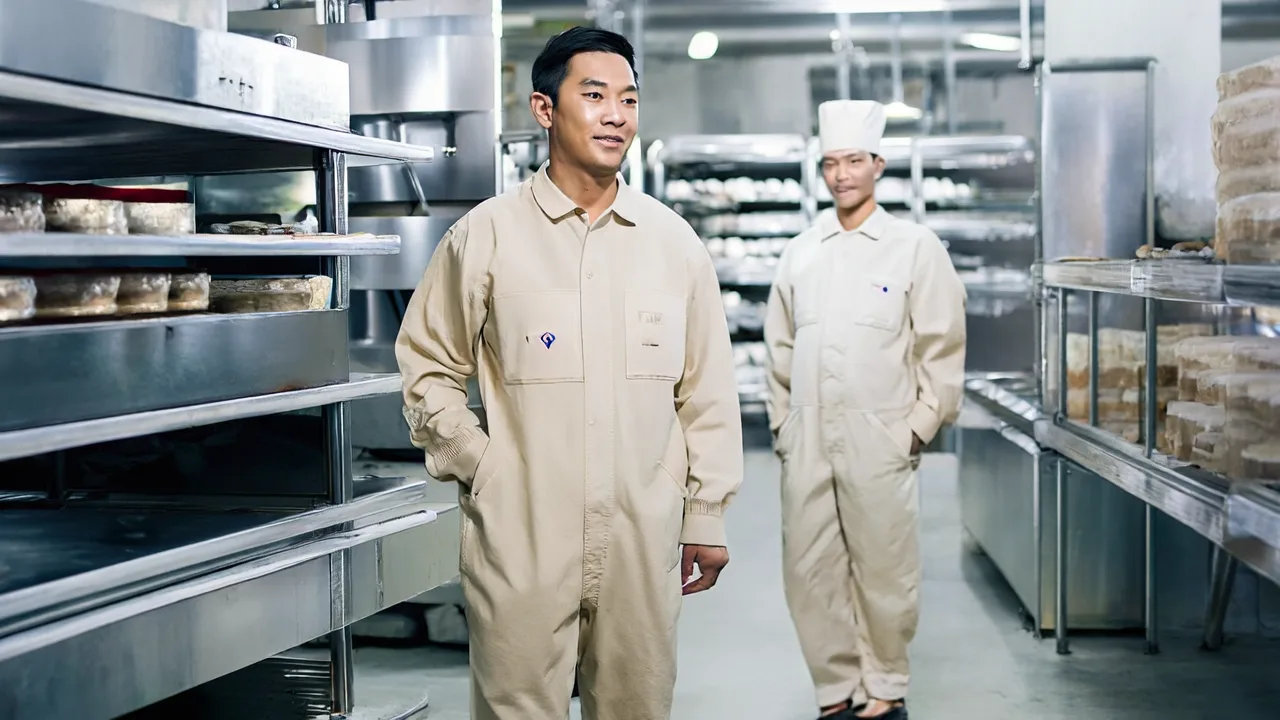
The solution for bakery workwear procurement is a wash-test-before-approval protocol that requires suppliers to submit samples that have already passed 5 wash cycles at bakery laundry conditions (75°C with alkaline detergent at pH 11–12), evaluated against defined acceptance criteria for dimensional change, colourfastness, pilling, seam integrity, and closure function. **Step 1: Define the bakery laundry wash conditions** Work with the bakery's laundry team to document the exact wash conditions used for production garments: - Wash temperature: typically 70–75°C - Detergent type and pH: typically alkaline detergent at pH 11–12 - Wash cycle duration: typically 20–30 minutes per cycle - Drying method: tumble dry at 65–75°C - Number of wash cycles per garment per week: typically 3–5 washes per week These conditions form the basis of the wash-test protocol. The wash test must replicate the bakery's actual laundry conditions — not a generic industrial laundry standard. **Step 2: Specify the wash-test protocol in the procurement specification** Include the following requirements in the procurement specification: - Supplier must submit 10 samples in each size — 5 for wash testing, 5 retained as sealed reference samples. - The 5 wash-test samples must undergo 5 complete wash cycles at the bakery's documented laundry conditions (temperature, detergent, cycle duration, drying method). - After 5 wash cycles, samples must meet acceptance criteria: dimensional change ≤3%, colour change ≤15%, no visible pilling, no seam failure, zippers and closures functional. - Supplier must provide a wash-test report with photographic evidence, dimensional measurements, colour measurements, and a statement of compliance. - Bulk order approval is conditional on the buyer's acceptance of the wash-test report. **Step 3: Evaluate wash-tested samples against acceptance criteria** After receiving the wash-tested samples, evaluate each criterion: - **Dimensional change:** Measure chest, waist, sleeve length, and inseam. Compare to pre-wash measurements. Accept if shrinkage is ≤3% in all directions. If shrinkage exceeds 3%, reject the sample and require the supplier to use heat-set fabric or a higher polyester content blend. - **Colourfastness:** Measure colour using a spectrophotometer (CIE L*a*b* values). Compare to pre-wash measurements. Accept if colour change is ≤15%. If colour change exceeds 15%, reject the sample and require the supplier to use vat dyes or disperse dyes instead of reactive dyes. - **Fabric pilling:** Inspect the fabric surface visually. Accept if no visible pilling (rated 4–5 on ISO 12945-2). If pilling is visible, reject the sample and require the supplier to use long-staple or combed cotton fibres. - **Seam integrity:** Inspect all seams for puckering, thread breakage, or seam slippage. Accept if seams lie flat and maintain original strength. If seams pucker or fail, reject the sample and require the supplier to use core-spun sewing thread or a different seam construction. - **Zipper and closure function:** Test all zippers and snap buttons. Accept if zippers operate smoothly and snaps remain secure. If zippers stick or snaps loosen, reject the sample and require the supplier to use corrosion-resistant zippers and reinforced button holes. **Step 4: Adjust specifications based on wash test results** If the wash-tested samples fail any acceptance criteria, work with the supplier to adjust the specification: - For shrinkage: specify heat-set fabric or higher polyester content. - For colour fading: specify vat dyes or disperse dyes. - For pilling: specify long-staple or combed cotton fibres. - For seam failure: specify core-spun sewing thread or flat-felled seam construction. - For zipper/closure degradation: specify corrosion-resistant zippers and reinforced button holes. Re-submit adjusted samples for wash testing before approving the bulk order. **Step 5: Pilot the bulk order before full fleet rollout** After approving the bulk order based on wash-test results, pilot the first batch with 20–30 workers for 4–6 weeks of actual bakery production use. Collect feedback on: - Garment fit after 5–10 production washes (confirm shrinkage is within acceptable limits) - Colour retention after 10–15 production washes (confirm fading is not visible) - Fabric pilling after 10–15 production washes (confirm pilling does not appear) - Seam integrity after 10–15 production washes (confirm seams do not fail) - Worker comfort and mobility during bakery tasks (reaching into mixers, bending over ovens, carrying trays) Use pilot feedback to make final adjustments before committing to full fleet rollout. **Recommended garments for bakery workwear:** - **Industrial coverall-pro** — specify the 65% polyester / 35% cotton version (220–240 GSM) with heat-set fabric, vat-dyed colour, core-spun sewing thread, and corrosion-resistant zippers. The coverall provides full-body protection for bakers working near ovens, mixers, and processing lines. The polyester content resists shrinkage, the vat dye resists fading, and the core-spun thread resists seam failure. Specify the coverall with closed cuffs (snap adjustment) and no open chest pockets to prevent flour dust and sugar residue from collecting in garment features. - **Logistics polo uniform** — specify the 200 GSM TC pique version with long-staple cotton fibres and disperse-dyed colour for packaging line workers, warehouse operatives, and administrative staff who do not work directly in production zones. The polo provides comfort and breathability for lighter-duty roles while maintaining a professional appearance. The long-staple cotton resists pilling, and the disperse dye resists fading in bakery wash conditions.
Recommended Products
Products that fit this use case

Industrial Workwear
Industrial Coverall Pro
Hard-wearing one-piece coverall for plant, maintenance, and heavy-duty operations.

Logistics Uniform
Logistics Polo Uniform
Breathable uniform polo for warehouse, delivery, and last-mile teams.