What Fabric Works Best for Workwear in Hot Climates? A Guide for GCC Buyers
GCC buyers sourcing workwear for outdoor crews face a dilemma: durable fabrics trap heat, while breathable fabrics wear out fast. This guide compares polyester-cotton blends, cooling-finished fabrics, and ripstop options so you can choose the right material for your climate, safety standards, and budget.

Buyer context
What procurement teams run into
<p>Every procurement manager in the Gulf region has faced this problem: the work uniforms you ordered last year are tough and hold their colour, but your crew complains they are too hot by 10 am. Swap to a lighter fabric, and the garments start fraying at the seams within three months, with colours fading under the relentless sun before the next order arrives.</p> <p>The tension between durability and heat comfort is the single most common sourcing headache for Middle East B2B buyers — whether you are outfitting construction crews in Riyadh, logistics teams in Dubai, or maintenance staff in Doha. Standard Chinese workwear fabrics, typically 100% polyester or poly-cotton blends at 200–260 gsm, are designed for temperate climates or controlled indoor environments. In Gulf summer conditions — 45°C ambient temperature, direct solar radiation, and high humidity near coastal sites — the same fabric performs very differently.</p> <p>Many buyers default to the cheapest option or copy a competitor's spec without understanding the tradeoffs. The result is either a garment that workers refuse to wear (wasting your investment) or one that needs replacement after a single season (doubling your annual uniform cost). Getting the fabric right from the start saves both money and operational friction.</p>
Sourcing approach
How a factory partner can respond
<h2>Poly-Cotton Blends: The Balanced Choice for All-Day Wear</h2> <p>A 65% polyester / 35% cotton blend at 210–240 gsm is the most practical general-purpose fabric for hot-climate workwear. The polyester content provides abrasion resistance and colour retention (important when garments are washed weekly in industrial laundries), while the cotton content improves breathability and moisture absorption compared to pure polyester.</p> <p>For Middle East buyers, look for a <strong>plain-weave or twill-weave</strong> poly-cotton with a slightly open construction. A tighter weave (higher thread count) improves durability but reduces airflow. Your Chinese manufacturer can supply swatches of both weaves — test them by holding the fabric up to sunlight: if you can see pinprick light through the weave, it will breathe better on site.</p> <p>Poly-cotton works well for coveralls, workshirts, and logistics polo uniforms where the garment is worn for full shifts and washed regularly. It also takes embroidery and screen printing cleanly, which matters when your order includes company logos or department markings.</p> <h2>Cooling-Finished Fabrics: Worth the Premium for Outdoor Crews</h2> <p>Several Chinese fabric mills now produce workwear materials with <strong>cooling finishes</strong> — treatments applied during the dyeing or finishing stage that reflect infrared radiation and wick moisture faster than standard fabrics. These are sometimes marketed as IR-reflective, cool-touch, or phase-change materials.</p> <p>In practice, a cooling-finished poly-cotton or polyester fabric can reduce the surface temperature of a garment by 2–4°C compared to an identical untreated fabric under direct sun. That small difference is significant for a construction worker on a steel structure in August, but the premium adds roughly 8–15% to the fabric cost per metre.</p> <p>Before specifying a cooling finish, ask your supplier for a <strong>laboratory test report</strong> showing the Qmax value (peak cooling contact, measured in W/cm²) or the IR reflectance percentage. Reputable Chinese mills can provide these tests. If the supplier cannot produce a test report, they are likely applying a generic finishing agent with no measurable effect.</p> <h2>Ripstop: Maximum Durability for Rough Environments</h2> <p>For crews working around sharp edges, rebar, machinery, or heavy tools — typical oil and gas maintenance or industrial demolition work — ripstop fabric is worth the upgrade. The distinctive grid reinforcement pattern prevents small tears from spreading, which is critical when a worker's coverall snags on a bolt or valve handle.</p> <p>Ripstop in a poly-cotton blend (the most common configuration for hot-climate use) at 200–230 gsm offers a good durability-to-weight ratio. Full polyester ripstop is stronger but traps more heat. The key tradeoff is flexibility: ripstop fabric is inherently stiffer than plain-weave, so workers who need to bend, squat, or climb extensively may prefer the unrestricted movement of a non-ripstop garment.</p> <h2>What to Ask Your Chinese Supplier</h2> <p>When you send an enquiry to a workwear manufacturer, specify these fabric parameters clearly:</p> <ul> <li><strong>Composition:</strong> e.g., 65% polyester / 35% cotton, 240 gsm, twill weave</li> <li><strong>Finish:</strong> Cooling/IR-reflective treatment if applicable, with Qmax value target</li> <li><strong>Testing:</strong> ISO 105 B02 light-fastness ≥ 5, ISO 5077 shrinkage ≤ 3% after 5 washes</li> <li><strong>Swatches:</strong> Request a minimum of three swatch options with different weaves or finishes so you can compare hand feel and draping before committing to bulk production</li> </ul> <p>A good Chinese OEM workwear supplier will not push you toward a single fabric — they should present options with clear explanations of the tradeoffs for your specific climate, work environment, and budget.</p>
Recommended Products
Products that fit this use case
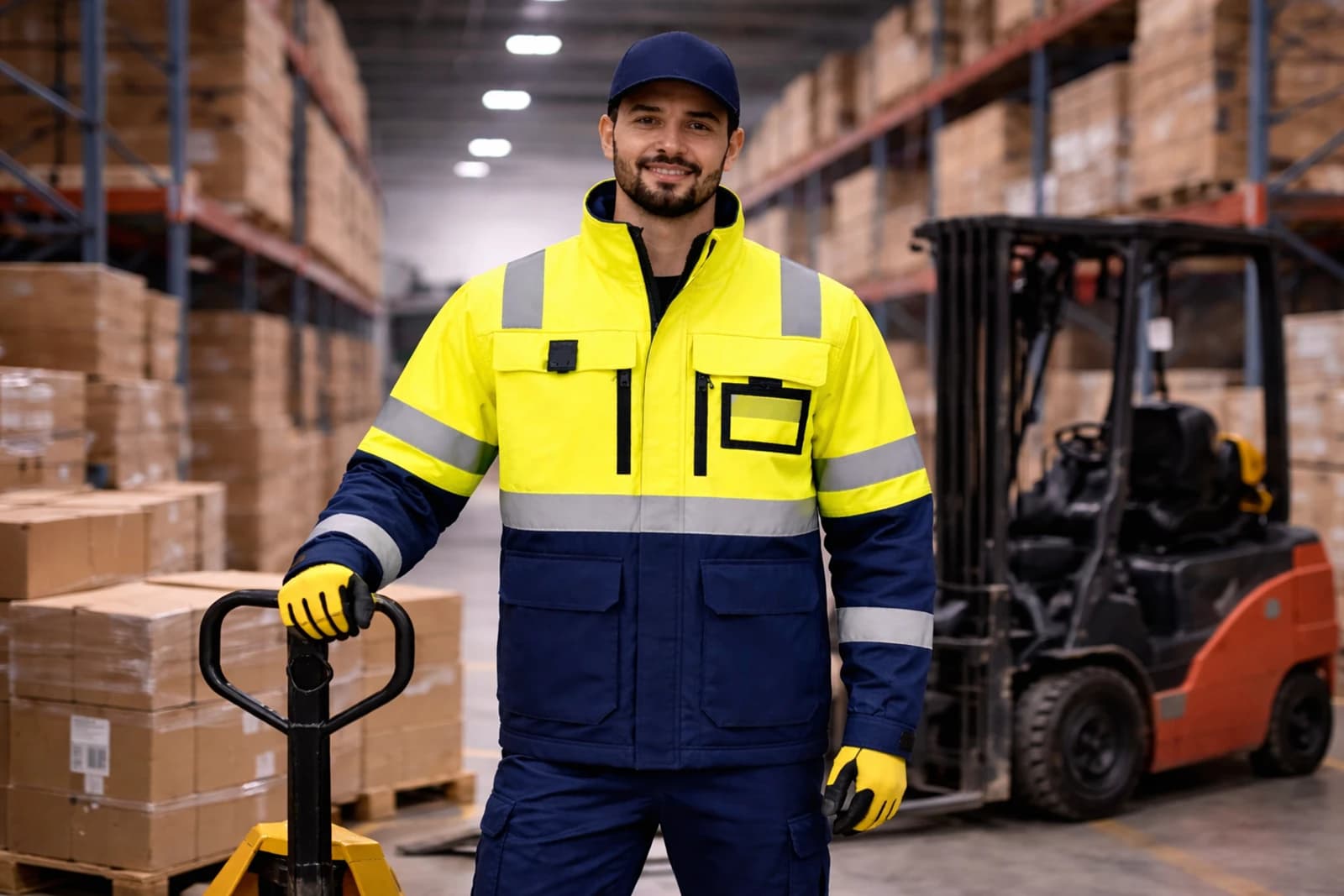
Safety Uniform
Hi-Vis Safety Jacket
Reflective safety jacket for high-visibility site operations and road work crews.
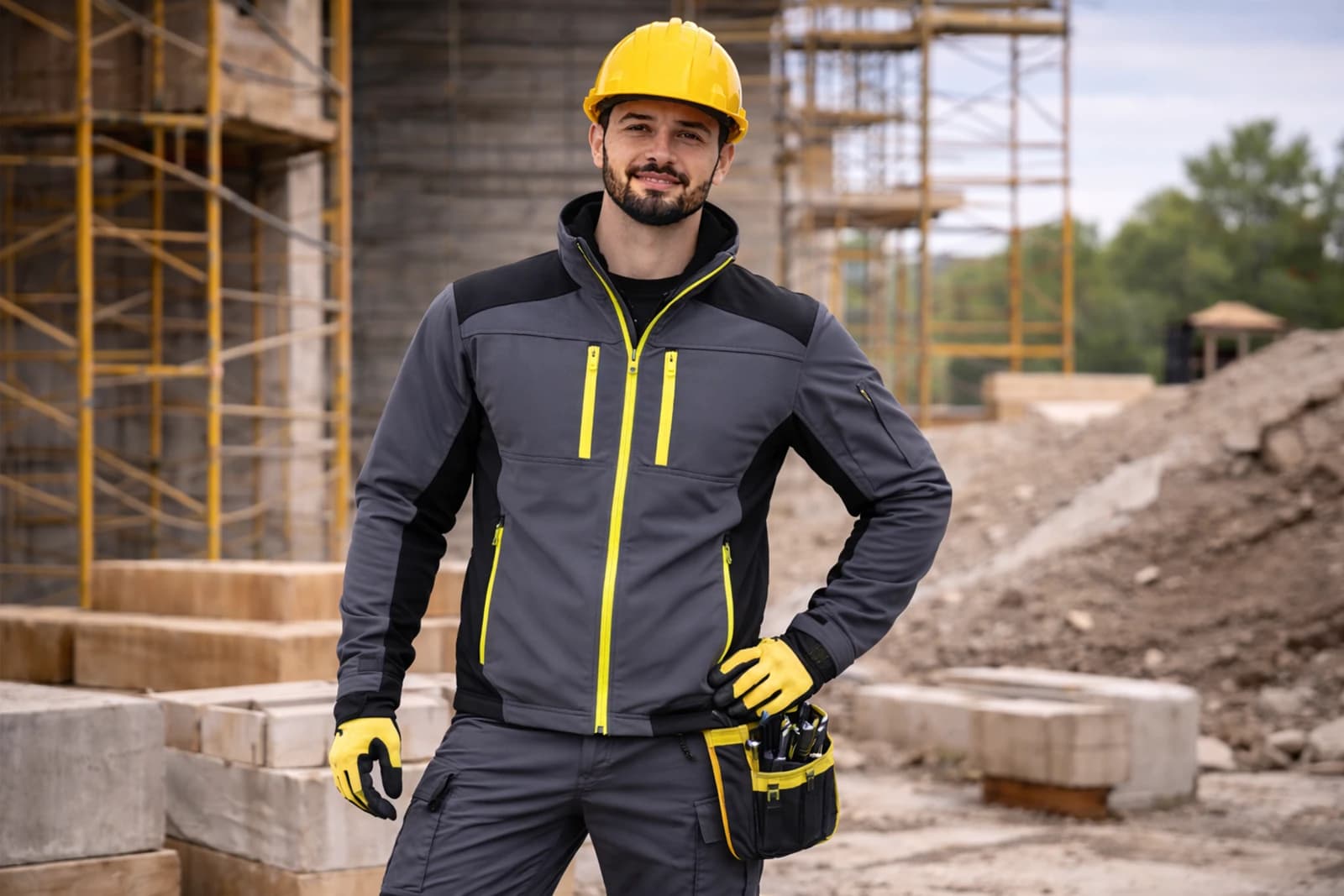
Construction Clothing
Construction Softshell Set
Flexible jacket and trouser set built for crews working across changing weather conditions.

Industrial Workwear
Industrial Coverall Pro
Hard-wearing one-piece coverall for plant, maintenance, and heavy-duty operations.