Cement Plant Workwear Specification Starts with Alkaline Resistance, Not GSM
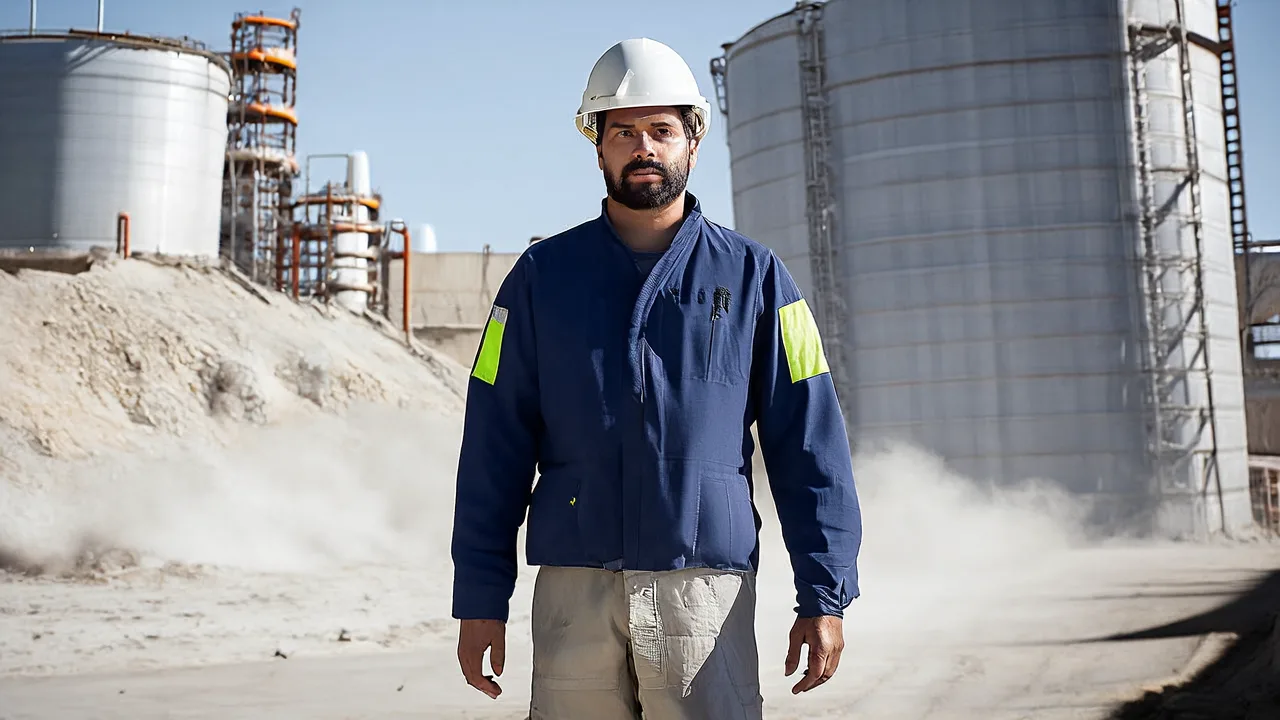
Cement manufacturing environments expose workwear to a hazard that most procurement specifications miss entirely: alkaline dust. Portland cement dust has a pH of 12–13 when it contacts moisture (sweat, humidity, or wash water), and this alkalinity degrades cotton and cotton-rich blend fabrics through alkaline hydrolysis of cellulose fibres — regardless of fabric weight. Buyers who specify 240 GSM or 280 GSM heavy-duty fabrics without addressing alkaline resistance find that garments lose tensile strength and fail structurally in 4–8 weeks, while a lighter polyester-rich garment specified for alkaline resistance survives 3–4 months. This article covers how to align cement plant workwear specification to the actual degradation mechanism.
Buyer context
What procurement teams run into
Cement manufacturing environments expose workwear to a hazard that most procurement specifications miss entirely: alkaline dust. Portland cement dust has a pH of 12–13 when it contacts moisture — sweat, humidity, or wash water — and this alkalinity degrades cotton and cotton-rich blend fabrics through alkaline hydrolysis of cellulose fibres. The buyer who specifies fabric weight (240 GSM, 280 GSM) as the primary durability criterion without addressing alkaline resistance finds that garments lose tensile strength and fail structurally in 4–8 weeks — while a lighter polyester-rich garment specified for alkaline resistance survives 3–4 months. The procurement specification is solving the wrong problem. **1. The alkaline degradation mechanism is specific to cement and concrete environments** Cement dust is not an inert mineral dust like sand or silica. Portland cement contains calcium oxide (lime), which reacts with water to form calcium hydroxide — a strong alkali. When cement dust settles on workwear fabric and contacts moisture (worker sweat, ambient humidity, or wash water), the resulting alkaline solution attacks cellulose fibres (cotton) through alkaline hydrolysis: the sodium and calcium hydroxide breaks the beta-1,4-glycosidic bonds in the cellulose polymer chain, reducing the fibre's molecular weight and tensile strength. The result is not surface abrasion or pilling — it is a progressive loss of fabric strength that is not visible until the fabric tears under normal working stress. A coverall that passes visual inspection at week 4 may have lost 30–40% of its original tensile strength. The worker bends, reaches, or kneels, and the fabric tears at the knee, seat, or underarm — not because of abrasion, but because the fibre has been chemically degraded. Polyester fibres (polyethylene terephthalate) are resistant to alkaline degradation at the pH levels found in cement environments. Polyester does not contain cellulose, and the ester bonds in polyester are not hydrolysed by calcium hydroxide at ambient temperatures. A polyester-rich fabric (80/20 polyester-cotton or 100% polyester) maintains its tensile strength in a cement environment, while a cotton-rich fabric (65/35 cotton-polyester or 100% cotton) degrades progressively. **2. Most procurement specifications focus on fabric weight, not fibre composition** The standard workwear procurement specification for heavy-industry environments specifies fabric weight: 240 GSM for general maintenance, 280 GSM for heavy-duty areas. The logic is that heavier fabric is more durable — more fibre mass means more abrasion resistance, more tear strength, longer garment life. This logic is correct for abrasion-dominated environments (mining, steel mill body shop, warehouse). In a cement plant, the primary degradation mechanism is not abrasion — it is alkaline hydrolysis. A 280 GSM cotton-rich coverall has more cellulose fibre mass than a 200 GSM polyester-rich coverall — meaning it has more material available for alkaline degradation. The heavier garment degrades faster, not slower, because the alkaline attack targets the cotton component of the blend. The procurement specification that focuses on GSM without specifying fibre composition creates a perverse outcome: the buyer pays more for heavier fabric, and the garment fails sooner because the heavier fabric contains more cellulose fibre that is vulnerable to alkaline degradation. **3. The failure pattern in cement plant workwear is consistent and predictable** Cement plant workwear fails in a specific pattern that distinguishes alkaline degradation from abrasion: - **Loss of tensile strength without visible surface damage:** The fabric looks intact — no pilling, no thinning, no holes — but tears easily under normal stress. A worker pulls on a pocket to load it with tools, and the pocket tears away from the garment. The stitching is intact; the fabric around the stitching has lost strength and torn. - **Seam failure before fabric failure:** Seam stitching (typically polyester thread) resists alkaline degradation better than cotton-rich fabric. As the fabric weakens, the seam remains strong — and the fabric tears along the seam line. The result is seam-adjacent tearing: the stitching holds, but the fabric next to the stitching rips. - **Accelerated degradation in high-moisture areas:** Underarms, the back of the knees, and the waistband (where sweat accumulates) degrade faster than drier areas. The alkaline hydrolysis reaction requires moisture — areas with higher moisture exposure (sweat, humidity) degrade faster. - **Degradation accelerates after washing:** Cement dust embedded in the fabric contacts wash water during laundering, creating an alkaline wash solution that accelerates fibre degradation. Garments washed in standard industrial laundry conditions (60°C, alkaline detergents) degrade faster than garments washed in cooler conditions. **4. The cement plant has zones with different alkaline exposure levels** A cement plant is not a uniform environment. Different areas have different dust concentrations, different moisture levels, and different workwear degradation rates: - **Kiln and clinker cooling area:** High cement dust concentration, high temperature (ambient 35–45°C), high sweat rates. Maximum alkaline exposure. Garment life for cotton-rich fabric: 3–5 weeks. Garment life for polyester-rich fabric: 10–14 weeks. - **Raw mill and finish mill area:** High cement dust concentration, moderate temperature. High alkaline exposure, lower moisture. Garment life for cotton-rich fabric: 5–7 weeks. Garment life for polyester-rich fabric: 12–16 weeks. - **Packing and dispatch area:** Moderate cement dust concentration, lower temperature. Moderate alkaline exposure. Garment life for cotton-rich fabric: 7–10 weeks. Garment life for polyester-rich fabric: 16–20 weeks. - **Maintenance workshop and laboratory:** Low cement dust concentration, controlled environment. Low alkaline exposure. Standard workwear fabric acceptable. Garment life determined by abrasion and wash cycles, not alkaline degradation. The procurement specification should differentiate zones by alkaline exposure level — specifying polyester-rich fabric for high-exposure areas (kiln, mill) and accepting standard TC blend for low-exposure areas (workshop, lab). Specifying polyester-rich fabric for all areas increases cost without adding value in low-exposure zones. **5. The breathability tradeoff: polyester resists alkaline but is less breathable than cotton** The reason cotton-rich blends are specified for workwear is breathability — cotton fibres absorb moisture and allow air circulation, keeping the worker cooler in hot conditions. Polyester fibres do not absorb moisture and create a less breathable fabric. In a cement plant kiln area where ambient temperature reaches 40°C+, the breathability difference between cotton and polyester is significant for worker comfort and heat stress management. The tradeoff is: - **Polyester-rich fabric (80/20 polyester-cotton):** Better alkaline resistance, longer garment life, lower breathability. Suitable for kiln and mill areas where alkaline exposure is the primary degradation mechanism. - **Cotton-rich fabric (65/35 cotton-polyester):** Better breathability, lower alkaline resistance, shorter garment life. Suitable for packing and dispatch areas where alkaline exposure is moderate and breathability is a higher priority. - **100% polyester fabric:** Maximum alkaline resistance, lowest breathability. Suitable for areas where alkaline exposure is extreme and breathability is secondary (e.g., wet-process kiln areas where moisture exposure is constant). The procurement specification should address this tradeoff explicitly — specifying polyester-rich fabric for high-alkaline areas and accepting cotton-rich fabric for low-alkaline areas where breathability is the priority. Do not specify 100% polyester for all areas; the breathability penalty creates heat stress risk in hot zones. **6. The procurement specification gap: alkaline resistance is not tested or specified** Most workwear procurement specifications do not include an alkaline resistance requirement. The specification lists fabric weight (GSM), fibre composition (65/35 TC), and wash cycle life (75 cycles) — but does not require the fabric to maintain tensile strength after exposure to alkaline conditions. The fabric manufacturer's standard test protocol measures abrasion resistance (Martindale test), tear strength (Elmendorf test), and tensile strength (ISO 13934) — but does not measure tensile strength after alkaline exposure. The result: the buyer receives fabric that passes all standard tests but fails in the cement environment because the standard tests do not simulate alkaline exposure. The garment fails at week 4, the buyer claims a warranty issue, the manufacturer points to the test reports showing the fabric passed all specifications — and the root cause (alkaline degradation) is not addressed. The procurement specification must include an alkaline resistance test requirement: the fabric must maintain ≥80% of its original tensile strength after 25 wash cycles in alkaline conditions (wash solution with pH 11–12, simulating cement dust exposure during washing). The fabric manufacturer must provide test reports confirming alkaline resistance — not just standard tensile strength and abrasion resistance.
Sourcing approach
How a factory partner can respond
The solution for cement plant workwear is a procurement specification that addresses the primary degradation mechanism (alkaline hydrolysis of cellulose fibres) by specifying fibre composition, zone-specific requirements, and alkaline resistance testing — not just fabric weight. **Step 1: Specify polyester-rich fabric for high-alkaline exposure areas** For kiln, raw mill, and finish mill areas (high cement dust concentration), specify polyester-rich fabric: - Fibre composition: minimum 80% polyester / 20% cotton (polyester resists alkaline hydrolysis; cotton provides some breathability) - Fabric weight: 200–220 GSM (not 240–280 GSM — heavier fabric with more cotton content degrades faster in alkaline conditions) - Construction: ripstop weave for tear resistance (alkaline-degraded fabric is more prone to tearing; ripstop construction limits tear propagation) - Alkaline resistance: fabric must maintain ≥80% of original tensile strength after 25 wash cycles at pH 11–12 (validated by test report from fabric manufacturer) Do not specify 100% polyester for all areas — the breathability penalty creates heat stress risk in hot kiln areas. The 80/20 blend provides adequate alkaline resistance with acceptable breathability. **Step 2: Specify cotton-rich fabric only for low-alkaline exposure areas** For packing, dispatch, workshop, and laboratory areas (low cement dust concentration), standard TC blend fabric is acceptable: - Fibre composition: 65% polyester / 35% cotton (standard TC blend) - Fabric weight: 220–240 GSM (heavier weight acceptable because alkaline exposure is low; abrasion is the primary concern) - Alkaline resistance: not required for these areas (alkaline exposure is too low to cause significant degradation) The procurement specification should clearly differentiate zones — specifying polyester-rich fabric for high-alkaline areas and TC blend for low-alkaline areas. Do not apply the polyester-rich specification to all areas; this increases cost without adding value in low-exposure zones. **Step 3: Require alkaline resistance test reports in the procurement specification** The procurement specification must include an alkaline resistance test requirement: - Test method: fabric immersed in alkaline solution (pH 11–12, simulating cement dust + moisture conditions) for 25 wash cycles at 60°C - Acceptance criteria: fabric must maintain ≥80% of original tensile strength (ISO 13934-1) and ≥80% of original tear strength (ISO 13937-2) after 25 wash cycles - Documentation: fabric manufacturer must provide test reports confirming alkaline resistance for each fabric lot supplied Do not accept standard test reports (abrasion resistance, tensile strength, tear strength) as evidence of alkaline resistance — these tests do not simulate cement plant conditions. Require specific alkaline resistance test data. **Step 4: Differentiate garment construction by zone** For high-alkaline areas (kiln, mill): - Coverall construction: sealed seams (overlocked with polyester thread) to prevent cement dust penetration into seam interiors where dust contacts moisture and degrades fabric from within - No external pockets on torso: cement dust accumulates in pocket folds and contacts moisture, creating concentrated alkaline exposure on the pocket fabric - Elastic or snap cuffs: seal against dust entry but allow quick removal for garment inspection For low-alkaline areas (packing, workshop): - Standard two-piece garment acceptable: jacket and trousers with standard construction - External pockets acceptable: alkaline exposure is low, so dust accumulation in pockets does not cause significant degradation **Step 5: Pilot the specification before full fleet commitment** Before committing to a full fleet order, pilot the polyester-rich fabric specification with 20–30 garments for 8–10 weeks of actual kiln and mill area use. Collect data on: - Garment tensile strength after 4, 6, 8, and 10 weeks (validate alkaline resistance under actual conditions) - Visual inspection for fabric degradation (compare against cotton-rich garments worn in the same areas) - Worker feedback on breathability and comfort (confirm the 80/20 blend provides acceptable comfort in hot kiln areas) - Cost comparison: garment life extension versus cost per garment (validate that longer garment life offsets the higher cost per garment of polyester-rich fabric) Use pilot data to adjust fibre composition, fabric weight, or construction before full fleet commitment. **Step 6: Implement condition-based replacement using tensile strength indicators** Replace garments based on condition, not calendar schedule: - Inspect garments every 2 weeks for signs of alkaline degradation (fabric that tears easily under normal stress, seam-adjacent tearing, loss of tensile strength) - Replace immediately if fabric tears under normal working stress (indicates alkaline degradation has compromised tensile strength) - Replace at 12 weeks maximum for kiln area garments (even if no visible damage), because alkaline degradation may have progressed below the visible surface - Track garment age and zone assignment to identify zones where garment life is shorter than expected (indicating higher alkaline exposure than anticipated) **Recommended garments for cement plant workwear:** - **Industrial coverall-pro** — specify the 80/20 polyester-cotton ripstop version (200–220 GSM, polyester-rich blend for alkaline resistance, ripstop weave for tear resistance, sealed seams with polyester thread, no external torso pockets) for kiln, raw mill, and finish mill areas. The coverall must be validated for alkaline resistance (≥80% tensile strength maintained after 25 wash cycles at pH 11–12). Replace at 12 weeks or immediately if fabric shows signs of alkaline degradation. - **Construction softshell set** — specify for supervisors, engineers, and maintenance staff who move between office/workshop areas and plant areas but do not work continuously in high-dust zones. The softshell provides wind resistance and moderate dust protection for short-duration plant visits, with better breathability and comfort for mobile roles. Specify the polyester shell version for alkaline resistance in plant areas. Replace at 16 weeks or when fabric shows visible degradation.
Recommended Products
Products that fit this use case

Industrial Workwear
Industrial Coverall Pro
Hard-wearing one-piece coverall for plant, maintenance, and heavy-duty operations.
Construction Clothing
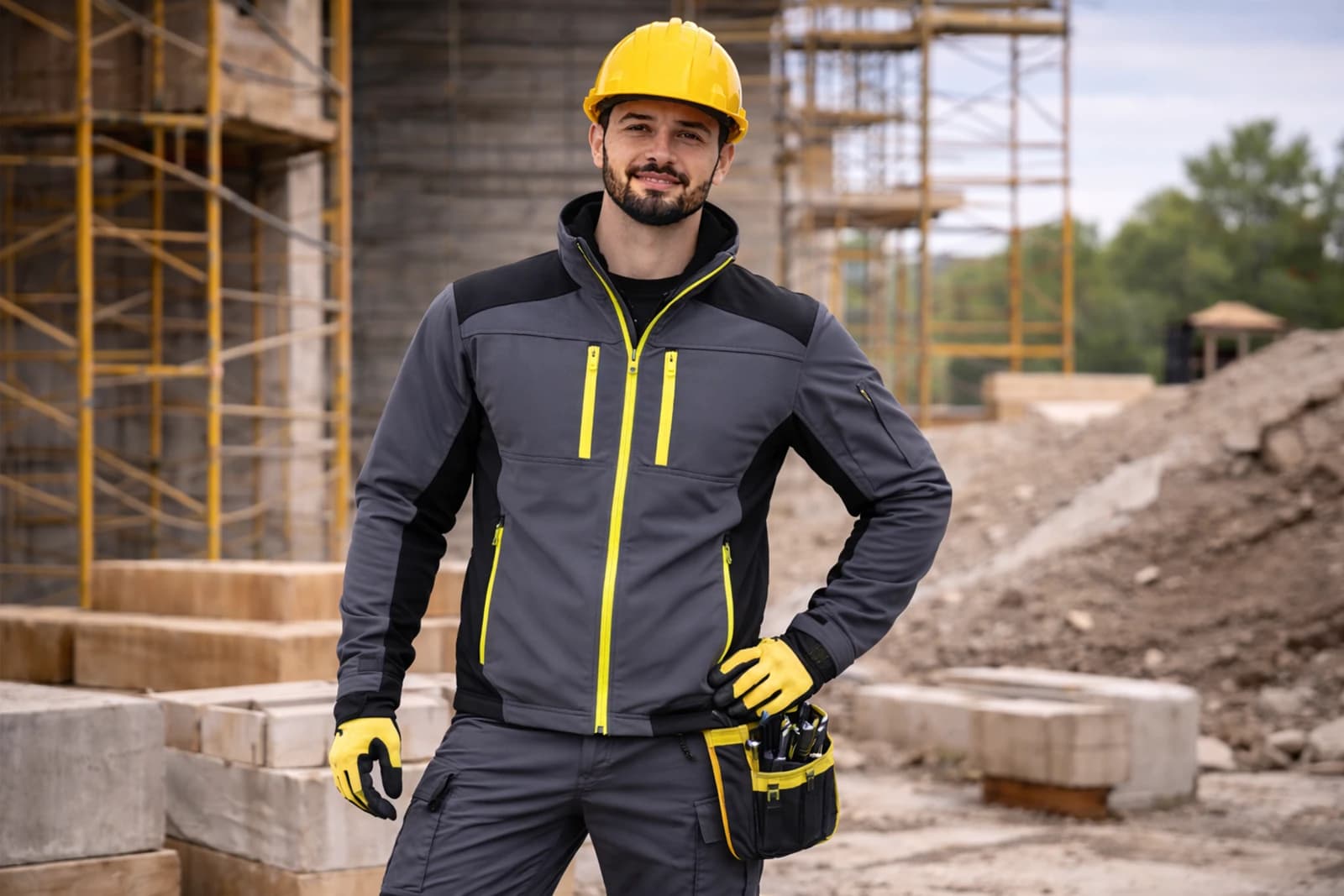
Construction Softshell Set
Flexible jacket and trouser set built for crews working across changing weather conditions.