How to Audit a Chinese Workwear Supplier: A Practical Checklist for GCC B2B Buyers
Middle East buyers sourcing workwear from China often rely on online listings and samples alone. This guide provides a structured supplier audit framework — covering factory visits, certification verification, quality control benchmarks, and production capability assessment — purpose-built for GCC procurement managers.

Buyer context
What procurement teams run into
<p>A procurement manager in Abu Dhabi receives a quote from a Chinese workwear manufacturer for 3,000 hi-vis safety jackets. The price is 40 % lower than the nearest competitor, and the samples look good in a WeChat video call. The manager places a trial order for 300 pieces. When the shipment arrives at Jebel Ali port, the zippers fail after three cycles, the reflective tape is not EN ISO 20471 certified despite the claim on the supplier's Alibaba page, and the colour variation across the batch exceeds acceptable tolerances for a corporate uniform programme.</p> <p>In another scenario, a facilities management company in Dammam sources industrial coveralls from a Chinese supplier they found through a trade show. The first two orders go smoothly, but the third order — placed during Chinese New Year — ships six weeks late with no communication, and half the garments use a different fabric blend than what was agreed in the contract. The supplier stops responding to messages.</p> <p>These situations are far too common in China–GCC workwear trade. The root cause is not malice — most Chinese workwear factories are honest and capable — but rather a mismatch between what the buyer assumes about the supplier and what the supplier actually delivers. The fix is a structured, verifiable audit process that goes beyond a sample photo and a price list. This guide provides that process, step by step, built specifically for GCC B2B buyers sourcing workwear from Chinese manufacturers.</p>
Sourcing approach
How a factory partner can respond
<h2>Phase 1: Desk Audit — Before You Fly to China</h2> <p>Before booking a factory visit, gather documentation that tells you whether the supplier is worth the trip. A proper desk audit saves weeks of wasted travel and focuses your attention on factories that pass the first filter.</p> <h3>Business License and Export Qualifications</h3> <p>Ask for the supplier's unified social credit code (营业执照) and verify it through China's National Enterprise Credit Information Publicity System. Confirm that the business scope explicitly includes "workwear manufacturing" or "garment production" (服装制造). Many trading companies present themselves as manufacturers — the business license reveals the truth. A genuine manufacturer will have production-related keywords; a trading company will show "import and export" or "trade" as the primary category.</p> <p>For GCC buyers, also verify whether the supplier holds a valid export customs registration number. Without it, your goods cannot clear Chinese customs for international shipment. Ask for their customs registration certificate or verify through your freight forwarder.</p> <h3>Certification Claims vs. Certification Reality</h3> <p>Every Chinese workwear supplier claims to meet international standards. The question is whether the certification is current and applies to the specific garments you are ordering. For Middle East buyers, the most critical certifications are:</p> <ul> <li><strong>EN ISO 20471 or ANSI 107 (hi-vis):</strong> These apply to reflective garments. Request a scanned copy of the actual test report from an accredited lab such as SGS, TÜV, or Intertek — not just a photo of the certificate. Cross-check the report number online at the certifying body's verification portal.</li> <li><strong>EN 343 (water resistance):</strong> Relevant for outerwear and construction softshell sets. The test report should specify which class (1–4) the garment achieved for water resistance and breathability.</li> <li><strong>OEKO-TEX Standard 100:</strong> Important for garments worn against the skin, such as logistics polo uniforms. Verify the certificate number on the OEKO-TEX website.</li> <li><strong>ISO 9001 (quality management):</strong> While this is a process certification rather than a product certification, it indicates that the factory has documented quality management procedures.</li> </ul> <p><strong>Red flag:</strong> If the supplier cannot provide third-party test reports within 48 hours, or if the report is older than two years, treat this as a high-risk indicator.</p> <h3>Export Experience to the GCC</h3> <p>Ask specifically: how many shipments has this supplier made to the GCC in the past 12 months? Request two to three references from Middle East clients and contact them. A supplier with GCC experience will understand requirements such as Gulf standardisation markings, Arabic-labelling needs, and the documentation required for SASO (Saudi) or ESMA (UAE) conformity assessment.</p> <p>If the supplier has no GCC export history, that is not necessarily disqualifying — but you will need to invest more time in specification alignment, and the compliance risk is higher.</p> <h2>Phase 2: Factory Visit — What to Inspect on the Ground</h2> <p>A factory visit is non-negotiable for first-time orders above 1,000 pieces. Video tours can supplement but never replace an on-site audit. When you visit, focus on these five areas:</p> <h3>1. Production Floor Capacity</h3> <p>Count the number of sewing stations. A serious industrial workwear factory will have 100+ industrial sewing machines, with separate lines for different garment types. Ask how many operators run each line and whether the factory operates single-shift or double-shift. A single-shift factory producing 200 hi-vis jackets per day is very different from a double-shift factory producing 600 — and the lead time quote should reflect that.</p> <p>For industrial coverall pro orders of 5,000+ pieces, verify that the factory has dedicated coverall production lines with appropriate cutting tables, fusing machines, and bar-tack sewing equipment. General garment factories that occasionally accept coverall orders will produce lower consistency at scale.</p> <h3>2. Fabric and Material Storage</h3> <p>Inspect the fabric warehouse. Is fabric stored off the floor on racks? Is it covered to protect from dust and sunlight? Are production rolls labelled with supplier, batch number, and date of receipt? Poor fabric storage conditions directly translate to quality problems in the finished garment — dust contamination affects reflective tape adhesion, and UV exposure degrades fabric strength before the garment is even cut.</p> <p>Ask to see the supplier's incoming material inspection records. A capable factory tests fabric for colour fastness, shrinkage, and tensile strength before accepting a batch from the textile mill. If they cannot show you these records, they are likely skipping this critical step.</p> <h3>3. Quality Control Checkpoints</h3> <p>A proper workwear factory has at least three QC checkpoints: incoming material inspection (IQC), in-process inspection (IPQC) during cutting and sewing, and final inspection (FQC) before packing. Walk the production floor and look for QC inspectors at each stage. They should have clearly defined pass/fail criteria posted at their station and tools such as colour assessment cabinets, tensile testers, and measuring tapes.</p> <p>For hi-vis safety jackets, observe how reflective tape is applied. Is the tape heat-pressed with a calibrated temperature and pressure setting, or is it applied manually with inconsistent results? The difference shows immediately in peel-test results.</p> <h3>4. Sample Room and Development Capability</h3> <p>A strong sample room indicates a factory that can handle custom specifications. Look for pattern-making equipment, a digital embroidery or printing setup, and the ability to produce a modified sample within 7–10 days. If the sample room only works from existing stock patterns and cannot accommodate your specific pocket configuration, zipper placement, or branding requirements, the factory's flexibility is limited — and you will face constant pushback during the customisation process.</p> <h3>5. Packaging and Labelling Readiness</h3> <p>GCC customs compliance requires specific labelling: country of origin (Made in China), fibre content in English and sometimes Arabic, care instructions, and size designation in both metric and local sizing conventions. Verify that the factory can produce hang tags, polybag labels, and carton markings that meet GCC requirements. A supplier who insists on using generic "one-size-fits-all" labelling will cause clearance delays at your destination port.</p> <h2>Phase 3: Pre-Shipment Inspection — The Final Safety Net</h2> <p>Even after a clean factory audit, every commercial order above $10,000 should include a third-party pre-shipment inspection. Contract with SGS, Bureau Veritas, or QIMA to inspect the finished goods at the factory before they are loaded into the container. The inspection should cover:</p> <ul> <li>Quantity verification (count per carton, total cartons)</li> <li>Appearance check (colour consistency, stitching quality, loose threads, fabric defects)</li> <li>Measurement check (compare actual measurements against specification sheet for at least 10 % of the batch)</li> <li>Functionality test (zippers, buttons, reflective tape peel test)</li> <li>Packing check (correct labels, proper polybagging, carton quality)</li> </ul> <p>Define your Acceptable Quality Limit (AQL) before production starts. For GCC corporate uniform programmes, a 2.5 AQL level is standard — meaning no more than 2.5 % of pieces may have a major defect. For critical garments such as flame-resistant industrial coveralls or hi-vis enforcement uniforms, request a 1.0 AQL or even 0.65 AQL with zero tolerance on safety-related defects.</p> <h2>Building the Supplier Relationship for the Long Term</h2> <p>A thorough audit is not just about catching problems — it is about establishing a baseline of mutual trust and shared quality standards. GCC buyers who invest in a proper audit process on the first order typically find that repeat orders run significantly smoother, lead times shrink, and the supplier proactively suggests fabric and design improvements for the local market.</p> <p>The factories that welcome a detailed audit and share documentation transparently are the ones worth building a long-term partnership with. The factories that deflect, delay, or dismiss audit requests — regardless of how attractive their prices look — are best avoided, no matter how low the quote.</p>
Recommended Products
Products that fit this use case
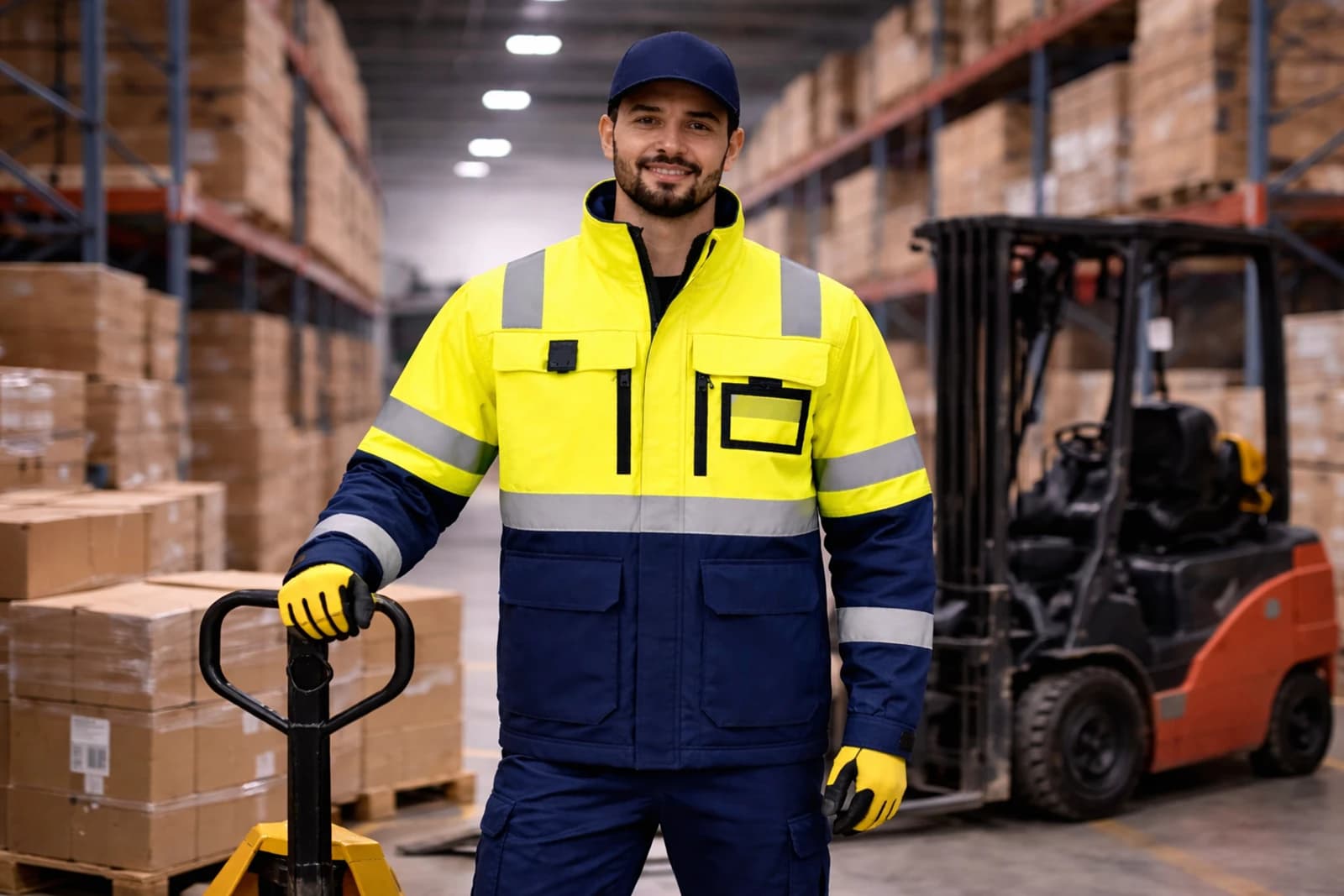
Safety Uniform
Hi-Vis Safety Jacket
Reflective safety jacket for high-visibility site operations and road work crews.

Industrial Workwear
Industrial Coverall Pro
Hard-wearing one-piece coverall for plant, maintenance, and heavy-duty operations.

Logistics Uniform
Logistics Polo Uniform
Breathable uniform polo for warehouse, delivery, and last-mile teams.