Cold Storage Workwear Must Insulate Without Restricting Worker Movement
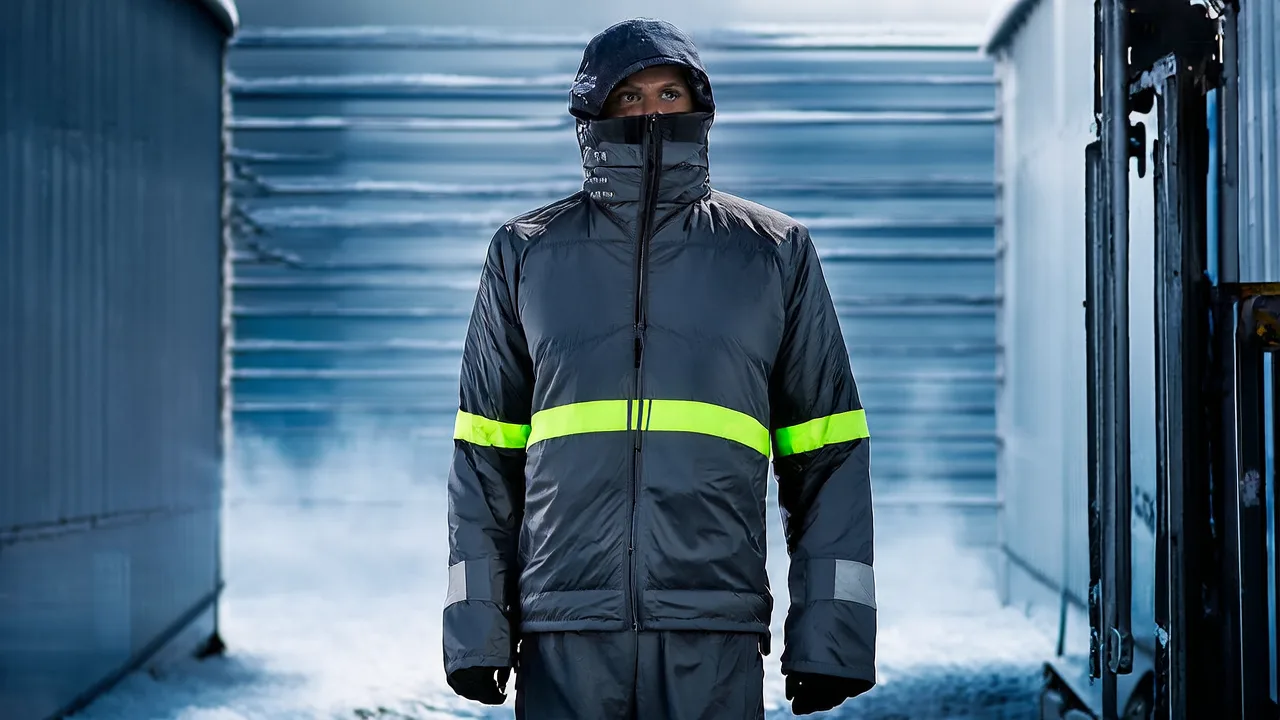
Cold storage and refrigerated warehouse workers operate in temperatures from -5°C to -30°C, where the instinct is to specify the heaviest possible insulation. But heavy insulation creates bulk that restricts movement, reduces dexterity for handling small items and operating scanners, and causes workers to overheat during physically demanding tasks. The result: workers reject the garments, modify them by removing layers, or experience reduced productivity from restricted movement. This article covers the insulation-to-mobility tradeoff, the fabric and design criteria that deliver warmth without bulk, and the layering specification that matches garment properties to cold storage work patterns.
Buyer context
What procurement teams run into
Cold storage and refrigerated warehouse workers operate in environments where ambient temperature ranges from -5°C (chilled storage for dairy, fresh produce, and pharmaceuticals) to -30°C (frozen storage for meat, seafood, and frozen foods). Workers include pickers, packers, forklift operators, inventory controllers, and maintenance technicians who perform physically demanding tasks throughout their shifts. The workwear specification must deliver thermal insulation to prevent hypothermia and maintain worker comfort, but the specification must also enable the mobility and dexterity that cold storage work requires. These two requirements conflict in standard insulated garment constructions. The mechanism: **1. Heavy insulation creates bulk that restricts movement** The instinct when specifying workwear for -20°C or -30°C environments is to select the highest-insulation garment available — thick synthetic insulation (200-400 GSM polyester fill), heavy fleece linings, or multi-layer constructions that maximize thermal resistance. The logic: colder temperature requires more insulation. But heavy insulation creates garment bulk that restricts movement: - **Restricted arm movement:** Thick insulation in the sleeves and shoulders increases the garment's effective diameter, limiting the worker's range of motion. Pickers who reach for items on high shelves, packers who lift and place cartons, and forklift operators who turn to check blind spots experience restricted movement that slows their work and increases fatigue. - **Reduced dexterity:** Thick insulation in the cuffs and hands (if integrated gloves are specified) reduces finger dexterity. Workers who handle small items (pharmaceutical products, electronic components), operate barcode scanners, or type on handheld devices cannot perform these tasks effectively with bulky, insulated hands. - **Increased garment weight:** Heavy insulation adds 30-50% more weight to the garment compared to lightweight insulation. Workers who lift, bend, and move throughout the shift carry the additional weight, increasing fatigue and reducing productivity over 8-10 hour shifts. The result: workers reject the heavily insulated garments because they cannot move freely, perform tasks effectively, or work comfortably. Workers modify the garments by removing insulation layers, opening closures, or wearing the garment open — compromising thermal protection and creating cold stress risk. **2. Lightweight insulation does not provide adequate warmth in extreme cold** The opposite specification error is to select lightweight insulation (40-80 GSM synthetic fill) to maximize mobility — but the lightweight insulation does not provide adequate thermal resistance for -20°C or -30°C environments. Workers experience cold stress, reduced finger dexterity from cold hands, and hypothermia risk during extended exposure. The result: workers are mobile but cold, experiencing the same productivity loss and safety risk as workers who are warm but restricted. **3. Single-layer specification ignores the layering principle** Most cold storage workwear specifications call for a single insulated garment — one jacket, one coverall — that must deliver all thermal protection. But cold storage work involves variable activity levels and temperature exposure: - **High activity periods:** Pickers and packers move continuously, generating body heat. During high activity, heavy insulation causes overheating and sweat accumulation. - **Low activity periods:** Forklift operators sit for extended periods, generating minimal body heat. During low activity, light insulation does not provide adequate warmth. - **Transition periods:** Workers move between cold storage areas (-20°C) and ambient-temperature areas (loading docks at +5°C to +15°C). A single garment cannot adapt to both temperature zones. The single-layer specification forces workers to choose one garment that is either too warm during high activity (causing overheating) or too cool during low activity (causing cold stress). The garment cannot adapt to the variable work pattern. **4. Moisture management failure in insulated garments** Insulated garments that trap heat cause workers to sweat. Sweat accumulates between the skin and the garment, soaking the insulation. Wet insulation loses 60-90% of its thermal resistance — the garment that provided adequate warmth when dry provides almost no warmth when wet. The worker experiences cold stress from wet insulation, even though the ambient temperature is within the garment's rated range. The root cause: the insulated garment does not enable moisture vapor transmission, so sweat cannot escape through the fabric and evaporate. **5. The cost of getting it wrong** The buyer who specifies heavy insulation without mobility faces: - Worker rejection of garments — workers cannot move freely and reject the garments, requiring replacement with different garments - Reduced productivity from restricted movement — workers move slower, perform tasks less efficiently, and experience increased fatigue - Garment modification by workers — workers remove insulation layers or wear garments open, compromising thermal protection - Cold stress risk from garment modification — workers who modify garments experience cold exposure, reducing productivity and creating safety risk The buyer who specifies light insulation without adequate warmth faces: - Cold stress for workers — workers experience hypothermia risk, reduced finger dexterity, and discomfort during extended exposure - Reduced productivity from cold — cold workers move slower, make more errors, and take more breaks to warm up - Safety risk from cold — cold workers experience reduced reaction time, impaired judgment, and increased accident risk
Sourcing approach
How a factory partner can respond
The solution is a cold storage workwear specification that balances insulation and mobility through fabric selection, garment design, and a layering system that adapts to variable work patterns and temperature exposure. **Step 1: Specify insulation type and weight that matches the temperature range and activity level** Select insulation based on the specific temperature range and worker activity level — not on the coldest possible temperature: - **Chilled storage (-5°C to 0°C):** Specify lightweight insulation (40-80 GSM synthetic fill) for workers who are continuously active (pickers, packers). Specify moderate insulation (100-150 GSM) for workers who are intermittently active (forklift operators, supervisors). - **Frozen storage (-18°C to -25°C):** Specify moderate insulation (100-150 GSM synthetic fill) for workers who are continuously active. Specify heavy insulation (200-250 GSM) for workers who are intermittently active or sedentary. - **Deep frozen storage (-30°C and below):** Specify heavy insulation (200-300 GSM synthetic fill) for all workers, but combine with a layering system that enables workers to adjust insulation based on activity level. Select synthetic insulation (polyester fill) rather than down insulation. Synthetic insulation retains thermal resistance when wet — critical in cold storage environments where sweat accumulation and condensation are inevitable. Down insulation loses thermal resistance when wet and is not suitable for cold storage workwear. **Step 2: Specify garment design that maximizes mobility** Design the insulated garment to minimize bulk and maximize range of motion: - **Articulated sleeves:** Specify sleeves that are pre-curved to match the natural arm position, reducing fabric bunching at the elbow and shoulder when the worker bends their arms. Articulated sleeves reduce the effective bulk of insulation at joint areas. - **Underarm gussets:** Specify gussets (diamond-shaped fabric inserts) at the underarm that expand when the worker raises their arms, providing additional range of motion without adding bulk to the sleeve. - **Stretch panels:** Specify stretch fabric panels at the shoulders, underarms, and back that enable movement without requiring the insulation to stretch. Stretch panels maintain insulation continuity while enabling mobility. - **Tapered cuffs:** Specify cuffs that taper to fit closely around the wrist, reducing bulk at the hand and enabling workers to operate scanners, type on devices, and handle small items without insulated fabric interfering. - **Slim-fit insulation distribution:** Specify insulation that is distributed strategically — heavier insulation at the core (chest, back) where heat loss is greatest, lighter insulation at the arms and shoulders where bulk most restricts movement. This delivers warmth where needed without adding bulk where it interferes with mobility. **Step 3: Specify a layering system that adapts to variable activity levels** Instead of specifying a single insulated garment, specify a layering system that workers can adjust based on activity level and temperature exposure: - **Base layer:** Moisture-wicking fabric (polyester or merino wool blend) that pulls sweat away from the skin and enables evaporation. The base layer keeps the worker dry during high activity, preventing sweat accumulation that compromises insulation performance. Specify base layer weight based on temperature: lightweight (150 GSM) for chilled storage, moderate (200-250 GSM) for frozen storage. - **Mid layer:** Insulated garment (fleece or lightweight synthetic fill, 80-120 GSM) that provides thermal insulation during low activity periods. The mid layer can be added or removed based on the worker's activity level and temperature exposure. - **Outer layer:** Wind-resistant and water-resistant shell garment that blocks wind chill and protects against condensation and moisture. The outer layer does not provide significant insulation but enables the mid layer to retain its thermal resistance by blocking wind and moisture. The layering system enables workers to adjust insulation based on their activity level: - **High activity (picking, packing):** Base layer only, or base layer + light mid layer. The worker stays cool and dry during high activity. - **Low activity (forklift operation, supervision):** Base layer + mid layer + outer layer. The worker stays warm during low activity. - **Transition between temperature zones:** Remove or add layers when moving between cold storage and ambient areas. The layering system adapts to temperature changes without requiring a garment change. **Step 4: Specify moisture vapor transmission for the insulated garment** The insulated garment must enable moisture vapor transmission so that sweat can escape through the fabric and evaporate. Specify: - **Moisture vapor transmission rate (MVTR) ≥ 5,000 g/m²/24h:** The fabric must enable sweat vapor to pass through at a rate that prevents accumulation inside the garment. - **Breathable insulation:** Select insulation that is breathable (open-cell structure polyester fill) rather than impermeable (closed-cell foam or solid film coatings). Breathable insulation enables moisture vapor to pass through the insulation layer. - **Mechanical ventilation:** Specify zippered vents at the chest, underarms, or back that workers can open during high activity to increase air circulation and moisture dissipation. Mechanical ventilation supplements fabric breathability during high-sweat activities. **Step 5: Specify visibility compliance for cold storage environments** Cold storage areas have low light levels — artificial lighting only, with shadows from racking and products. Workers must be visible to forklift operators and other workers to prevent struck-by incidents. Specify: - **High-visibility outer layer:** The outer shell garment must meet EN ISO 20471 Class 2 or Class 3 requirements for high-visibility clothing. The fluorescent background fabric and retroreflective tape enable workers to be seen in low-light cold storage areas. - **Retroreflective tape placement:** Specify retroreflective tape on the chest, back, and sleeves — positioned to be visible to forklift operators approaching from any direction. **Recommended garments for cold storage workwear:** - **Construction softshell set** — specify the softshell jacket as the outer layer in the layering system. The softshell's wind-resistant and water-resistant outer face blocks wind chill and condensation in cold storage areas. The softshell's breathable membrane enables moisture vapor transmission, preventing sweat accumulation. Specify the softshell with retroreflective tape for visibility compliance in low-light cold storage areas. The softshell's slim-fit design minimizes bulk, enabling mobility for pickers, packers, and forklift operators. - **Hi-vis safety jacket** — specify the hi-vis jacket as an alternative outer layer for workers who require high visibility in cold storage areas with forklift traffic. The hi-vis jacket's fluorescent background fabric and retroreflective tape meet EN ISO 20471 Class 2 or Class 3 requirements. Specify the hi-vis jacket with lightweight insulation (40-80 GSM) for chilled storage areas, or as a shell layer over the mid layer for frozen storage areas.
Recommended Products
Products that fit this use case
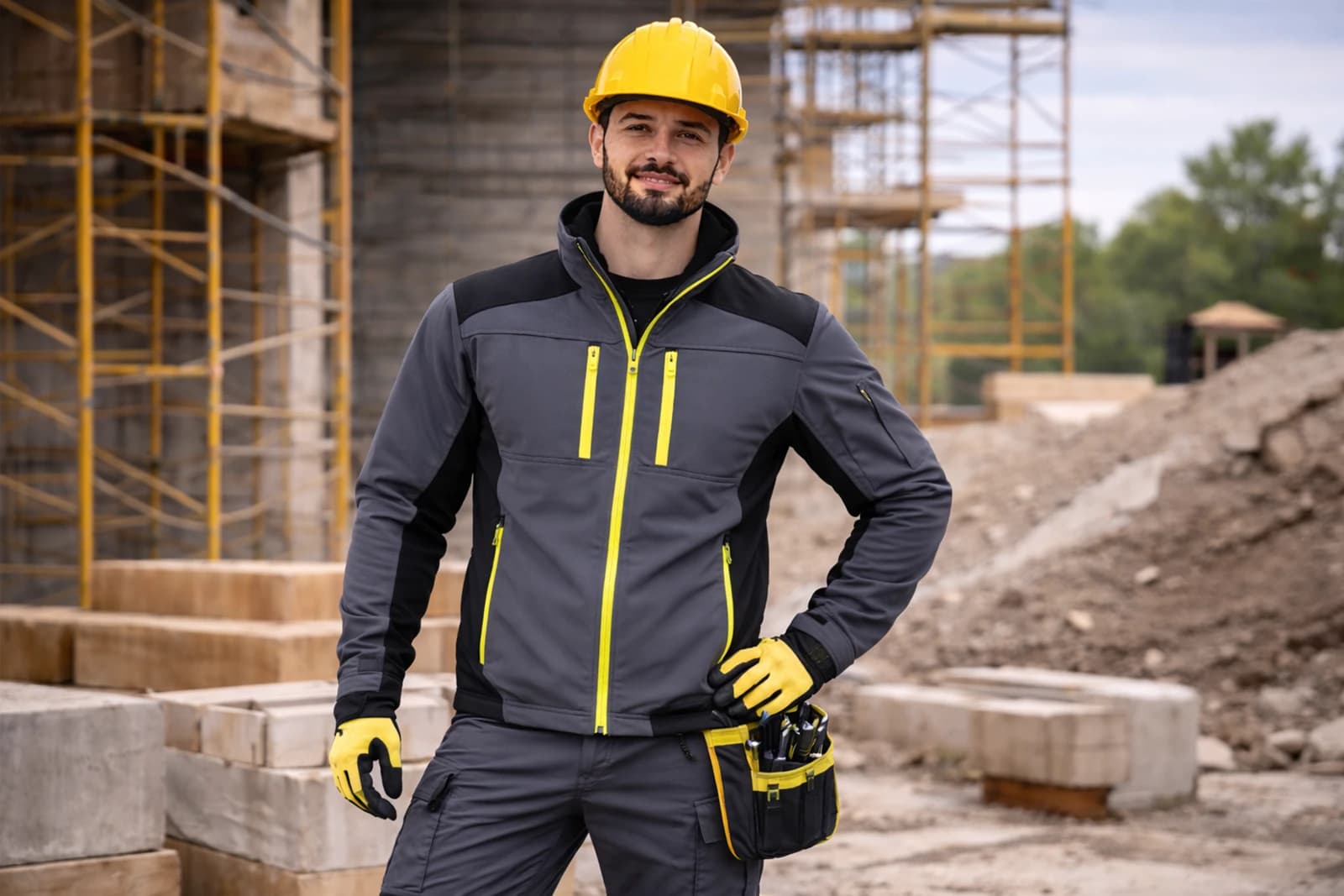
Construction Clothing
Construction Softshell Set
Flexible jacket and trouser set built for crews working across changing weather conditions.
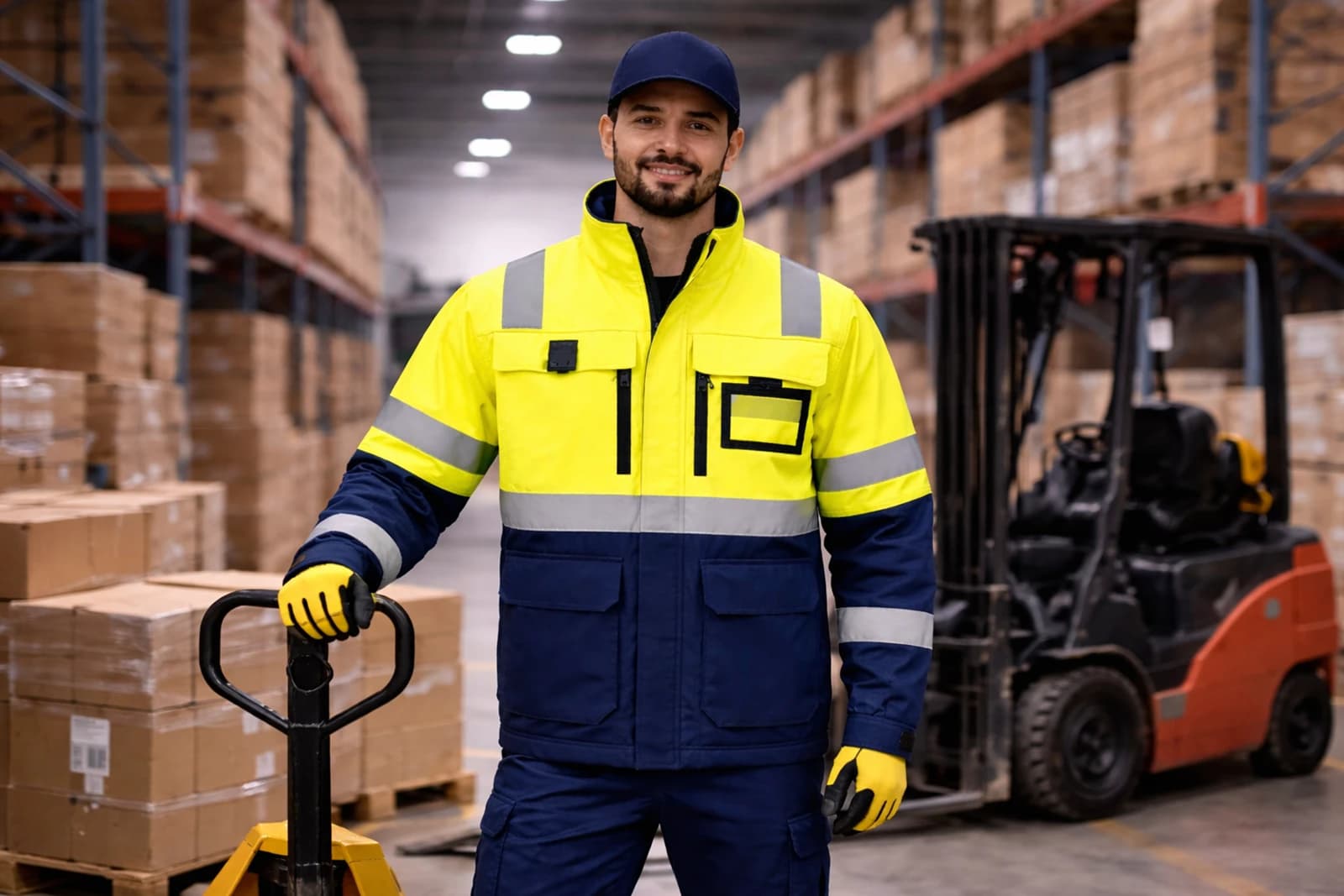
Safety Uniform
Hi-Vis Safety Jacket
Reflective safety jacket for high-visibility site operations and road work crews.