Cold Storage Workwear Must Match Each Temperature Zone, Not Just the Coldest
Cold storage facilities operate multiple temperature zones — ambient warehouse (15–20°C), chill cooler (0–4°C), and deep freezer (−20 to −30°C) — but buyers often specify a single workwear garment rated for the coldest zone. This approach creates discomfort, reduced dexterity, and heat stress for workers spending most of their shift in ambient or chill zones. This article covers the zone-based specification approach that matches garment insulation, moisture management, and dexterity to each temperature zone, the procurement steps for ordering multiple garment types without overcomplicating inventory, and the practical next steps for piloting zone-specific workwear before full fleet rollout.
Buyer context
What procurement teams run into
Cold storage facilities present a workwear specification challenge that most buyers do not recognise until they see worker discomfort, reduced productivity, and premature garment replacement. The core issue: cold storage operations typically include three distinct temperature zones — ambient warehouse (15–20°C), chill cooler (0–4°C), and deep freezer (−20 to −30°C) — and workers rotate between these zones during a single shift. But the buyer often specifies a single workwear garment rated for the coldest zone (the deep freezer), assuming that one garment will cover all zones. This approach creates a cascade of problems for workers spending most of their shift in ambient or chill zones. **1. Over-insulation in ambient and chill zones causes heat stress and moisture buildup** A garment specified for −25°C freezer work typically includes 200–300 GSM synthetic insulation, a windproof and waterproof outer shell, and sealed seams to prevent cold air penetration. This garment is appropriate for the freezer zone — but when the worker moves to the ambient warehouse (15–20°C) or chill cooler (0–4°C) to pick orders, check inventory, or load trucks, the same garment creates overheating. The worker's body generates heat during physical activity (walking, lifting, bending), and the insulated garment traps that heat. The result: - **Sweat buildup:** The worker sweats inside the insulated garment. The moisture accumulates against the skin and in the garment's inner layers. Sweat reduces the body's ability to regulate temperature, creating discomfort and fatigue. - **Reduced dexterity:** Overheating causes the worker to unzip or remove layers, but in a cold storage environment, removing insulation in the chill zone creates a cold stress risk. The worker is trapped between overheating in the garment and cold stress without it. - **Moisture degradation:** The sweat absorbed by the garment's insulation reduces the insulation's thermal efficiency. Wet insulation conducts heat away from the body 25 times faster than dry insulation. When the worker re-enters the freezer zone, the damp garment provides less thermal protection than a dry garment, creating a cold stress risk in the freezer. **2. Reduced dexterity in ambient and chill zones slows productivity** Freezer-rated garments are designed for minimal dexterity requirements — the worker in a −25°C freezer is typically operating forklifts, pallet jacks, or conveyor controls, not performing fine motor tasks. The garment's thick insulation, bulky cuffs, and stiff outer shell reduce hand and finger dexterity. In the ambient warehouse, where workers pick orders, scan barcodes, label packages, and handle small items, the reduced dexterity slows productivity. The worker takes longer to scan items, struggles with small package labels, and fatigues more quickly because the garment restricts movement. **3. The procurement mistake: specifying one garment for all zones** The most common procurement error is to specify a single workwear garment — typically a heavy insulated coverall or parka — rated for the coldest zone, and issue that garment to all cold storage workers regardless of their primary zone. The logic: "If the garment keeps workers warm in the freezer, it will keep them warm everywhere." But this logic ignores the fact that workers spend different amounts of time in each zone: - **Freezer workers:** Spend 70–80% of their shift in the freezer zone, with short rotations to the chill zone or ambient warehouse. - **Chill zone workers:** Spend 60–70% of their shift in the chill cooler (0–4°C), with short rotations to the freezer or ambient warehouse. - **Ambient warehouse workers:** Spend 80–90% of their shift in the ambient warehouse (15–20°C), with occasional entry to the chill zone for picking. A single freezer-rated garment is appropriate for freezer workers — but it is over-insulated for chill zone workers and grossly over-insulated for ambient warehouse workers. The buyer who specifies one garment for all zones creates discomfort, reduced productivity, and premature garment replacement (because ambient zone workers wear out the garment's outer shell through abrasion and movement, even though the insulation is not needed). **4. The specification conflict: insulation vs. breathability vs. dexterity** The workwear specification for cold storage must balance three competing requirements: - **Insulation:** The garment must provide sufficient thermal protection for the zone's temperature. Freezer zones require 200–300 GSM insulation; chill zones require 100–150 GSM insulation; ambient zones require no insulation (or a lightweight 50 GSM liner). - **Breathability:** The garment must allow moisture vapour (sweat) to escape, preventing sweat buildup and maintaining comfort. Insulated garments with waterproof shells have low breathability — moisture vapour transmission rates (MVTR) of 5,000–10,000 g/m²/24h. Breathable garments without insulation have high MVTR (20,000–40,000 g/m²/24h) but provide no thermal protection. - **Dexterity:** The garment must allow the worker to perform task-specific movements. Freezer garments prioritise thermal protection over dexterity; ambient garments prioritise dexterity and mobility over thermal protection. A single garment cannot optimise all three requirements for all three zones. The buyer must specify different garments for each zone, matching the garment's insulation, breathability, and dexterity to the zone's temperature and the worker's task requirements. **5. The inventory and procurement complexity of zone-specific garments** The buyer who recognises the need for zone-specific garments faces a new challenge: managing inventory for multiple garment types. Instead of ordering one SKU (a single freezer-rated coverall) in various sizes, the buyer must order three SKUs (ambient garment, chill garment, freezer garment) in various sizes. This increases procurement complexity: - **Three separate specifications:** The buyer must write and manage three garment specifications, each with different insulation, fabric, and construction requirements. - **Three separate size runs:** The buyer must forecast demand for each garment type by zone, accounting for worker rotation between zones and new hires. - **Three separate replacement cycles:** The buyer must track garment replacement for each zone, accounting for different wear rates (ambient zone garments wear out faster due to abrasion; freezer zone garments degrade due to repeated cold exposure and wash cycles). The complexity is manageable — but only if the buyer plans the zone-specific specification before placing the bulk order, not after discovering worker discomfort during the first month of use.
Sourcing approach
How a factory partner can respond
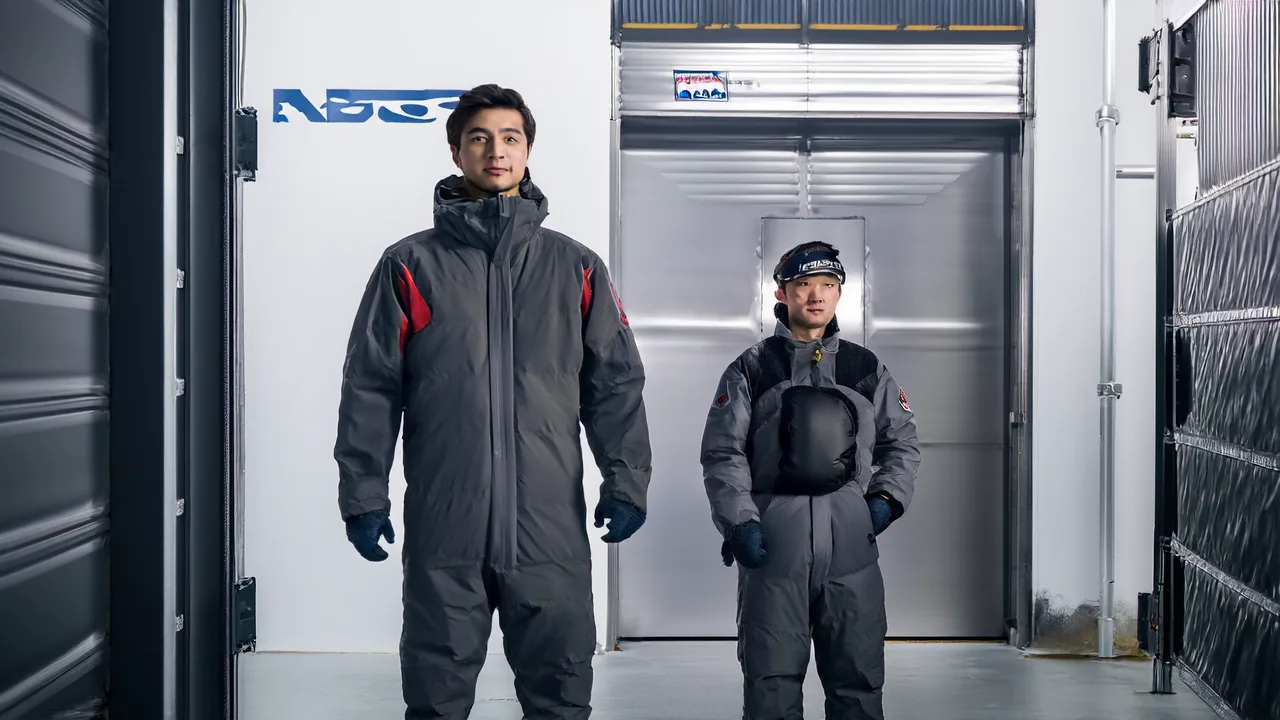
The solution for cold storage workwear is a zone-based specification that matches garment insulation, breathability, and dexterity to each temperature zone's requirements, with procurement steps to manage multiple garment types without overcomplicating inventory. **Step 1: Map each zone's temperature and worker exposure time** Conduct a walk-through of the cold storage facility and document: - **Ambient warehouse zone:** Temperature (typically 15–20°C), worker tasks (picking, scanning, loading, labelling), time spent in zone per shift (typically 6–8 hours for ambient workers, 1–2 hours for chill/freezer workers). - **Chill cooler zone:** Temperature (typically 0–4°C), worker tasks (order picking, stock rotation, equipment operation), time spent in zone per shift (typically 4–6 hours for chill workers, 1–2 hours for ambient/freezer workers). - **Deep freezer zone:** Temperature (typically −20 to −30°C), worker tasks (forklift operation, pallet handling, conveyor operation), time spent in zone per shift (typically 4–6 hours for freezer workers, 30–60 minutes for chill/ambient workers). This mapping identifies the primary zone for each worker role and the rotation pattern between zones. The specification is based on the primary zone — the zone where the worker spends most of their shift. **Step 2: Specify garment insulation and features per zone** For each zone, specify the garment's insulation, breathability, and dexterity requirements: - **Ambient warehouse zone (15–20°C):** Specify a lightweight, breathable garment with no insulation (or a 50 GSM lightweight liner for workers who occasionally enter the chill zone). The garment should be a polyester-cotton blend (65/35) at 180–200 GSM, with high breathability (MVTR 20,000+ g/m²/24h), moisture-wicking finish, and full range of motion for picking, scanning, and lifting tasks. Specify a polo uniform or lightweight coverall with mesh ventilation panels for workers who generate high body heat. - **Chill cooler zone (0–4°C):** Specify a mid-weight insulated garment with 100–150 GSM synthetic insulation, windproof outer shell, and breathable membrane (MVTR 10,000–15,000 g/m²/24h). The garment should be a softshell jacket and trouser set, with articulated knees and elbows for mobility, sealed cuffs to prevent cold air entry, and a high collar for neck protection. Specify the garment with radio pockets and scanner holders for workers who use handheld devices. - **Deep freezer zone (−20 to −30°C):** Specify a heavy insulated garment with 200–300 GSM synthetic insulation, windproof and waterproof outer shell, and sealed seams. The garment should be a coverall with integrated hood, insulated gloves, and thermal boot covers. Specify the garment with reinforced knees and seat for workers who kneel or sit on cold surfaces, and corrosion-resistant zippers that function at −30°C. **Step 3: Order multiple garment types with clear SKU differentiation** To manage inventory for three zone-specific garment types: - **Create separate SKUs for each zone and garment type:** For example, SKU-AMBIENT-POLO-M (ambient zone polo, size M), SKU-CHILL-SOFTSHELL-L (chill zone softshell set, size L), SKU-FREEZER-COVERALL-XL (freezer zone coverall, size XL). - **Forecast demand by zone:** Based on the worker mapping in Step 1, calculate the number of workers in each primary zone and order garments accordingly. For example, if 40% of workers are ambient-primary, 35% are chill-primary, and 25% are freezer-primary, order 40% ambient garments, 35% chill garments, and 25% freezer garments. - **Order spare stock (10–15% over forecast):** Cold storage operations have high turnover and seasonal hiring peaks. Spare stock ensures that new hires receive zone-appropriate garments immediately, without waiting for a reorder. **Step 4: Pilot zone-specific garments before full fleet rollout** Before committing to a full fleet order, pilot the zone-specific garments with 10–15 workers per zone for 4–6 weeks of actual cold storage operations. Collect data on: - **Worker comfort:** Survey workers on thermal comfort (too hot, too cold, just right) at the start, middle, and end of each shift. - **Garment performance:** Inspect garments after 10–15 wash cycles for insulation degradation, seam failure, zipper corrosion, and fabric abrasion. - **Productivity impact:** Compare picking rates, scanning accuracy, and task completion times before and after the zone-specific garment rollout. - **Moisture management:** Check garments for sweat buildup, dampness, and odour after a full shift. If ambient zone garments show sweat buildup, specify higher breathability or moisture-wicking finishes. Use pilot data to adjust garment specifications before full fleet commitment. **Step 5: Adjust based on worker feedback and zone conditions** After the pilot, adjust the zone-specific specifications based on feedback: - **If ambient zone workers report overheating:** Specify lighter fabric weight (160–180 GSM instead of 200 GSM), add mesh ventilation panels, or switch to a short-sleeve polo for high-activity tasks. - **If chill zone workers report cold stress during extended exposure:** Increase insulation weight (150–200 GSM instead of 100–150 GSM), add a thermal liner, or specify a hooded softshell for head and neck protection. - **If freezer zone workers report reduced dexterity:** Specify thinner insulation with higher thermal efficiency (e.g., PrimaLoft or Thinsulate instead of standard polyester batting), or add articulated patterning to improve hand and finger movement. **Recommended garments for cold storage workwear:** - **Construction softshell set** — specify the mid-weight version (150–180 GSM) with windproof and water-resistant outer shell, 100–150 GSM synthetic insulation, and breathable membrane for chill cooler zone workers. The softshell set provides sufficient insulation for 0–4°C environments, with the flexibility and mobility needed for order picking, stock rotation, and equipment operation. Specify the set with radio pockets, scanner holders, and articulated knees/elbows for task-specific functionality. - **Industrial coverall-pro** — specify the heavy-insulated version (220–240 GSM outer shell with 200–300 GSM synthetic insulation liner) for deep freezer zone workers. The coverall provides full-body thermal protection for −20 to −30°C environments, with sealed seams, integrated hood, and corrosion-resistant zippers rated for low-temperature operation. Specify the coverall with reinforced knees and seat for workers who kneel on cold surfaces, and thermal boot covers for foot protection.
Recommended Products
Products that fit this use case
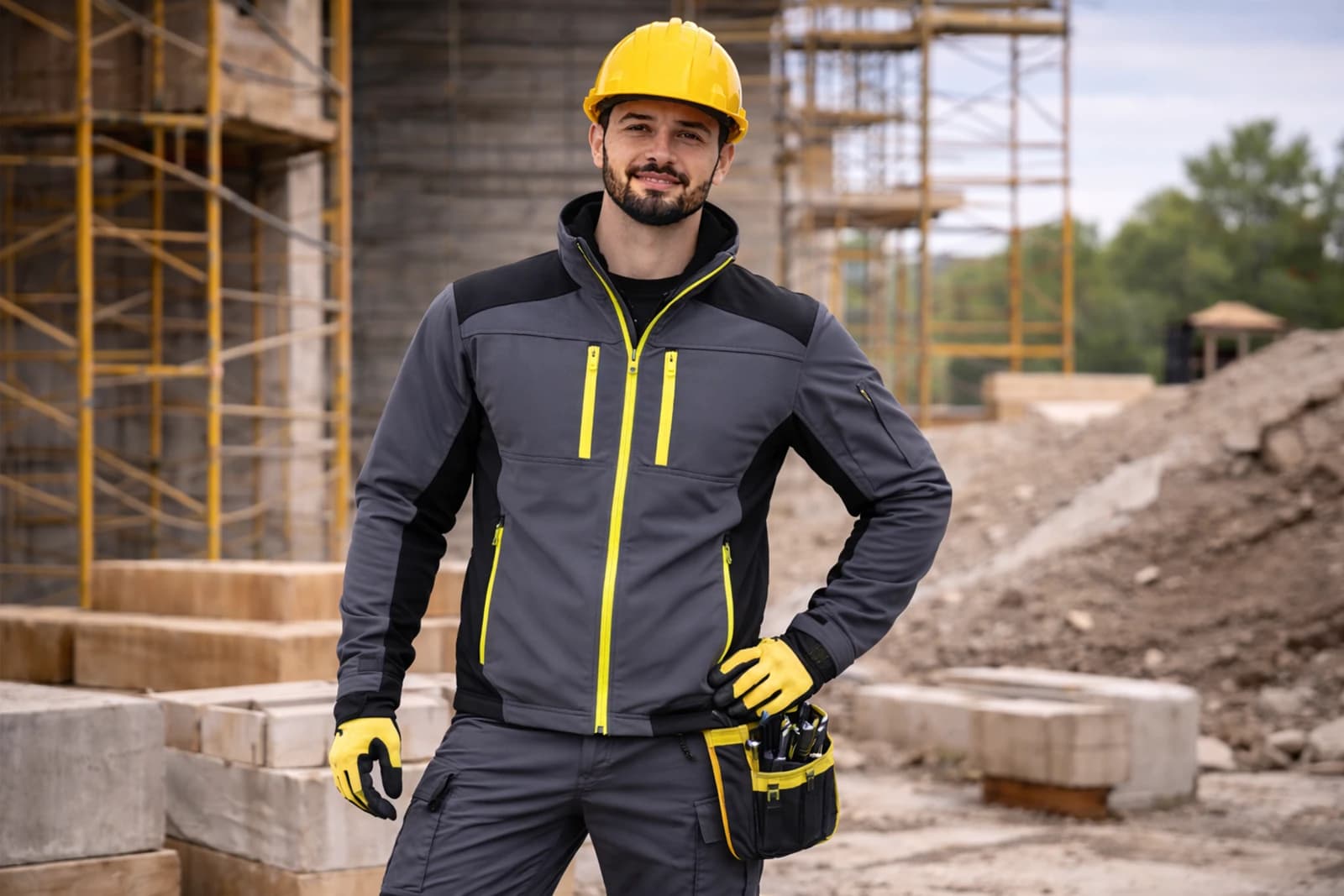
Construction Clothing
Construction Softshell Set
Flexible jacket and trouser set built for crews working across changing weather conditions.

Industrial Workwear
Industrial Coverall Pro
Hard-wearing one-piece coverall for plant, maintenance, and heavy-duty operations.