Cold Storage Workwear: Solving the Insulation-Mobility Tradeoff
Cold storage facilities operate at -18°C to -40°C, where workers face hypothermia risk while maintaining mobility for picking, packing, and equipment operation. Most specifications solve insulation by adding bulk — thicker garments, more layers — but bulk restricts movement, reduces dexterity, and increases fatigue. This article covers the layering strategy that separates insulation from mobility, the fabric criteria that manage moisture without compromising thermal protection, and the zone-based specification that matches garment coverage to each area's temperature and activity level.
Buyer context
What procurement teams run into
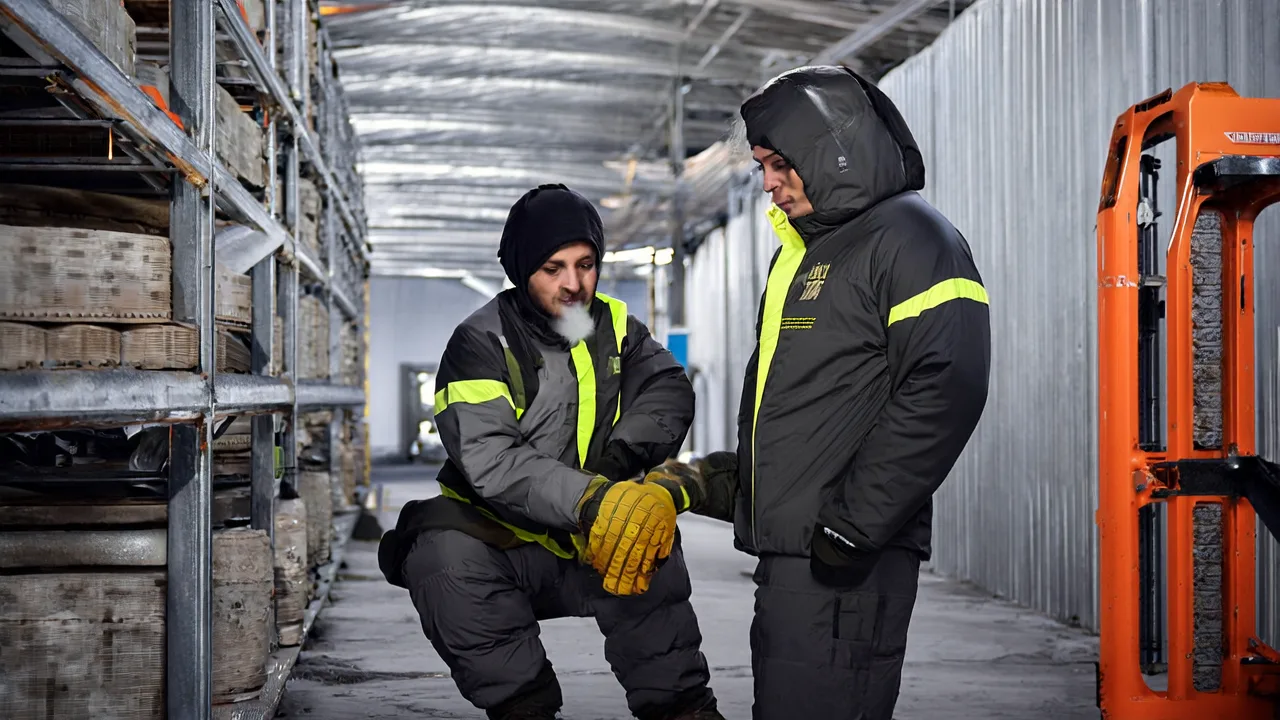
Cold storage and refrigerated warehouse facilities — distributing frozen food, pharmaceuticals, chemicals, and temperature-sensitive products — operate at sustained temperatures ranging from -18°C (standard frozen storage) to -40°C (blast freezers, ultra-low temperature pharmaceutical storage). Workers in these facilities face continuous cold exposure throughout their shifts, performing physically demanding tasks: picking orders from racking, packing products into shipping containers, operating forklifts and pallet jacks, loading and unloading delivery vehicles. The mechanism: **1. Standard workwear fabrics provide insufficient insulation at cold storage temperatures** Cotton and cotton-blend fabrics — the default choice for general workwear — provide minimal thermal insulation. Cotton fabric has a thermal resistance (clo value) of approximately 0.03-0.05 clo per layer at typical fabric weights (150-250 gsm). At -18°C, a worker wearing standard cotton workwear loses body heat through conduction (contact with cold surfaces), convection (cold air movement), and radiation (heat loss to cold environment) faster than the body can generate heat through metabolic activity. The root cause: standard workwear fabrics are not designed for thermal insulation at cold storage temperatures. Lightweight, low-clo fabrics allow rapid body heat loss, creating hypothermia risk during sustained cold exposure. **2. Bulk insulation restricts mobility and reduces dexterity** The typical solution to cold exposure is adding insulation — thicker fabrics, quilted linings, multiple layers. But bulk insulation creates mobility constraints: - **Restricted arm movement:** thick insulated garments limit shoulder and arm range of motion. Workers reaching for products on high racking, lifting boxes, or operating equipment controls face restricted movement that reduces productivity and increases injury risk (compensatory movements, awkward postures). - **Reduced dexterity:** thick insulated gloves and sleeve cuffs reduce finger dexterity. Workers handling small products, scanning barcodes, operating touchscreens, or fastening packaging struggle with reduced grip and finger movement. Reduced dexterity increases error rates (mis-picks, incorrect packing) and extends task completion time. - **Increased fatigue:** bulk insulation adds garment weight (insulated garments can weigh 2-4 kg more than standard workwear). Additional weight increases metabolic cost of movement, accelerating fatigue over an 8-hour shift. Fatigued workers have slower reaction times, reduced attention, and higher injury risk. The root cause: bulk insulation solves thermal protection but creates mobility, dexterity, and fatigue constraints that undermine productivity and safety in cold storage operations. **3. Moisture management fails when insulation traps sweat** Workers performing physically demanding tasks in cold environments generate sweat. Sweat moisture is produced at rates of 0.5-1.5 liters per hour during moderate-to-heavy activity. If sweat moisture is trapped inside insulation layers: - **Wet insulation loses thermal resistance:** wet fabric (cotton, down, or synthetic insulation) loses 50-90% of its thermal resistance. Wet insulation conducts heat away from the body 25 times faster than dry insulation, creating rapid body heat loss and hypothermia risk. - **Evaporative cooling:** sweat evaporating from skin surface removes heat (evaporative cooling). If moisture is trapped against skin, evaporative cooling continues, accelerating body heat loss. - **Post-exercise chill:** when workers stop activity (taking a break, moving to a warmer area), sweat-soaked insulation continues to conduct heat away from the body, creating rapid cooling and chill risk. The root cause: insulation that traps sweat moisture undermines thermal protection — wet insulation loses thermal resistance, and evaporative cooling accelerates body heat loss. **4. Workers move between zones with different temperatures and activity levels** Cold storage facilities have distinct zones with different temperatures and physical demands: - **Ultra-low temperature areas:** blast freezers (-40°C), ultra-low temperature pharmaceutical storage (-80°C). Workers enter these areas for short durations (minutes) to load/unload products. Cold exposure is extreme but brief. - **Frozen storage areas:** standard frozen storage (-18°C to -25°C). Workers spend extended periods (hours) picking, packing, and moving products. Cold exposure is sustained. - **Chilled storage areas:** chilled storage (0°C to +4°C). Workers handle refrigerated (not frozen) products. Cold exposure is moderate. - **Ambient areas:** loading docks, packaging areas, administrative offices (+15°C to +20°C). Workers move between cold storage and ambient areas throughout the shift. Workers move between zones throughout the shift — from frozen storage to loading dock to chilled storage. A worker wearing heavy insulation in frozen storage overheats when moving to ambient areas. The same worker wearing lightweight garments in ambient areas faces hypothermia risk when entering frozen storage. Garment insulation must match each zone's temperature and activity level — but workers need a single garment system that adapts across zones. The root cause: workwear that doesn't adapt to zone temperature and activity changes either over-insulates (causing overheating and sweat accumulation in warmer zones) or under-insulates (creating hypothermia risk in colder zones). **5. Visibility is compromised in cold storage environments** Cold storage facilities have visibility challenges: - **Low light levels:** cold storage areas often have reduced lighting to minimize heat gain from lighting fixtures. Low light levels reduce visibility of workers, racking, and equipment. - **Fogged visors and glasses:** workers moving from cold to warm areas experience fogging of safety glasses and face shields. Fogged visors reduce visibility, creating trip, slip, and equipment operation hazards. - **Bulk insulation obscures body silhouette:** thick insulated garments obscure the worker's body silhouette, making workers less visible to forklift operators and equipment drivers. Reduced visibility increases struck-by equipment risk. The root cause: cold storage workwear that doesn't address visibility — through high-visibility colors, reflective tape, and fog-resistant eye protection — increases struck-by equipment and slip/trip/fall risk. **6. The cost of getting it wrong** The buyer who specifies standard workwear for cold storage without addressing insulation, mobility, moisture management, zone adaptation, and visibility faces: - Hypothermia and cold stress injuries for workers (insufficient insulation, wet insulation) - Reduced productivity and increased errors (restricted mobility, reduced dexterity, fatigue) - Increased injury risk (restricted movement, obscured visibility, struck-by equipment) - Budget waste (replacing garments that degrade prematurely, under-replacing garments that lose insulation properties) The buyer who specifies cold-storage-appropriate workwear faces: - Cold stress injuries controlled (adequate insulation, moisture management) - Productivity maintained (mobility, dexterity, comfort) - Injury risk reduced (visibility, mobility, proper fit) - Garment service life optimized (wash-durable insulation maintains thermal properties through repeated laundering)
Sourcing approach
How a factory partner can respond
The solution is a cold storage workwear specification that addresses insulation, mobility, moisture management, zone adaptation, and visibility — treating thermal protection as a layering system problem rather than a single-garment insulation problem. **Step 1: Specify a three-layer system that separates insulation from mobility** For cold storage workwear, specify a three-layer layering system that separates moisture management, insulation, and weather protection: - **Base layer (moisture management):** specify moisture-wicking synthetic fabric (polyester or polypropylene) worn next to skin. The base layer wicks sweat away from skin surface, keeping skin dry and reducing evaporative cooling. Specify base layer fabric with a tight weave (minimum 150 gsm) that wicks moisture without trapping it. Avoid cotton base layers — cotton absorbs and holds moisture, creating wet fabric against skin that accelerates heat loss. - **Mid layer (insulation):** specify lightweight, high-clo insulation fabric (fleece, synthetic insulation, or thin quilted insulation). The mid layer provides thermal insulation without bulk. Specify mid layer fabric with a clo value of 0.8-1.2 clo (typical of lightweight fleece or thin synthetic insulation) that provides adequate insulation at -18°C without restricting mobility. Specify mid layer with stretch fabric or articulated construction that maintains arm and shoulder range of motion. - **Outer layer (weather protection):** specify wind-resistant, water-repellent fabric that blocks cold air movement and protects against moisture (condensation, product moisture). The outer layer prevents convective heat loss (wind chill) and protects insulation layers from moisture. Specify outer layer fabric with a tight weave (minimum 200 gsm) that blocks wind without adding bulk. Specify outer layer with breathable construction that allows moisture vapor to escape, preventing sweat accumulation inside the garment system. The three-layer system separates moisture management (base layer), insulation (mid layer), and weather protection (outer layer). Each layer can be added or removed to adapt to zone temperature and activity level changes. The system provides adequate insulation without the bulk that restricts mobility. **Step 2: Specify garment construction that maintains mobility and dexterity** Specify garment construction that maintains mobility and dexterity for cold storage tasks: - **Articulated construction:** specify garments with articulated sleeves, knees, and shoulders that follow the body's natural movement range. Articulated construction reduces fabric tension during movement, maintaining mobility without requiring oversized garments. - **Stretch fabric panels:** specify garments with stretch fabric panels (elastane or spandex blend) at shoulders, knees, and back. Stretch panels expand during movement, maintaining mobility without adding bulk. - **Fitted cuffs and wrists:** specify garments with fitted cuffs that seal the wrist without restricting hand movement. Fitted cuffs prevent cold air entry while maintaining dexterity for tasks. Avoid loose, open cuffs that allow cold air entry. - **Glove compatibility:** specify garment sleeves that integrate with insulated gloves — sleeve cuffs that seal over glove cuffs, preventing cold air entry at the wrist-glove interface. Specify insulated gloves with touchscreen-compatible fingertips for operating touchscreens and scanners without removing gloves. The construction specification ensures that garments maintain mobility and dexterity for cold storage tasks — enabling workers to pick, pack, and operate equipment without restriction. **Step 3: Create a zone-based specification that matches insulation to each area** Cold storage facilities have distinct zones with different temperatures and activity levels. Specify different garment configurations for each zone: - **Ultra-low temperature areas (-40°C to -80°C):** specify full insulated coverall or two-piece suit (shirt and trouser) in heavyweight insulation (mid layer clo value 1.5-2.0) with wind-resistant outer layer. Specify the garment with full body coverage (hood, insulated gloves, insulated boots) for extreme cold exposure. Specify the garment for short-duration use (minutes) — workers enter ultra-low temperature areas for brief periods, then return to warmer zones. Specify the garment with quick-release closures (covered zippers with large pulls) that enable rapid garment removal if the worker overheats or needs to remove layers quickly. - **Frozen storage areas (-18°C to -25°C):** specify three-layer system (base layer, mid layer clo value 0.8-1.2, outer layer) in fitted construction that maintains mobility. Specify the garment with articulated construction, stretch panels, and fitted cuffs. Specify the garment for extended-duration use (hours) — workers spend extended periods in frozen storage areas. Specify the garment with hi-vis colors and reflective tape for visibility in low-light frozen storage areas. - **Chilled storage areas (0°C to +4°C):** specify two-layer system (base layer, light mid layer clo value 0.4-0.6) or insulated vest over base layer. Specify the garment with lighter insulation for moderate cold exposure. Specify the garment with breathable construction for workers moving between chilled storage and ambient areas. - **Ambient areas (+15°C to +20°C):** specify base layer alone or base layer with light outer layer (wind-resistant shell). Specify the garment for minimal insulation — workers in ambient areas don't need the insulation required in cold storage areas. Specify the garment with hi-vis colors and reflective tape for visibility in loading dock areas where forklifts and delivery vehicles operate. The zone-based specification matches insulation level and garment configuration to each area's temperature and activity level. The worker adapts the layering system (adding or removing mid layers) when moving between zones, maintaining thermal comfort without overheating or under-insulating. **Step 4: Specify hi-vis colors and reflective tape for cold storage visibility** Cold storage workwear must address visibility challenges: - **Hi-vis colors:** specify garments in hi-vis yellow or hi-vis orange that make workers visible in low-light cold storage areas. Hi-vis colors contrast with the cold storage environment (metal racking, concrete floors, white frost), making workers visible to forklift operators and equipment drivers. - **Reflective tape:** specify garments with reflective tape (minimum 50 mm width) on chest, arms, and legs. Reflective tape reflects light from forklift headlights and area lighting, making workers visible in low-light conditions. Specify reflective tape that maintains reflectivity after repeated industrial washing and cold exposure. - **Fog-resistant eye protection:** specify safety glasses or face shields with anti-fog coating that prevents fogging when workers move between cold and warm areas. Fogged visors reduce visibility, creating slip, trip, and equipment operation hazards. Specify anti-fog coating that withstands repeated temperature transitions without degrading. The visibility specification ensures that workers are visible in low-light cold storage areas — reducing struck-by equipment and slip/trip/fall risk. **Step 5: Implement a garment care protocol that maintains insulation properties** Cold storage workwear requires regular laundering to remove soil, sweat residues, and product contamination. Industrial laundering degrades insulation properties: - **Wash durability:** require supplier testing data confirming that insulation fabric maintains clo value, moisture-wicking properties, and wind resistance after 25, 50, and 75 wash cycles. Insulation that degrades through washing loses thermal protection, creating cold stress risk. - **Drying protocol:** specify drying parameters (temperature, duration) that restore insulation loft and thermal properties after washing. Insulation fabrics (fleece, synthetic insulation) require proper drying to restore loft — improper drying compresses insulation, reducing clo value. - **Post-wash inspection:** inspect garments after washing for insulation degradation (compressed insulation, reduced loft), moisture-wicking failure (fabric that absorbs rather than wicks moisture), and wind resistance failure (fabric that allows air penetration). Garments that fail post-wash inspection are rewashed or removed from service. The care protocol ensures that garments maintain insulation properties throughout their service life — providing consistent thermal protection through repeated laundering. **Step 6: Track garment condition and replace based on insulation degradation** Repeated washing and cold exposure degrade insulation over time. Track garment condition and replace garments before insulation degradation increases cold stress risk: - **Wash cycle tracking:** record the number of wash cycles for each garment. Set a maximum wash cycle limit based on supplier wash durability testing (e.g., replace garments after 50 wash cycles if wash durability testing confirms insulation maintains clo value through 50 cycles). - **Periodic insulation testing:** test garments periodically (quarterly) for insulation performance — measure clo value using standardized testing methods. Garments that fall below the minimum clo value threshold are removed from service. - **Visual inspection:** inspect garments periodically for insulation degradation (compressed insulation, reduced loft), fabric damage (tears, seam degradation), and closure damage (zipper failure, cuff degradation). Garments that show degradation are removed from service regardless of wash cycle count. The tracking and replacement protocol ensures that garments are replaced before insulation degradation increases cold stress risk — maintaining thermal protection throughout garment service life. **Recommended garments for cold storage workwear:** - **Construction softshell set** — specify the softshell set as the outer layer and mid layer system for frozen storage and chilled storage areas. The softshell's wind-resistant, water-repellent outer fabric blocks cold air movement and protects against moisture. The softshell's insulated inner layer provides thermal insulation without bulk. Specify the softshell set with articulated construction, stretch panels, and fitted cuffs that maintain mobility and dexterity for picking, packing, and equipment operation. Specify the softshell set in hi-vis colors with reflective tape for visibility in low-light cold storage areas. Specify the softshell set with wash durability testing data confirming that insulation maintains clo value and wind resistance after 50 wash cycles. The softshell set's wind resistance, insulation, mobility, and visibility make it suitable for cold storage operations where thermal protection and mobility are both critical. - **Hi-vis safety jacket** — specify the hi-vis jacket as an additional insulation layer or outer layer for workers moving between cold storage and ambient areas. The jacket's hi-vis colors and reflective tape make workers visible in low-light cold storage areas and loading dock areas. The jacket's insulated construction provides additional thermal protection for workers entering frozen storage areas. Specify the jacket with breathable construction that allows moisture vapor to escape, preventing sweat accumulation. Specify the jacket with quick-release closures (covered zippers with large pulls) that enable rapid jacket removal if the worker overheats when moving to warmer areas. Specify the jacket with wash durability testing data confirming that insulation maintains clo value and hi-vis colors maintain visibility after 50 wash cycles. The jacket's hi-vis visibility, insulation, and adaptability make it suitable for cold storage operations where workers move between zones with different temperatures.
Recommended Products
Products that fit this use case
Construction Clothing
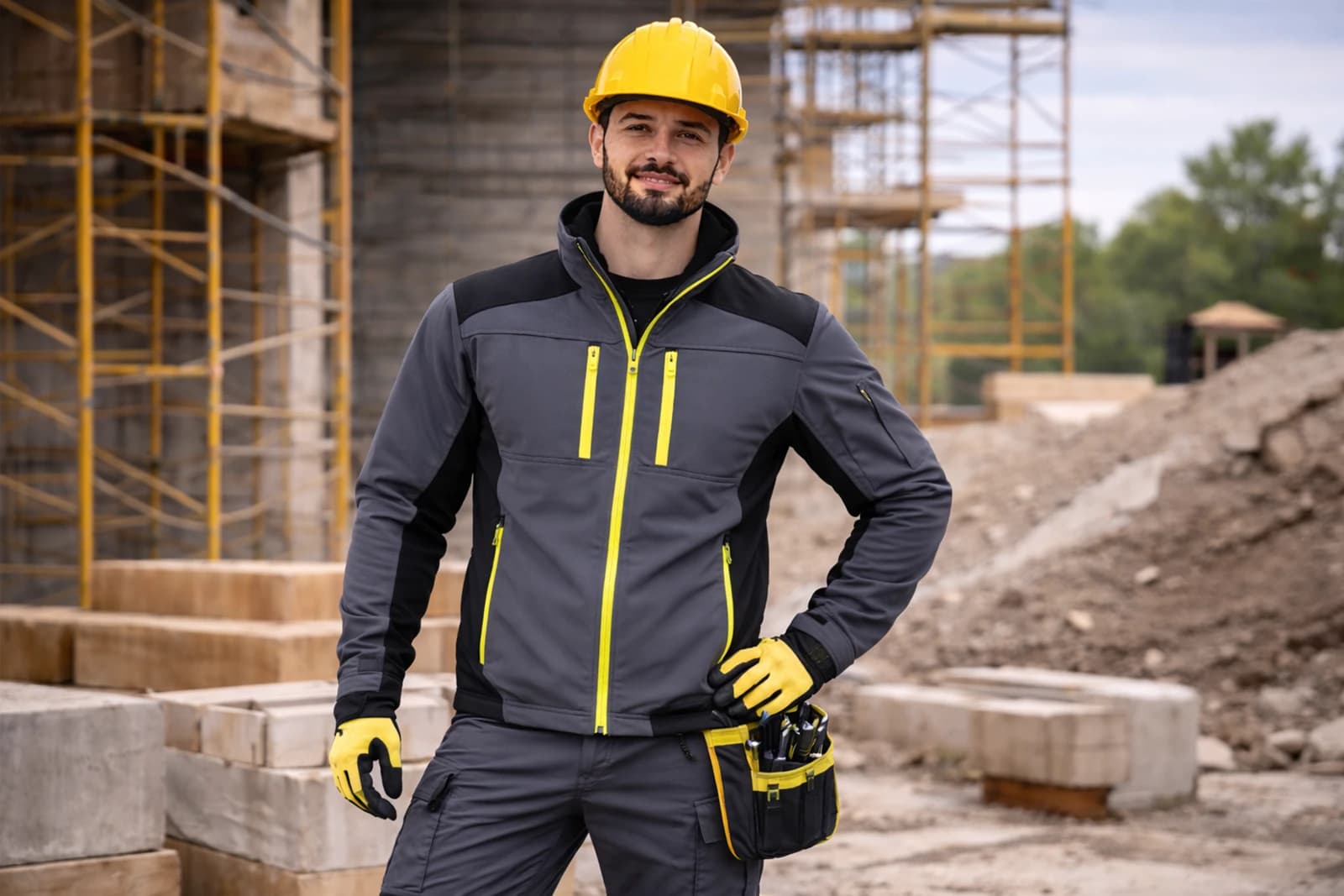
Construction Softshell Set
Flexible jacket and trouser set built for crews working across changing weather conditions.
Safety Uniform
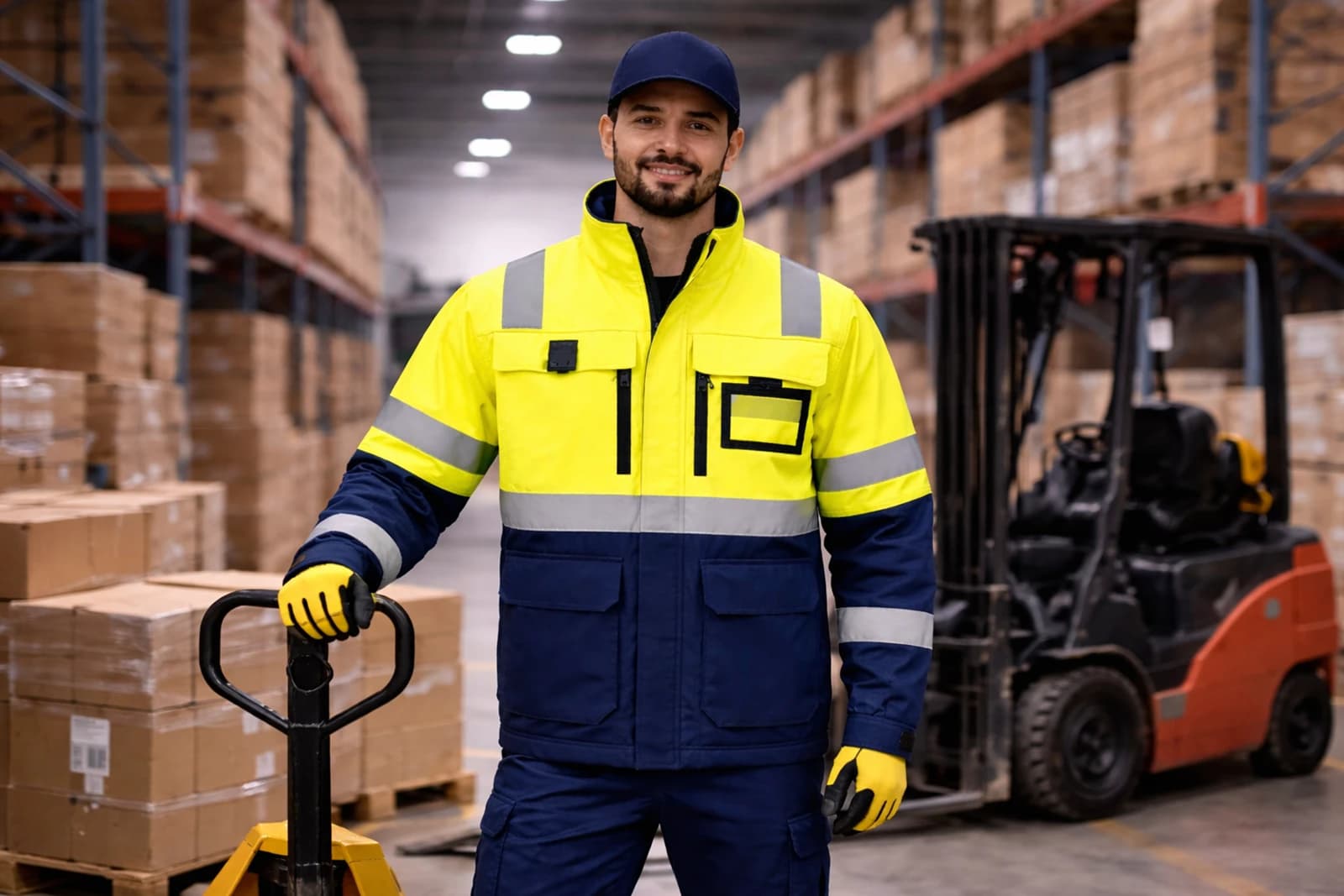
Hi-Vis Safety Jacket
Reflective safety jacket for high-visibility site operations and road work crews.