Cold Storage Workwear: The Sweat Problem That Makes Thermal Layers Dangerous
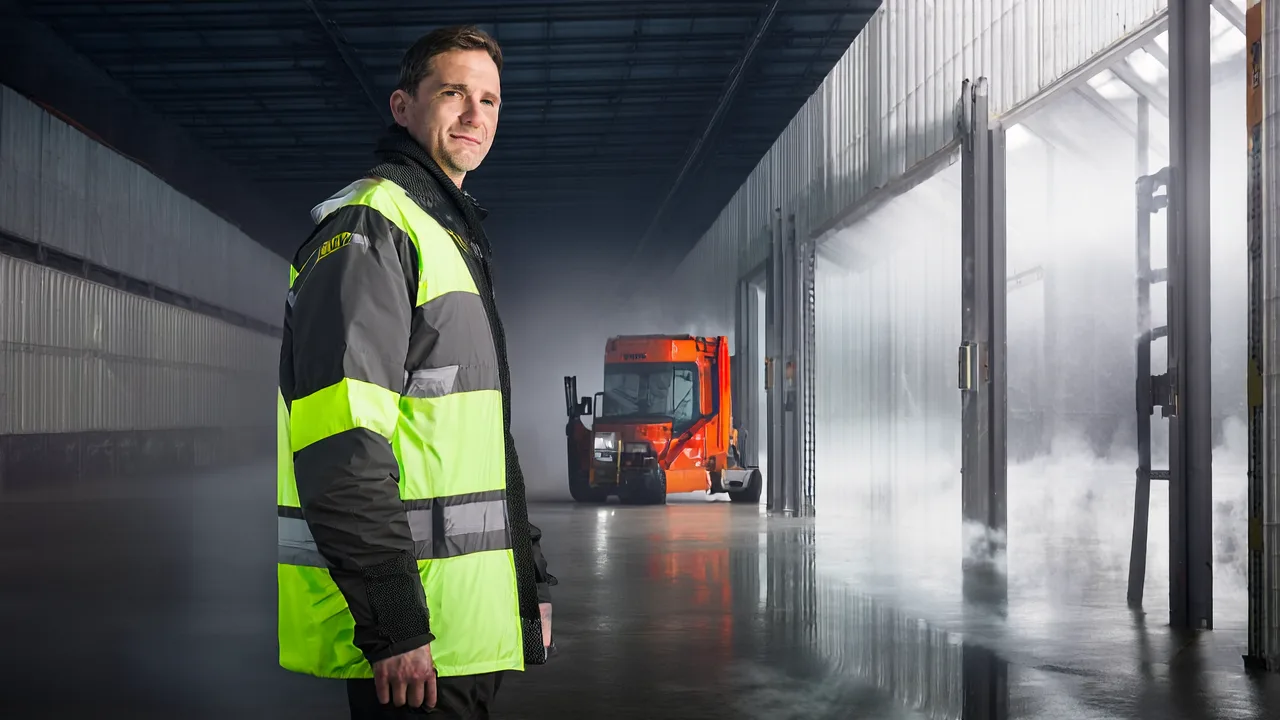
Cold storage workers move between -20°C freezers and ambient loading docks, wearing heavy thermal layers that trap sweat. When they re-enter the freezer, sweat-soaked clothing conducts heat away from the body 25 times faster than dry clothing, creating cold stress that thick insulation cannot fix. The root cause: buyers specify thermal garments without specifying a moisture management layering system or a zone transition protocol. The result: workers overheat in ambient zones, sweat through their thermal layers, and face dangerous cold stress when they return to the freezer. This article covers the layering system that manages moisture across temperature zones, the procurement specification for cold storage workwear, and the operational protocol that prevents sweat-related cold stress.
Buyer context
What procurement teams run into
Cold storage and cold chain logistics present a workwear problem that most buyers do not recognise until they see cold stress incidents or workers refusing to enter freezers. The core issue: cold storage workers move between sub-zero freezer zones (-18°C to -25°C) and ambient-temperature loading docks, break rooms, and packing areas (15°C to 22°C). Buyers specify heavy thermal garments — insulated coveralls, thick fleece liners, padded jackets — for the freezer zones, assuming that maximum insulation protects workers from cold stress. But the same thermal garments that protect workers in the freezer create a dangerous moisture trap when workers move to ambient zones. **1. The temperature swing creates a moisture trap** A worker enters a -20°C freezer wearing a heavy insulated coverall with a fleece liner. The garment traps body heat, keeping the worker warm in the freezer. After 45–60 minutes, the worker exits the freezer to load a pallet onto a truck at the ambient-temperature loading dock (18°C). The worker remains wearing the heavy insulated garment at the loading dock. Within 5–10 minutes, the worker overheats and begins to sweat. The sweat is absorbed by the fleece liner and the inner layers of the coverall. The worker returns to the freezer wearing sweat-soaked clothing. The problem: wet clothing conducts heat away from the body 25 times faster than dry clothing. The sweat-soaked fleece liner, now in contact with the worker's skin, pulls heat away from the body at a rate that the outer insulation cannot compensate for. The worker experiences cold stress — shivering, loss of dexterity, numbness in fingers and toes — not because the freezer is too cold, but because the sweat-soaked layers are conducting heat away from the body faster than the insulation can retain it. **2. Sweat-soaked clothing is more dangerous than insufficient insulation** The buyer who specifies maximum insulation for cold storage workwear addresses the cold environment but ignores the moisture environment. The result: workers are adequately protected during their first 30–45 minutes in the freezer (when the garment is dry), but face dangerous cold stress after 60–90 minutes (when the garment is sweat-soaked from previous ambient-zone exposure). The cold stress symptoms are cumulative: - **Mild cold stress:** Shivering, discomfort, reduced morale. Workers become reluctant to enter the freezer, reducing productivity. - **Moderate cold stress:** Loss of dexterity in fingers and hands. Workers cannot operate pallet jacks, scanners, or door controls safely. Accident risk increases. - **Severe cold stress:** Numbness in extremities, confusion, slurred speech. Workers face hypothermia risk if they remain in the freezer without intervention. The buyer who does not address the moisture problem faces cold stress incidents, workers' compensation claims, and OSHA-equivalent regulatory citations for inadequate cold stress protection — even though the buyer specified heavy thermal garments. **3. The procurement mistake: specifying insulation without moisture management** The most common procurement error is to specify cold storage workwear based on insulation value (thermal resistance, measured in clo or tog) without specifying moisture management performance. The logic: "If the garment has high insulation, workers will be warm in the freezer." But this logic ignores the fact that insulation only works when the garment is dry. A sweat-soaked garment with high insulation still conducts heat away from the body because the moisture in the fabric creates a thermal bridge between the skin and the cold environment. The buyer who specifies insulation without moisture management faces two risks: - **Cold stress incidents:** Workers experience cold stress because sweat-soaked garments conduct heat away from the body, regardless of the garment's insulation value. - **Garment degradation:** Sweat and moisture degrade the insulation material over time. Fleece liners lose their loft (and therefore their insulating ability) after repeated exposure to sweat and improper washing. The garment's insulation value decreases over its lifecycle, even though the buyer specified high initial insulation. Neither outcome is acceptable. The buyer must specify a layering system that manages moisture across temperature zones, not just insulation for the cold environment. **4. The three-layer system for cold storage workwear** The solution is a three-layer system that separates moisture management, insulation, and weather protection: - **Base layer (moisture management):** A lightweight, moisture-wicking garment worn directly against the skin. The base layer pulls sweat away from the skin and spreads it across the fabric surface, where it evaporates. The base layer must be made from synthetic fibers (polyester or polypropylene) that do not absorb moisture — cotton absorbs moisture and holds it against the skin, creating the same cold stress problem as sweat-soaked insulation. The base layer must be lightweight (150–180 GSM) to avoid adding insulation that causes overheating in ambient zones. - **Mid layer (insulation):** A fleece or padded garment that provides insulation in the freezer zone. The mid layer must be breathable — allowing moisture vapor from the base layer to pass through — and must retain its insulation value when damp. Synthetic insulation (polyester fleece or synthetic batting) retains insulation when damp, unlike down insulation which loses insulation when wet. The mid layer should be removable — allowing the worker to remove the mid layer when moving to ambient zones, reducing overheating and sweat accumulation. - **Outer layer (windproof and water-resistant):** A windproof, water-resistant garment that protects the worker from wind chill in the freezer (freezer fans create wind speeds of 5–10 m/s, increasing the effective cold) and from moisture exposure in loading docks (rain, condensation). The outer layer must be breathable — allowing moisture vapor from the inner layers to escape — to prevent condensation inside the garment. The outer layer should be a softshell or hardshell jacket with sealed seams and adjustable cuffs to prevent cold air ingress. **5. The zone transition protocol: managing layers across temperature zones** The layering system only works if workers manage their layers during zone transitions. The zone transition protocol: - **Entering the freezer:** The worker wears all three layers (base, mid, outer) before entering the freezer. The base layer manages moisture, the mid layer provides insulation, and the outer layer blocks wind chill. - **Exiting to ambient zones:** The worker removes the mid layer (insulation) and, if necessary, the outer layer (wind protection) before moving to the loading dock or break room. The worker retains only the base layer in ambient zones, preventing overheating and sweat accumulation. - **Re-entering the freezer:** The worker dons the mid layer and outer layer before re-entering the freezer. The base layer, now dry (having evaporated moisture in the ambient zone), manages moisture effectively in the freezer. The protocol requires designated layering stations at each zone boundary — a location where workers can remove or add layers before crossing the temperature boundary. The layering station must include hooks or shelves for storing removed layers, and a mirror or visual cue to remind workers to check their layering before crossing. **6. The procurement specification for cold storage workwear** The procurement specification for cold storage workwear must address each layer: - **Base layer:** Specify 150–180 GSM synthetic fabric (polyester or polypropylene) with moisture-wicking finish. The base layer must not contain cotton (cotton absorbs moisture and holds it against the skin). Specify long-sleeve tops and full-length bottoms for full-body moisture management. Specify antimicrobial finish to reduce odor from repeated wear without immediate washing. - **Mid layer:** Specify 250–300 GSM polyester fleece or synthetic batting, removable (zip-in or button-in construction) so the worker can remove the mid layer in ambient zones. Specify breathable construction (fleece with open structure or batting with breathable facing) to allow moisture vapor to pass through. Specify high-loft construction that retains insulation value when damp. - **Outer layer:** Specify a softshell or hardshell jacket with windproof and water-resistant construction. Specify breathable membrane (e.g., microporous PU membrane) that blocks wind and water but allows moisture vapor to escape. Specify sealed seams to prevent cold air ingress. Specify adjustable cuffs, hem, and collar to prevent cold air entry at the wrists, waist, and neck. Specify hi-vis retroreflective tape (EN ISO 20471 Class 2) for workers who operate in loading docks where forklifts and trucks are present. **7. The garment care protocol that maintains moisture management** The layering system only works if the garments maintain their moisture-wicking and breathable properties over repeated washing. The garment care protocol: - **Base layer washing:** Wash in warm water (40°C) with synthetic-friendly detergent. Do not use fabric softener — fabric softener coats synthetic fibers and blocks moisture-wicking performance. Do not use bleach — bleach degrades synthetic fibers. Tumble dry on low heat or air dry. Inspect the base layer after 20–30 wash cycles for loss of moisture-wicking performance (if the fabric no longer spreads water across the surface, the moisture-wicking finish has degraded and the garment must be replaced). - **Mid layer washing:** Wash in warm water (40°C) with synthetic-friendly detergent. Do not use fabric softener. Tumble dry on low heat to restore fleece loft. Inspect the mid layer after 30–40 wash cycles for loss of loft (if the fleece is flattened, the insulation value has decreased and the garment must be replaced). - **Outer layer washing:** Wash in warm water (40°C) with technical fabric detergent. Do not use fabric softener. Tumble dry on low heat to restore water-resistant finish. Reapply DWR (durable water repellent) finish after 10–15 wash cycles if water no longer beads on the fabric surface. Inspect the outer layer for seam seal integrity, cuff adjustment function, and membrane damage after 40–50 wash cycles. The buyer must specify the garment care protocol in the workwear service contract — if garments are laundered by a third-party laundry, the laundry must use synthetic-friendly detergent, avoid fabric softener, and follow the washing and drying temperatures specified by the garment manufacturer.
Sourcing approach
How a factory partner can respond
The solution for cold storage workwear is to specify a three-layer system (base, mid, outer) that manages moisture across temperature zones, implement a zone transition protocol that prevents sweat accumulation, and specify garment care that maintains moisture-wicking performance over the garment lifecycle. **Step 1: Specify the three-layer system in the procurement specification** Include the following requirements in the procurement specification: - **Base layer:** 150–180 GSM synthetic fabric (polyester or polypropylene) with moisture-wicking finish. No cotton. Long-sleeve tops and full-length bottoms. Antimicrobial finish for odor control. - **Mid layer:** 250–300 GSM polyester fleece or synthetic batting, removable (zip-in or button-in) for zone transitions. Breathable construction. High-loft construction that retains insulation when damp. - **Outer layer:** Softshell or hardshell jacket with windproof, water-resistant, and breathable construction. Sealed seams. Adjustable cuffs, hem, and collar. Hi-vis retroreflective tape (EN ISO 20471 Class 2) for loading dock workers. **Step 2: Specify the zone transition protocol** Include the following requirements in the workwear service contract: - **Layering stations:** Install designated layering stations at each temperature zone boundary (freezer-to-ambient transitions). The layering station must include hooks or shelves for storing removed layers, and a visual cue (signage or floor markings) reminding workers to manage layers before crossing. - **Transition protocol:** Workers remove the mid layer and outer layer before moving to ambient zones. Workers retain only the base layer in ambient zones. Workers don the mid layer and outer layer before re-entering the freezer. - **Training:** Train workers on the zone transition protocol during onboarding. Reinforce the protocol with signage at layering stations and regular supervision during zone transitions. **Step 3: Specify the garment care protocol** Include the following requirements in the workwear service contract: - **Base layer washing:** Wash in warm water (40°C) with synthetic-friendly detergent. No fabric softener. No bleach. Tumble dry on low heat or air dry. Replace after 20–30 wash cycles or when moisture-wicking performance degrades. - **Mid layer washing:** Wash in warm water (40°C) with synthetic-friendly detergent. No fabric softener. Tumble dry on low heat to restore loft. Replace after 30–40 wash cycles or when loft is lost. - **Outer layer washing:** Wash in warm water (40°C) with technical fabric detergent. No fabric softener. Tumble dry on low heat. Reapply DWR finish after 10–15 wash cycles. Replace after 40–50 wash cycles or when seam seals, cuffs, or membrane degrade. **Step 4: Pilot the layering system before full fleet commitment** Before committing to a full fleet order, pilot the three-layer system with 10–15 workers for 4–6 weeks: - **Cold stress monitoring:** Monitor workers for cold stress symptoms (shivering, loss of dexterity, numbness) during freezer shifts. Compare cold stress incidents before and after implementing the layering system. - **Moisture management:** Inspect base layers at the end of each shift for moisture accumulation. If base layers are dry or only slightly damp, the moisture-wicking system is working. If base layers are soaked, investigate whether workers are wearing cotton undergarments (which absorb moisture) or whether the base layer's moisture-wicking finish has degraded. - **Zone transition compliance:** Observe workers during zone transitions. Record whether workers remove layers before moving to ambient zones and don layers before re-entering the freezer. If compliance is below 90%, investigate the root cause (layering station inconvenient, time pressure, lack of supervision) and adjust the protocol. - **Worker feedback:** Survey workers on thermal comfort, mobility, and ease of layer management. Adjust garment specifications based on feedback (e.g., if workers report that the mid layer is too bulky, specify a lighter mid layer with higher-loft insulation). **Step 5: Adjust the programme based on pilot data** After the pilot, adjust the workwear programme: - **If cold stress incidents persist:** Investigate whether workers are wearing cotton undergarments (which absorb moisture and defeat the moisture-wicking system). Specify that only synthetic base layers are worn against the skin. Investigate whether the base layer's moisture-wicking finish has degraded — if so, replace the base layer or specify a more durable moisture-wicking finish. - **If zone transition compliance is low:** Relocate the layering station to a more convenient location, add visual cues (floor markings, signage), or assign a supervisor to monitor transitions during peak changeover times. - **If workers report overheating in ambient zones:** Specify a lighter mid layer (lower GSM fleece) or a more breathable outer layer (higher moisture vapor transmission rate). Ensure that the adjusted garments still provide adequate insulation in the freezer — validate with cold stress monitoring during the next pilot cycle. **Recommended garments for cold storage workwear:** - **Construction softshell set** — specify the 280–320 GSM polyester version with windproof and water-resistant construction for the outer layer. The softshell set provides wind protection in freezer zones (blocking fan-induced wind chill) and water resistance in loading dock zones (blocking rain and condensation). Specify the softshell set with breathable membrane, sealed seams, adjustable cuffs, and hi-vis retroreflective tape for loading dock visibility. The softshell set serves as the outer layer in the three-layer system, worn over the base layer and mid layer in freezer zones, and worn alone or over the base layer in ambient zones. - **Hi-vis safety jacket** — specify the 200 GSM polyester version with EN ISO 20471 Class 2 retroreflective tape for workers who operate in loading docks where forklifts and trucks are present. The hi-vis jacket provides visibility for roadside and forklift safety during loading and unloading operations. Specify the hi-vis jacket as an alternative outer layer for ambient-zone work when wind and water protection are not required but hi-vis visibility is mandatory. The hi-vis jacket is worn over the base layer (and optionally the mid layer) in loading dock zones, and is removed before entering the freezer (where the softshell set serves as the outer layer).
Recommended Products
Products that fit this use case
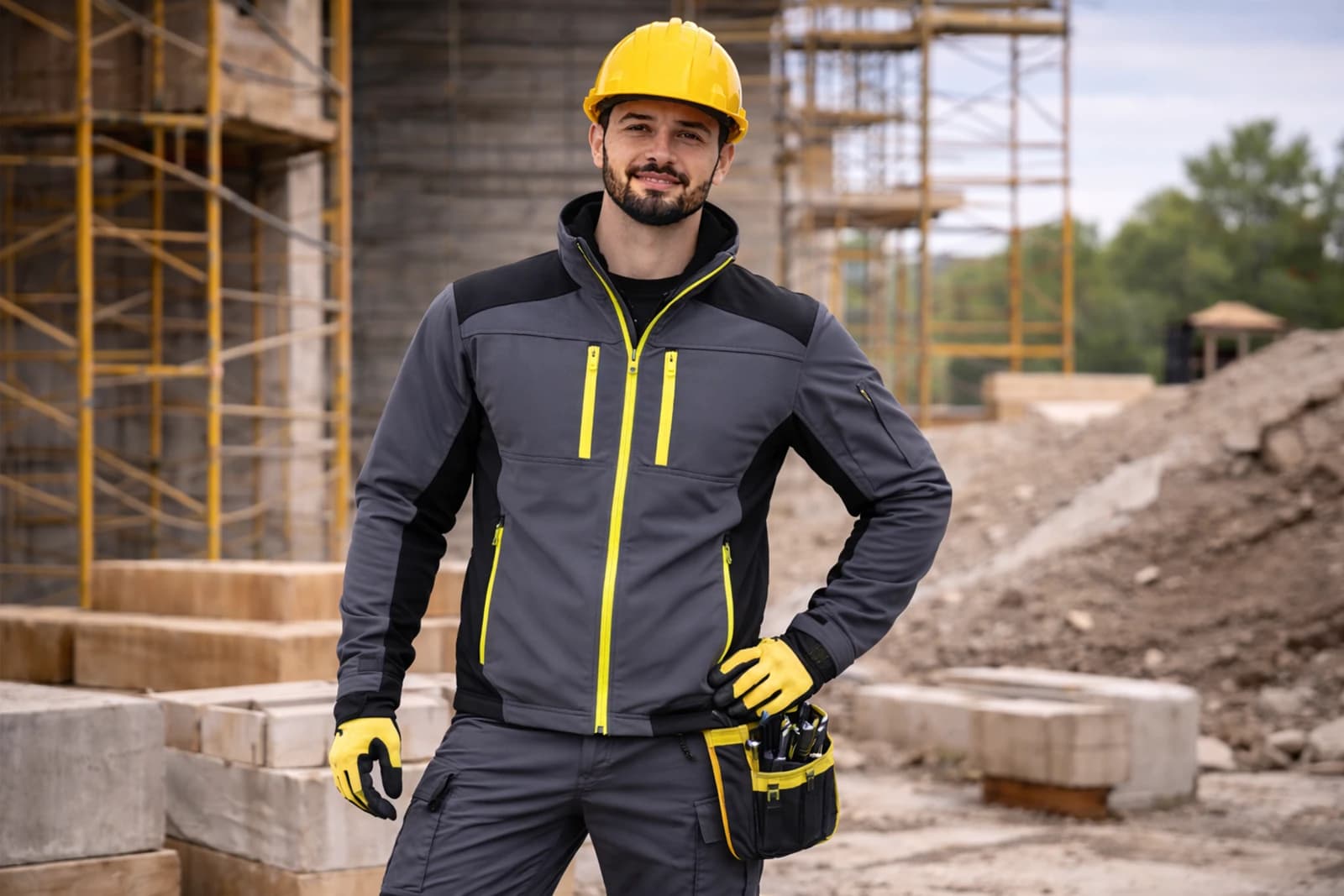
Construction Clothing
Construction Softshell Set
Flexible jacket and trouser set built for crews working across changing weather conditions.
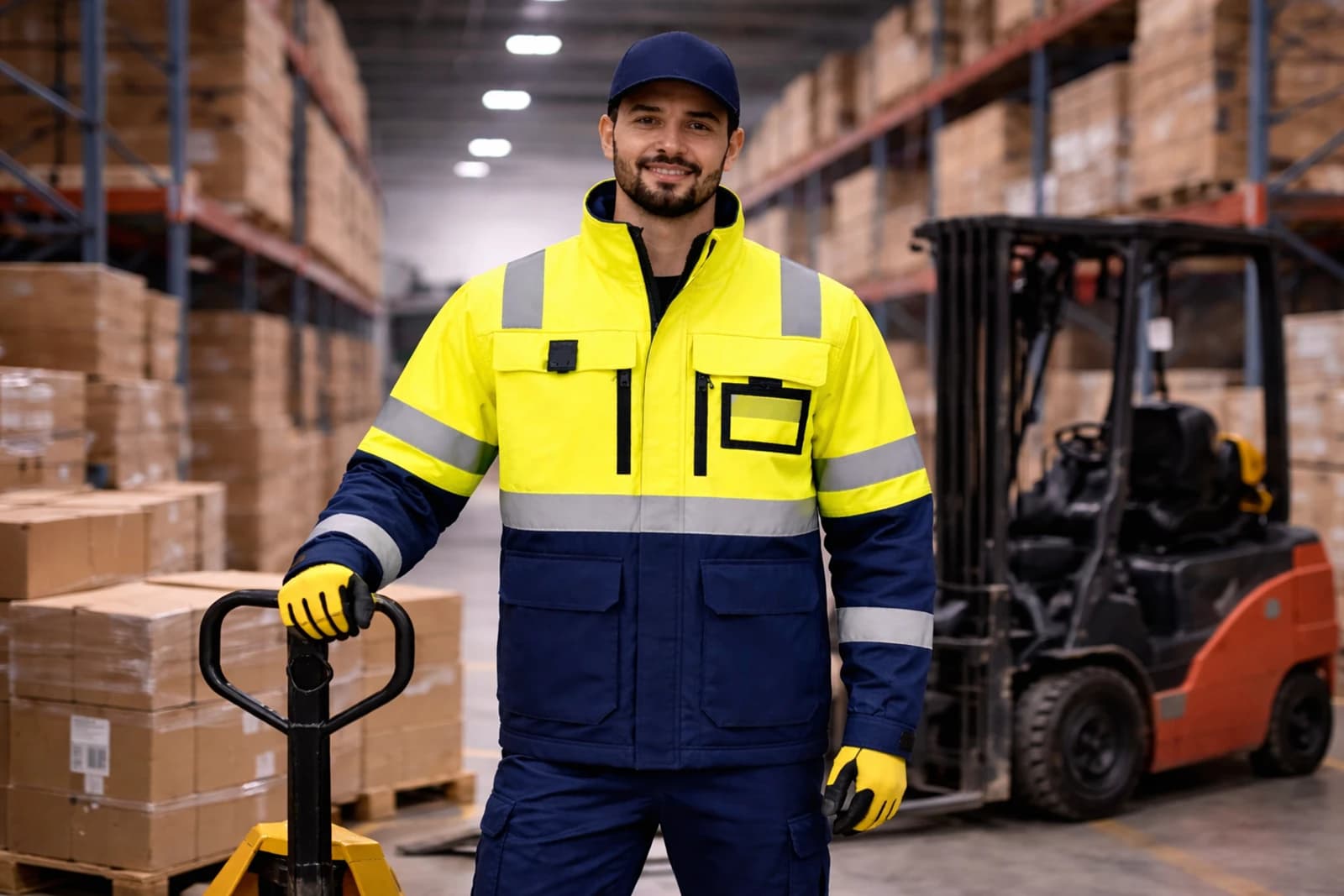
Safety Uniform
Hi-Vis Safety Jacket
Reflective safety jacket for high-visibility site operations and road work crews.