Cold Stores and Production Floors in Food Processing Need Different Workwear
Food processing operations span environments from -25°C cold stores to hot, humid production kitchens — and a single workwear specification cannot serve both. This article covers the fabric, insulation, and hygiene requirements for each zone, how to allocate garments across roles, and what to specify when procuring from a manufacturer.
Buyer context
What procurement teams run into
Food and beverage processing plants operate across some of the widest temperature ranges of any single industrial site. A typical meat, dairy, seafood, or ready-meal facility includes deep-freeze cold stores at -18°C to -25°C, chillers at 0°C to 4°C, ambient production halls at 10°C to 18°C (kept cool for food safety), hot kitchens and cooking areas at 30°C to 45°C, and dispatch yards where workers face full outdoor weather. A single workwear specification cannot serve all these zones — and attempting to do so creates real problems for worker comfort, food safety compliance, and garment lifespan. **1. The thermal range within a food plant is wider than most industrial sites** A worker who picks up an order in a -20°C freezer, drives a forklift through a 4°C chiller, processes product in a 12°C production hall, and then loads a truck on an outdoor dispatch yard in 35°C summer heat passes through a 55°C temperature swing in a single shift. No single garment can perform across that range. Workers issued one standard coverall for the whole plant either overheat in production and cooking areas or suffer cold stress in freezers and chillers. **2. Cold store workwear requires insulation, wind resistance, and moisture management** Workers spending significant time in cold stores and chillers need garments that: - Provide thermal insulation without bulk that restricts movement (forklift drivers, order pickers, and cold-store operatives need full arm and torso range of motion) - Resist wind chill from cold-store evaporator fans and chiller air curtains - Manage moisture — workers sweat during warm-up breaks and when moving between zones; damp insulation loses thermal performance and creates cold stress - Have sealed seams and snug cuffs to prevent cold air ingress - Include a hood compatible with cold-store headgear (bump caps, hair nets, hearing protection) - Use fabrics that remain flexible at -25°C (some standard polyesters and coatings become brittle at deep-freeze temperatures) A standard lightweight coverall or polo shirt provides zero thermal protection in a -20°C freezer. Workers issued only a cold-store jacket over a t-shirt overheat the moment they step into a 15°C production area. **3. Production and hot kitchen workwear requires breathability, hygiene, and wash durability** Workers in production halls, cooking areas, and packing lines need garments that: - Allow heat dissipation and moisture wicking — production halls at 12–18°C are cool by food safety standards, but cooking areas at 30–45°C with steam and fryer heat create heavy sweat conditions - Meet food hygiene requirements: smooth fabric surfaces that do not shed fibres, no external pockets above waist height in open-product areas (to prevent foreign-body contamination), minimal seams and trims where bacteria can harbour - Withstand daily industrial washing at 60–75°C with chlorine or peroxide-based detergents — food plant workwear is washed every shift to remove protein, fat, and carbohydrate residues - Resist staining from oils, sauces, blood, and marinades — dark or mid-tone colours hide staining between washes but must still present a clean appearance - Have snap or zip closures (not buttons) that resist detachment and survive industrial laundering A heavy insulated jacket worn in a 40°C cooking area creates heat stress risk and contaminates the garment with cooking oils that cannot be removed in standard washing. **4. The dispatch yard and outdoor areas require weather protection and visibility** Workers loading and unloading trucks, driving forklifts on external yards, and performing goods-in inspection at dispatch doors need: - Wind and water resistance for rain, wind, and cold exposure on external yards - Hi-vis compliance for yards where forklifts, lorries, and pedestrians share traffic routes - Breathability for summer conditions when yard workers face direct sun and radiant heat from vehicle engines - Durability against abrasion from pallet racking, truck tails, and strapping bands A cold-store jacket worn on a dispatch yard in summer causes immediate overheating. A lightweight polo worn in a freezer provides zero thermal protection. **5. The procurement problem: one spec does not fit all zones** Food processing buyers often attempt to simplify procurement by issuing a single workwear specification across the whole plant. This creates: - Workers in cold stores wearing inadequate insulation → cold stress, reduced productivity, increased sick leave - Workers in production and kitchens wearing insulated garments → heat stress, sweat-soaked garments, hygiene non-compliance - Workers on dispatch yards wearing indoor garments → weather exposure, visibility non-compliance - Accelerated garment failure — cold-store garments worn in hot kitchens accumulate oil and protein stains that degrade insulation; kitchen garments worn in freezers become damp and lose thermal performance - Worker dissatisfaction and non-compliance — staff reject garments that are uncomfortable in their actual working zone, leading to inconsistent uniform wear and hygiene risk The correct approach is zone-based specification: different garments for cold stores, production/kitchens, and dispatch yards — with clear allocation rules based on the worker's primary zone and time spent in secondary zones.
Sourcing approach
How a factory partner can respond
The solution for food processing operations is a zone-based workwear system — industrial coveralls for production and kitchen areas, construction softshell sets for cold store and chiller work, and hi-vis safety jackets for dispatch yard and outdoor operations — sourced from a single manufacturer with food-safe fabric specifications and industrial wash durability. **For cold stores and chillers (construction softshell set):** - Three-layer bonded construction: stretch-woven outer face with DWR finish, windproof membrane, brushed polyester fleece inner - Windproof membrane with zero air permeability — resists cold-store evaporator fan chill and chiller air curtain downdraught - Fabric rated flexible to -25°C (confirm with manufacturer — some standard softshell membranes become brittle below -15°C) - Sealed seams at shoulders, cuffs, and hem to prevent cold air ingress - Articulated sleeves and action back for full range of motion during order picking, pallet wrapping, and forklift operation - Hood compatible with cold-store bump caps and hair nets - Moisture-wicking inner face to manage perspiration during warm-up breaks and zone transitions - Dark or mid-tone colour to resist visible soiling between washes **For production halls and hot kitchens (industrial coverall-pro):** - Smooth-faced polyester-cotton blend fabric (65/35 or 60/40) at 200–240gsm — smooth surface resists fibre shedding, minimal seams reduce bacterial harbourage points - No external chest pockets above waist line in open-product areas (foreign-body contamination risk); thigh and leg pockets only below waist - Snap or zip front closure (no buttons — buttons can detach into product) - Moisture-wicking treatment for cooking areas and hot kitchens where steam and fryer heat create heavy sweat conditions - Breathable fabric construction for production halls at 12–18°C and cooking areas at 30–45°C - Industrial wash durability: ≤ 3% dimensional change after 50+ wash cycles at 60–75°C with chlorine or peroxide detergents - Colour fastness to chlorine and peroxide bleaching agents — confirm fabric maintains colour after repeated industrial laundering - Dark navy, charcoal, or mid-grey colour to hide protein, fat, and oil staining - Reinforced knees for workers kneeling on wet production floors **For dispatch yards and outdoor areas (hi-vis safety jacket):** - EN ISO 20471 Class 2 or Class 3 compliant retroreflective tape on torso and sleeves — mandatory for yards with forklift and lorry traffic - Breathable mesh-lined construction for summer yard work in 30–45°C heat - Wind and water resistant outer shell for winter dispatch yard conditions - Lightweight design (200–250gsm) so it can be worn over cold-store softshell or production coverall without overheating - Secure zip front and adjustable hem to prevent flapping in wind and entanglement with forklift controls - High-visibility colour (fluorescent yellow or orange) maintained after 50+ industrial wash cycles **Zone allocation rules:** - Cold store and chiller operatives: construction softshell set as primary garment; hi-vis jacket worn over softshell when entering dispatch yard - Production and kitchen operatives: industrial coverall as primary garment; no cold-store garment needed unless worker regularly enters chillers - Dispatch yard and goods-in staff: hi-vis jacket as primary outer garment; construction softshell worn underneath in winter, production coverall in summer - Forklift drivers who move between zones: issue both softshell and coverall; driver wears coverall in production areas, adds softshell when entering cold store, adds hi-vis jacket when on external yard **Procurement strategy:** - Order all three garment types from one manufacturer to ensure consistent colour palette, fabric quality, and branding - Specify food-safe fabric: confirm fabric does not shed fibres, does not contain loose buttons or trims, and meets industrial wash requirements at 60–75°C - Pilot 50–100 units per zone before full fleet commitment — get feedback from cold-store operatives, kitchen staff, and yard workers on fit, thermal comfort, and wash durability - Stock 25–30% buffer above annual requirements — food processing workwear faces aggressive washing (daily industrial laundering), protein and oil staining, and abrasion from pallets, racks, and truck tails - Plan for seasonal timing: order softshell sets 3–4 months before winter when cold-store and yard work increases; order coveralls and hi-vis jackets year-round with quarterly replenishment - Confirm with the manufacturer that all garments meet food hygiene requirements: smooth fabric surfaces, no fibre-shedding construction, secure closures that cannot detach into product
Recommended Products
Products that fit this use case
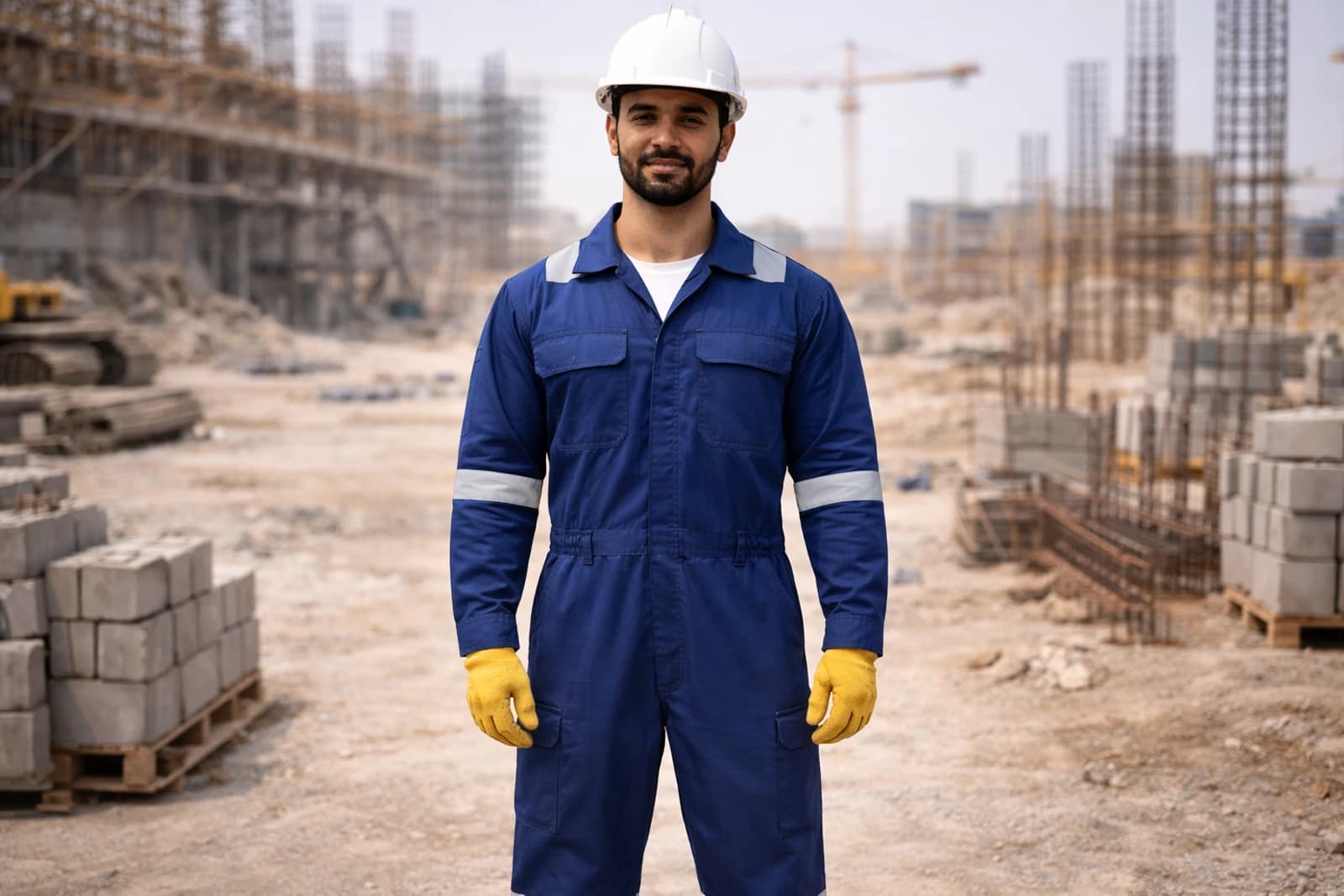
Industrial Workwear
Industrial Coverall Pro
Hard-wearing one-piece coverall for plant, maintenance, and heavy-duty operations.
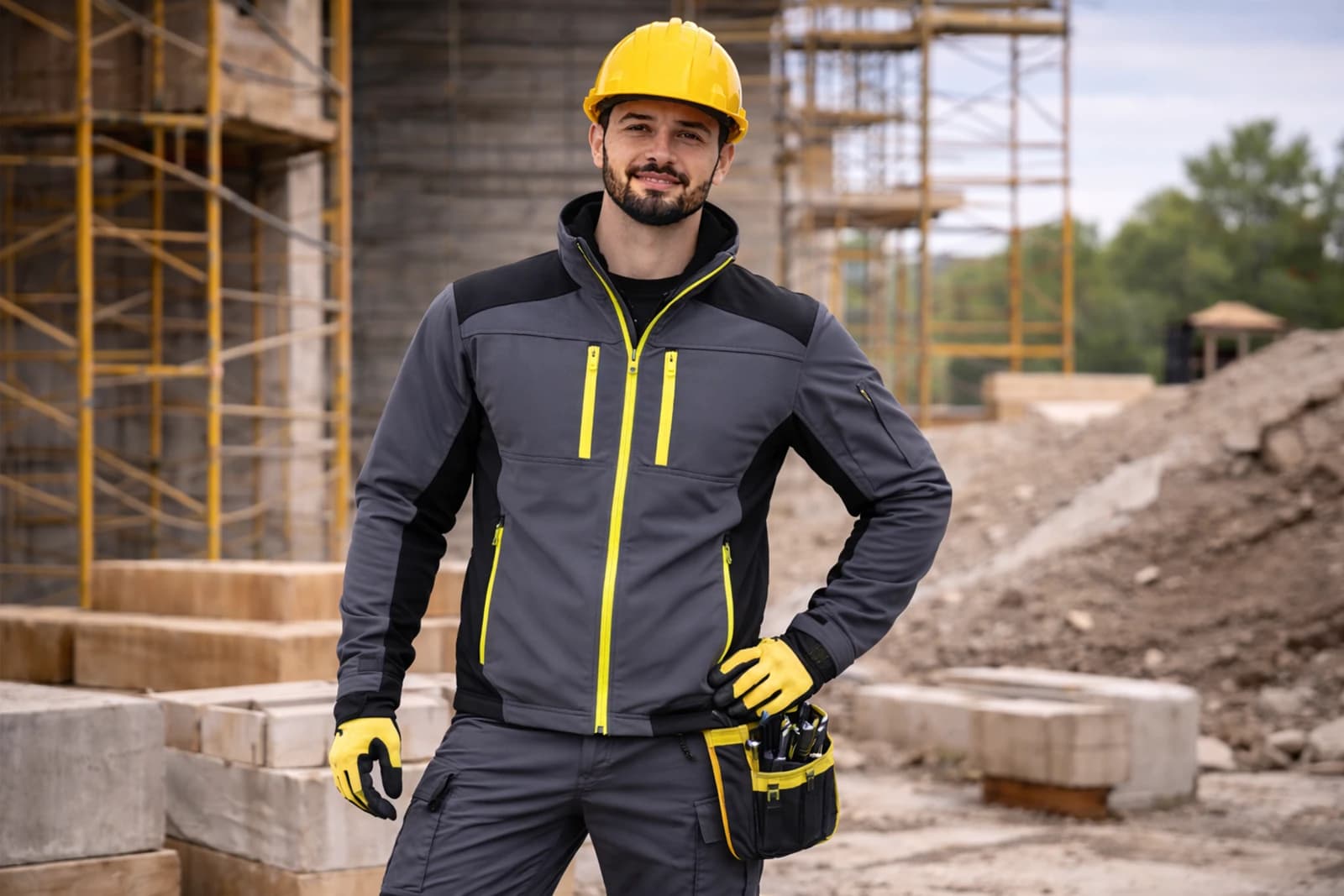
Construction Clothing
Construction Softshell Set
Flexible jacket and trouser set built for crews working across changing weather conditions.