Cold-Weather Workwear for Middle East Construction: Why Winter and Night-Shift Workers Need Insulated PPE — And How a Chinese Manufacturer Delivers It
Middle East B2B buyers often associate the region with extreme heat, but winter temperatures in the Gulf can drop to 5–12 °C at night, and construction projects run year-round — including overnight shifts during cooler months. Workers exposed to cold conditions without proper insulation face reduced dexterity, increased accident risk, and productivity drops of 15–30%. This guide covers why cold-weather PPE matters in the Middle East, the differences between layering with a Construction Softshell Set versus insulated Industrial Coverall Pro, and how a Chinese workwear manufacturer can deliver winter-ready gear for Gulf construction crews and industrial teams.

Buyer context
What procurement teams run into
A procurement director for a major infrastructure contractor in Dubai is overseeing a 3,000-worker project — a new metro-line extension with above-ground stations, track laying, and bridge construction running 24/6. During the summer (April–October), heat stress protocols dominate planning. But in winter (November–March), night-shift temperatures drop to 8–14 °C, and early-morning concrete pours start at 4:00 AM when it's 6–10 °C with desert wind chill. The contractor issued standard cotton coveralls and lightweight hi-vis vests as year-round uniform. On cold-weather night shifts, workers started wearing personal clothing under their coveralls — hoodies, sweatshirts, sometimes multiple layers — creating safety hazards: loose hoodie strings getting caught in machinery, bulky inner layers restricting movement on scaffolding, and non-FR fabrics creating fire risks near welding or cutting operations. For Middle East B2B buyers sourcing from a Chinese workwear manufacturer, the cold-weather problem is often overlooked: - **The belief that "the Gulf is always hot"** — most procurement teams budget only for lightweight, breathable workwear designed for 40–50 °C heat. When winter arrives, they scramble for temporary solutions (buying cheap fleece liners locally at 2–3x markup, or asking workers to improvise). A structured cold-weather workwear plan is rare. - **Layering without a system** — when workers add personal layers under ill-fitting coveralls, the result is: (a) restricted arm and shoulder movement (critical for rebar tying, formwork assembly, and equipment operation), (b) poor fit of safety harnesses over bulky layers, (c) sweat accumulation during active work followed by rapid chilling during breaks (leading to cold-stress illness), and (d) non-compliant fabrics near ignition sources. - **Wind chill on elevated structures** — bridge and high-rise construction workers face 15–25 km/h desert winds that cut effective temperature by 5–8 °C. A standard coverall provides essentially zero wind resistance. Workers on exposed structures (crane operators, steel erectors, scaffolders) need wind-proof or wind-resistant outer layers. - **Dew point and moisture management** — Gulf winter nights have high humidity (60–85% relative humidity is common even in cool months). Cotton fabric absorbs moisture from sweat and ambient dew, becomes heavy, and conducts heat away from the body. Workers in damp cotton at 10 °C can develop hypothermia symptoms within 60–90 minutes. Synthetic moisture-wicking base layers or insulated workwear with moisture management are critical. - **Glove and grip dexterity loss** — when hands are cold, workers lose fine motor control. In construction, this means: slower knot tying for riggers, reduced grip strength for tool operators, and increased dropped-tool incidents. A comprehensive cold-weather PPE plan must include the garment's effect on overall thermal comfort — not just the torso. - **Contract compliance gaps** — several Gulf state HSE regulations (including UAE OSHAD-SF and Qatar's Ministry of Labour Worker Welfare standards) reference general requirements for "suitable PPE for all weather conditions." A worker found wearing non-uniform personal layers under company coveralls can trigger a safety non-compliance finding during an audit. Without addressing cold-weather workwear, buyers face: (a) HSE non-compliance during winter audits, (b) 15–30% night-shift productivity reduction due to cold-related discomfort and movement restriction, (c) increased injury rates from reduced dexterity and ill-fitting layered clothing, and (d) higher per-worker costs from emergency local sourcing of cold-weather gear at premium prices.
Sourcing approach
How a factory partner can respond
The solution is a two-tier cold-weather workwear system for Middle East construction and industrial operations: the Construction Softshell Set for wind-resistant, breathable insulation during active outdoor work, and the Industrial Coverall Pro for a one-piece insulated option suitable for less mobile roles or extended cold exposure. **When to choose the Construction Softshell Set:** The Construction Softshell Set (a softshell jacket and matching trousers) is the primary recommendation for active construction workers, scaffolders, steel erectors, and any role involving significant physical movement during cool-weather shifts: - **Wind-resistant outer fabric** — the softshell uses a bonded three-layer construction: a durable outer nylon/spandex face fabric (approx. 310 GSM) with a DWR (durable water repellent) finish, a mid-layer breathable membrane for wind resistance, and a warm brushed micro-fleece inner lining. This blocks wind while allowing moisture vapor to escape — critical for workers generating metabolic heat through physical activity. - **Breathability vs. insulation balance** — unlike a heavy insulated jacket that causes overheating during active work, the softshell is designed for moderate cold (5–15 °C) with high activity. The breathability rating (MVTR of 5,000–8,000 g/m²/24h) means sweat evaporates rather than soaking the garment. In Gulf winter conditions where workers move between active tasks and static periods (waiting for concrete, equipment, or materials), this breathability prevents the sweat-then-chill cycle. - **Articulated fit for construction movement** — the jacket features articulated elbows and a gusseted underarm for full arm extension when reaching, lifting, or operating tools. The trousers have a gusseted crotch and articulated knees for squatting, kneeling, and climbing. This maintains freedom of movement even when the softshell is worn over a base layer — unlike a bulky coverall that restricts range of motion. - **Layering compatibility** — the softshell set is designed as a mid-layer system. Underneath: a lightweight moisture-wicking base layer (polyester or merino blend). Over the softshell: a hi-vis vest or jacket (Hi-Vis Safety Jacket) for compliance. This three-layer system (base + softshell + hi-vis shell) provides 5–15 °C protection without the bulk of a single thick garment. For warehouse or logistics workers in cooler conditions, the Logistics Polo Uniform worn under the softshell jacket provides both hi-vis compliance and cold protection without a separate vest. - **Practical features** — the jacket has zippered hand-warmer pockets lined with microfleece (for cold hands during equipment idle time), a high-standing fleece-lined collar with a chin guard, adjustable hook-and-loop cuffs to seal out wind, and a drawcord hem. The trousers have zippered side pockets, knee-pad pockets (compatible with foam knee pads for kneeling work), and ankle zippers for easy donning over boots. - **Durability** — the fabric has a tear strength of 25+ N (tested to ISO 13937) and the DWR finish withstands 20+ wash cycles. For Gulf construction sites with abrasive surfaces (concrete, rebar, scaffolding), this represents typical seasonal durability (one winter season plus the shoulder months of November and March). **When to choose the Industrial Coverall Pro:** The Industrial Coverall Pro is the better choice for less mobile roles, extended cold exposure (3+ hours), or workers who prefer a one-piece system: - **One-piece thermal efficiency** — the coverall eliminates the cold gap at the waist (the "draft gap" between jacket and trousers that occurs when reaching or bending). For stationary or semi-stationary workers (crane operators, security checkpoint personnel, quality inspectors on outdoor rebar inspection), the coverall provides continuous insulation from neck to ankle. - **Insulation for lower activity levels** — the coverall uses a quilted polyester insulation lining (120 g/m² in the torso, 80 g/m² in the sleeves) bonded to a durable outer fabric (65% polyester / 35% cotton, 250 GSM with a DWR finish). This provides effective insulation at 0–15 °C for low-activity roles. The insulation is synthetic (not down), so it retains thermal performance even when damp — relevant for Gulf humidity. - **Full-body wind and dust protection** — the coverall covers the entire body with a full front zip protected by a storm flap with hook-and-loop closure. An elasticized waist, adjustable snap cuffs, and ankle snap closures prevent wind entry. In Gulf winter, this also provides protection against sand and dust carried by cool winds — a combined cold-dust hazard during shamal wind events. - **Multiple pocket configuration** — the coverall includes: two chest pockets with flaps, one mobile phone pocket (left chest, with headphone outlet), two side pockets, one rule pocket (right leg), two back pockets, and a knee-pad pocket system. For inspectors and supervisors who carry clipboards, tablets, radios, and small tools, this organized pocket layout eliminates the need for a separate tool vest or belt. - **Customization** — factory embroidery or heat-transfer logos on chest and back. Reflective tape can be added to the torso and sleeves for night-shift visibility — an important consideration since cold-weather work in the Gulf often coincides with overnight shifts. **Sourcing recommendations for Middle East B2B buyers:** 1. **Order a pre-production fit sample set** — request one construction softshell set and one industrial coverall pro in the sizes most common in your workforce. Test for: (a) range of motion while wearing a safety harness, (b) ease of donning and doffing in a vehicle or confined space, (c) comfort when worn with existing hi-vis PPE. A sampling run of 5–10 units across size S–XXL costs approximately $200–400 delivered and prevents a 10,000-unit sizing mistake. 2. **Specify the wash-test protocol** — request fabric and insulation samples tested to 25 wash cycles (ISO 6330) before bulk order. Verify: DWR performance loss, insulation clumping (synthetic insulation should migrate no more than 5% from original position), and seam integrity. Chinese manufacturers can typically complete this in 7–10 days. 3. **Layer system, not single garment** — for most construction roles, the softshell set plus a hi-vis jacket provides better flexibility than a single insulated coverall. Budget the softshell set as the primary cold-weather layer and add the coverall for specific low-activity roles. This reduces total cost while improving worker compliance — workers are more likely to wear a comfortable, breathable softshell than a bulky coverall designed for cold that they abandon after 30 minutes of active work. 4. **Timing** — winter in the Gulf runs November through March. Order cold-weather gear by August–September for delivery by October, before temperatures drop and local suppliers raise prices by 30–50%.
Recommended Products
Products that fit this use case
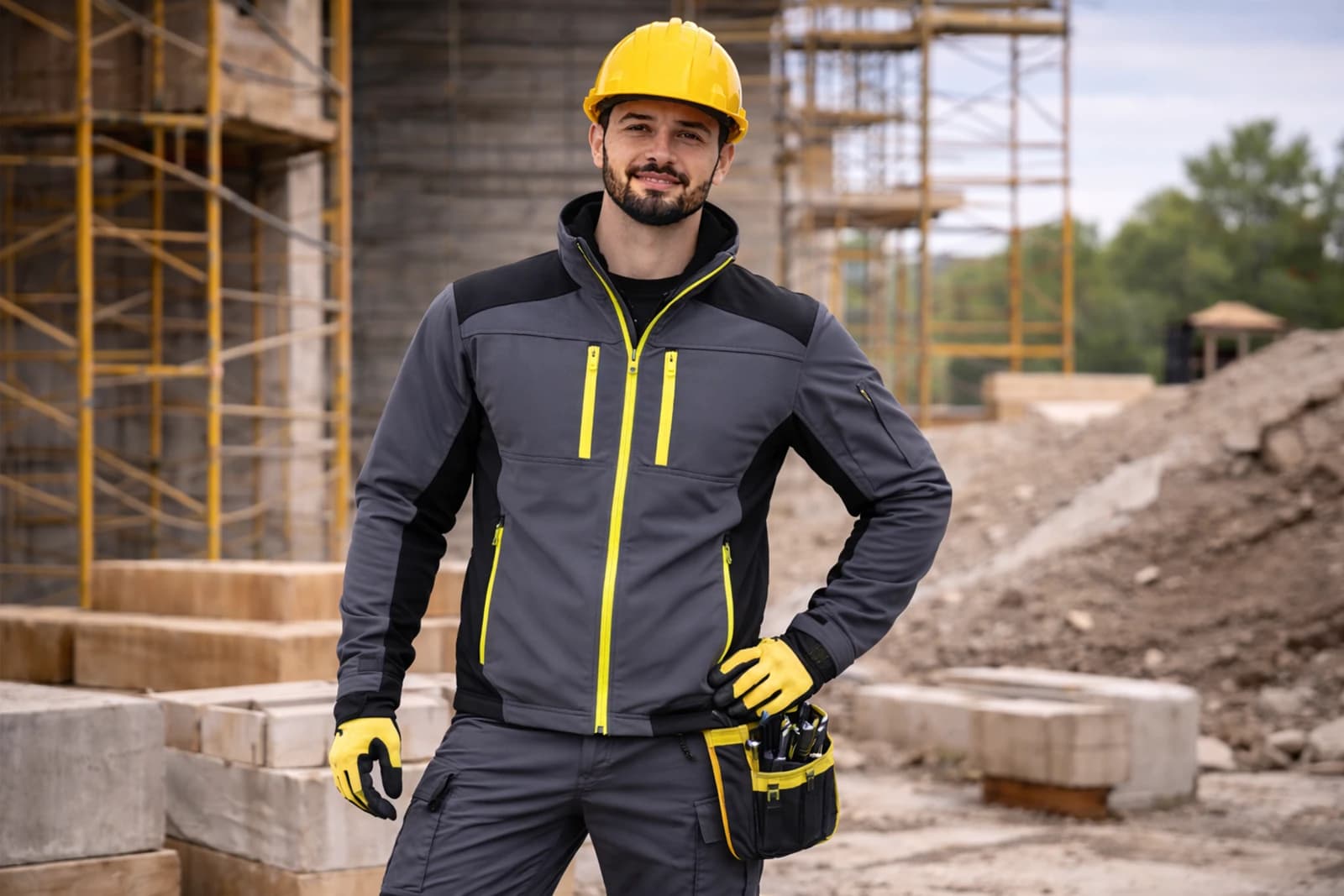
Construction Clothing
Construction Softshell Set
Flexible jacket and trouser set built for crews working across changing weather conditions.
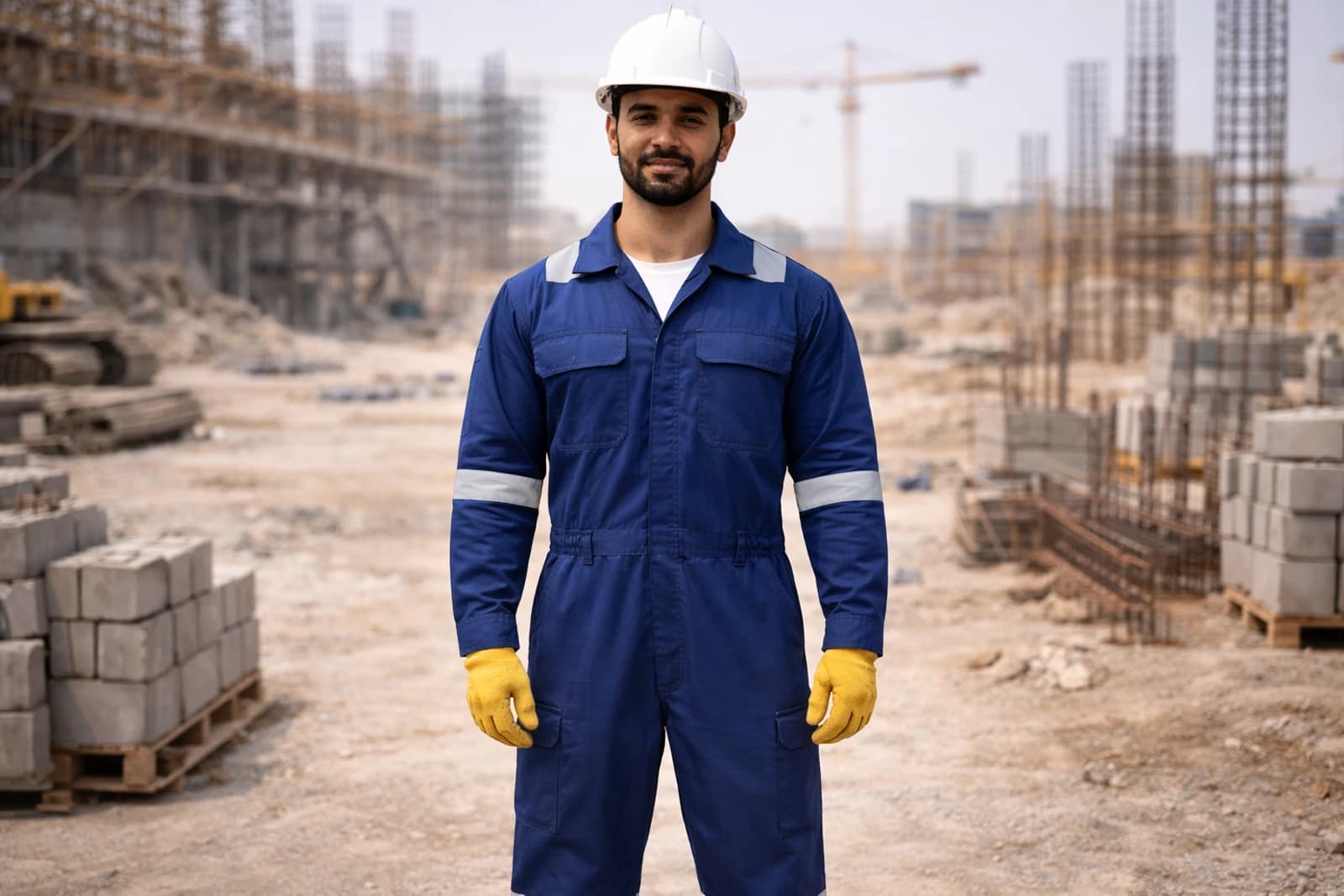
Industrial Workwear
Industrial Coverall Pro
Hard-wearing one-piece coverall for plant, maintenance, and heavy-duty operations.