Color Coding Workwear for Safety: A Guide for Middle East Facility and Site Managers Sourcing from China
Color-coded workwear helps Middle East facility managers, safety officers, and site supervisors identify trade roles, contractor companies, and access levels at a glance. This guide explains standard color coding systems and shows GCC buyers how to specify consistent, compliant workwear colors when ordering from a Chinese manufacturer.

Buyer context
What procurement teams run into
<p>A petrochemical refinery in Jubail operates with five different contractor companies on site simultaneously. Each contractor issues workwear in whatever color is cheapest and available — one in navy blue, one in dark grey, another in olive green. When an emergency alarm sounds and all 800 workers must evacuate to the assembly point, the site safety supervisor cannot distinguish which contractor teams have arrived and which are still unaccounted for. The permit-to-work system requires identifying workers by company at every restricted-area entry point, but security personnel must stop and ask every worker — slowing operations by an average of 12 minutes per shift change.</p><p>In Doha, a construction megaproject with 2,500 workers uses a single color of coveralls for everyone. A pipefitter needs to enter a welding zone, but the site safety officer has no way to tell — at a distance — whether the person approaching has the correct trade qualification for the area. The officer must personally check hard hat stickers on every worker who enters, creating a bottleneck at each controlled access point. When subcontractors from three different companies work in the same tower simultaneously, tracking which company's team occupies which floor becomes a manual whiteboard exercise that is always 20 minutes out of date.</p><p>Both problems are solved by the same approach: color-coded workwear. When workwear colors are assigned by trade, company, or access level — and enforced consistently — site managers can read the worksite like a dashboard. Identifying a welder, a contractor team, or a confined-space authorized worker becomes a one-second visual check. For Middle East buyers who supply workwear to multi-contractor industrial sites, specifying color in the initial purchase order from a Chinese manufacturer is far easier than trying to retrofit a color system after uniforms arrive.</p>
Sourcing approach
How a factory partner can respond
<h2>Which Workwear Colors Are Standard and What They Mean</h2><p>There is no single global standard for workwear color coding, but common industry practices have emerged. For hi-vis garments — where the primary function is conspicuity — fluorescent yellow-green is the most widely specified color for daytime roles across EN ISO 20471 and ANSI/ISEA 107 standards. Fluorescent orange-red is a common alternative in North America and is often specified for roadside and railway workers. In GCC industrial sites, fluorescent yellow-green (often called "lime") is the dominant choice because it provides the highest contrast against the sand and concrete background that dominates Middle East construction environments.</p><p>For non-hi-vis workwear — coveralls, polo shirts, and softshell jackets — colors serve identification rather than visibility. The most common site color coding systems assign colors by company or by trade. In the company-based system, each contractor on site receives a unique color: blue for the main civil contractor, grey for the MEP contractor, white for the cleaning company, and orange for the security team. In the trade-based system, welders receive red coveralls, electricians blue, pipefitters grey, scaffolders yellow, and general laborers white.</p><p>Many GCC operators use a hybrid system. The Saudi Aramco Al-Maha and similar site color coding systems use hi-vis vest colors worn over standard coveralls: green for certified first aiders, red for fire watch, yellow for general workers, and blue for supervisors. The vest approach is practical because it avoids the cost and inventory complexity of maintaining color-differentiated coveralls for every role — the same set of navy blue coveralls works for everyone, and the role is shown by the vest color alone.</p><h2>What to Specify When Ordering Color-Coded Workwear from China</h2><p>When you source color-coded workwear from a Chinese manufacturer such as Sidaier, include these specifications in your order to ensure color consistency across batches:</p><p><strong>Standardized color references.</strong> Do not rely on color names alone ("orange," "navy blue") — they vary significantly between fabric mills. Instead, specify a Pantone code for each color. For example, Pantone 19-4052 TPX (Classic Navy) for company A coveralls, Pantone 17-1641 TPX (Crimson) for welders, and Pantone 15-1247 TPX (Gold Yellow) for scaffolders. Request a physical color swatch from the fabric supplier that matches the specified Pantone code, and keep a signed reference swatch for incoming quality inspection.</p><p><strong>Colorfastness requirements.</strong> In GCC conditions — intense UV, high heat, industrial washing — non-colorfast fabrics fade visibly within weeks. Specify a colorfastness to light rating of minimum 4 (ISO 105-B02) for all dyed fabrics used in hi-vis or identification roles. For hi-vis fluorescent fabrics, specify that the finished garment meets the luminance factor (β) requirements of EN ISO 20471 even after 20 wash cycles at 60 °C. Request a wash test certificate from the manufacturer that confirms the color remains within the standard's tolerance after accelerated washing.</p><p><strong>Minimum order quantities per color.</strong> If you need five different coverall colors at 300 units each, the total is 1,500 units. However, a Chinese manufacturer may charge a separate dye-lot setup fee for each color — materials are purchased and dyed per color batch. Ask for the incremental setup cost per additional color so there are no surprises in the final invoice. Consolidating multiple colors into a single order is normally the most cost-effective approach, as dye-lot costs for additional colors are typically lower when processed alongside the main production run.</p><h2>Practical Color Selection for GCC Work Sites</h2><p>Light-colored workwear (white, light grey, light blue) reflects more solar radiation and keeps workers cooler in outdoor Gulf environments. Dark colors (navy, black, dark green) absorb more heat and can raise the surface temperature of the garment by 10 to 15 °C under direct sun. Where possible, assign lighter colors to outdoor roles that require hi-vis vests or jackets — the lighter base layer reduces overall heat load, while the hi-vis vest or jacket provides the required conspicuity.</p><p>For polo uniforms worn in air-conditioned logistics warehouses or office-adjacent roles, the fabric color has less thermal impact, but color retention still matters. White polo shirts on GCC warehouse teams become visibly soiled within two to three shifts and require frequent replacement. Navy blue or charcoal polo shirts hide stains better and maintain a professional appearance for 50 to 80% longer between replacements — an important consideration for B2B buyers managing uniform budgets across hundreds or thousands of staff.</p><h2>Common Color Coding Systems Used in GCC Industrial Sites</h2><p>While no single standard is mandatory, the following color assignments are widely recognised in Gulf oil, gas, and petrochemical facilities:</p><ul><li><strong>Red hi-vis or coveralls:</strong> Fire watch personnel, emergency response team members, and workers with confined space entry authorisation</li><li><strong>Green hi-vis:</strong> First aiders, safety officers, environmental monitors</li><li><strong>Blue hi-vis or coveralls:</strong> Supervisors, competent persons, permit issuers</li><li><strong>Yellow hi-vis or coveralls:</strong> General workers, operators, technicians</li><li><strong>Orange hi-vis:</strong> Road and traffic workers (common in ADNOC and similar sites)</li><li><strong>White coveralls:</strong> Engineers, inspectors, visitors (white is also standard for cleanroom environments in pharmaceutical and food processing facilities)</li></ul><p>Confirm the color coding schedule with your client's site safety officer or HSE department before placing the order. Some major operators have site-specific color schedules that override industry conventions. Once confirmed, document the color assignment for each trade or company and include it in the purchase order. A single well-specified order from a Chinese manufacturer will deliver consistent color across all batches for the life of the contract.</p>
Recommended Products
Products that fit this use case
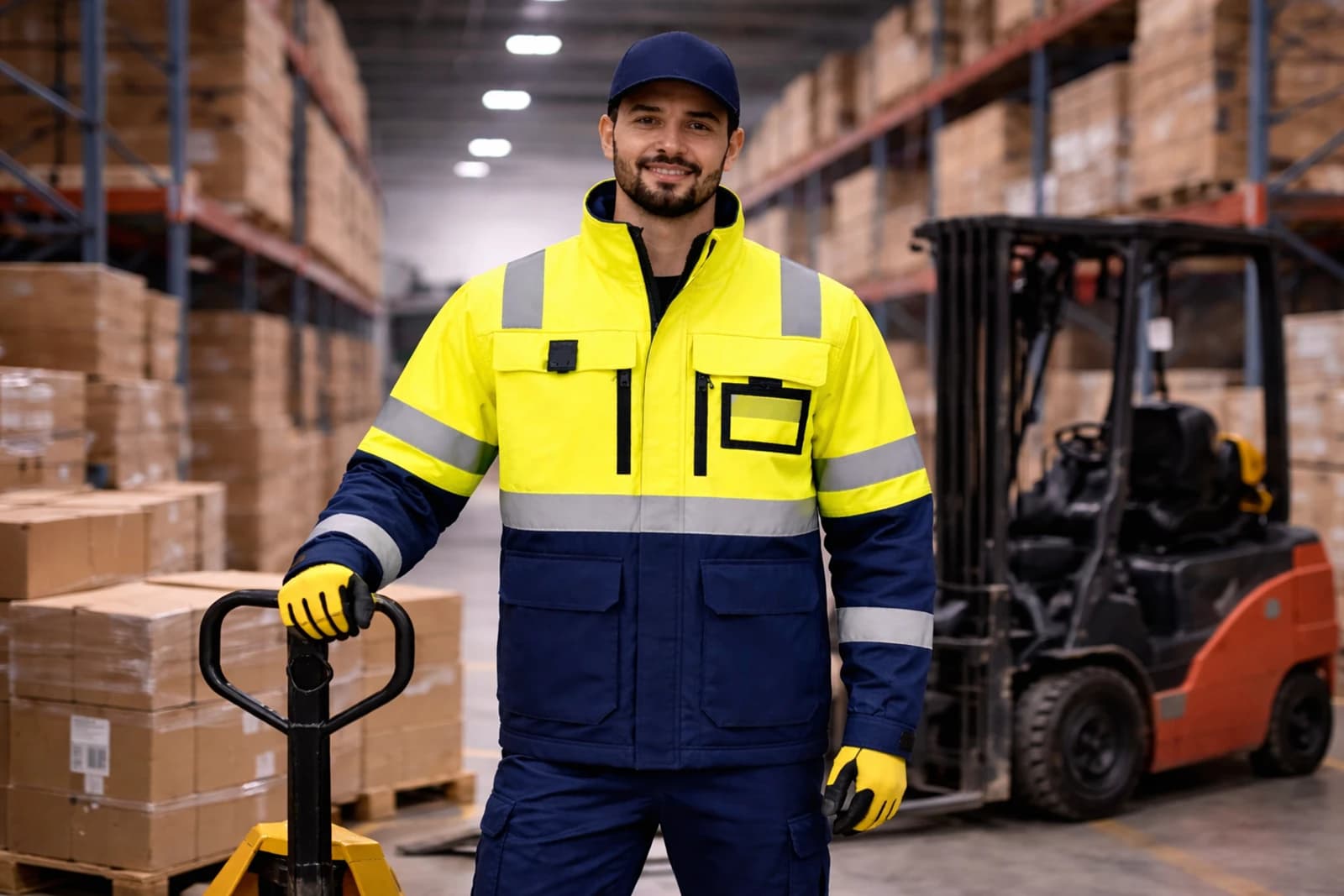
Safety Uniform
Hi-Vis Safety Jacket
Reflective safety jacket for high-visibility site operations and road work crews.

Industrial Workwear
Industrial Coverall Pro
Hard-wearing one-piece coverall for plant, maintenance, and heavy-duty operations.
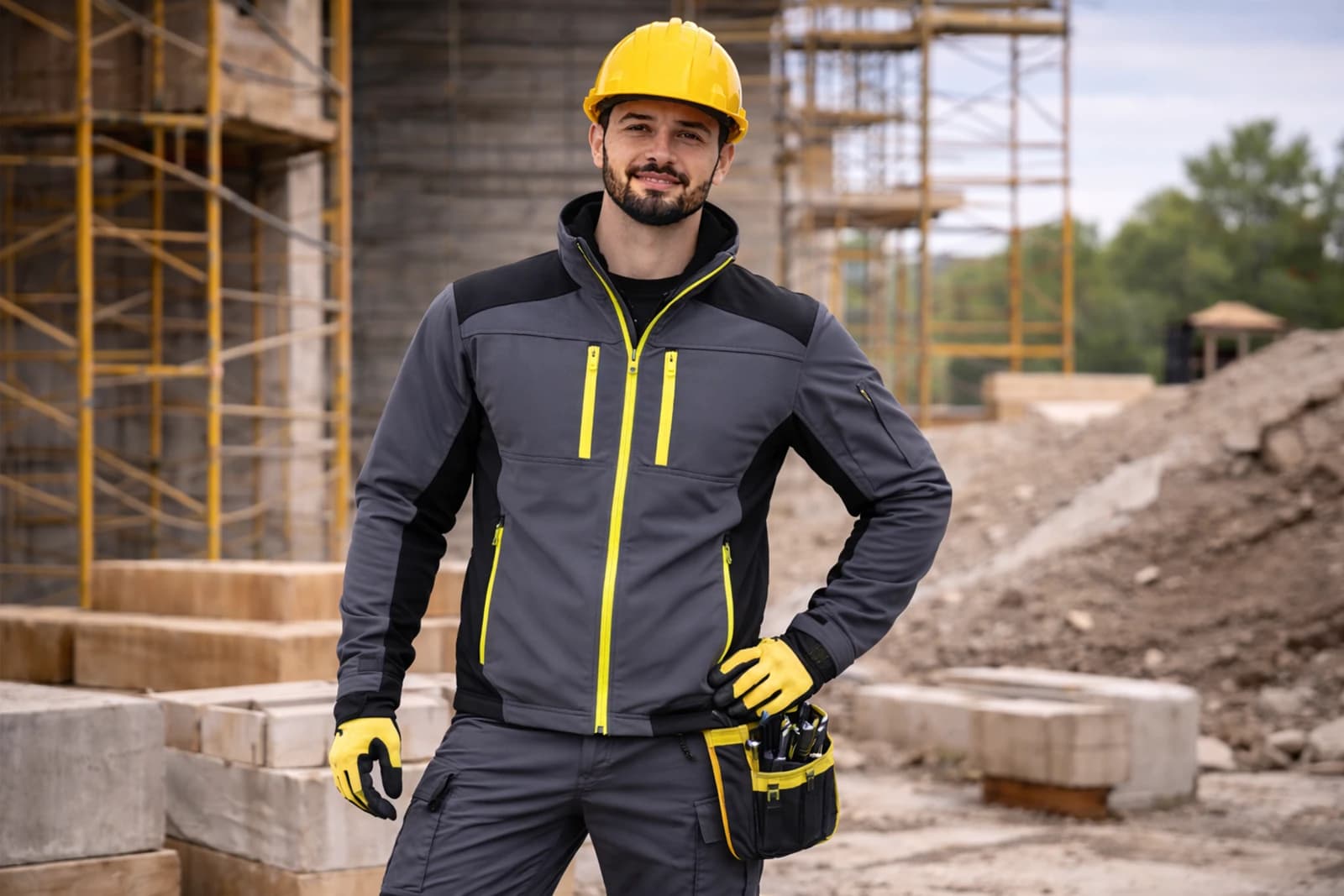
Construction Clothing
Construction Softshell Set
Flexible jacket and trouser set built for crews working across changing weather conditions.

Logistics Uniform
Logistics Polo Uniform
Breathable uniform polo for warehouse, delivery, and last-mile teams.