Hi-Vis Softshells vs Hi-Vis Jackets: Construction Safety Workwear for Middle East Cold Months
Middle East construction sites don't stop when temperatures drop below 20°C — but worker safety requirements change. This guide compares hi-vis softshell sets with traditional hi-vis safety jackets for Gulf construction crews during the cooler months (November–March), covering thermal performance, moisture management, reflective tape durability, and how to specify both options when sourcing from a Chinese workwear manufacturer.
Buyer context
What procurement teams run into
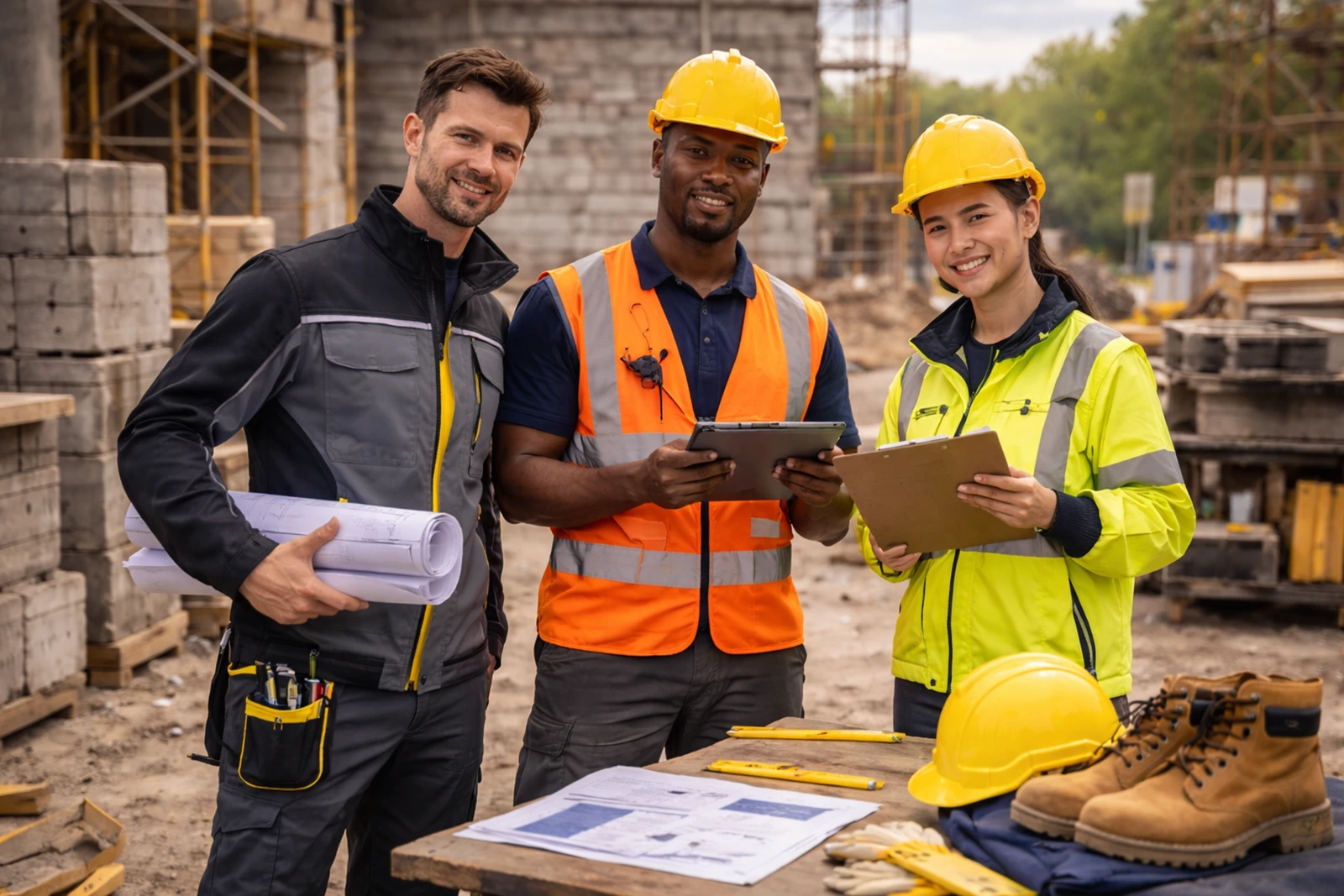
A procurement manager at a leading construction company in Riyadh orders 800 hi-vis jackets for a large residential tower project scheduled to run through winter. By December, when night temperatures in Riyadh drop to 8–12°C, the site engineers are wearing two or three layers under their hi-vis jackets — reducing mobility for climbing scaffolding and causing sweat buildup that chills them when they stop moving. The site safety officer notes that workers on upper floors face winds that cut through single-layer jackets, while ground-level workers in the same jackets are too warm during midday sun exposure. The crew ends up mixing personal jackets (non-hi-vis) under their work-issued hi-vis vests, creating a compliance risk during safety audits. This is the core problem: Middle East construction sites operate year-round, and the "winter" season (November to March) presents a challenging temperature range — from 8°C at night to 28°C during the day. No single garment handles both extremes well. Hi-vis safety jackets (typically 120–150 GSM with a lightweight polyester shell) are too light for cold morning shifts but adequate for midday. Standard fleece or insulated jackets, if worn underneath, often obscure the reflective tape or sit poorly under the vest, and workers tend to remove layers during warm hours, leaving them under-protected. For B2B buyers sourcing from Chinese workwear manufacturers, the question isn't "which garment type is better" — it's "how to offer both options in a uniform program so supervisors and safety officers can assign the right garment to the right crew based on work location, shift timing, and exposure level." A hi-vis softshell set (jacket + detachable hood, often paired with matching pants) provides 180–240 GSM stretch fabric with a bonded fleece backing, while a standard hi-vis safety jacket relies on a lighter shell that works better for warmer conditions. The wrong blanket choice leads to compliance issues, worker discomfort, and reduced productivity during the 4–5 month cool season.
Sourcing approach
How a factory partner can respond
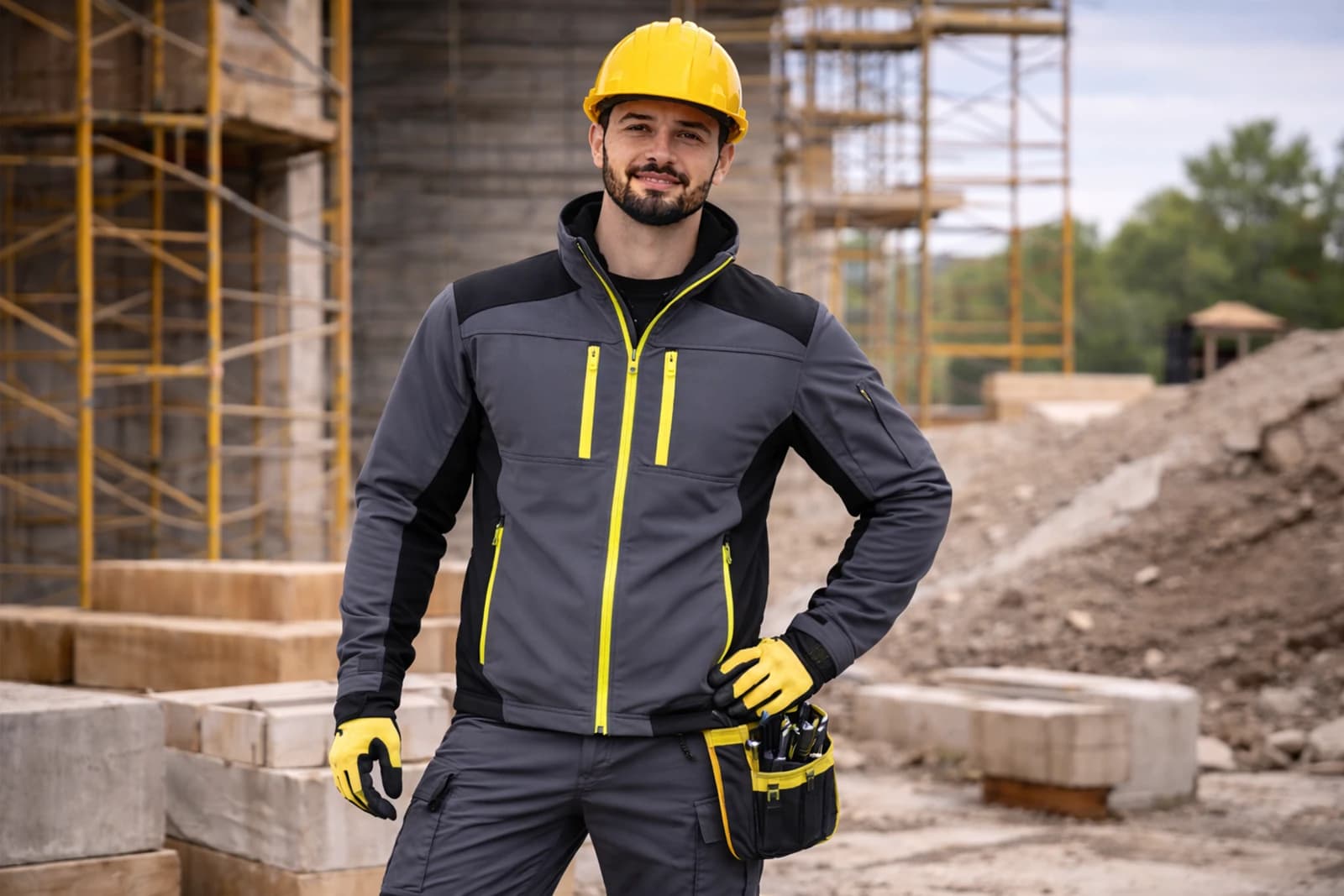
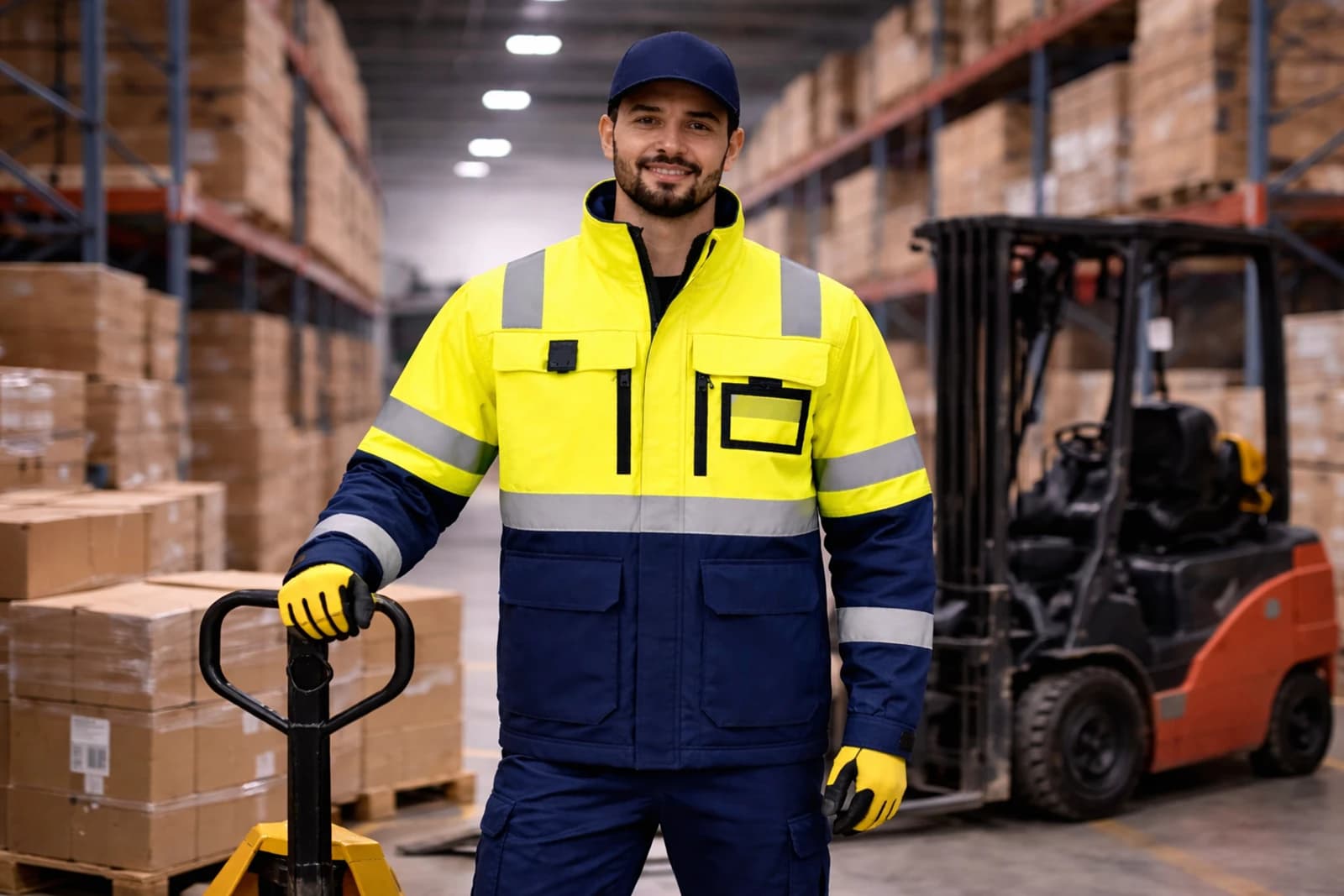
The solution is a tiered approach that gives site supervisors two hi-vis garment options, matched to work conditions rather than a one-size-fits-all policy. **Hi-vis Softshell Set (construction-softshell-set)** — Best for night shifts, early morning (before 9 AM), elevated positions exposed to wind, and guard/security personnel stationed at gates. The softshell construction uses a bonded tri-laminate: a durable outer face (typically 93% polyester / 7% elastane for stretch), a water-resistant membrane (10,000 mm breathability rating minimum), and a 180 GSM brushed fleece inner. This delivers three benefits: wind resistance that blocks 15–20 km/h site winds, breathability so workers don't overheat during active periods, and stretch recovery that moves with climbing and crouching on scaffolding. Specify ANSI/ISEA 107 Class 3 or EN ISO 20471 Class 3 depending on your market, with segmented reflective tape (50 mm width, silver) on the torso, arms, and — critically — the hood. Many Chinese factories offer this softshell set with a detachable hood so the same garment covers both hood-up (cold/windy) and hood-down (warmer) conditions. The matching softshell pants with full-length side zippers allow workers to add or remove them without removing boots. **Hi-vis Safety Jacket (hi-vis-safety-jacket)** — Best for daytime shifts (10 AM to 4 PM), ground-level workers, and indoor/covered construction areas where wind exposure is minimal. Specify a lightweight 120–150 GSM polyester oxford shell with a mesh lining for maximum breathability. Two key features matter: detachable sleeves (converting to a hi-vis vest when temperatures rise) and a hidden ID/document pocket on the inner left chest. For Middle East sites, the jacket shell should be treated with a UV-resistant coating — standard hi-vis fabric fades within 2–3 months under Gulf sun, losing compliance brightness. Chinese manufacturers producing the hi-vis safety jacket model can apply a UV-stabilized pigment at the yarn-dyeing stage, extending color fastness to 12+ months in direct sunlight. **How to specify both in one RFP:** When sourcing from Sidaier, request a bulk order split — e.g., 60% hi-vis safety jackets for daytime/ground crews, 40% hi-vis softshell sets for night/elevated/guard crews. Standardize on one reflective tape design and one color (orange or lime-yellow, per local regulations) across both garments so the site uniform looks cohesive. Include a sizing cross-reference chart — a worker wearing L in the safety jacket should order XL in the softshell set, since the insulated lining reduces interior space. Pre-production samples of both garments should be field-tested together on the same site for one week before final order approval.
Recommended Products
Products that fit this use case
Construction Clothing
Construction Softshell Set
Flexible jacket and trouser set built for crews working across changing weather conditions.
Safety Uniform
Hi-Vis Safety Jacket
Reflective safety jacket for high-visibility site operations and road work crews.