Construction Safety Workwear for Middle East Job Sites: Hi-Vis Jackets, Softshell Sets, and Sourcing from a Chinese Manufacturer
Middle East construction contractors — from high-rise developments in Dubai to infrastructure projects in Riyadh, Doha, and Abu Dhabi — face a unique workwear challenge: how to keep workers safe and comfortable on job sites where temperatures exceed 50°C and site conditions demand both high-visibility compliance and all-day wearability. This guide covers when to spec hi-vis safety jackets vs construction softshell sets for different site roles, what to look for in heat-adapted hi-vis garments, and how to source construction workwear from a Chinese manufacturer that understands Gulf safety requirements.
Buyer context
What procurement teams run into
Construction job sites in the Middle East are among the most demanding environments in the world for safety workwear. From the high-rise towers of Dubai Marina to the sprawling infrastructure projects of NEOM and the industrial megaprojects of Saudi Arabia's Eastern Province, contractors must balance compliance with multiple safety standards — OSHAD in Abu Dhabi, SASO in Saudi Arabia, and international benchmarks like EN ISO 20471 for hi-vis and EN ISO 13688 for protective clothing — against the practical reality of workers spending 8–10 hours in direct sunlight at temperatures that routinely exceed 45°C and can peak above 50°C in the summer months.\n\nThe most common mistake construction procurement teams make is buying hi-vis workwear designed for European or North American climates and simply accepting that workers in the Gulf will find it too hot and heavy to wear properly. A typical EN ISO 20471 Class 3 hi-vis jacket with 300 gsm poly-cotton fabric plus bonded reflective tape may be comfortable for a site supervisor in London but becomes an unbearable heat trap for a steel fixer on a concrete deck in Riyadh at 2 PM. The result: workers remove their hi-vis garments, leaving themselves unprotected, and site safety officers either look the other way or enforce compliance with unhappy crews — neither outcome is acceptable.\n\nA second problem is role-specific mismatch. On a typical Middle East construction site, you have multiple roles with different workwear needs: general laborers doing concrete work, formwork, and rebar tying; equipment operators who sit in air-conditioned cabs but need hi-vis for egress; site supervisors who move across the entire project and need visibility from every angle; and welders, scaffolders, and finishing crews who need additional protective features. Buying a single hi-vis garment type for everyone either over-protects some roles (making them uncomfortable unnecessarily) or under-protects others (leaving them exposed).\n\nHeat-related safety incidents are a real concern. Workers wearing heavy hi-vis jackets or coveralls in Gulf summer conditions risk heat exhaustion, reduced concentration, and slower reaction times — exactly when they need to be alert around mobile plant, moving loads, and elevated work platforms. A worker who is heat-stressed and uncomfortable is more likely to make a mistake than one wearing properly ventilated hi-vis garments that allow airflow while maintaining the required level of visibility.\n\nSizing is another persistent issue in Middle East construction. Workforces are typically multinational — laborers from South Asia, operators from the Philippines, supervisors from Egypt and the Levant — and body types vary significantly. Hi-vis garments sized for Western or East Asian proportions don't fit correctly across this range. Excess fabric from oversized garments creates a snagging hazard near machinery and rebar, while undersized garments ride up and expose the wearer's torso. Neither is safe, and neither is comfortable for a full work day.\n\nFinally, contractors managing multiple sites across the Gulf face a logistical challenge with colour consistency and branded visibility. Each site or project may require a distinct uniform colour for role identification — orange for general labor, yellow for supervisors, red for emergency response — and maintaining consistent colour across production runs is critical for clear on-site identification. Without a sourcing partner that can match colours precisely across reorders and different garment types, contractors end up with workers on the same site wearing different shades of the same colour, defeating the purpose of role-based colour coding.
Sourcing approach
How a factory partner can respond
The most effective approach for Middle East construction contractors is a two-tier hi-vis system designed for the climate: lightweight hi-vis safety jackets for general site duty and all-weather conditions, paired with hi-vis construction softshell sets (jacket + trouser) for roles that need warmth, wind protection, and additional durability during cooler months and overnight work.\n\n**For general laborers and site-wide use: the heat-adapted hi-vis safety jacket.** The most important specification for a Gulf construction site is not insulation — it's ventilation. Choose a hi-vis safety jacket made from a lightweight 150–180 gsm breathable fabric such as polyester mesh or a moisture-wicking poly-cotton blend with mesh lining. Look for EN ISO 20471 Class 3 certification but avoid heavy bonded linings. Key design features for Gulf conditions: underarm ventilation zippers or mesh panels for airflow, a mesh inner lining rather than a solid lining, and a shorter cut that doesn't trap heat around the waist. Use 5 cm wide reflective tape on the torso and sleeves (50 mm is the standard for EN ISO 20471 Class 3), but bonded tape rather than sewn-through for better breathability at the attachment points. For site roles that don't need full jacket coverage — such as equipment operators or site runners — a hi-vis safety vest over a company-branded work polo offers sufficient visibility while maximizing airflow. Specify EN ISO 20471 Class 2 for vest duty where Class 3 full jacket coverage is not required. Add feature pockets sized for mobile phones and two-way radios, as most site workers in the Gulf carry a personal phone and a site radio simultaneously.\n\n**For site supervisors, night crews, and cooler months: the construction softshell set.** Softshell hi-vis garments (EN ISO 20471 Class 3 jacket + Class 2 trousers) fill a specific niche on Gulf construction sites: overnight work, cooler winter months (December–February), and supervisor roles where the wearer needs warmth without the bulk of a traditional fleece or heavy jacket. A 280–320 gsm bonded polyester softshell with a breathable membrane (water-resistant but not fully waterproof — full waterproofing reduces breathability and traps heat) offers wind protection during the cooler season while maintaining the stretch and mobility needed for climbing scaffolding and navigating uneven terrain. Include adjustable cuffs, a stand-up collar, and a two-way front zipper for ventilation control. Softshell trousers should have reinforced knees for kneeling and cuffed ankles to keep cement dust and debris out. For night crews working on road and infrastructure projects, add retro-reflective tape on the lower trouser legs for 360° visibility when crossing or working near traffic. The softshell set is particularly useful for multi-purpose workers who shift between inside structure protection (where wind chill is not an issue) and exposed outdoor areas (where it is) during the same shift.\n\n**Colour-coded role identification and consistent sourcing.** A well-planned hi-vis system assigns distinct colours per role: fluorescent yellow-green for general supervision and traffic control, fluorescent orange for general laborers and ground workers, and red for emergency response and first aid. When both hi-vis jackets and softshell sets come from the same manufacturer as platform-based garments, contractors get exact colour matching across garment types (essential for role identification at a glance) and consistent application of retro-reflective tape patterns (torso, sleeves, and trouser legs follow the same layout regardless of garment type).\n\n**Sourcing from a Chinese manufacturer with construction sector expertise.** The right Chinese workwear manufacturer for Middle East construction projects should demonstrate specific capabilities: fabric sourcing for lightweight hi-vis materials that meet EN ISO 20471 while maintaining breathability below 180 gsm, bonded reflective tape application that survives 25+ industrial wash cycles without peeling, proportional sizing (short and tall variants per chest size for multinational workforces), role-based colour coding across multiple garment types, and the ability to apply custom branding through heat-transfer logos, sew-down patches, or embroidery without compromising safety certification. Confirm EN ISO 20471 and EN ISO 13688 certification documentation upfront. Ask for size-set samples in each colour and garment type before bulk production, and request wash-test documentation showing reflective tape retention after repeated industrial laundering. If a manufacturer cannot explain how they adapt hi-vis design for hot climates — or cannot match colours between jacket and softshell sets from the same fabric platform — consider a more experienced supplier.
Recommended Products
Products that fit this use case
Safety Uniform
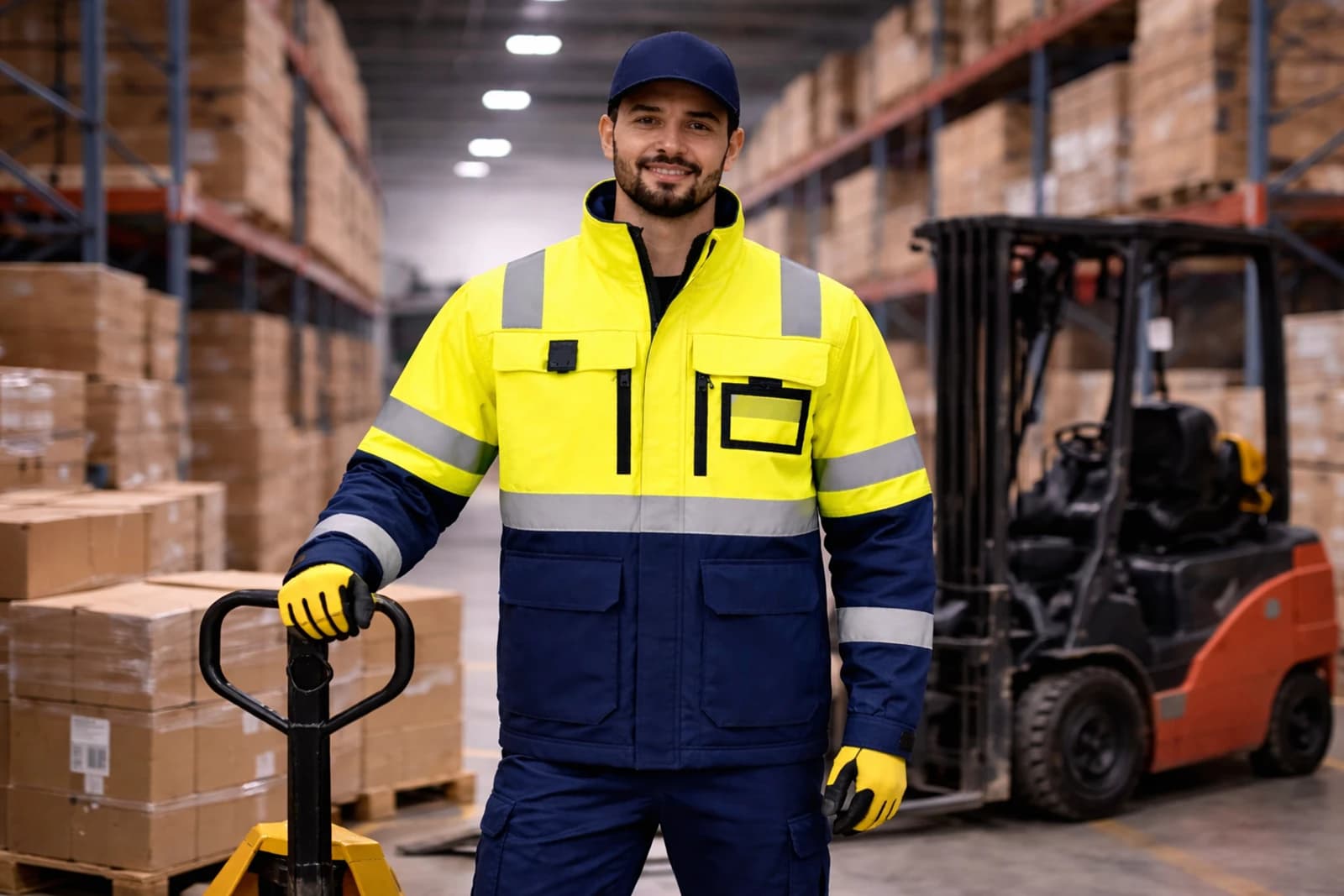
Hi-Vis Safety Jacket
Reflective safety jacket for high-visibility site operations and road work crews.
Construction Clothing
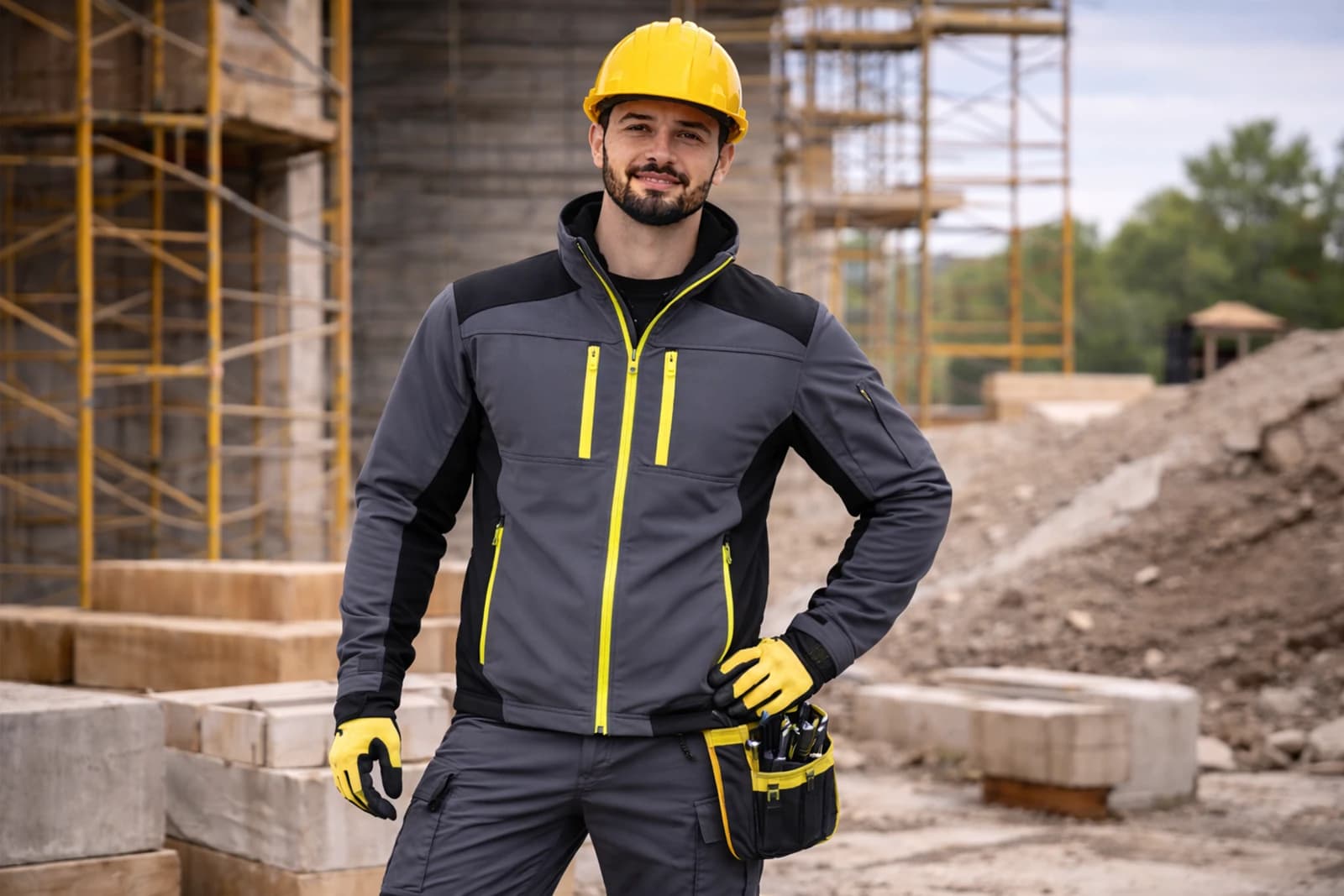
Construction Softshell Set
Flexible jacket and trouser set built for crews working across changing weather conditions.