Why Construction Supervisors in the Middle East Need Softshell Jacket Sets: Cool-Season Workwear That Still Meets Safety Standards
Middle East construction supervisors face a workwear gap during the cooler months (November–March) and in cold storage zones: regular hi-vis vests are too light, while heavy winter jackets trap heat. Softshell jacket sets solve this with windproof insulation, hi-vis compliance, and the flexibility to layer or remove the liner as conditions change. A practical sourcing guide for B2B buyers.

Buyer context
What procurement teams run into
<p>If you supply workwear to construction companies in the Gulf, you have likely heard this complaint: "The hi-vis vests are fine in summer, but from November to March the morning wind cuts right through them. And the insulated jackets we tried are too heavy — workers take them off by 10 AM and they sit in the truck cab all day."</p> <p>The workwear gap in Middle East construction is real. Most buyers default to one of two extremes:</p> <ul> <li><strong>Hi-vis vests or lightweight bomber jackets</strong> — acceptable for 8 months of the year, but insufficient when desert mornings drop below 15 °C, when windchill hits open high-rise floors, or when workers move between conditioned interiors and outdoors.</li> <li><strong>Heavy padded winter jackets</strong> — overkill for the region. They add bulk, restrict movement on scaffolding, and store heat so effectively that workers discard them by late morning, defeating the safety visibility purpose entirely.</li> </ul> <p>For construction supervisors, site engineers, and safety officers who spend part of their day on open floors, part in site offices, and part walking material staging areas, neither extreme works. What they need is a <strong>layered system</strong> — one that provides wind resistance and insulation when stationary or exposed, breathes when moving, and maintains hi-vis compliance throughout. That is exactly what a softshell jacket set delivers.</p> <p>Yet many Middle East procurement managers skip softshell sets because they assume "softshell" means lightweight fashion outerwear. They do not realise that industrial-grade softshell sets — combining a hi-vis outer shell and a detachable inner vest or liner — are purpose-built for the kind of variable-conditions work that defines Gulf construction between November and March.</p>
Sourcing approach
How a factory partner can respond
<h2>What a Softshell Jacket Set Actually Is (and Why It Fits Gulf Construction)</h2> <p>A softshell jacket set typically comprises two garments in one: a hi-vis outer jacket made from a water-repellent, wind-resistant softshell fabric (typically 3-layer bonded: outer woven face, breathable membrane, inner micro-fleece), and a detachable inner vest or full-sleeve liner that adds insulation when needed and zips out when not. For Middle East construction users, this means:</p> <ul> <li><strong>Morning site walks before sunrise</strong> (12–18 °C): wear the full set — hi-vis outer + inner liner provides windproof warmth</li> <li><strong>Midday inspections</strong> (25–30 °C): remove the inner liner, the outer shell alone breathes enough for active work</li> <li><strong>Afternoon wind on open floors</strong>: the outer's bonded membrane blocks wind without trapping sweat</li> <li><strong>Evening/night shifts on lit sites</strong>: hi-vis tape and bright fabric colour maintains EN ISO 20471 visibility all day</li> </ul> <p>This three-season flexibility is the core value proposition for Gulf construction buyers. Instead of issuing two separate garment types (summer hi-vis and winter jacket), you issue one garment system that adapts. Less storage space, lower replacement cost per worker, and fewer compliance gaps when a worker forgets or discards a layer.</p> <h2>Key Features to Specify When Sourcing from a Chinese Manufacturer</h2> <p>When you send an RFQ for a softshell jacket set, here is what to include in your specification to get the right product for Gulf conditions:</p> <h3>1. Fabric Weight and Bonding</h3> <p>Specify 3-layer bonded softshell at 280–320 gsm total weight. This is light enough to pack into a tool bag but heavy enough to block wind up to 30 km/h. The outer face should be 100 % polyester for colourfastness under strong UV; the inner fleece layer should be anti-pilling rated (tested to ISO 12945-2 at Grade 4 minimum).</p> <h3>2. Hi-Vis Certification</h3> <p>For Gulf construction sites, EN ISO 20471 Class 3 is the standard for outerwear with sleeves. This requires a minimum area of 0.80 m² of fluorescent background material and 0.20 m² of retroreflective tape. Ensure the detachable liner <em>also</em> includes hi-vis elements or that the outer shell alone maintains Class 3 compliance when the liner is removed — otherwise you lose compliance during the warmer part of the day.</p> <h3>3. Ventilation Strategy</h3> <p>Gulf humidity (even in winter) means sweat management matters. Ask for mesh-lined ventilation zippers under the arms (pit zips) and a mesh back vent panel on the inner side of the outer shell. These details add maybe $1.50–$2.50 to the unit cost but dramatically improve all-day wearability.</p> <h3>4. Pocket Layout for Supervisors</h3> <p>Construction supervisors carry phones, inspection checklists, measuring tools, and ID badges. Specify: two lower zip pockets, one chest radio/mobile pocket with a headphone port, and one internal document pocket that fits an A5-sized tablet or notebook. Avoid open-top pockets — items fall out when bending or climbing.</p> <h3>5. Zipper and Closure Quality</h3> <p>In sandy environments, standard zippers jam within weeks. Specify YKK or SBS brand zippers with covered (storm-flap) closure on the main front zipper. The detachable liner connection should use a full-length zipper with at least five snap-button anchor points to prevent the liner from riding up during movement.</p> <h2>MOQ and Lead Time Expectations</h2> <p>Softshell jacket sets are more complex to manufacture than a standard hi-vis vest or a single-layer jacket, so MOQs are higher. Expect minimum quantities of 200–300 pieces per colour and size spread, with a lead time of 35–50 days from sample approval. Sample turnaround (including 1–2 rounds of fit and colour adjustment) is typically 10–14 days. A reliable Chinese OEM like Sidaier will provide a pre-production photo sample showing the garment assembled with the liner before cutting the full order.</p> <h2>Recommended Product: The Construction Softshell Set</h2> <p>The <strong>construction-softshell-set</strong> from Sidaier is designed specifically for the Gulf construction supervisor profile. It features a 3-layer bonded hi-vis outer shell (EN ISO 20471 Class 3 certified), a zip-out quilted inner vest with two lower pockets, concealed pit zips for ventilation, and a storm-flap front closure that keeps desert dust out. The outer fabric is treated with a durable water-repellent (DWR) finish for the occasional winter rain squall that passes through GCC cities.</p> <p>Pair it with the <strong>hi-vis-safety-jacket</strong> for general site labour who do not need the full set but require reliable hi-vis protection during the cooler season — a cost-effective option when you want to differentiate supervisor-grade softshell from crew-grade jackets in your procurement plan.</p> <h2>Summary for Middle East Buyers</h2> <p>Softshell jacket sets are not a niche product. They are the most practical year-round workwear option for Gulf construction supervisors, safety inspectors, and site engineers who work in variable conditions between November and March. By specifying the right fabric weight, hi-vis certification level, ventilation features, and zipper quality — and by sourcing from an experienced Chinese OEM like Sidaier — you can offer your clients a garment that stays on the worker's body all day, every shift, instead of ending up on the truck seat by 10 AM.</p>
Recommended Products
Products that fit this use case
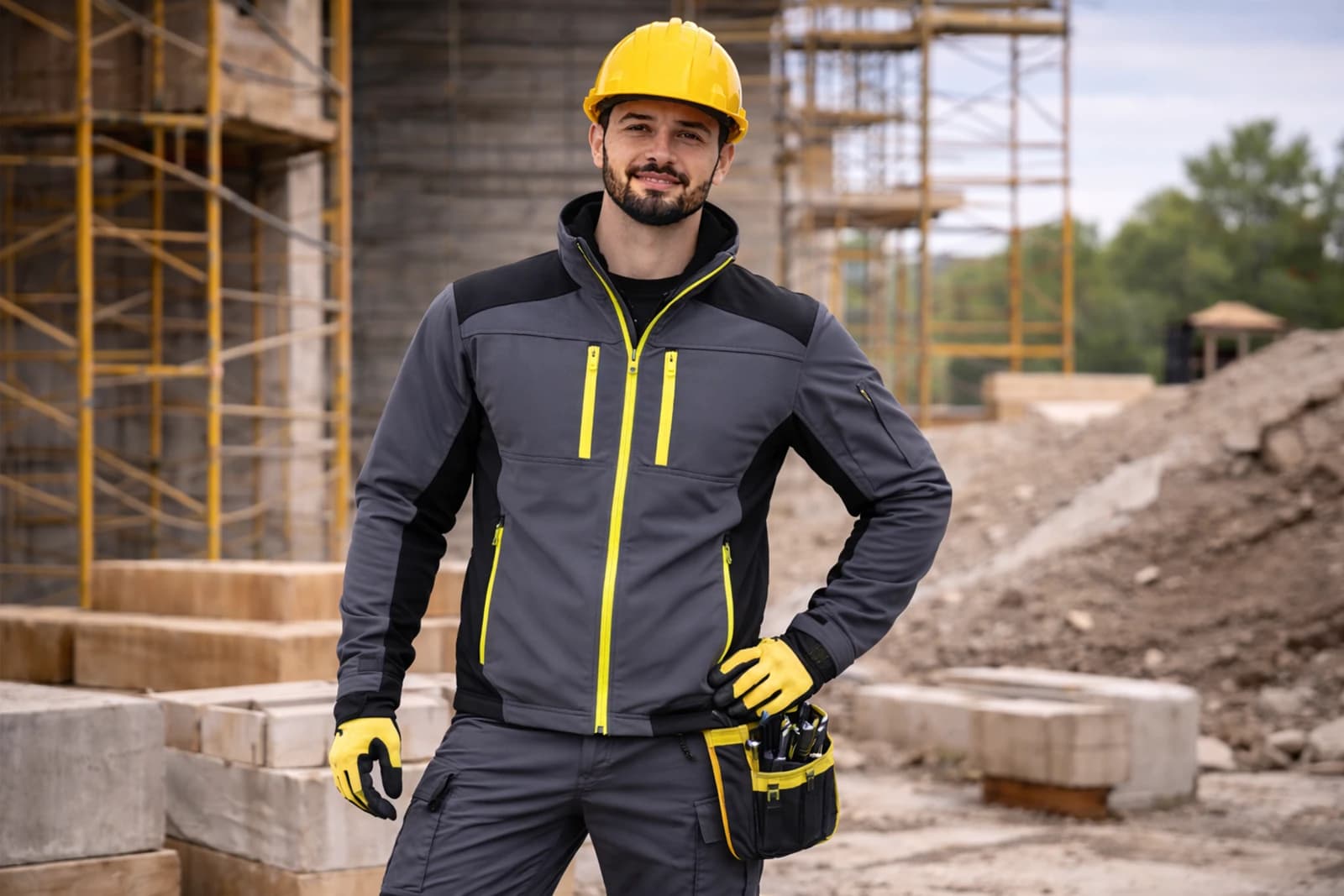
Construction Clothing
Construction Softshell Set
Flexible jacket and trouser set built for crews working across changing weather conditions.
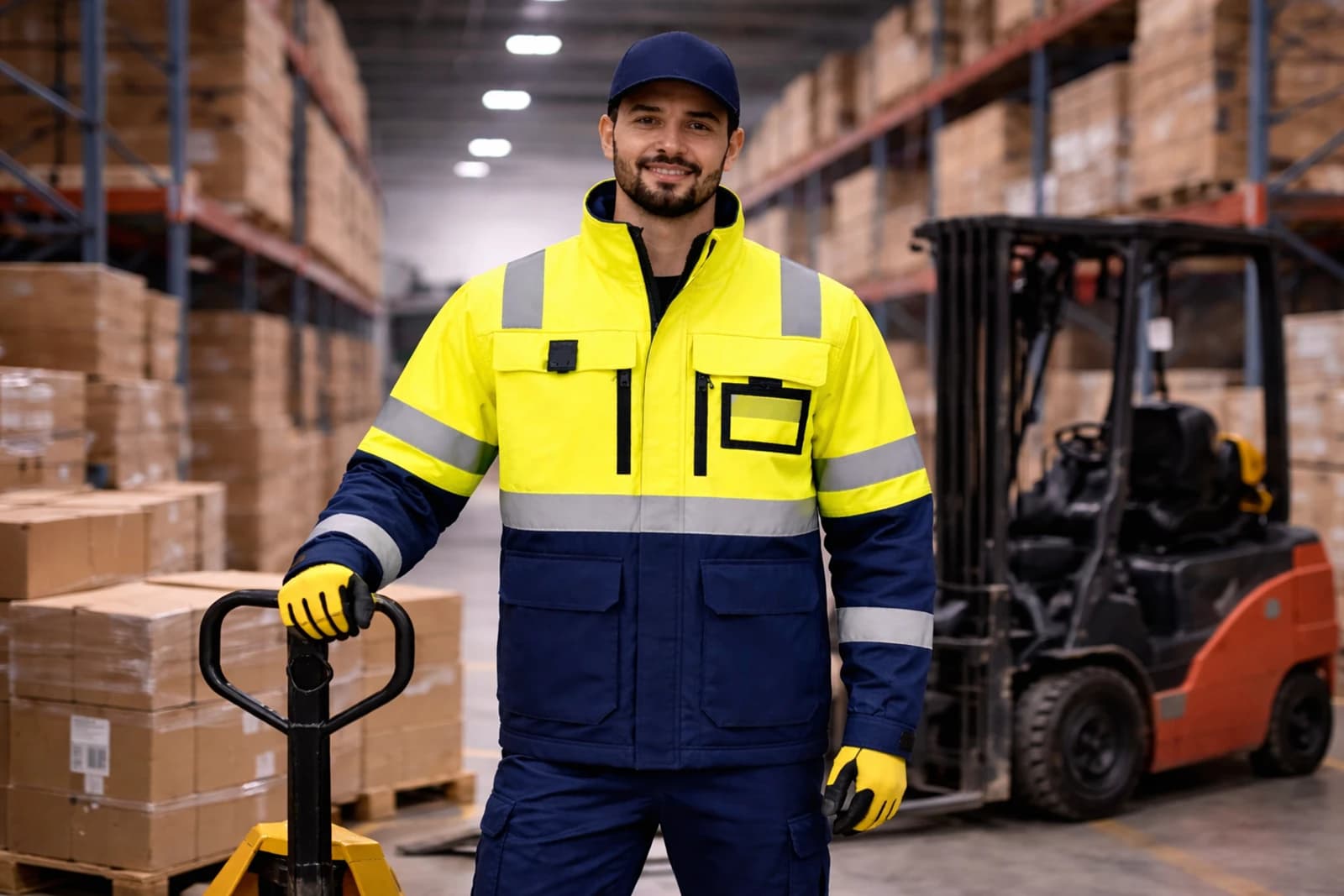
Safety Uniform
Hi-Vis Safety Jacket
Reflective safety jacket for high-visibility site operations and road work crews.