Construction Softshell Sets for Middle East Infrastructure Projects: Sourcing Climate-Adaptive Workwear from China
Middle East infrastructure projects require workwear that withstands extreme temperatures while maintaining durability and safety. Softshell construction sets offer versatile protection against wind, light rain, and temperature fluctuations. Learn how to source quality softshell workwear from Chinese manufacturers with proper fabric technology, sizing options, and customization for desert construction sites.
Buyer context
What procurement teams run into
Construction managers overseeing Middle East infrastructure projects face significant challenges when sourcing appropriate workwear for their teams. The region's extreme climate—with daytime temperatures exceeding 45°C (113°F) and nighttime drops of 20°C (36°F)—requires garments that adapt to rapid temperature changes. Traditional workwear either traps heat during the day or fails to provide adequate warmth during early morning and evening shifts, compromising worker comfort and productivity. Softshell workwear presents a promising solution but introduces its own sourcing complexities. Many procurement teams struggle to find softshell sets that balance breathability with wind and water resistance. Chinese manufacturers may offer softshell garments designed for temperate climates that perform poorly in desert conditions, leading to premature fabric degradation, reduced protective properties, and frequent replacements. Without proper understanding of softshell fabric technologies and construction requirements for hot climates, companies waste budget on unsuitable workwear that fails to protect workers effectively. Another critical issue is sizing and fit for diverse construction teams. Middle East infrastructure projects often employ workers from various regions with different body types. Standard sizing charts from Western manufacturers don't account for these variations, resulting in poor fit that restricts movement during physically demanding construction tasks. Ill-fitting softshell sets compromise safety by catching on equipment, limiting mobility on scaffolding, and reducing the effectiveness of integrated safety features like reflective strips and tool pockets. Certification compliance adds further complexity. While softshell workwear may not require the same flame-resistant certifications as oil and gas PPE, it still needs to meet relevant safety standards for construction environments. These include tear strength requirements, colorfastness to sunlight for high-visibility applications, and durability standards for abrasive surfaces. Many Chinese manufacturers claim compliance without providing proper test documentation, putting companies at risk during safety audits and potentially endangering workers on active construction sites.
Sourcing approach
How a factory partner can respond
Begin by understanding the specific requirements for softshell workwear in Middle East construction environments. For infrastructure projects involving road construction, building erection, or civil engineering works, prioritize softshell sets with these key features: breathable windproof membranes, light water resistance (2,000-5,000mm hydrostatic head), and strategic ventilation zones. Look for Chinese manufacturers who specialize in climate-adaptive workwear and can provide fabric samples with documented performance in high-temperature conditions. When evaluating softshell fabrics for desert construction, focus on advanced technologies that address both heat management and protection. Modern softshell materials incorporate moisture-wicking inner layers with wind-resistant outer treatments that don't compromise breathability. Some innovative fabrics feature temperature-regulating properties or UV-blocking technologies specifically designed for prolonged sun exposure. Request samples with the exact fabric composition and treatments planned for production, not just generic demonstration pieces that may differ in actual performance. For Middle East conditions, consider softshell sets with modular design elements. Look for jackets with removable liners or zip-off sleeves that allow workers to adapt to temperature changes throughout the day. Ventilation features like underarm zippers, mesh-backed pockets, and breathable back panels significantly improve comfort during physical labor in heat. Reinforced areas at stress points (elbows, shoulders, knees) should use abrasion-resistant materials without adding excessive weight or reducing flexibility. Certification verification remains essential. When sourcing from Chinese manufacturers, request comprehensive test reports from accredited laboratories. Key tests for construction softshell workwear include: tear strength (ASTM D1424 or ISO 13937), colorfastness to sunlight (ISO 105-B02), water resistance (ISO 811 or AATCC 35), and breathability (ISO 11092 or ASTM E96). For projects requiring high-visibility elements, verify that reflective materials meet EN ISO 20471 standards for luminance and durability after washing. Implement a practical testing protocol before placing bulk orders. Conduct field tests with sample garments on actual construction sites during different times of day to evaluate performance across temperature ranges. Perform wash tests simulating industrial laundry conditions to ensure colorfastness, seam integrity, and maintained protective properties. This approach ensures the softshell sets will perform reliably throughout their service life on Middle East infrastructure projects.
Recommended Products
Products that fit this use case
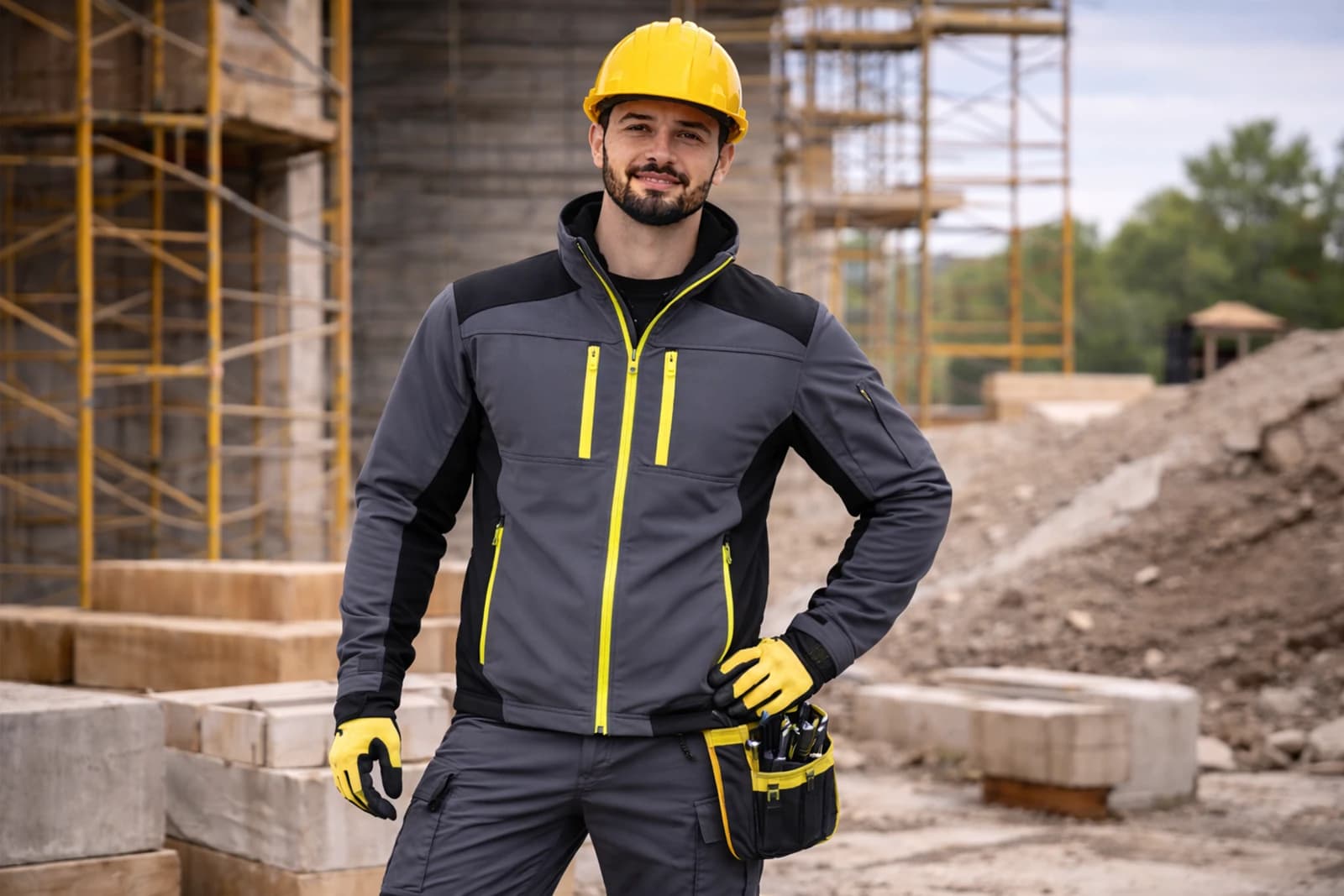
Construction Clothing
Construction Softshell Set
Flexible jacket and trouser set built for crews working across changing weather conditions.
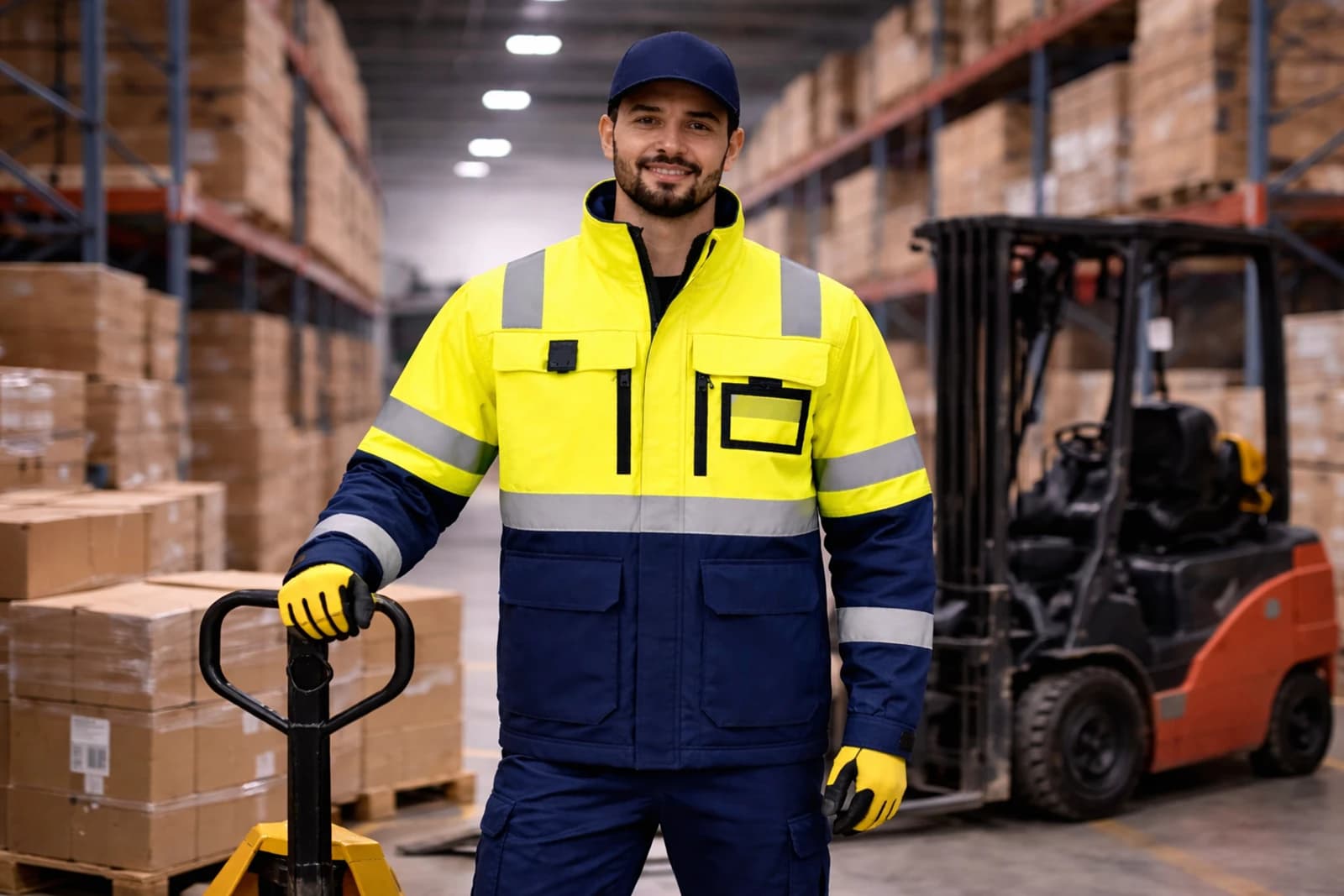
Safety Uniform
Hi-Vis Safety Jacket
Reflective safety jacket for high-visibility site operations and road work crews.