Construction Softshell Uniforms for Middle East Job Sites: Sourcing Durable Workwear for Cold Weather & Desert Conditions from Chinese Manufacturers
Middle East construction projects face unique workwear challenges — cold desert nights, dust storms, abrasive materials, and multi-season schedules. Construction softshell uniforms with integrated insulation, windproof membranes, and reinforced abrasion resistance provide site workers with year-round protection and professional appearance. Learn how to source certified construction softshell sets and industrial coveralls from Chinese manufacturers with proper fabric technology, thermal performance, and durability features for Middle East construction environments.

Buyer context
What procurement teams run into
Construction project managers, procurement officers, and site safety supervisors managing large-scale projects across the Middle East—from high-rise towers in Dubai and Doha to infrastructure developments in Saudi Arabia and Oman—face significant challenges when sourcing appropriate workwear for their construction teams. The region's construction environments present a unique combination of extreme conditions that standard workwear rarely addresses: winter nighttime temperatures dropping to 5-10°C in desert locations, abrasive dust and particulate from excavation and concrete work, constant contact with rebar, scaffolding, and rough building materials, and the need for professional corporate presentation on high-profile project sites.\n\nTraditional cotton coveralls or basic work jackets fail in these conditions for several reasons. Single-layer garments provide insufficient thermal protection during early morning and evening shifts—common work schedules during cooler months—while offering no wind resistance against the constant dust-laden winds that sweep across construction sites. Standard coverall fabrics abrade quickly against rough concrete surfaces and exposed rebar, leading to premature failure at knees, elbows, and seat areas. Imported softshell garments often use membrane technologies designed for cold European climates that overheat workers during the Middle Eastern daytime, forcing workers to remove protective layers and compromising both safety and professional appearance.\n\nThe primary challenge lies in selecting fabrics that balance thermal insulation with breathability appropriate for Middle East conditions. A construction softshell uniform suitable for the region must provide effective wind and dust resistance without trapping body heat during the warmer parts of the day. Many manufacturers offer softshell sets with heavy fleece backing and thick membranes that are comfortable only in winter conditions—impractical for the 8-9 months of the year when daytime construction work happens in warm weather. Chinese manufacturers producing for domestic markets with similar climate ranges often understand this balance better than European suppliers, but their quality varies significantly. Procurement teams need to identify manufacturers who can provide appropriate two-way stretch fabrics with mid-weight fleece backing and water-repellent finishes that work in the variable conditions of Middle Eastern construction.
Sourcing approach
How a factory partner can respond
Begin by understanding the specific workwear requirements for Middle East construction projects across different seasons. For winter months (November through February), a softshell jacket and trouser set with a 280-320 gsm fabric weight provides optimal thermal performance—sufficient insulation for early morning temperatures of 5-10°C while remaining breathable for midday work in 20-25°C conditions. Look for three-layer softshell constructions: a durable outer face fabric (92% polyester / 8% elastane with TPU membrane), a mid-layer windproof and water-resistant barrier rated to 5000mm hydrostatic head, and an inner brushed fleece layer for moisture wicking. These specifications provide year-round versatility for construction sites that operate through multiple seasons.\n\nFor hot weather months, prioritize construction workwear that transitions seamlessly from softshell sets to lighter alternatives. Many Middle East construction projects benefit from a layered approach: softshell jackets that can be removed during peak heat, combined with industrial coveralls in cotton-polyester blends with 65/35 or 60/40 fabric compositions for optimal moisture management. Industrial coveralls designed for construction environments should incorporate reinforced knee panels with CORDURA® or equivalent abrasion-resistant fabric (500-1000 denier), articulated elbow gussets for unrestricted movement during overhead work, and tool pockets positioned for comfort when bending and kneeling. The combination of softshell sets for cool periods and durable coveralls for high-heat or heavy-duty tasks gives construction companies maximum flexibility.\n\nDust and abrasion resistance are critical considerations for Middle East construction workwear. The fine dust common across Gulf construction sites infiltrates standard zippers, pocket closures, and seam constructions. When evaluating construction softshell uniforms, look for features that address these specific challenges: YKK reversed-coil zippers with inner storm flaps that prevent dust ingress, elasticated cuffs with thumb holes that seal against the wrists to keep dust out, internal gusseted pockets with zip closures for securing phones and tools, and high-collar design with chin guard protection against wind and dust exposure. For trousers, reinforced seat and knee areas with double stitching and bar-tacking at all stress points—pocket corners, belt loops, and crotch seams—extend service life significantly in construction environments.\n\nProfessional appearance and corporate branding matter for Middle East construction projects, where clients regularly visit sites and expect a polished, organized impression. Construction softshell sets from Chinese manufacturers can be customized with embroidery, heat-sealed logos, or reflective tape configurations in corporate colors. Embroidery works well for chest logos on softshell jackets when performed with low-density digitizing (under 8000 stitches per logo) to maintain fabric breathability. Heat-sealed reflective tape in project-specific patterns (class 2 or class 3 per EN ISO 20471 for sites requiring visibility compliance) adds both safety visibility and professional appearance. For industrial coveralls, ensure sufficient flat space on chest and back for company branding without interfering with pocket functionality or zipper access.\n\nCertification requirements for Middle East construction workwear differ from European or North American standards. While EN ISO 13688:2013 (general requirements for protective clothing) is widely accepted, specific project specifications may require additional certifications. For construction softshell sets, request manufacturers to provide test reports for: water resistance (ISO 811 / AATCC 127, minimum 5000mm), breathability (ISO 11092, minimum 3000 g/m²/24h), abrasion resistance (EN 530 / ASTM D3884, minimum 20000 cycles for critical areas), and tear strength (ISO 13937-2 / ASTM D1424, minimum 20N). For industrial coveralls used on construction sites, add requirements for seam strength (ISO 13935-2, minimum 200N) and dimensional stability after washing (ISO 5077 / AATCC 150, maximum 3% shrinkage in both directions).\n\nImplement a structured evaluation process before committing to bulk orders. Order 8-10 sample sets in various sizes and conduct a 30-day field trial across different construction roles—masons, steel fixers, equipment operators, and site supervisors. Assess performance in actual working conditions: morning cool periods, midday heat, dust events, and after 10+ industrial wash cycles. Measure fabric durability at stress points, zipper performance after repeated use, color fastness after UV exposure and washing, and fit retention after laundering. Request manufacturer warranty terms specifically covering: seam integrity (minimum 12 months), zipper functionality (minimum 500 cycles), and reflective tape adhesion (if applicable, minimum 25 industrial washes). Chinese manufacturers experienced in export to Middle East construction markets typically provide these test results and warranty terms as standard practice, ensuring the workwear performs reliably throughout its intended service life on demanding construction sites.
Recommended Products
Products that fit this use case
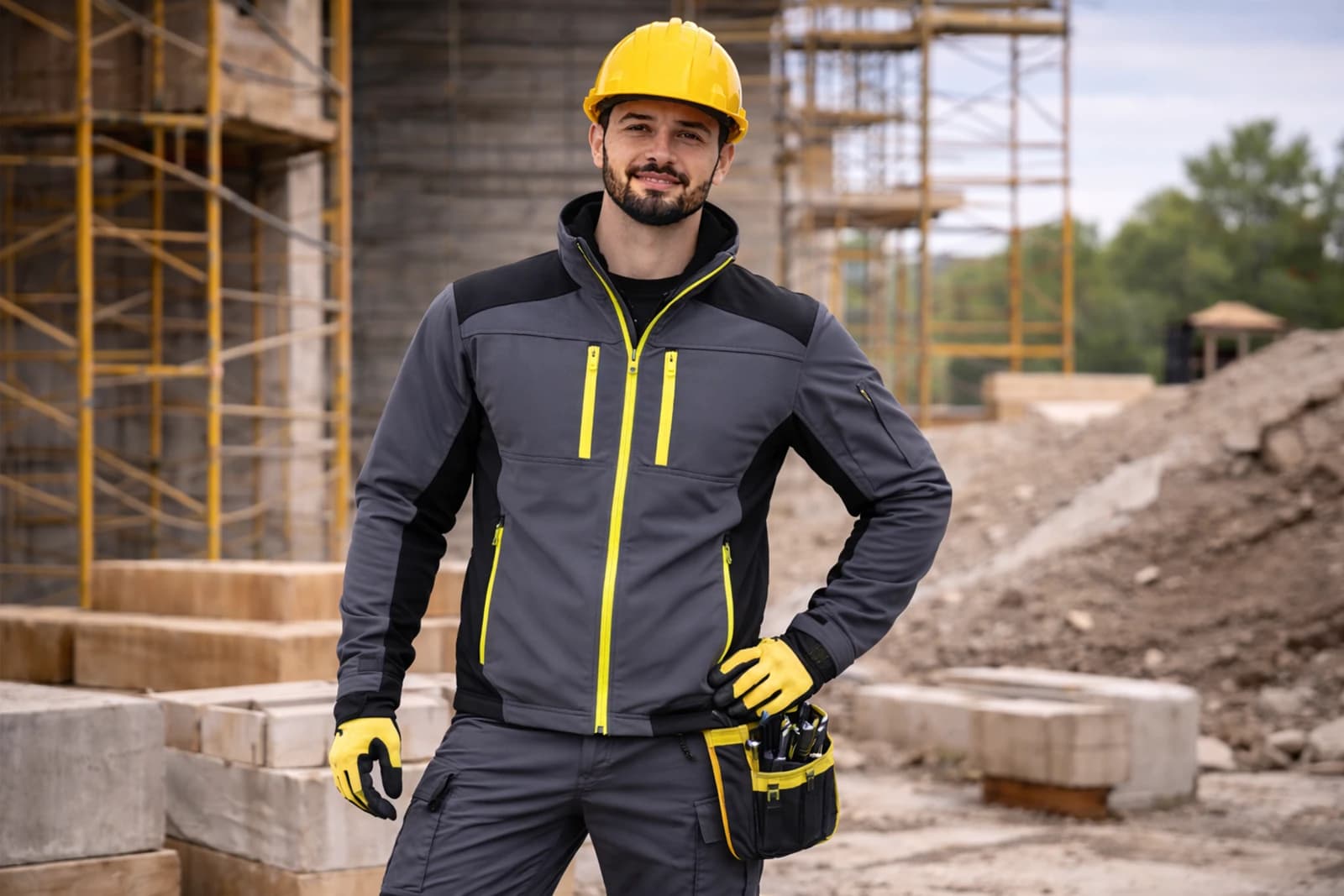
Construction Clothing
Construction Softshell Set
Flexible jacket and trouser set built for crews working across changing weather conditions.
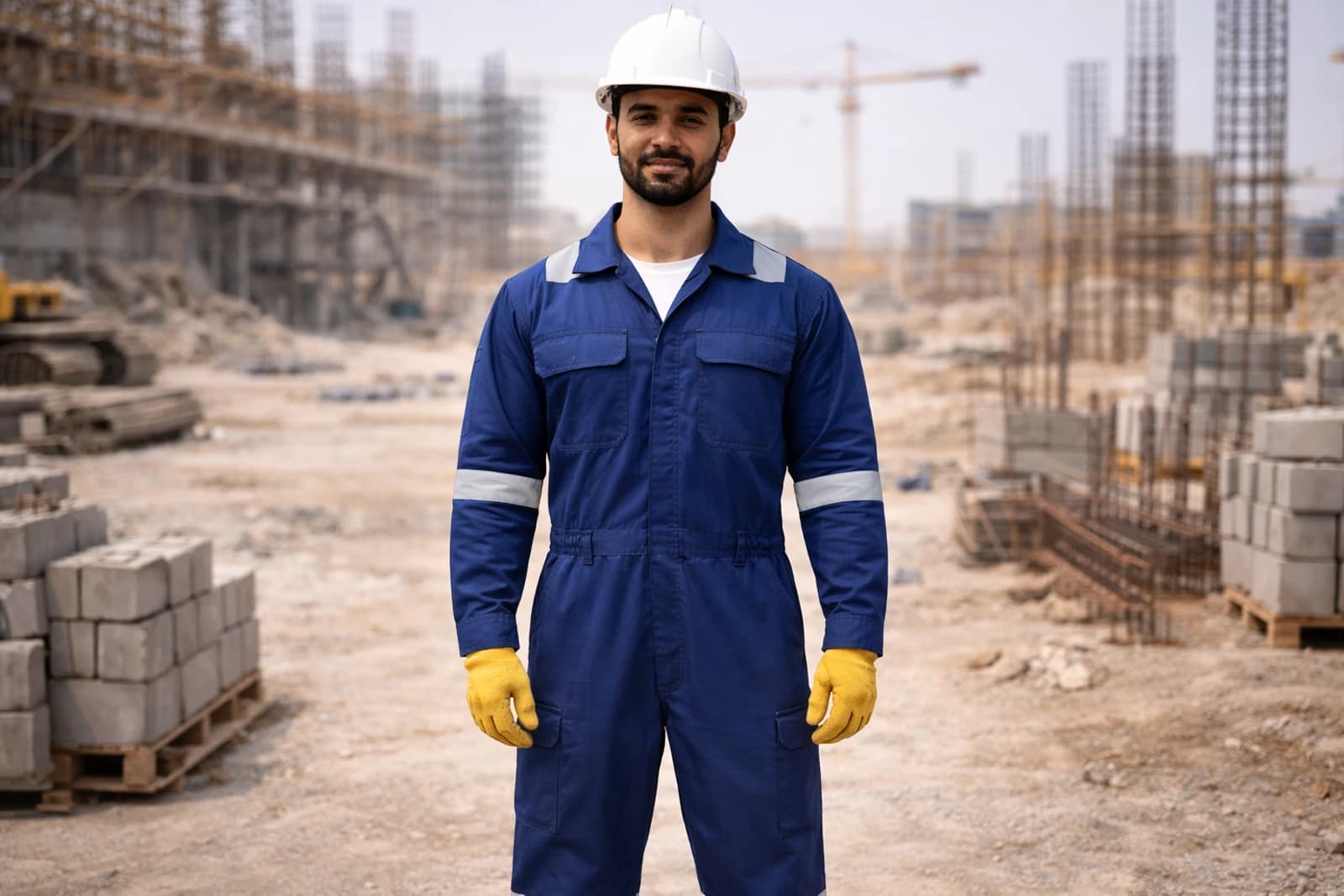
Industrial Workwear
Industrial Coverall Pro
Hard-wearing one-piece coverall for plant, maintenance, and heavy-duty operations.