Contamination Events Break Calendar Workwear Replenishment in Pharmaceutical Plants
Pharmaceutical manufacturing replaces workwear due to contamination events—chemical spills, cleanroom breaches, and product contact—rather than gradual wear. Calendar-based replenishment assumes predictable wear-driven replacement and cannot absorb contamination-driven demand spikes. This article covers how contamination events create unpredictable replacement demand, why standard replenishment cycles fail, and the event-driven replenishment triggers that maintain adequate stock without over-ordering.
Buyer context
What procurement teams run into
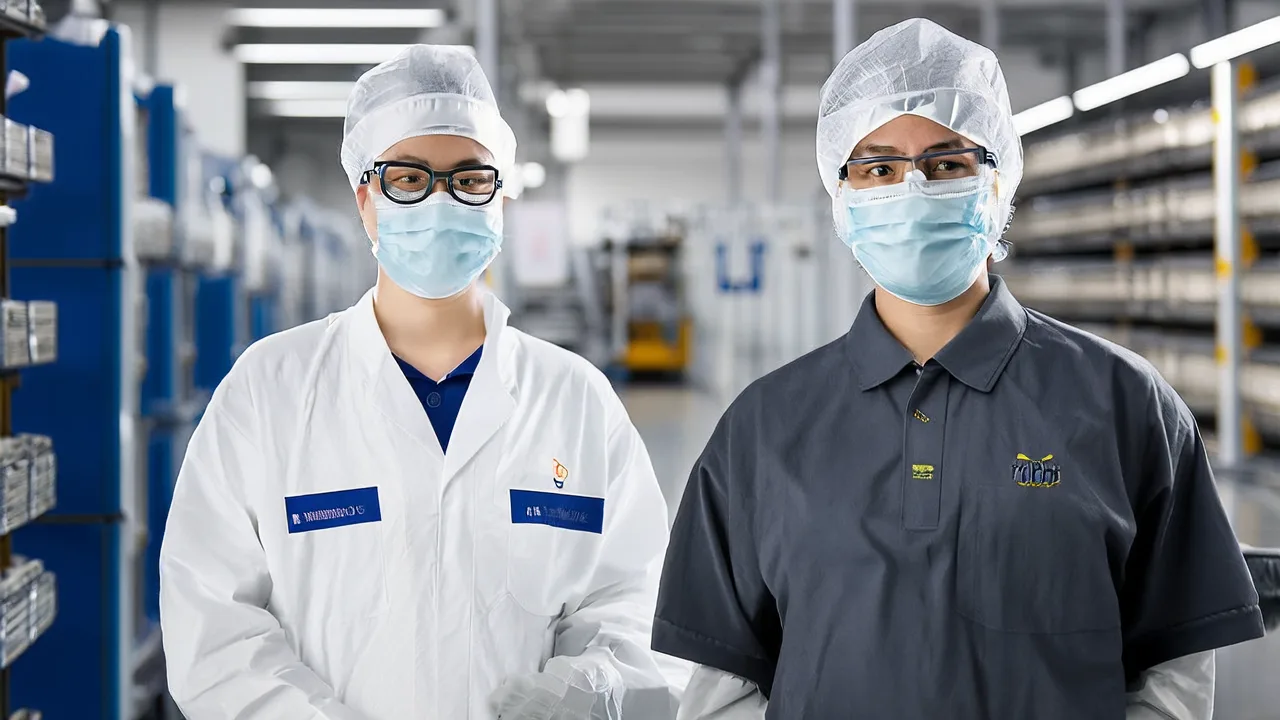
Pharmaceutical manufacturing operations—producing tablets, capsules, injectables, and biologics in GMP-regulated facilities—use workwear that serves a dual purpose: protecting workers from chemical and biological exposure while protecting products from worker-generated particulate and microbial contamination. Garments in pharmaceutical facilities become contaminated through specific events: chemical spills during cleaning and sanitization, product contact during filling and packaging operations, and cleanroom protocol breaches (garment contact with non-classified surfaces, torn garments exposing skin). These contamination events create immediate garment replacement requirements that are unpredictable in timing and volume—and calendar-based replenishment systems, designed around predictable wear-driven replacement, cannot absorb the demand variability. The mechanism: **1. Pharmaceutical workwear serves dual protection: worker safety and product integrity** Workwear in pharmaceutical manufacturing must meet two simultaneous requirements: protect workers from exposure to active pharmaceutical ingredients (APIs), solvents, and cleaning agents; and protect products from worker-generated contamination (skin flakes, hair, particulate, microorganisms). Garments that fail either requirement—through contamination, damage, or degradation—must be removed from service immediately. A garment with a chemical spill on the front panel cannot continue in service because the spill creates both worker exposure risk (chemical contacting skin) and product contamination risk (chemical transferring to product contact surfaces). The dual-protection function means that contamination events create immediate replacement requirements regardless of the garment's remaining wear life. The root cause: pharmaceutical workwear is not replaced when it wears out—it is replaced when it becomes contaminated. A garment that has been worn for three shifts but suffers a chemical spill on the fourth shift is removed from service immediately, even though the fabric remains structurally sound. The replacement trigger is contamination, not wear. **2. Contamination events create immediate replacement demand that is unpredictable in timing and volume** Contamination events in pharmaceutical facilities occur randomly: a worker splashes cleaning agent on their coverall during sanitization, a garment snags on equipment creating a tear that compromises cleanroom integrity, a worker contacts a non-classified surface during a gowning protocol breach. Each event requires immediate garment replacement—the contaminated garment cannot remain in service. The timing of contamination events is random (driven by worker activity, equipment interaction, and process variability), and the volume of events varies by production schedule, batch size, and facility activity level. The root cause: contamination events follow a stochastic pattern, not a predictable wear pattern. A facility running three production shifts with high-batch-changeover frequency experiences more contamination events than a facility running continuous production with stable operations. The variability in contamination event frequency creates variability in garment replacement demand that calendar-based replenishment cannot predict. **3. Calendar-based replenishment assumes predictable wear-driven replacement** Standard workwear replenishment systems operate on calendar cycles: order garments at fixed intervals (monthly, quarterly) based on expected garment service life (e.g., coveralls lasting 12-16 weeks, polo uniforms lasting 20-24 weeks). Calendar-based replenishment works when garment replacement is driven by gradual wear—garments wear out at a predictable rate, and replacement demand follows a predictable pattern aligned with the calendar cycle. The root cause: calendar-based replenishment assumes that garment replacement demand is distributed evenly across the calendar cycle. If a facility issues 100 coveralls and expects them to last 12 weeks, the system orders 100 replacement coveralls every 12 weeks. This assumption holds when replacement is wear-driven (all 100 coveralls wear out around week 12). The assumption fails when replacement is contamination-driven (20 coveralls are removed from service in week 3 due to contamination events, creating an immediate need for 20 replacements—but the next calendar order isn't due until week 12). **4. Contamination-driven demand spikes exceed safety stock and create garment shortages** When contamination events remove garments from service faster than calendar-based replenishment anticipates, the facility's safety stock (reserve garments held to cover demand variability) is consumed. Once safety stock is exhausted, the facility faces garment shortages: workers cannot be issued replacement garments, production lines operate with reduced staffing, or workers continue wearing contaminated garments (creating safety and compliance risk). The root cause: safety stock levels are calculated based on expected demand variability. When demand variability is driven by contamination events (which are random and unpredictable), safety stock calculated for wear-driven replacement is insufficient. A facility that calculates safety stock based on 10% demand variability (wear-driven) faces stockouts when contamination events create 30-40% demand variability. **5. Standard replenishment specifications don't account for contamination-driven demand** Most workwear procurement specifications for pharmaceutical facilities set replenishment parameters based on garment service life (weeks of wear) and order quantities based on headcount. Specifications don't differentiate between wear-driven replacement (predictable, calendar-based) and contamination-driven replacement (unpredictable, event-based). The buyer receives a replenishment system designed for wear-driven demand that fails when contamination events create demand spikes. The root cause: procurement specifications assume that garment replacement follows a predictable pattern. Specifications don't require suppliers to provide guidance on contamination-driven replacement demand, contamination event tracking, or event-based replenishment triggers. The buyer implements a replenishment system that works for wear-driven replacement but breaks down when contamination events create unpredictable demand. **6. The cost of getting it wrong** The buyer who uses calendar-based replenishment for pharmaceutical workwear faces: - Garment shortages (contamination events consuming safety stock before next calendar order) - Production delays (workers unable to be issued replacement garments, reducing production staffing) - Compliance risk (workers continuing to wear contaminated garments because replacements aren't available) - Worker safety risk (chemical exposure from contaminated garments remaining in service) - Emergency orders (placing rush orders to cover shortages, paying premium pricing and expedited shipping) The buyer who implements contamination-triggered replenishment faces: - Adequate stock levels (replenishment triggered by contamination events, not calendar dates) - Production continuity (replacement garments available when contamination events occur) - Compliance maintained (contaminated garments removed from service immediately, replacements available) - Worker safety maintained (workers issued clean garments immediately after contamination events) - Predictable procurement costs (replenishment based on actual contamination event data, not emergency orders)
Sourcing approach
How a factory partner can respond
The solution is a pharmaceutical workwear replenishment system that uses contamination-event triggers rather than calendar cycles—tracking contamination events, setting safety stock based on contamination-driven demand variability, and ordering replenishment when contamination events consume reserve stock rather than when a calendar date arrives. **Step 1: Categorize garment replacement drivers into wear-driven and contamination-driven** Track every garment replacement and categorize the replacement reason: wear-driven (fabric thinning, seam failure, closure damage, color fading) or contamination-driven (chemical spill, product contact, cleanroom breach, garment tear compromising contamination barrier). Record the replacement reason, garment type, production area, and date of replacement for every garment removed from service. The categorization reveals the proportion of replacement demand driven by contamination events versus wear. A facility where 60-70% of replacements are contamination-driven needs a fundamentally different replenishment approach than a facility where 80-90% of replacements are wear-driven. **Step 2: Calculate contamination-driven demand variability from event tracking data** Using contamination event tracking data (Step 1), calculate the monthly variability in contamination-driven replacements. Determine the average number of contamination-driven replacements per month and the standard deviation (variability around the average). For example, if a facility averages 25 contamination-driven replacements per month with a standard deviation of 10, demand ranges from 15-35 replacements per month. Use the variability data to set safety stock levels. Safety stock should cover demand at the 95th percentile (average + 1.65 × standard deviation). In the example, safety stock = 25 + (1.65 × 10) = 41.5, rounded to 42 garments. This safety stock level covers contamination-driven demand variability with 95% confidence. **Step 3: Set contamination-event replenishment triggers rather than calendar-based order dates** Implement a replenishment trigger system that places orders when contamination-driven replacements consume safety stock below a defined threshold. The trigger threshold is set at the safety stock level calculated in Step 2. When cumulative contamination-driven replacements in the current replenishment period reach the trigger threshold, the system generates a replenishment order. For example, if safety stock is 42 garments and the trigger threshold is set at 70% of safety stock (30 garments), the system generates a replenishment order when 30 contamination-driven replacements have occurred in the current period. The replenishment order quantity covers expected contamination-driven demand for the next period plus restoration of safety stock. The event-driven trigger ensures that replenishment responds to actual contamination demand rather than calendar dates, preventing stockouts when contamination events occur at higher-than-expected frequency. **Step 4: Specify garment types by contamination risk zone to reduce contamination-driven replacement frequency** Reduce contamination-driven replacement demand by specifying garment types matched to contamination risk by facility zone: - **High-contamination-risk zones (production, filling, cleanroom):** specify garments with chemical-resistant fabric treatment (fluorocarbon or silicone-based water-repellent finish) that resists liquid penetration. Chemical-resistant treatment causes liquid spills to bead on fabric surface rather than penetrating fabric, enabling workers to wipe spills and continue wearing the garment without immediate replacement. Specify garments with smooth, non-linting fabric construction that resists particulate generation and maintains cleanroom integrity. - **Medium-contamination-risk zones (warehousing, packaging, laboratory):** specify garments with stain-release fabric treatment that enables stain removal through standard washing. Stain-release treatment reduces the likelihood that product contact or chemical splash creates permanent staining that requires garment replacement. - **Low-contamination-risk zones (administration, maintenance, utilities):** specify standard garments without chemical-resistant or stain-release treatment. These zones experience minimal contamination events, and specialized treatment adds cost without benefit. The zone-based specification reduces contamination-driven replacement frequency in high-risk zones (chemical-resistant treatment prevents spill penetration) while avoiding unnecessary treatment cost in low-risk zones. **Step 5: Track contamination events by type and frequency to calibrate replenishment parameters** Implement ongoing contamination event tracking that records event type (chemical spill, product contact, cleanroom breach, garment tear), frequency (events per week per production area), and garment impact (garment removed from service, garment cleaned and returned to service). Use tracking data to: - Identify contamination event trends (increasing frequency indicating process changes or worker behavior issues) - Calibrate safety stock levels (adjust safety stock when contamination event frequency changes) - Evaluate garment specification effectiveness (assess whether chemical-resistant treatment reduces spill-driven replacement frequency) - Identify training needs (high contamination event frequency in specific areas indicating worker training gaps) The tracking data enables continuous replenishment parameter calibration, ensuring that safety stock and trigger thresholds reflect actual contamination event patterns rather than initial estimates. **Step 6: Train workers on contamination protocols to reduce contamination event frequency** Reduce contamination-driven replacement demand by training workers on contamination prevention protocols: - **Gowning protocol:** train workers on proper gowning procedures that minimize cleanroom breaches (garment contact with non-classified surfaces, improper garment closure, exposed skin). Proper gowning reduces cleanroom breach events that require garment replacement. - **Chemical handling:** train workers on chemical handling procedures that minimize splash and spill events (proper container handling, splash guard use, spill containment). Proper chemical handling reduces spill events that require garment replacement. - **Garment care during use:** train workers on garment care practices that reduce contamination events (avoiding contact with dirty surfaces, reporting spills immediately rather than continuing to wear contaminated garments, proper garment removal to avoid spreading contamination). The training reduces contamination event frequency, lowering contamination-driven replacement demand and reducing the safety stock required to cover demand variability. **Recommended garments for pharmaceutical manufacturing workwear:** - **Industrial coverall-pro** — specify the coverall for production area workers (filling operators, cleanroom technicians, compounding staff) who face full-body contamination risk in high-risk zones. The coverall provides full-body coverage (torso, arms, legs) with single-garment protection that prevents contamination at waist gaps. Specify the coverall with chemical-resistant fabric treatment (fluorocarbon water-repellent finish) that causes liquid spills to bead on fabric surface rather than penetrating fabric, enabling spill wipe-off without immediate garment replacement. Specify the coverall with smooth, non-linting fabric construction that resists particulate generation and maintains cleanroom integrity. The coverall's full-body coverage, chemical-resistant treatment, and cleanroom-compatible construction make it suitable for pharmaceutical production operations where contamination events drive unpredictable replacement demand. - **Logistics polo uniform** — specify the polo uniform for warehouse and distribution area workers (pickers, packers, shipping staff) who handle packaged pharmaceutical products in lower-contamination-risk zones. The polo uniform provides comfortable coverage for warehouse operations with stain-release fabric treatment that enables stain removal through standard washing, reducing replacement frequency from product contact staining. Specify the polo uniform with enclosed seams and smooth fabric construction that minimizes particulate generation. The polo uniform's comfort, stain-release treatment, and durability make it suitable for pharmaceutical warehouse and distribution operations where contamination risk is lower than production areas but stain-driven replacement remains a concern.
Recommended Products
Products that fit this use case

Industrial Workwear
Industrial Coverall Pro
Hard-wearing one-piece coverall for plant, maintenance, and heavy-duty operations.

Logistics Uniform
Logistics Polo Uniform
Breathable uniform polo for warehouse, delivery, and last-mile teams.