Corporate Identity on Safety Gear: Custom Branding for GCC Workwear Programs
GCC construction and logistics companies investing in branded workwear face decisions about logo placement, embroidery vs. heat transfer, colour matching across batches, and art file handoff to Chinese manufacturers. This guide walks through the practical process of custom-branding hi-vis jackets, coveralls, softshell sets, and polo uniforms for Middle East corporate programs.

Buyer context
What procurement teams run into
A facilities management company in Riyadh orders 1,500 branded hi-vis safety jackets for its maintenance teams. The logo placement is specified at chest-left in the technical drawing, but when the shipment arrives, the embroidery is positioned 3 cm lower than agreed — misaligned with the reflective tape in a way that looks unprofessional when staff stand together for a group photo. The supplier blames "production tolerance." The client accepts the shipment because the season has already started, but the programme manager is dissatisfied and begins searching for a new supplier for the next order. In Dubai, a logistics company sources 2,000 polo uniforms with a heat-transfer logo on the left chest and company name across the back. After three industrial laundry cycles, the back-print begins peeling. By cycle ten, the logo on half the uniforms is unreadable. The supplier's sales representative explains that heat transfer durability depends on fabric composition and wash temperature — information that was never discussed during the ordering process because neither party raised it. These situations are frustrating because they are preventable. Custom branding on workwear — whether for a construction contractor, logistics fleet, or industrial maintenance team — is as much a technical specification as the garment itself. GCC buyers who source branded workwear from Chinese manufacturers need to specify branding details with the same rigour as fabric, sizing, and certification requirements. This guide covers the practical decisions, art file preparation, and supplier communication steps that prevent branding mismatches and deliver consistent, professional results across every garment in the order.
Sourcing approach
How a factory partner can respond
Choosing the Right Branding Method for Your Garment The branding method you choose depends on the garment type, fabric composition, desired durability, and order volume. Each method has specific advantages and limitations that matter in Gulf working conditions — especially high heat, sun exposure, and industrial laundering. Embroidery: Best for Structural Garments Embroidery delivers the most durable, professional-looking brand mark on workwear. It withstands industrial washing, does not peel or crack, and projects a premium corporate image. For hi-vis safety jackets and construction softshell sets, chest-level embroidery on the left or centre is the standard specification across GCC corporate programmes. Embroidery on the back yoke is also common for logistics and maintenance teams where rear visibility of the company name is operationally useful. Key specifications to communicate to your Chinese manufacturer: - Stitch count: A chest logo typically uses 7,000–12,000 stitches. Higher stitch counts produce better detail on fine elements such as text and small icons, but increased density reduces fabric breathability behind the embroidery area. For hi-vis jackets, keep the stitch pattern open enough that the background fabric colour remains visible through the embroidery — this prevents the logo from becoming a solid block that traps heat against the chest. - Thread colour matching: Chinese factories stock a standard thread colour range (typically Pantone-based). Send your brand colours as Pantone TCX (textile) references, not as digital RGB or CMYK values. The factory will match from their inventory or order custom-dyed thread — custom thread requires 7–14 days lead time and a minimum spool quantity, so specify this at the quotation stage, not after the order is placed. - Backing type: For hi-vis and softshell fabrics, specify tear-away backing (removed after embroidery) rather than cut-away backing (which leaves a stiff patch). Tear-away backing produces a cleaner result on woven performance fabrics and reduces the stiff feel against the wearer's chest. Heat Transfer: Best for Fine Detail and Large Areas Heat transfer (silicone or polyurethane film) is the preferred method for large brand marks, full back prints, and detailed logos with gradients or fine text. It is lighter than embroidery, does not reduce fabric breathability, and reproduces photographic-quality artwork. However, durability varies significantly by application quality and fabric type. For logistics polo uniforms in the GCC, heat transfer on the back (company name) combined with embroidery on the chest (corporate logo) is a proven combination. The back print provides large-area visibility for warehouse and delivery identification, while the embroidered chest logo maintains a professional appearance during client-facing interactions. Critical specifications for heat transfer in Gulf workwear: - Film type: Silicone heat transfer outperforms polyurethane in GCC summer conditions. Silicone withstands higher curing temperatures and remains flexible in 50°C heat. Polyurethane can become brittle after repeated sun exposure and high-temperature washing. Specify silicone heat transfer explicitly in your purchase order. - Application temperature and pressure: The heat-press settings are calibrated to the fabric. A hi-vis polyester mesh fabric requires lower temperature and shorter dwell time than a cotton-rich polo fabric. Ask your supplier for their heat-press specification sheet — if they cannot provide one calibrated to your fabric type, the application quality is inconsistent. - Wash test requirement: Before full production, request three branded samples from the production run. Wash each sample 10 times at 60°C (GCC industrial laundry standard) and inspect for peeling, cracking, or discolouration. Accept only if all three samples pass visual inspection after 10 washes. Woven Labels and Badges: For Versatility Woven labels sewn into the garment are standard for brand identification on industrial coveralls and multi-program garments where garments rotate between teams. A woven label with the company logo on the chest pocket flap or collar allows garment reassignment without re-branding. This is particularly useful for industrial maintenance programmes where coverall pro models are shared across contractor groups on large site projects. Art File Preparation: What Your Manufacturer Actually Needs Most branding mismatches between GCC buyers and Chinese manufacturers start with the art file. The buyer sends a low-resolution .jpg or a screenshot of the company logo, and the factory's digitising team interprets the details differently than intended. To prevent this, provide the following: - Vector format (.ai, .eps, or .cdr) — never raster. A vector file ensures that curves, spacing, and proportions are mathematically exact. - Pantone colour references — both Pantone C (coated/print) and Pantone TCX (textile) values. The factory's embroidery thread or heat transfer film colour match starts from Pantone. - Minimum size specification — state the final embroidered or printed size in millimetres. For embroidery on hi-vis jacket chest, a common minimum is 90 mm × 50 mm. Text elements below 6 mm in final size will not be legible when embroidered. - Colour separation file — especially for logos with three or more colours. A colour separation file tells the factory exactly which colour goes where. Placement Specifications: Where the Logo Goes Each garment type has standard placement zones that align with safety requirements and ergonomic function: Hi-vis safety jacket: Left chest (embroidered) as primary, back yoke (heat transfer) as secondary. Avoid covering reflective tape. Leave 15 mm clear margin around all tape borders. Construction softshell set: Left chest (embroidered) as primary, right sleeve (embroidered) as secondary. Sleeve branding suits supervisor-level identification on site tours. Industrial coverall pro: Chest pocket flap (woven label) as primary, back between shoulders (heat transfer) as secondary. Woven label allows garment reassignment across teams. Logistics polo uniform: Left chest (embroidered) as primary, upper back (heat transfer) as secondary. Back print essential for warehouse and delivery team identification. Ordering Artwork Samples Before Production Always request a pre-production branding sample — a single garment with your exact logo placement and method applied — before the full production run. This sample confirms that the factory has correctly interpreted the art file, colour match, and placement position. Approve the sample in writing before production release. For orders of 2,000+ pieces, request three pre-production samples from different production lines if the factory operates multiple lines. This catches line-to-line variation in application temperature, pressure, or digitising interpretation. Common Branding Mistakes GCC Buyers Should Avoid - Assuming one method fits all garments: Embroidery that works perfectly on a cotton-rich polo fabric may pucker badly on a lightweight hi-vis mesh. - Over-specifying stitch density on stretch fabrics: Softshell sets have stretch panels. High-density embroidery on stretch fabric distorts the logo shape when the garment is worn. Use lower stitch density (6,000–8,000 stitches) on garment panels that undergo regular stretching. - Sending artwork with embedded background: If your logo sits on a white rectangle, the factory assumes you want a white background. Send your logo with a transparent background so it integrates cleanly with the garment colour. - Ignoring Arabic language elements: If your brand or division name includes Arabic text, provide the Arabic version in vector format separately. Do not expect the factory to transcribe Arabic from a .jpg — the character rendering may be incorrect or reversed.
Recommended Products
Products that fit this use case
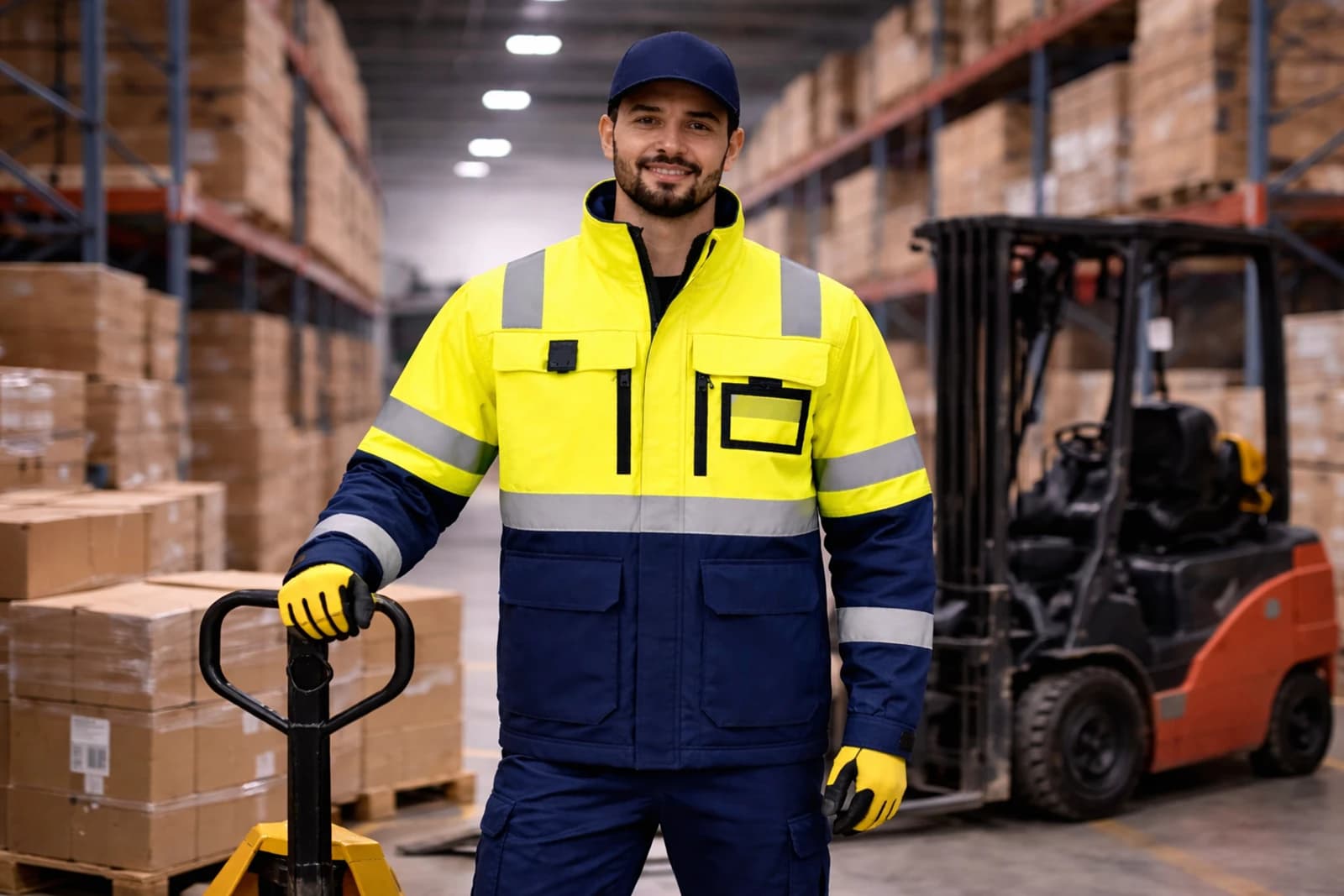
Safety Uniform
Hi-Vis Safety Jacket
Reflective safety jacket for high-visibility site operations and road work crews.
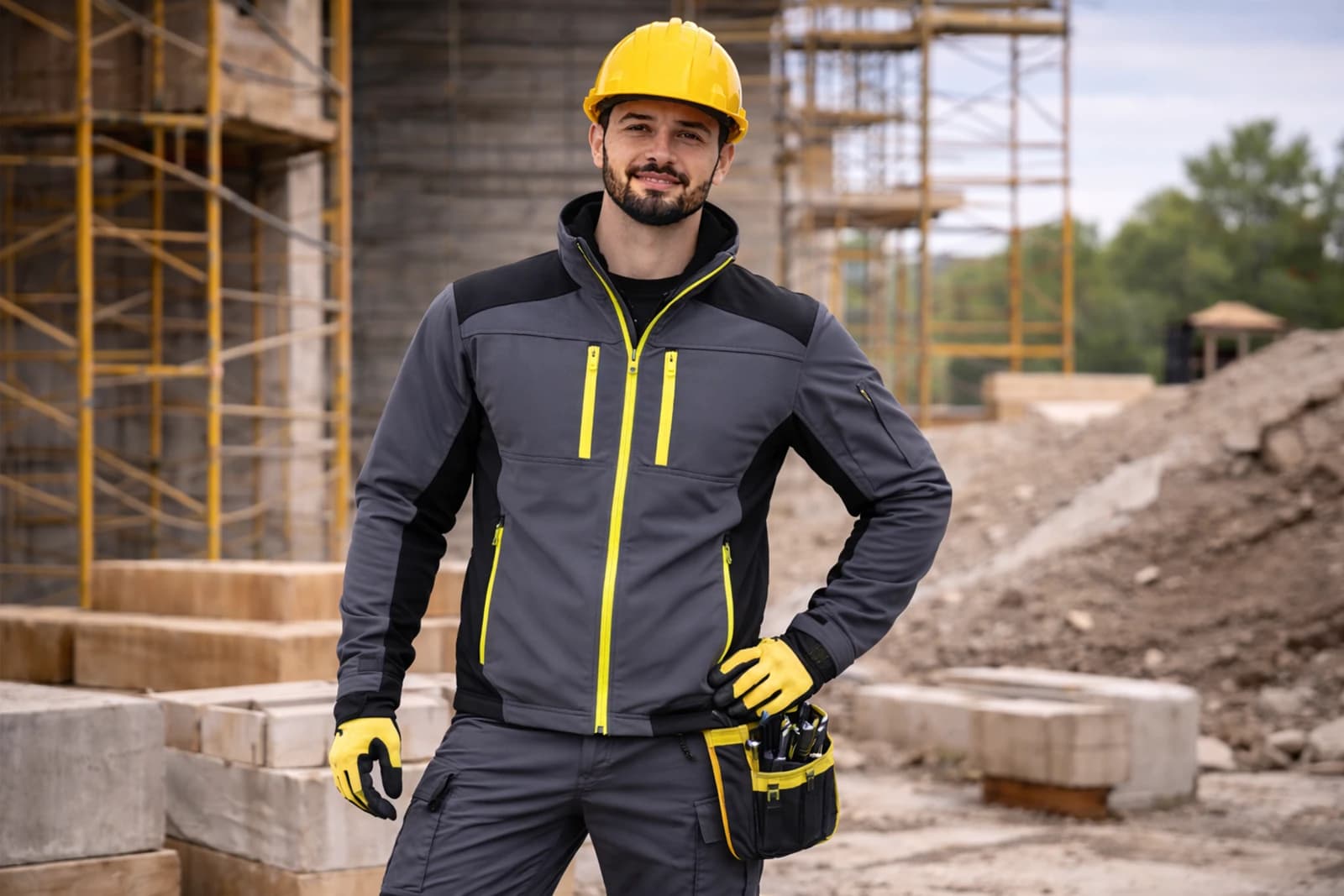
Construction Clothing
Construction Softshell Set
Flexible jacket and trouser set built for crews working across changing weather conditions.

Industrial Workwear
Industrial Coverall Pro
Hard-wearing one-piece coverall for plant, maintenance, and heavy-duty operations.

Logistics Uniform
Logistics Polo Uniform
Breathable uniform polo for warehouse, delivery, and last-mile teams.