Custom Workwear Branding for GCC Companies: Embroidery, Screen Printing, and Heat Transfer Compared
GCC B2B buyers sourcing branded workwear from China often face a choice between embroidery, screen printing, and heat transfer for company logos and markings. Each method carries different cost curves, durability profiles, and aesthetic outcomes — and the wrong choice can waste thousands on uniforms that fade or peel in Gulf conditions. This guide compares all three for Middle East procurement managers.

Buyer context
What procurement teams run into
<p>A facilities management company in Dammam orders 1,500 hi-vis safety jackets with their corporate logo embroidered on the chest. Six months later, the thread is fraying on the edges, the logo has shrunk two millimetres after industrial washing, and the embroidery backing has caused uncomfortable chafing for workers in the Gulf humidity.</p> <p>Across town, a logistics firm in Dubai prints their company name and safety QR code onto 2,000 logistics polo uniforms using screen printing. The first batch looks sharp on delivery, but after three months in a warehouse environment with frequent laundering, the print develops hairline cracks on the folds near the collar and the QR code no longer scans reliably.</p> <p>A third company — a construction contractor in Qatar — opts for heat transfer vinyl on their industrial coveralls. The logos look crisp and the upfront cost is lower than embroidery. But after a summer of 48 °C outdoor work and daily industrial laundering at 75 °C, the edges begin peeling and large sections delaminate entirely.</p> <p>These are not isolated failures. They are the predictable outcome of selecting a branding method without fully accounting for Gulf conditions: extreme heat, high humidity, aggressive industrial laundering, and the specific demands of different work environments. The branding method that works perfectly for a European office uniform can fail catastrophically on a Qatar construction site or a Saudi warehouse floor.</p>
Sourcing approach
How a factory partner can respond
<h2>The Three Branding Methods at a Glance</h2> <table> <tr><th>Method</th><th>Initial Cost</th><th>Minimum Order</th><th>Durability (Gulf Conditions)</th><th>Detail Resolution</th><th>Best For</th></tr> <tr><td>Embroidery</td><td>High (per-stitch setup)</td><td>50–100 pieces</td><td>Excellent — 3–5 years with proper care</td><td>Limited — text below 6 mm hard to read</td><td>Chest logos on jackets, coveralls, front pockets</td></tr> <tr><td>Screen Printing</td><td>Low per colour per screen</td><td>200+ pieces for economy</td><td>Good — 1–3 years depending on ink type and laundering</td><td>Excellent — fine detail down to 0.5 mm</td><td>Back prints, large text areas, safety markings</td></tr> <tr><td>Heat Transfer (DTF/HTV)</td><td>Low — no screen or digitising cost</td><td>1 piece possible</td><td>Fair — 6–18 months before edge peeling</td><td>Excellent — photo-quality possible</td><td>Small batches, multi-colour logos, seasonal rebranding</td></tr> </table> <h2>Embroidery: Durable but Demanding</h2> <p>Embroidery is the most durable branding method for GCC workwear, provided the garment and the embroidery specification are designed for each other. A well-executed embroidered logo on a hi-vis safety jacket can outlast the jacket itself — the thread does not crack, peel, or fade the way ink-based methods do.</p> <p>However, embroidery has three specific failure modes in Gulf environments that buyers need to anticipate:</p> <ul> <li><strong>Backing chafing.</strong> The stabiliser material on the reverse of the embroidery can cause skin irritation, especially on polo uniforms worn directly against the skin in 40 °C+ conditions. Solution: request cut-away backing (trimmed clean) instead of tear-away, and specify a soft mesh backing for garments worn against bare skin.</li> <li><strong>Thread degradation.</strong> Polyester thread is standard and holds up well to Gulf sun. But cheaper polyester-cotton blends can degrade in UV exposure. Specify 100 % high-tenacity polyester thread for all outdoor garments. The small upcharge (roughly $0.15–0.30 per logo) prevents mid-contract replacement.</li> <li><strong>Fabric distortion.</strong> Heavy embroidery on lightweight fabric (such as 150 gsm polo fabric) causes puckering. For logistics polo uniforms, limit stitch count to 7,000–10,000 stitches per logo and use a lightweight backing. For industrial coveralls and jackets, 12,000–15,000 stitches is acceptable on heavier fabric.</li> </ul> <h2>Screen Printing: Cost-Effective at Scale, Vulnerable in Heat</h2> <p>Screen printing is the most cost-effective method for bulk orders of 500+ pieces. The per-unit cost drops significantly after the screen setup fee is amortised, making it attractive for large GCC contracts. However, screen printing has a durability ceiling in Gulf conditions:</p> <ul> <li><strong>Plastisol ink cracks.</strong> Standard plastisol ink is formulated for temperate climates. In Gulf conditions — 48 °C ambient temperature plus industrial laundering cycles — the ink film becomes brittle and develops micro-cracks at fold points. The fix is to specify high-elongation plastisol (sometimes called "stretch ink") which maintains flexibility across a wider temperature range.</li> <li><strong>Water-based alternatives.</strong> Some GCC buyers are switching to water-based screen printing inks that bond more deeply with the fabric fibres rather than sitting as a surface layer. Water-based prints are softer (better for next-to-skin comfort) and resist cracking longer, but they may fade faster in direct sunlight. A clear trade-off that depends on whether the garment is mainly worn indoors (warehouse, logistics) or outdoors (construction, oil and gas).</li> <li><strong>Colour limitations.</strong> Each colour requires a separate screen and a separate production pass. Five-colour logos are common, but each colour adds setup cost and reduces registration precision. For complex logos, buyers are better off limiting screen-print to simpler designs and using embroidery for detailed chest logos.</li> </ul> <h2>Heat Transfer (DTF/HTV): Flexible but Short-Lived</h2> <p>Direct-to-film (DTF) and heat-transfer vinyl (HTV) have become popular for small-run and emergency workwear orders in the GCC because they require no minimum quantity and can reproduce photo-quality logos at low upfront cost. But they are the least durable option for Gulf conditions:</p> <ul> <li><strong>Edge peeling.</strong> The adhesive layer on heat transfers degrades faster at Gulf ambient temperatures. A DTF print that would last 2–3 years in a European climate may begin peeling at the edges within 6–8 months in a Saudi or UAE logistics environment.</li> <li><strong>Wash resistance.</strong> Industrial laundering at 75 °C+ is the death of most heat transfers. Even premium DTF films recommend maximum 60 °C wash temperatures. If your facility uses industrial wash, specify embroidery or screen printing instead — or accept that heat-transfer garments may need replacement after 12–18 cycles.</li> <li><strong>Where it works.</strong> Heat transfer is a legitimate choice for temporary branding, promotional giveaway uniforms at trade shows, rapid rebranding during company acquisitions, and small pilot batches before committing to embroidery or screen printing for the main contract.</li> </ul> <h2>Practical Recommendations for GCC Buyers</h2> <h3>Garment-by-Garment Guidance</h3> <p><strong>Logistics polo uniform:</strong> Embroidery for chest logo (7,000–8,000 stitches, cut-away backing), screen print for back company name. The combination gives durability where it matters (chest) and cost-effective large-area branding (back). Avoid heat transfer — the frequent laundering in logistics environments will cause early failure.</p> <p><strong>Hi-vis safety jacket:</strong> Embroidery only. The jacket sees outdoor UV exposure, industrial laundering, and rough handling. Screen print and heat transfer both degrade faster on the reflective fabric surface. Specify polyester thread for UV resistance. Keep the embroidery zone at least 10 cm from reflective tape to avoid tape distortion.</p> <p><strong>Industrial coverall pro:</strong> Embroidery for chest and back logos. Coveralls face the harshest conditions — chemicals, abrasion, high-temperature laundering — and only embroidery survives long-term. Request double-needle perimeter stitching on embroidered logos for added edge security.</p> <p><strong>Construction softshell set:</strong> Screen printing with high-elongation plastisol ink for the jacket back (large safety identification area) and embroidery for the chest. The middle layer of the softshell can distort under heavy embroidery, so keep chest logos to 10,000 stitches maximum.</p> <h3>Ordering for Longevity</h3> <p>GCC B2B buyers should request a branding durability test as part of pre-production sampling. The manufacturer produces 3–5 branded samples using the specified method, and the buyer runs them through 20 industrial wash cycles or 200 hours of continuous UV exposure (whichever is more relevant). If the logo shows visible degradation — peeling, cracking, colour shift, or thread fraying — the spec needs adjustment before bulk production begins.</p> <p>For mixed-method orders (e.g., embroidery on chest + screen print on back), confirm that both methods are applied before the garment is washed and finished. Some manufacturers prefer to screen print first (on the flat fabric panel) and add embroidery after assembly, but a pre-assembly approach risks misalignment. A single post-assembly finishing line with both stations in sequence produces the best registration.</p> <h2>Summary</h2> <p>No single branding method suits all GCC workwear applications. Embroidery wins for durability and outdoor conditions but costs more and needs proper backing specification for comfort. Screen printing delivers the best cost-per-unit for large back-of-garment or text-heavy branding, but ink formulation matters more in Gulf heat than buyers typically realise. Heat transfer is suitable only for small batches where replacement is acceptable within 12 months.</p> <p>The best approach: spec the branding method to the garment's expected lifespan and washing cycle, not just to upfront cost. A garment that costs 20 % more to brand but lasts twice as long is the economical choice, and a carefully specified logo that survives Gulf conditions protects your company branding investment for the full contract period.</p>
Recommended Products
Products that fit this use case
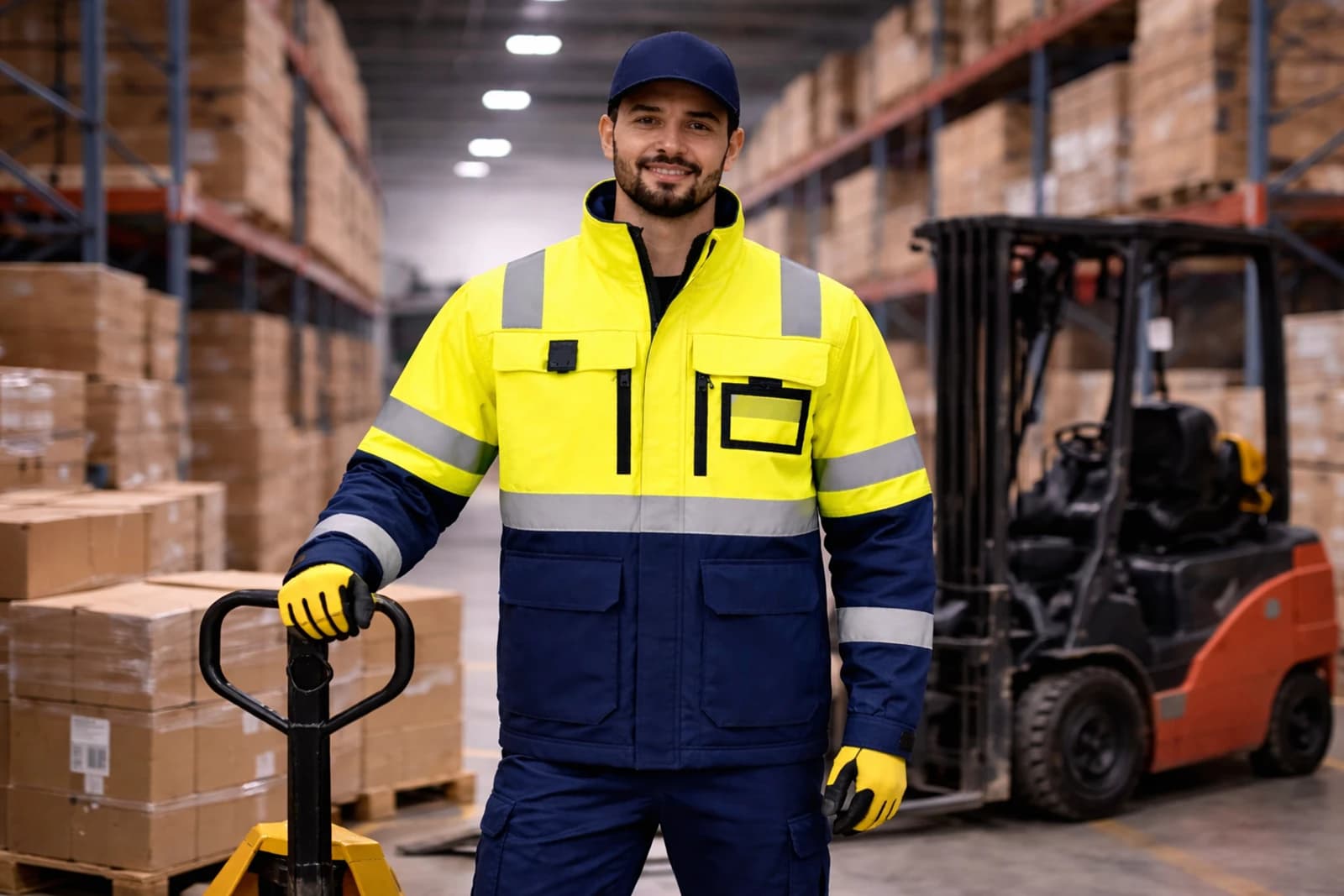
Safety Uniform
Hi-Vis Safety Jacket
Reflective safety jacket for high-visibility site operations and road work crews.

Logistics Uniform
Logistics Polo Uniform
Breathable uniform polo for warehouse, delivery, and last-mile teams.
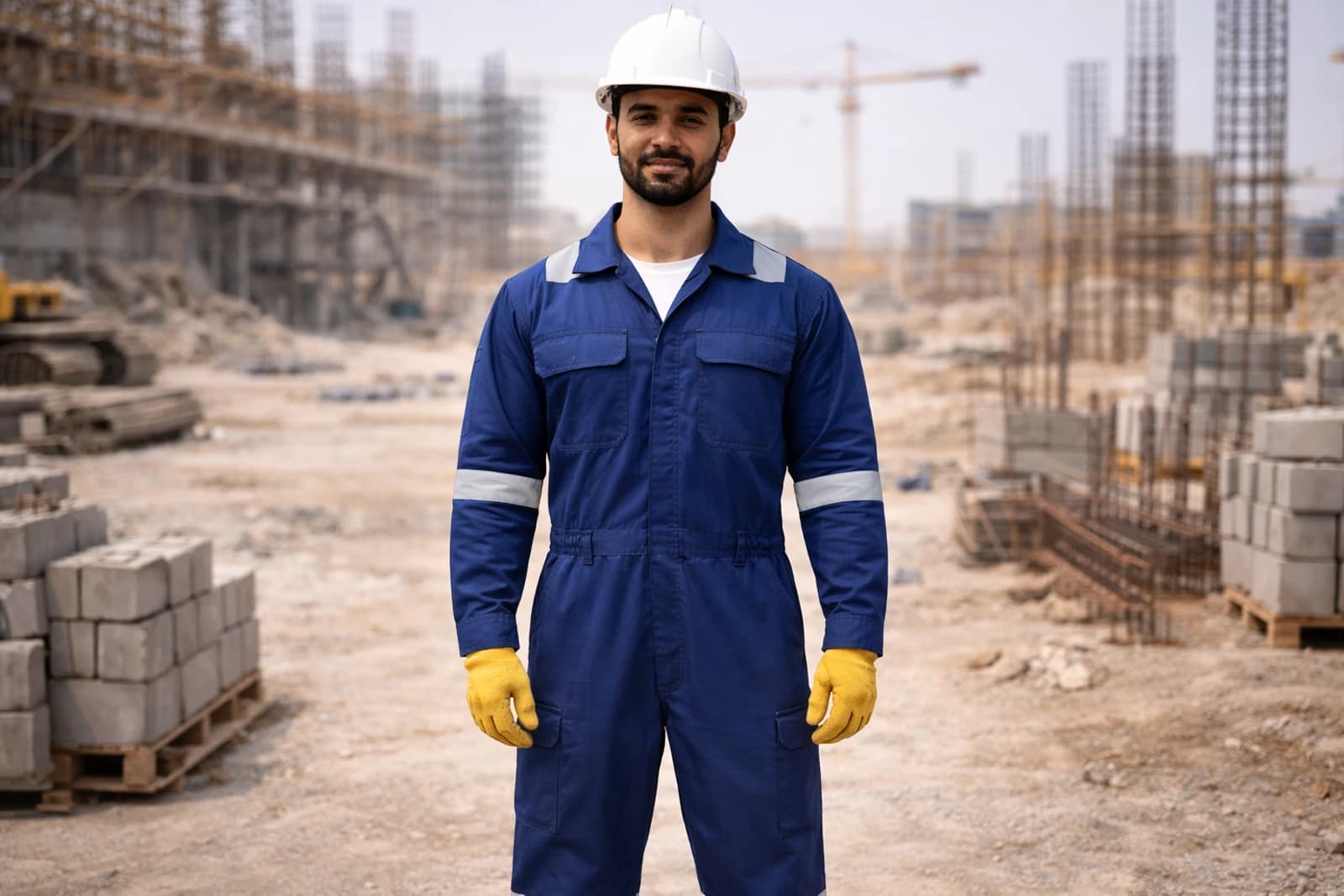
Industrial Workwear
Industrial Coverall Pro
Hard-wearing one-piece coverall for plant, maintenance, and heavy-duty operations.