Data Center Workwear Must Control Static Discharge and Lint Simultaneously
Data center buyers specify ESD-safe garments for technicians, then discover that ESD-safe fabric sheds lint that contaminates server hardware — or they specify low-lint garments that do not control static discharge. The root cause: ESD control and lint control are treated as separate specifications, but in a data center environment, both hazards exist simultaneously. The result: technicians wear garments that control static but contaminate servers with lint, or garments that control lint but generate static that damages sensitive electronics. This article covers the dual-hazard specification gap in data center workwear, the fabric criteria that address both ESD and lint together, and the pilot protocol that validates dual performance before fleet commitment.
Buyer context
What procurement teams run into
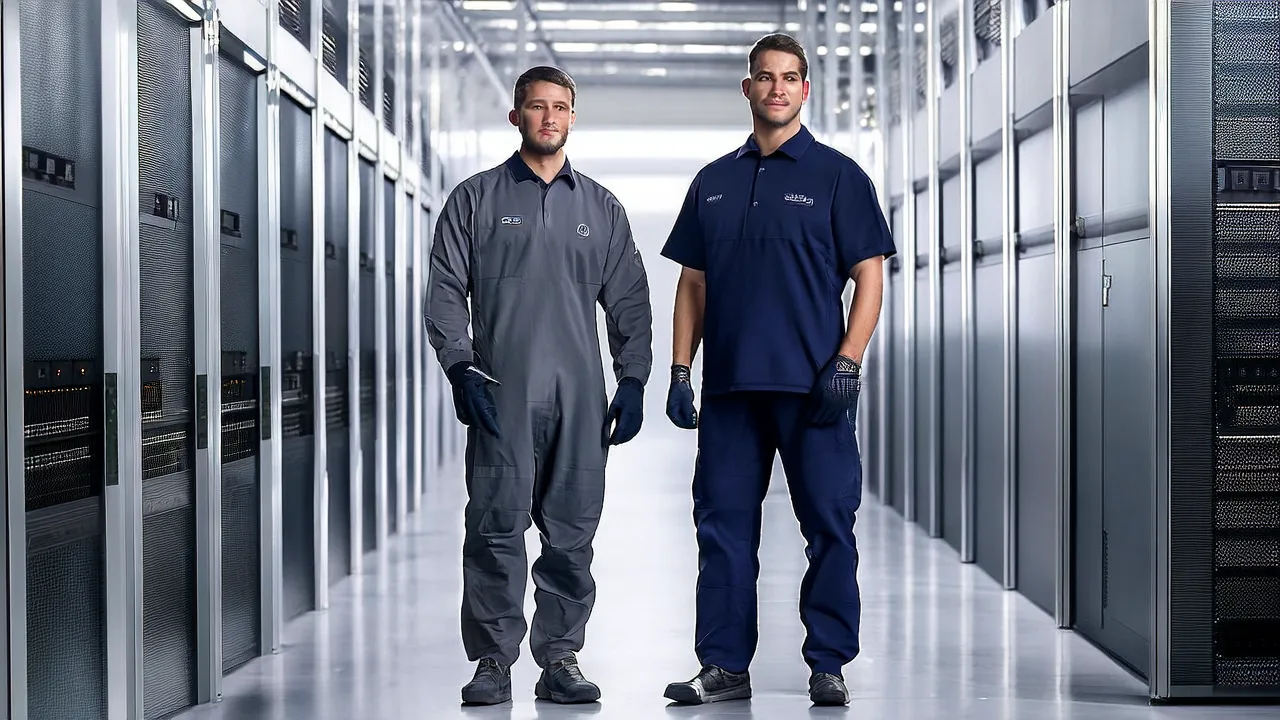
Data center workwear presents a dual-hazard specification gap that most buyers do not recognise until they see server hardware contamination or electrostatic discharge damage. The core issue: buyers specify ESD-safe garments for data center technicians based on static control alone, or they specify low-lint garments based on cleanliness alone, assuming that one specification addresses the workwear requirement. But data center environments present both hazards simultaneously — technicians working in server rooms generate static electricity through movement and friction, and their garments shed lint and fibers that settle on sensitive electronic components. The result: a garment that controls static discharge but contaminates servers with lint, or a garment that controls lint but generates static that damages hard drives, memory modules, and circuit boards. **1. The dual-hazard environment in data centers** Data centers present multiple simultaneous ESD and lint exposure scenarios: - **Server installation and maintenance:** Technicians who install, replace, or service servers in racks wear garments exposed to friction against rack metal, cable bundles, and flooring. The garment generates static electricity through movement, and the static discharge damages sensitive electronic components if the garment does not dissipate charge. Simultaneously, the garment sheds lint and fibers that settle on server internals, fan blades, and heat sinks during maintenance. - **Cable management and structured cabling:** Technicians who install, route, or terminate cables wear garments exposed to friction against cable jackets, patch panels, and cable trays. The garment generates static electricity through movement, and the static discharge damages active network equipment if the garment does not dissipate charge. Simultaneously, the garment sheds lint and fibers that settle on fiber optic connectors and copper contacts, creating signal degradation or connection failure. - **Cooling system maintenance:** Technicians who service CRAC units, cooling towers, and air handlers wear garments exposed to airflow and temperature variation. The garment generates static electricity through movement in low-humidity environments (common in data centers to prevent corrosion), and the static discharge damages sensors and control boards. Simultaneously, the garment sheds lint and fibers that are drawn into cooling system air intakes, reducing airflow efficiency and contaminating filters. - **Cleanroom-class server areas:** Some data centers operate classified cleanroom environments for high-density computing or semiconductor-adjacent operations. Technicians in these areas wear garments that must meet both ESD control and particulate control standards. The garment must dissipate static electricity without generating particulates that exceed the cleanroom classification. In all scenarios, the technician's garment must address both ESD control and lint control simultaneously — addressing one hazard without addressing the other creates a specification gap that leads to hardware damage or contamination. **2. Standard ESD-safe fabric fails on lint control** Standard ESD-safe garments are made from polyester or polyester-cotton blend fabric with conductive fibers (carbon or stainless steel) woven into the fabric to dissipate static electricity. The garment's ESD performance: - **Conductive fiber grid:** ESD-safe fabric incorporates a grid of conductive fibers (typically carbon fibers at 1–2% of fabric weight) that creates a conductive path across the garment surface. The conductive path dissipates static electricity generated by movement and friction, preventing static buildup and discharge. The ESD performance is measured in surface resistance (ohms per square) — ESD-safe fabric typically has a surface resistance of 10^6 to 10^9 ohms per square. - **ESD-safe fabric lint performance:** Standard ESD-safe fabric is made from short-staple polyester fibers spun into yarn, with conductive fibers woven into the yarn or fabric structure. The short-staple polyester fibers shed lint during wear and movement, at a rate of 10–50 fibers per square meter per hour. The conductive fibers do not reduce lint shedding — the fabric dissipates static but continues to shed fibers that contaminate server hardware. The technician wearing standard ESD-safe fabric in a data center environment controls static discharge but contaminates servers with lint — the garment addresses one hazard but not the other. **3. Standard low-lint fabric fails on ESD control** Standard low-lint garments are made from long-staple polyester or filament polyester fabric with a tight weave construction that locks fibers into the fabric structure and prevents fiber release. The garment's lint performance: - **Tight weave construction:** Low-lint fabric has a thread count of 100×100 or higher (threads per 10 cm) and a porosity of less than 10% (open area). The tight weave locks fibers into the fabric structure and prevents fiber release during wear and movement. The lint performance is measured in particles generated per square meter per hour — low-lint fabric typically generates less than 5 fibers per square meter per hour. - **Low-lint fabric ESD performance:** Standard low-lint fabric is made from long-staple or filament polyester fibers without conductive fibers. The fabric does not dissipate static electricity generated by movement and friction. The surface resistance of standard low-lint fabric is 10^12 to 10^15 ohms per square — far above the ESD-safe threshold of 10^9 ohms per square. The fabric controls lint but generates static that damages sensitive electronics. The technician wearing standard low-lint fabric in a data center environment controls lint but generates static discharge — the garment addresses one hazard but not the other. **4. The procurement mistake: specifying ESD or lint control without specifying both** The most common procurement error is to specify ESD-safe garments for data center technicians based on static control alone, or to specify low-lint garments based on cleanliness alone, without specifying dual performance. The logic: "If the garment is ESD-safe, it protects the electronics" or "If the garment is low-lint, it keeps the servers clean." But this logic addresses only one hazard and ignores the second hazard. The buyer who specifies ESD-safe fabric without low-lint performance faces hardware contamination from lint shedding. The buyer who specifies low-lint fabric without ESD performance faces hardware damage from static discharge. Neither outcome is acceptable. The buyer must specify garments that address both ESD control and lint control simultaneously. **5. The dual-performance specification for data center workwear** The procurement specification for data center workwear must include both ESD control and lint control requirements: - **ESD-safe fabric with low-lint performance:** Specify fabric made from long-staple polyester or filament polyester fibers with conductive fibers (carbon or stainless steel) woven into the fabric structure. The fabric must have a surface resistance of 10^6 to 10^9 ohms per square (ESD-safe) and a lint generation rate of less than 5 fibers per square meter per hour (low-lint). Require the supplier to provide testing data for both ESD performance (surface resistance per IEC 61340-5-1 or equivalent) and lint performance (particle generation per IEST-RP-CC004 or equivalent). - **Tight weave construction with conductive grid:** Specify fabric with a tight weave (thread count 100×100 or higher, porosity less than 10%) that locks fibers into the fabric structure and prevents fiber release. The conductive fibers must be integrated into the tight weave without compromising the lint-locking performance. Require the supplier to provide fabric construction data (thread count, porosity, conductive fiber percentage) for the fabric. - **Sealed seams and edges:** Specify sealed seams (heat-sealed or ultrasonically welded) rather than sewn seams. Sewn seams create needle holes that release fibers from the fabric interior and compromise the lint-locking performance. Sealed seams lock fibers into the fabric structure and prevent fiber release through needle holes. Specify sealed edges (heat-cut or ultrasonically cut) rather than raw-cut edges. Raw-cut edges release fibers from the fabric edge during wear and washing. - **ESD-safe components:** Specify ESD-safe thread for all seams (conductive thread that maintains the conductive path across the garment). Specify ESD-safe zippers (metal zippers with conductive tape or plastic zippers with conductive properties). Specify ESD-safe snap buttons or hook-and-loop closures. No non-ESD-safe components (standard polyester labels, standard elastic cuffs, non-conductive pocket lining) may be used in the garment — non-conductive components break the conductive path and create static buildup zones. **6. The pilot protocol for dual-performance data center workwear** Before committing to a full fleet order, pilot dual-performance garments with 10–15 data center technicians in the highest-exposure areas (server installation, cable management, cooling system maintenance) for 8–12 weeks: - **ESD incident monitoring:** Monitor ESD incidents (hardware damage, equipment malfunction) during the pilot period. Record whether dual-performance garments reduce ESD incidents compared to standard ESD-safe garments or standard low-lint garments. If an ESD incident occurs, inspect the garment for non-conductive components or damaged conductive fibers that may have compromised ESD performance. - **Lint contamination monitoring:** Monitor lint contamination incidents (server hardware contamination, filter clogging, connector degradation) during the pilot period. Record whether dual-performance garments reduce lint contamination compared to standard ESD-safe garments. If a contamination incident occurs, inspect the garment for loose threads, pilling, or thinning fabric that may have compromised lint performance. - **Worker comfort and mobility:** Survey technicians on thermal comfort, breathability, and mobility during data center tasks. Dual-performance fabrics may be heavier or less breathable than standard workwear fabric; confirm that technicians adapt to the difference. Data centers operate at 18–27°C (64–81°F) with low humidity (20–40% RH); technicians need garments that manage thermal comfort in cool, dry environments. If technicians report overheating or restricted mobility, specify a lighter dual-performance fabric or a more breathable construction — but re-test for both ESD and lint performance to confirm that the adjustment does not compromise dual performance. - **Garment inspection:** Inspect garments weekly for loose threads, pilling, thinning fabric, or damaged conductive fibers. Replace garments that show signs of ESD or lint performance degradation before the pilot is complete. - **Wash-cycle tracking:** Track wash cycles for each garment during the pilot. Confirm that garments maintain both ESD and lint performance after 10, 25, and 50 wash cycles. Require the supplier to provide ESD and lint testing data for garment samples after 10, 25, and 50 wash cycles to confirm that dual performance is maintained throughout the garment's service life. **7. Adjusting the specification based on pilot data** After the pilot, adjust the garment specification: - **If ESD incidents occur:** Investigate whether non-conductive components (labels, zippers, elastic cuffs) are breaking the conductive path. Specify fully conductive components for all garment elements. Require the supplier to provide ESD testing data for the complete garment, not just the fabric. - **If lint contamination occurs:** Investigate whether the fabric weave is degrading after washing. Specify a tighter weave construction or a more durable fabric. Reduce the replacement interval if the fabric loses lint-locking performance after 25 wash cycles. - **If technicians report overheating:** Specify a lighter dual-performance fabric (lower GSM) or a more breathable construction (mesh-lined vents, open-weave fabric in non-critical zones). Ensure that the adjusted garment still meets both ESD and lint performance requirements — validate with testing. - **If conductive fibers degrade after washing:** Specify a more durable conductive fiber integration (conductive fibers woven into the yarn rather than applied as a coating). Require the supplier to provide ESD testing data after 50 wash cycles to confirm that conductive performance is maintained.
Sourcing approach
How a factory partner can respond
The solution for data center workwear is to specify dual-performance garments that address both ESD control and lint control simultaneously, implement a pilot protocol that validates dual performance in the data center environment, and establish an inspection and replacement protocol that maintains dual performance throughout the garment's service life. **Step 1: Specify dual performance in the procurement specification** Include the following requirements in the procurement specification: - **ESD-safe fabric with low-lint performance:** Specify long-staple polyester or filament polyester fabric with conductive fibers (carbon or stainless steel) that has a surface resistance of 10^6 to 10^9 ohms per square and a lint generation rate of less than 5 fibers per square meter per hour. Require the supplier to provide testing data for both ESD performance (IEC 61340-5-1 or equivalent) and lint performance (IEST-RP-CC004 or equivalent). - **Tight weave construction with conductive grid:** Specify fabric with a thread count of 100×100 or higher and porosity of less than 10%, with conductive fibers integrated into the tight weave. Require the supplier to provide fabric construction data. - **Sealed seams and edges:** Specify sealed seams (heat-sealed or ultrasonically welded) and sealed edges (heat-cut or ultrasonically cut). No sewn seams or raw-cut edges are permitted. - **ESD-safe components:** Specify ESD-safe thread, ESD-safe zippers, and ESD-safe snap buttons or hook-and-loop closures. No non-ESD-safe components are permitted. **Step 2: Pilot dual-performance garments before full fleet commitment** Before committing to a full fleet order, pilot dual-performance garments with 10–15 data center technicians in the highest-exposure areas for 8–12 weeks. Monitor ESD incidents, lint contamination incidents, worker comfort and mobility, and garment inspection data. Track wash cycles and require the supplier to provide ESD and lint testing data for garment samples after 10, 25, and 50 wash cycles. **Step 3: Adjust the specification based on pilot data** After the pilot, adjust the garment specification based on ESD incident data, lint contamination data, worker comfort feedback, and garment inspection data. Specify fully conductive components if ESD incidents occur. Specify a tighter weave or more durable fabric if lint contamination occurs. Specify a lighter or more breathable fabric if technicians report overheating — but re-test for both ESD and lint performance. **Step 4: Establish an inspection and replacement protocol** Implement an inspection and replacement protocol that maintains dual performance throughout the garment's service life: - **Pre-wear inspection:** Technicians inspect dual-performance garments before each wear for signs of ESD or lint performance degradation: loose threads, pilling, thinning fabric, or damaged conductive fibers. A garment with signs of degradation must be removed from service immediately. - **Wash-cycle tracking:** Track wash cycles for each dual-performance garment. Specify garment replacement based on wash-cycle count (typically 30–50 wash cycles) or based on periodic ESD and lint testing. - **Periodic ESD and lint testing:** Require ESD and lint testing for garment samples after 10, 25, and 50 wash cycles to confirm that dual performance is maintained throughout the garment's service life. If the garment's ESD or lint performance degrades below the required threshold after 25 wash cycles, reduce the replacement interval to 20 wash cycles. **Recommended garments for data center workwear:** - **Logistics polo-uniform** — specify the polo shirt in dual-performance fabric (long-staple polyester with conductive fibers, tight weave construction, sealed seams) for data center technicians who need a comfortable, breathable garment for server installation, cable management, and cooling system maintenance. The polo shirt provides comfort and breathability for technicians who move between cold aisles and hot aisles, with ESD-safe and low-lint performance that protects sensitive electronics from static discharge and lint contamination. Specify the polo shirt with ESD-safe thread, ESD-safe zippers or snap buttons, and heat-transfer labels. - **Industrial coverall-pro** — specify the coverall in dual-performance fabric for data center technicians who need full-body ESD and lint protection in classified cleanroom environments or high-density computing areas. The coverall provides full-body protection against static discharge and lint contamination, with sealed seams, sealed edges, and ESD-safe components. Specify the coverall with ESD and lint testing data for the complete garment, not just the fabric.
Recommended Products
Products that fit this use case

Logistics Uniform
Logistics Polo Uniform
Breathable uniform polo for warehouse, delivery, and last-mile teams.

Industrial Workwear
Industrial Coverall Pro
Hard-wearing one-piece coverall for plant, maintenance, and heavy-duty operations.