Desalination Plant Workwear: Sourcing a Four-Garment Uniform System for the Middle East's Strategic Water Infrastructure
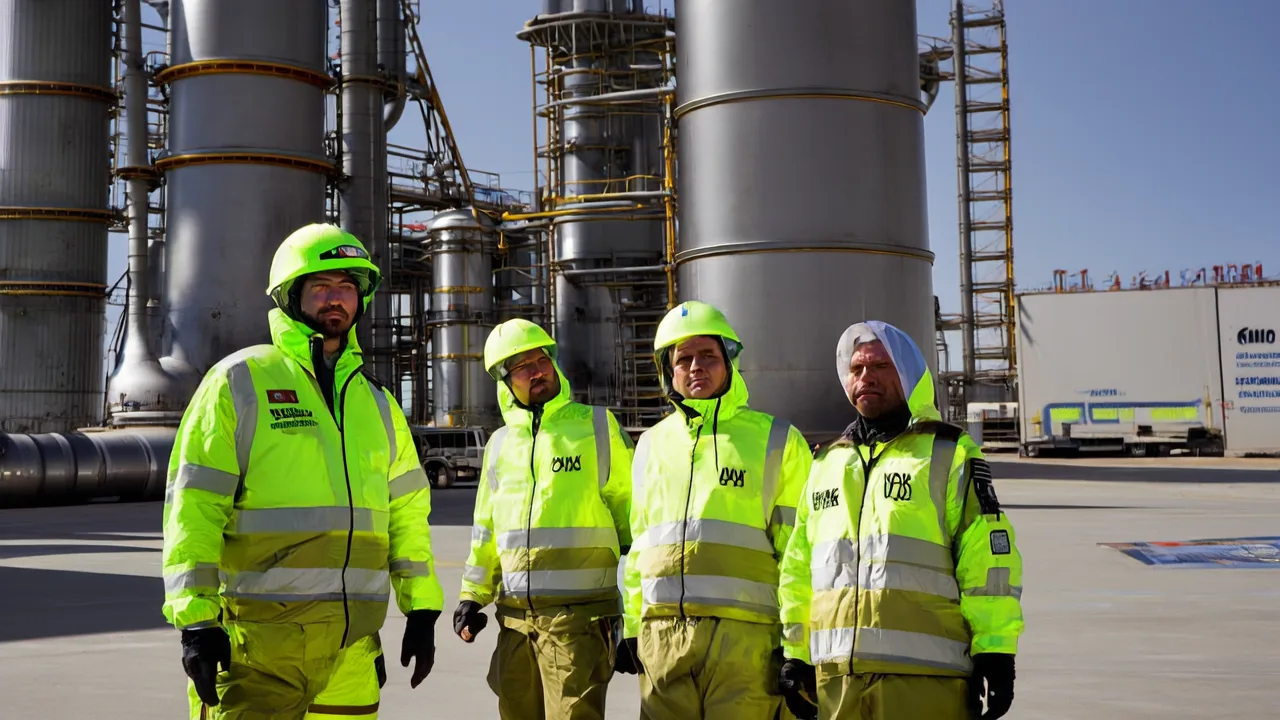
The Middle East produces over 50% of the world's desalinated water — Saudi Arabia's Ras Al Khair, UAE's Jebel Ali, Qatar's Ras Abu Fontas, and Kuwait's Doha East are among the largest plants on earth. Each facility employs process technicians, maintenance fitters, chemical handlers, control room operators, lab analysts, and plant managers who work across vastly different conditions: corrosive salt-laden air, chemical exposure, high-humidity process halls, and air-conditioned control rooms. This sourcing guide covers industrial coveralls, construction softshell sets, hi-vis safety jackets, and logistics polo uniforms for desalination plants — fabric specifications for coastal-chemical conditions, role-based garment allocation, compliance considerations, and volume procurement from a Chinese workwear manufacturer.
Buyer context
What procurement teams run into
The Middle East is the undisputed global epicentre of desalination. Saudi Arabia produces over 20% of the world's desalinated water, with the Ras Al Khair integrated plant producing 1,025 million litres per day. The UAE's Jebel Ali desalination complex is one of the world's largest, Qatar relies on desalination for over 90% of its potable water, Kuwait depends on desalination for 90% of its drinking water supply, and Oman and Bahrain continue expanding capacity. New mega-projects are underway across the region — Saudi Arabia's Vision 2030 targets significant desalination capacity expansion, the UAE plans to double capacity by 2030, and NEOM will require dedicated renewable-powered desalination. Across the wider Middle East, Egypt, Jordan, Iraq, Libya, Algeria, and Israel all operate major desalination facilities. Every desalination plant — whether reverse osmosis (RO), multi-stage flash (MSF), or multi-effect distillation (MED) — employs a diverse workforce operating across dramatically different conditions within a single facility. For B2B buyers procuring workwear for these workforces, the challenge is unusually complex because one site demands multiple garment types for different roles. **1. The desalination plant environment combines chemical, thermal, and coastal hazards in one location** A large desalination plant presents multiple distinct work zones, each with its own hazard profile: - **Intake and outfall zones.** Seawater intake structures, pump houses, screening plants, and outfall diffusers are fully exposed to coastal conditions — salt spray, tidal splash, wind-driven sand, and marine growth. Workers here face constant salt-laden moisture, UV exposure, and physical hazards from heavy submersible pumps and large-diameter piping. - **Pre-treatment and chemical dosing areas.** Coagulation, flocculation, sand filtration, and chemical dosing (anti-scalant, chlorine dioxide, sulphuric acid for pH adjustment, sodium hexametaphosphate) expose workers to chemical splashes and vapours. Garments must resist chemical degradation and be easily laundered to remove chemical residues. - **RO membrane halls and high-pressure pump rooms.** These enclosed spaces are hot (35–45°C from process heat and pump friction), humid (80–95% RH from water evaporation), and noisy. Workers spend full shifts here maintaining membrane elements, replacing cartridge filters, and servicing high-pressure pumps rated at 60–80 bar. - **MSF/MED thermal distillation units.** For thermal plants, distillation units operate at temperatures up to 110°C with steam and hot brine. Workers face thermal hazard from hot surfaces, steam leaks, and brine splashes. - **Post-treatment and product water storage.** Remineralisation, chlorination, fluoride dosing, and product water pumping areas are relatively clean but still in a coastal industrial environment. - **Control rooms and laboratories.** Air-conditioned, clean environments where control room operators, lab analysts, and plant managers work. These staff need professional appearance garments for internal meetings and external client visits. - **Outdoor plant areas and vehicle routes.** Pipe racks, access roads, laydown areas, and construction zones where vehicle and pedestrian traffic overlap. Workers need high visibility. **2. The multi-garment challenge: one plant, four distinct garment types** Unlike a single-hazard industrial site, a desalination plant requires different garments for different roles — and procurement must cover all four simultaneously. **For process technicians, maintenance fitters, and chemical handlers — industrial coveralls:** Workers who spend their shifts in the pre-treatment area, RO membrane halls, chemical dosing zones, or thermal distillation units need full-body protection. The one-piece coverall eliminates the waist gap where chemical splashes or brine can enter, protects the full torso from hot surfaces and sharp pipe edges, and presents a professional appearance. Key specifications when sourcing coveralls for desalination from a Chinese manufacturer: **Fabric weight and composition.** Specify 245–260gsm poly-cotton twill (65/35 or 80/20 blend). The polyester content provides chemical and abrasion resistance against pipe edges and membrane housings, dimensional stability after industrial washing, and faster drying than pure cotton in humid process halls. **Chemical splash resistance.** For workers in anti-scalant and acid dosing areas, specify fabric treated with chemical-resistant finish or inherent chemical-resistant fibres. Garments should meet EN ISO 6529 or equivalent for chemical splash protection. This is a premium specification but critical for safety in chemical handling zones. **Corrosion-resistant hardware.** Specify YKK Natulon or equivalent anti-corrosion zippers and stainless steel or coated snap buttons. Standard steel zippers corrode rapidly in salt-laden coastal air — within weeks, not months. This is the single most critical hardware specification for desalination plant workwear. **Reinforcement at high-wear zones.** Double-layer knees with internal knee-pad pockets (maintenance fitters kneel on wet concrete floors constantly when servicing pumps and valves). Reinforced elbows for pipe-work. Bar-tacked stress points at all pocket corners and seam intersections. **Ventilation features.** Mesh-lined back vents and underarm eyelets for heat escape in enclosed, humid process halls. Two-way front zip for comfort during bending and crouching. **Pocket configuration.** Chest pockets with flaps and snap closures. Thigh cargo pockets with secure hook-and-loop closures. Dedicated pen and tool pockets. All pockets must close cleanly — open pockets collect salt crystals and chemical dust. **Colour.** Light colourways (khaki, sand, light grey) for outdoor areas to reduce heat absorption. Dark colours (navy, charcoal) for chemical dosing areas where stains are frequent. Confirm ISO 105-B02 xenon-arc fade testing. **Industrial wash durability.** Desalination plants wash garments frequently to remove salt and chemical residues. Specify ISO 15797 compliance with ≤ 3% dimensional change after 50+ wash cycles. **For night-shift workers, outdoor patrol crews, and intake/outfall inspectors — construction softshell sets:** Desalination plants operate 24/7. Night-shift maintenance crews, security patrol teams, intake/outfall inspectors, and outdoor construction or expansion crews work in coastal conditions where wind chill off the sea can be significant — especially during Gulf winter nights (December–February) when temperatures drop to 10–15°C with wind chill making it feel much colder. Key specifications when sourcing softshell sets for desalination from a Chinese manufacturer: **Fabric weight and composition.** Specify 280–320gsm bonded softshell — polyester face (92–95%) with elastane (5–8%) for stretch, bonded to a brushed polyester backing. The outer face resists abrasion from pipe racks and marine growth. The brushed backing provides warmth for pre-dawn and night shifts. **Wind and water resistance.** DWR finish with 5,000–8,000mm hydrostatic head for salt spray and coastal rain protection. For Gulf conditions, this level of water resistance is sufficient — fully waterproof membranes trap too much heat in humid conditions. **Corrosion-resistant zippers.** Same critical specification as coveralls — YKK Natulon or equivalent for all zippers and hardware. **Reinforcement.** Double-layer knees with knee-pad pockets, reinforced elbows, Cordura patches at cuffs and hem. **Pocket configuration.** Zipped chest pockets for phones and radios. Side hand pockets. Cargo pockets on trousers with secure closures. All pockets must have zippers — items dropped near intake channels are lost to the sea. **Reflective accents.** Retroreflective piping on shoulders, sleeves, and trouser legs for supplementary visibility in low-light conditions. **Fit and layering.** Action back on the jacket for freedom of movement when climbing onto pipe racks and intake structures. Articulated knees on trousers. **For all workers in vehicle and equipment zones — hi-vis safety jackets:** Every worker who spends time on plant access roads, near mobile cranes, in pipe-lay areas, or at intake/outfall structures needs high-visibility clothing. Desalination plants use trucks, telehandlers, mobile cranes, and service vehicles extensively — especially during expansion projects. A worker in standard clothing is difficult to see against the backdrop of white pipes, concrete structures, and bright coastal sunlight. Key specifications when sourcing hi-vis jackets for desalination from a Chinese manufacturer: **Fabric weight and composition.** Specify lightweight polyester 210–240gsm with mesh lining for Gulf heat and humidity. Heavy hi-vis jackets are unbearable in 45°C summer heat combined with coastal humidity. **EN ISO 20471 Class 3.** Class 3 offers the highest retroreflective coverage and is the right call for all workers who spend significant time near moving vehicles and equipment. Confirm the jacket meets EN ISO 20471 minimum retroreflective intensity (typically 330 cd/lx/m² for Class 3). **Salt and moisture resistance.** Desalination hi-vis jackets face salt spray, high humidity, and frequent washing. Specify fabric and tape that maintain retroreflective performance after 50+ wash cycles in industrial laundering. Confirm the fluorescent background fabric resists salt-induced colour degradation. **Fluorescent background and retroreflective tape.** Specify fluorescent yellow-green or orange fabric with retroreflective tape positioned to EN ISO 20471 geometry on torso, arms, and shoulders. **Practical details.** Two-way front zip, zipped side pockets, adjustable cuffs, DWR finish with 5,000mm+ hydrostatic head. **Durability.** Reinforced shoulders and elbows for abrasion against pipe racks and structures. **For supervisors, control room operators, lab analysts, and client-facing staff — logistics polo uniforms:** Desalination plants employ shift supervisors, control room operators, lab technicians, HSE officers, plant managers, and client/authority liaison staff who work in air-conditioned control rooms and laboratories but also walk the plant for inspections, meetings, and client visits. These roles need a professional, brandable garment. Key specifications when sourcing polo uniforms for desalination from a Chinese manufacturer: **Fabric.** 180–220gsm pique knit in 65% polyester / 35% cotton with moisture-wicking treatment and UPF 30+ sun protection. **Collar and trim.** Ribbed collar with contrast piping; tonal buttons; clean placket. The collar must hold its shape after repeated industrial washing. **Branding.** Embroidered chest logos with Pantone colour matching for plant/operator branding. Woven name tapes and role patches ("CONTROL ROOM," "LAB ANALYST," "HSE," "PLANT MANAGER"). **Sizing.** Full size range (2XS–4XL+) with Middle East / South Asian body proportions for the multinational workforce. **Colour fastness.** ISO 105 certified for Gulf sun and industrial laundering. **3. The four-garment system for complete desalination plant uniform** The smartest procurement approach treats all four garments as a unified uniform system: **Process technicians and maintenance fitters:** Industrial coveralls as primary garment. Hi-vis jacket over coveralls when working in vehicle zones or during plant shutdowns and turnarounds with increased mobile plant traffic. **Night-shift and outdoor patrol crews:** Construction softshell set as primary outdoor garment. Hi-vis jacket over softshell for all vehicle-zone work. Coveralls for indoor process areas during the same shift. **Intake/outfall divers and marine crews:** Coveralls for boat operations and deck work. Softshell jacket for wind protection during boat transit. Hi-vis jacket mandatory for all deck and quayside work. **Control room operators and lab staff:** Logistics polo uniform as daily garment. Clean, professional appearance for control room and laboratory work. Polo with company branding for authority visits and client meetings. **Shift supervisors and HSE officers:** Polo uniform for office and control room. Coveralls or softshell with hi-vis jacket for plant walkdowns and inspections. Distinctive polo colour for instant recognition. **Construction and expansion crews:** Full softshell set for outdoor work. Coveralls for process-area tie-ins. Hi-vis jacket mandatory at all times. Polo for supervisors and client-facing roles. This system means one colour palette, one branding scheme, one manufacturer, and one procurement process covering every role in the desalination plant. **4. Compliance and testing for desalination plant workwear** Relevant standards: - **EN ISO 13688** — general requirements for protective clothing (ergonomics, sizing, ageing, marking). Applies to all four garment types. - **EN ISO 20471** — high-visibility clothing. Class 3 for all workers in vehicle and equipment zones. Insist on third-party test reports from accredited labs (SGS, TÜV, Intertek, Bureau Veritas) covering retroreflective performance after washing and fabric colour fastness — specifically including salt-spray resistance testing. - **EN ISO 6529** — chemical splash resistance for coveralls in dosing areas. - **ISO 9227** — salt spray corrosion testing for zippers and hardware. - **ISO 105-B02** — colour fastness to light (xenon arc). Critical for Gulf coastal conditions. - **ISO 15797** — industrial laundering durability. Specify ≤ 3% dimensional change after 50+ wash cycles. - **OEKO-TEX Standard 100** — restricted substances. Workers in extreme heat and humidity sweat heavily. **5. Procurement strategy for desalination plant buyers** **Volume and frequency.** A large desalination plant employs 200–800 operational staff. Order all four garments in one consolidated shipment to reduce freight and simplify customs clearance at Dammam, Jebel Ali, or Doha ports. **Consolidate orders.** Order coveralls, softshell sets, hi-vis jackets, and polos from a single Chinese manufacturer with in-house capability for all four garment types. This ensures consistent quality, consolidated shipping, and volume pricing. **Plan for seasonal timing.** Order softshell sets in August–September for December–February delivery (pre-winter, when layering garments are needed). Order coveralls and polos 3–4 months before mobilisation or expansion. Avoid ordering for summer delivery during Ramadan production slowdowns. **Stock buffer.** Order 20–25% buffer stock above annual requirements. Desalination workwear faces accelerated wear from salt, chemicals, and frequent washing. Reordering small batches of custom garments costs far more per unit than including buffer in the original production run. **Pilot before full volume.** Order 50–100 units per garment type for a trial fitting before committing to the full plant order. Adjust sizing, fabric weight, pocket placement, and hardware specifications based on field feedback from process technicians, maintenance fitters, and plant supervisors. **Standardise across plant functions.** Whether your plant uses RO, MSF, or MED technology, the same four-garment system works. Standardise on one colour palette and one hi-vis class across all functions — this simplifies procurement, ensures consistent safety standards, and makes your plant's workforce instantly recognisable.",
Sourcing approach
How a factory partner can respond
The solution for Middle East desalination plants is a four-garment workwear system — industrial coveralls for process technicians, maintenance fitters, and chemical handlers; construction softshell sets for night-shift workers, outdoor patrol crews, and intake/outfall inspectors; EN ISO 20471 Class 3 hi-vis safety jackets for all workers in vehicle and equipment zones; and logistics polo uniforms for supervisors, control room operators, lab analysts, and client-facing staff — sourced from a single Chinese workwear manufacturer for consistent quality, consolidated shipping, and volume pricing. **For industrial coveralls (process technicians and maintenance crews):** - 245–260gsm poly-cotton twill (65/35 or 80/20 blend) — chemical and abrasion resistant, quick-drying in humid process halls - Chemical splash resistance (EN ISO 6529) for workers in anti-scalant and acid dosing areas - Corrosion-resistant zippers (YKK Natulon or equivalent) — critical for salt-laden coastal air - Double-layer reinforced knees with knee-pad pockets, reinforced elbows, bar-tacked stress points - Mesh-lined back vents and underarm eyelets for heat escape in enclosed process halls - Secure-closure pockets: chest with flaps, thigh cargo with hook-and-loop, pen and tool pockets - ISO 15797 industrial wash durability (≤ 3% dimensional change after 50+ cycles), OEKO-TEX Standard 100 **For construction softshell sets (night-shift and outdoor patrol crews):** - 280–320gsm bonded softshell — polyester face with elastane, bonded to brushed polyester backing - DWR finish with 5,000–8,000mm hydrostatic head for salt spray and coastal rain - Corrosion-resistant zippers throughout - Double-layer reinforced knees with knee-pad pockets, reinforced elbows, Cordura patches - Retroreflective piping on shoulders, sleeves, and trouser legs for supplementary visibility - Action back jacket fit with articulated knees for climbing and pipe-work **For hi-vis safety jackets (all workers in vehicle and equipment zones):** - Lightweight polyester 210–240gsm with mesh lining for Gulf heat and humidity - EN ISO 20471 Class 3 with fluorescent yellow-green or orange fabric - Retroreflective tape on torso, arms, and shoulders (330 cd/lx/m² minimum) - Salt and moisture resistant — fabric and tape maintain performance after 50+ wash cycles - Two-way front zip, zipped side pockets, adjustable cuffs, DWR finish (5,000mm+ hydrostatic head) - Reinforced shoulders and elbows for abrasion against pipe racks **For logistics polo uniforms (supervisors, control room, lab, client-facing staff):** - 180–220gsm pique knit in 65% polyester / 35% cotton with moisture-wicking and UPF 30+ - Ribbed collar with contrast piping; tonal buttons; clean placket - Embroidered chest logos with Pantone colour matching; woven name tapes and role patches - Full size range (2XS–4XL+) with Middle East / South Asian body proportions - ISO 105 colour-fastness certified for Gulf sun and industrial laundering **Procurement strategy:** - Treat all four garments as a unified uniform system across every plant function and shift pattern - Consolidate all four garments into one shipment from a single manufacturer to reduce freight and simplify customs - Order softshell sets in August–September for pre-winter delivery; order coveralls and polos 3–4 months before mobilisation - Stock 20–25% buffer for replacement cycles (desalination workwear faces accelerated wear from salt, chemicals, and frequent washing) - Pilot 50–100 units per garment type before full fleet commitment
Recommended Products
Products that fit this use case
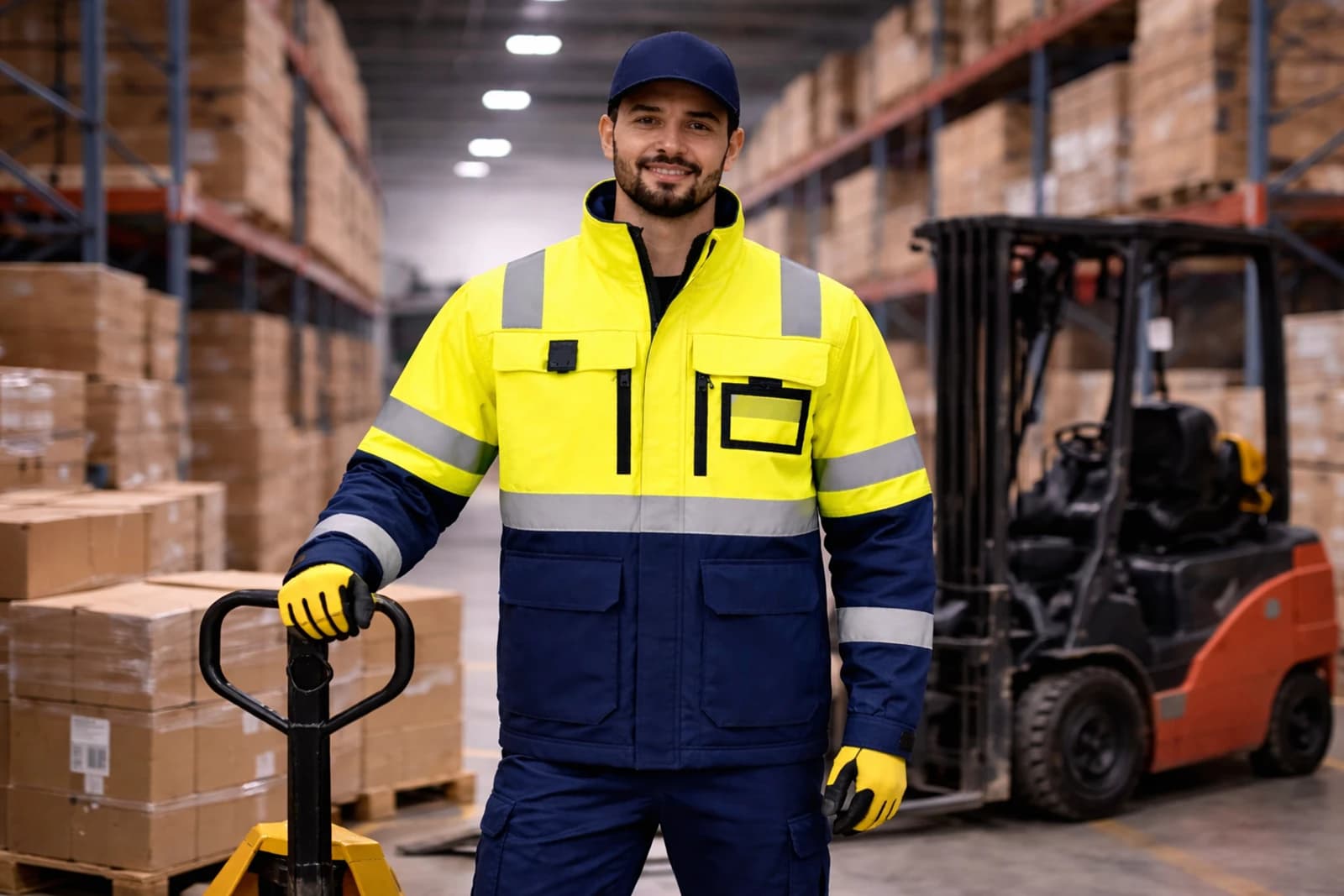
Safety Uniform
Hi-Vis Safety Jacket
Reflective safety jacket for high-visibility site operations and road work crews.
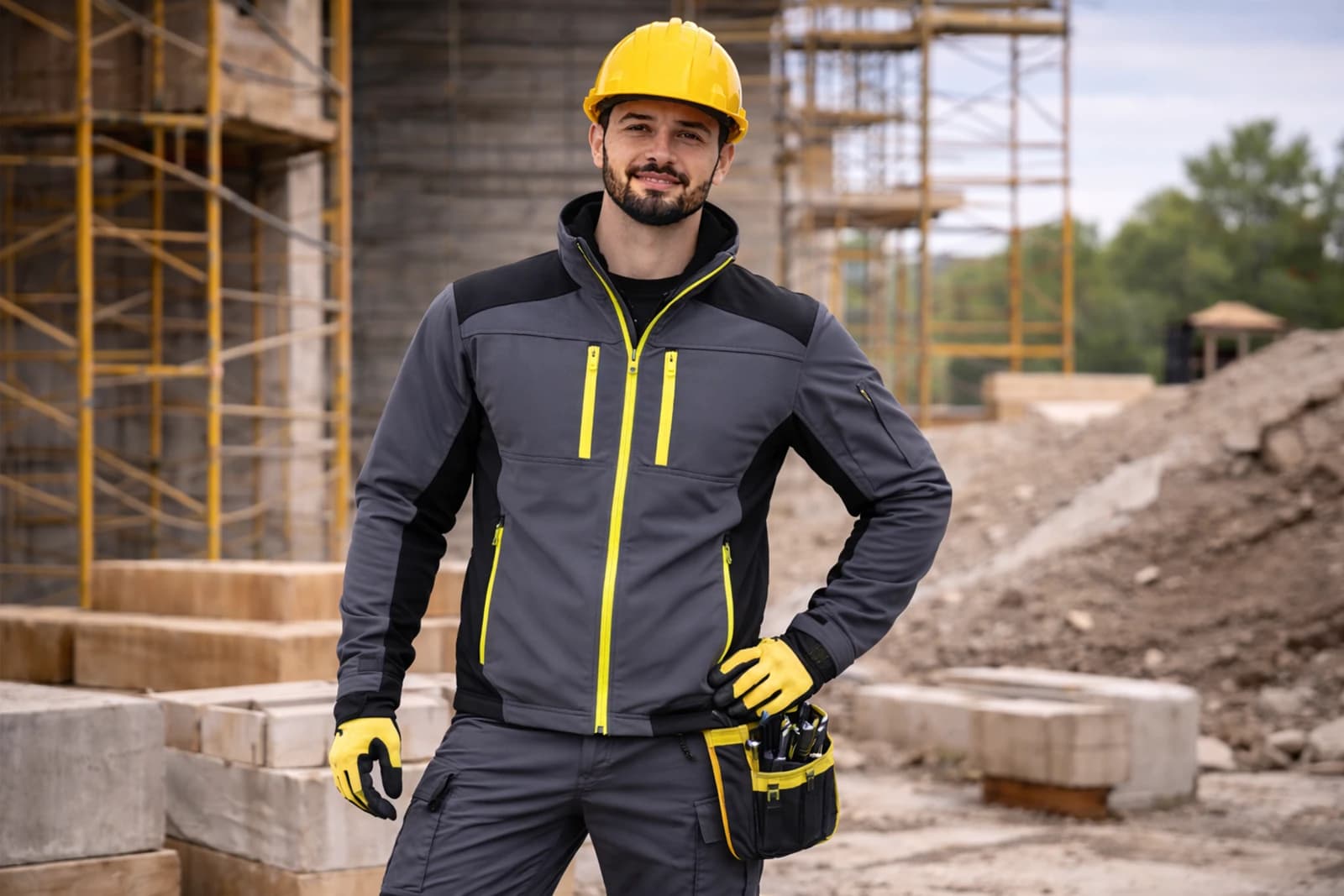
Construction Clothing
Construction Softshell Set
Flexible jacket and trouser set built for crews working across changing weather conditions.
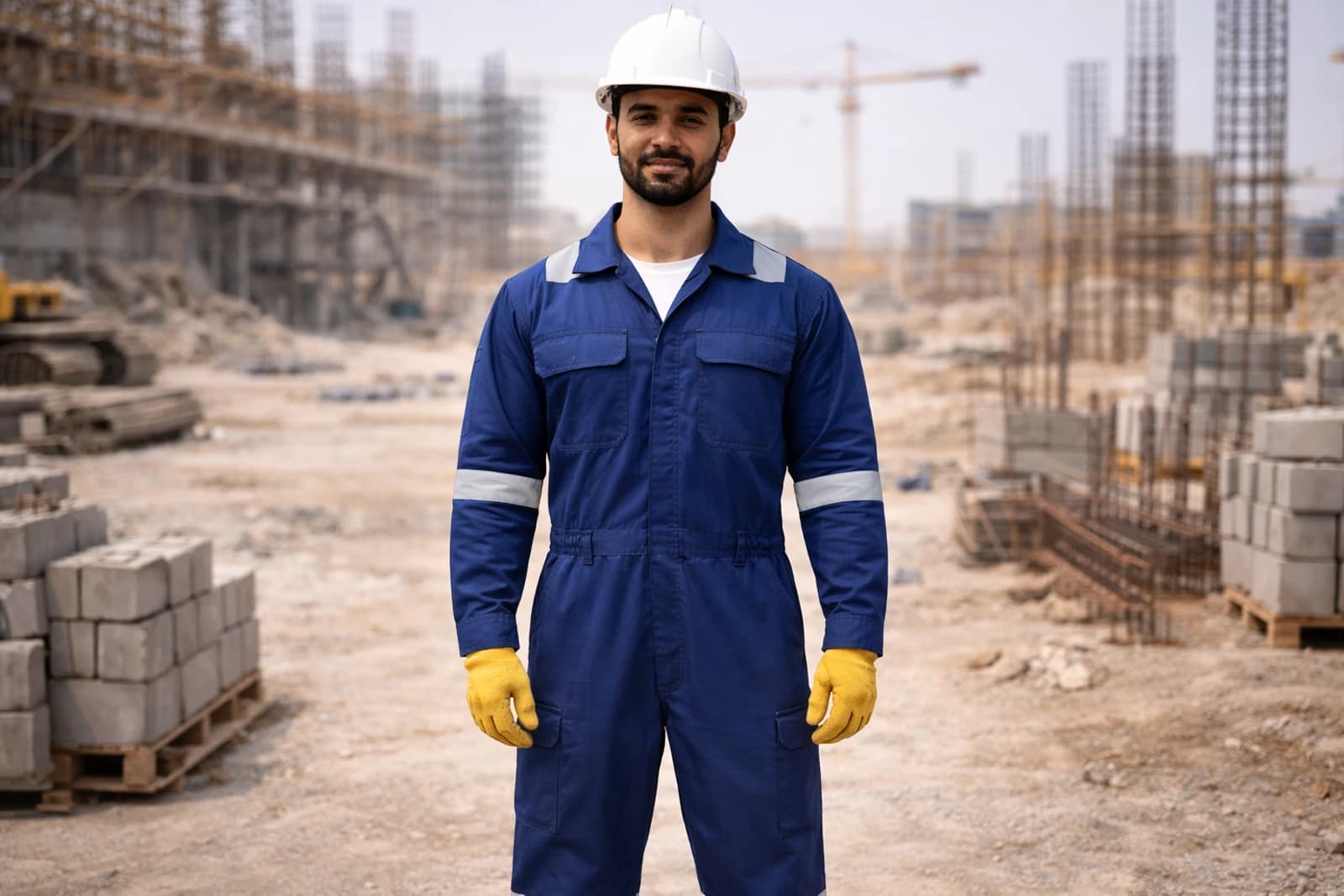
Industrial Workwear
Industrial Coverall Pro
Hard-wearing one-piece coverall for plant, maintenance, and heavy-duty operations.

Logistics Uniform
Logistics Polo Uniform
Breathable uniform polo for warehouse, delivery, and last-mile teams.