Does Chill Room Workwear Need a Waterproof Membrane or Just a Tight Weave?
Chill room and cold storage workwear sits at an unusual intersection: workers need liquid protection from condensation and wash-down splash, but also need to move freely in sub-zero temperatures where a waterproof membrane can trap sweat and create its own cold-stress problem. This article covers when a waterproof-breathable membrane is the correct specification, when a tight-weave windproof fabric is sufficient, and how the worker's actual task intensity determines the right choice.
Buyer context
What procurement teams run into
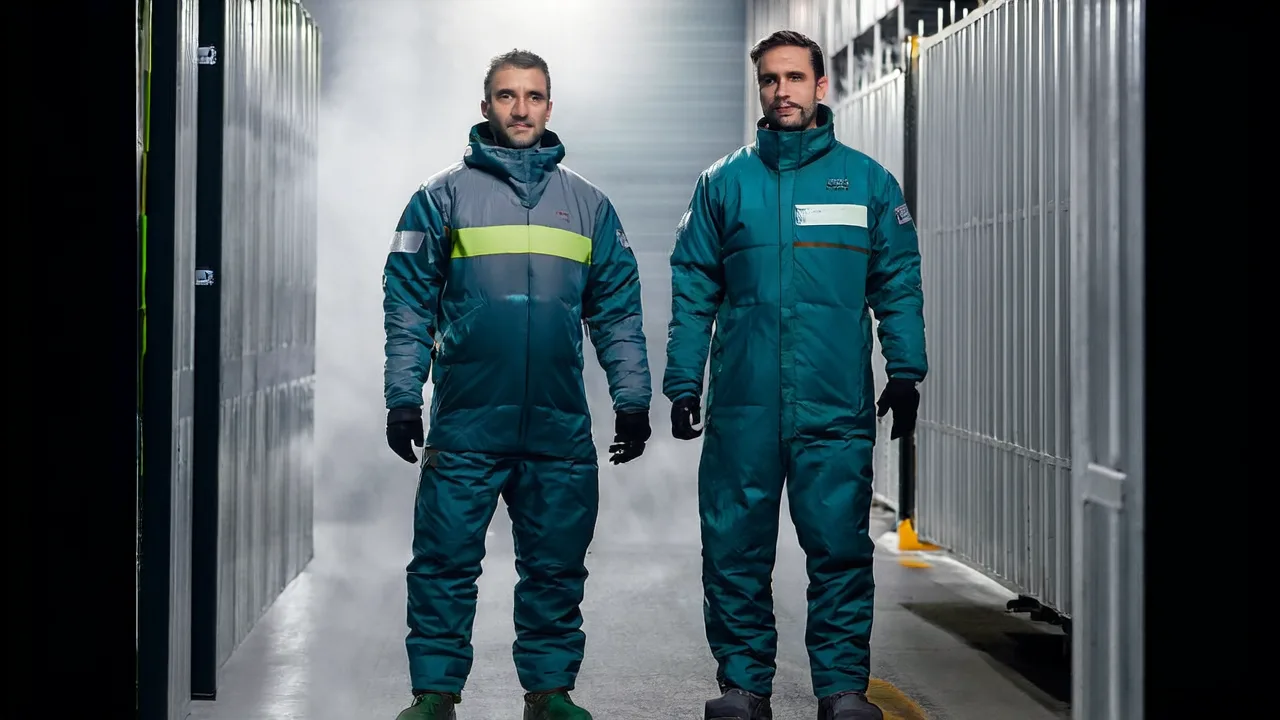
Chill room and cold storage workwear presents a specification dilemma that does not exist in most other industrial environments. Workers in food processing chill rooms (0–4°C) and freezers (−18 to −25°C) face two simultaneous moisture challenges: external moisture from condensation, frost, and wash-down splash, and internal moisture from their own sweat production. The instinct is to specify a waterproof-breathable membrane jacket for all chill room workers — the logic being that a membrane blocks external water while allowing sweat vapour to escape. But this instinct is wrong for most chill room roles, and the consequences of over-specifying a membrane are not trivial. **1. A waterproof-breathable membrane restricts sweat vapour escape — and that restriction matters more in a chill room than in most environments** Waterproof-breathable membranes (e.g., Gore-Tex, eVent, or generic PU membranes) work by allowing water vapour molecules to pass through microscopic pores while blocking liquid water droplets. The breathability of a membrane is measured by its Moisture Vapour Transmission Rate (MVTR), typically expressed in g/m²/24h. A high-quality membrane has an MVTR of 10,000–20,000 g/m²/24h. A tight-weave windproof fabric (without a membrane) has an MVTR of 10,000–15,000 g/m²/24h — similar to or better than many membranes. But the real-world breathability of a membrane garment is always lower than its laboratory-rated MVTR. The membrane's performance degrades when: - The outer fabric wets out (water fills the fabric's pores, blocking vapour escape) - The membrane surface becomes contaminated with dirt, oil, or detergent residue - The temperature differential between inside and outside is small (vapour transmission is driven by the humidity gradient, and in a chill room at 0–4°C, the gradient is smaller than in hot outdoor conditions) In a chill room at 0–4°C with 85–95% relative humidity, the humidity gradient driving sweat vapour through the membrane is small — typically 20–40% difference between the garment interior (near 100% RH from sweat) and the chill room air (85–95% RH). This small gradient means the membrane's effective MVTR is 30–50% lower than its laboratory rating. For a membrane rated at 10,000 g/m²/24h, the effective MVTR in a chill room may be only 5,000–7,000 g/m²/24h. For a worker performing moderate or heavy physical work (producing 0.5–2.0 litres of sweat per shift), this reduced MVTR means sweat vapour accumulates inside the garment faster than it can escape. The result is a damp inner layer — not from external water ingress, but from trapped sweat. A damp inner layer conducts heat away from the body 25 times faster than a dry layer, creating cold stress and discomfort. **2. A tight-weave windproof fabric provides sufficient water resistance for most chill room tasks** Most chill room work does not involve sustained exposure to liquid water. The moisture challenges are: - **Condensation:** When a worker moves from a freezer (−18°C) to a chill room (0–4°C) or to an ambient area (15–20°C), condensation forms on the outer garment surface. This condensation is a thin film of water — typically 0.1–0.5 mm thick — that evaporates quickly once the garment temperature equilibrates. - **Wash-down splash:** During periodic wash-down of processing areas (typically 1–2 times per shift), workers within 2–3 metres of hoses may receive splash from water jets. This splash is intermittent and low-volume — not sustained immersion or heavy rain. - **Frost and ice melt:** In freezers, frost accumulates on garments and melts when the worker moves to a warmer area. The melt water is a thin film that can be shed by a water-repellent fabric finish. A tight-weave windproof fabric (200–240 GSM polyester with a DWR — Durable Water Repellent — finish) provides: - Hydrostatic head of 3,000–5,000 mm — sufficient to resist condensation, wash-down splash, and frost melt for the duration of a shift - MVTR of 10,000–15,000 g/m²/24h — equal to or better than most membranes in chill room conditions - Wind resistance — blocks cold air movement that accelerates heat loss - Durability — tight-weave fabrics are more abrasion-resistant than membrane laminates, which can delaminate after repeated washing For workers performing moderate or heavy physical work in a chill room at 0–4°C, a tight-weave windproof fabric with DWR finish is the correct specification. The fabric sheds condensation and splash, allows sweat vapour to escape freely, and provides wind resistance — without the breathability penalty of a membrane. **3. A membrane is necessary only for freezer work and dedicated wash-down tasks** There are two chill room scenarios where a waterproof-breathable membrane is the correct specification: **Freezer work (−18 to −25°C):** In a freezer, the external moisture challenge is not condensation or splash — it is frost and ice. Frost accumulates on the garment surface from the freezer's humid air (freezers typically operate at 90–95% RH, and the temperature differential between the worker's body and the freezer air causes frost to form on the garment). When the worker exits the freezer, the frost melts and water saturates the outer garment layer. If the outer layer is a tight-weave fabric without a membrane, the melt water soaks through to the insulation layer, reducing its thermal performance. A membrane prevents the melt water from reaching the insulation — keeping the insulation dry and maintaining its thermal performance. For freezer work, specify a waterproof-breathable membrane jacket (5,000 mm hydrostatic head / 5,000–8,000 g/m²/24h MVTR) with a synthetic insulation liner. The membrane blocks frost melt from reaching the insulation. The synthetic insulation retains warmth even when damp (unlike down insulation, which collapses when wet). This is a dedicated freezer garment — do not use it for chill room work at 0–4°C, where its lower MVTR creates sweat accumulation risk. **Dedicated wash-down operators:** Some workers in a food processing plant have wash-down as their primary task — they spend 1–2 hours per shift hosing down processing areas with high-pressure water jets. These workers face sustained water exposure that a tight-weave fabric cannot resist for the full duration. For wash-down operators, specify a dedicated waterproof suit (10,000 mm hydrostatic head membrane jacket and trousers) worn only during wash-down tasks. This suit is not used for other chill room work. After wash-down, the worker removes the suit and returns to their task-appropriate outer layer. **4. The task intensity of the worker determines the correct specification** The decision between a membrane and a tight-weave fabric is not just about the external moisture challenge — it is also about the worker's internal moisture production (sweat). A worker's sweat production is determined by their task intensity: - **Light work (100–150 W metabolic rate):** Quality inspectors, line supervisors, light assembly workers. These workers produce 0.2–0.4 litres of sweat per shift. Their sweat vapour production is low enough that even a membrane's reduced MVTR in a chill room can handle it. A membrane jacket is acceptable for light work roles — but a tight-weave fabric is also sufficient and provides better breathability. - **Moderate work (200–300 W metabolic rate):** Order pickers, warehouse operatives, light pallet movers. These workers produce 0.5–1.0 litres of sweat per shift. Their sweat vapour production exceeds a membrane's effective MVTR in a chill room. A tight-weave windproof fabric is the correct specification — it provides sufficient water resistance while allowing sweat vapour to escape. - **Heavy work (350–500 W metabolic rate):** Manual pallet movers, loading operatives, fast-paced picking workers. These workers produce 1.0–2.0 litres of sweat per shift. Their sweat vapour production far exceeds a membrane's effective MVTR in a chill room. A tight-weave windproof fabric with ventilation panels (under arms, across upper back) is the correct specification — it provides water resistance while maximising breathability during high-sweat tasks. **5. The layered system approach for chill room workwear** Chill room workwear is not a single garment — it is a layered system where each layer addresses a specific function: - **Base layer (worn next to skin):** Wicks sweat away from the body to keep the skin dry. For chill room work, a synthetic moisture-wicking base layer (polyester or polypropylene) is preferred for moderate and heavy work — it wicks sweat quickly and dries fast. A merino wool base layer is preferred for light work and freezer work — it provides natural thermal insulation and retains warmth even when damp. Do not use cotton base layers in a chill room — cotton absorbs sweat, stays wet, and conducts heat away from the body 25 times faster than dry fabric. - **Mid layer (insulation):** Provides thermal insulation. For light work roles and freezer work, a synthetic insulation vest or jacket (80–160 GSM) provides core warmth. For moderate and heavy work roles, no mid layer is needed — the worker's own metabolic heat provides sufficient warmth. Adding a mid layer to a moderate or heavy work role traps sweat vapour and creates dampness. - **Outer layer (wind and water resistance):** Blocks wind and sheds external moisture. For moderate and heavy work roles in a chill room at 0–4°C, specify a tight-weave windproof jacket (220–240 GSM polyester, DWR finish). For freezer work (−18 to −25°C), specify a waterproof-breathable membrane jacket with synthetic insulation liner. For wash-down operators, specify a dedicated waterproof suit worn only during wash-down tasks. **6. The procurement mistake: specifying a membrane for all chill room workers** The most common procurement error is to specify a waterproof-breathable membrane jacket for all chill room workers — the logic being that a membrane provides the highest level of water protection. But this specification is wrong for moderate and heavy work roles, where the membrane's reduced MVTR in chill room conditions creates sweat accumulation and cold stress. The buyer has specified a garment that protects against external moisture but creates internal moisture problems — the opposite of the intended outcome. The correct specification matches the outer layer's breathability to each worker's actual task intensity and sweat production — using tight-weave windproof fabrics with DWR for moderate and heavy work, and waterproof-breathable membranes only for freezer work and dedicated wash-down tasks.
Sourcing approach
How a factory partner can respond
The solution for chill room workwear is a task-intensity-based specification that matches the outer layer's breathability to each worker's actual sweat production — using tight-weave windproof fabrics with DWR for moderate and heavy work, and waterproof-breathable membranes only for freezer work and dedicated wash-down tasks. **Step 1: Map each chill room role to task intensity** Classify each role by metabolic rate and sweat production: - **Light work (100–150 W, 0.2–0.4 L sweat/shift):** Quality inspectors, line supervisors, light assembly workers. - **Moderate work (200–300 W, 0.5–1.0 L sweat/shift):** Order pickers, warehouse operatives, light pallet movers. - **Heavy work (350–500 W, 1.0–2.0 L sweat/shift):** Manual pallet movers, loading operatives, fast-paced picking workers. - **Freezer work (−18 to −25°C):** Any worker spending 2+ hours per shift in a freezer. - **Wash-down operators:** Workers whose primary task is hosing down processing areas. **Step 2: Specify the outer layer by task intensity** For each role category, specify the outer jacket's fabric construction: - **Light work roles:** Specify a tight-weave windproof jacket (200 GSM polyester, DWR finish, MVTR 10,000+ g/m²/24h) with an optional lightweight insulation liner (80–100 GSM synthetic). The jacket blocks wind and sheds condensation. The liner provides warmth during low-activity periods. Hydrostatic head 3,000–5,000 mm is sufficient — no membrane needed. - **Moderate work roles:** Specify a tight-weave windproof jacket (220–240 GSM polyester, DWR finish, MVTR 10,000+ g/m²/24h) with no insulation liner. The worker's own metabolic heat provides sufficient warmth. The jacket blocks wind and sheds condensation without restricting sweat vapour escape. Do not add an insulation liner — it traps sweat vapour and creates dampness. - **Heavy work roles:** Specify a tight-weave windproof jacket (200 GSM polyester, DWR finish, MVTR 12,000–15,000 g/m²/24h) with mesh-lined ventilation panels under arms and across the upper back. The ventilation panels increase effective breathability during high-sweat tasks. No insulation liner. Hydrostatic head 3,000 mm is sufficient — the worker is not exposed to sustained water. - **Freezer work (−18 to −25°C):** Specify a waterproof-breathable membrane jacket (5,000 mm hydrostatic head / 5,000–8,000 g/m²/24h MVTR) with a synthetic insulation liner (120–160 GSM). The membrane prevents frost and ice melt from entering the insulation layer. The synthetic insulation retains warmth even when damp (unlike down insulation, which collapses when wet). This is a dedicated freezer garment — do not use it for chill room work at 0–4°C, where its lower MVTR creates sweat accumulation risk. - **Wash-down operators:** Specify a dedicated waterproof suit (10,000 mm hydrostatic head membrane jacket and trousers) worn only during wash-down tasks. This suit is not used for other chill room work. After wash-down, the worker removes the suit and returns to their task-appropriate outer layer. **Step 3: Specify the base layer for moisture management** The base layer (worn next to skin) must wick sweat away from the body to keep the skin dry and maintain thermal regulation. For chill room work: - **Synthetic moisture-wicking base layer (polyester or polypropylene):** Preferred for moderate and heavy work. Synthetic fibres wick sweat quickly and dry fast. They do not absorb water (unlike cotton), so they stay light and do not conduct heat away from the body. - **Merino wool base layer:** Preferred for light work and freezer work. Merino wool provides natural thermal insulation, wicks moisture moderately well, and retains warmth even when damp. It is more expensive than synthetic but provides better thermal comfort for low-activity roles. - **Do not use cotton base layers in a chill room.** Cotton absorbs sweat, stays wet, and conducts heat away from the body 25 times faster than dry fabric — creating cold stress. **Step 4: Specify the mid layer for insulation (if needed)** For light work roles and freezer work, a mid layer provides additional insulation: - **Light work roles (0–4°C):** Synthetic insulation vest or jacket (80–100 GSM). The vest provides core warmth without restricting arm movement. - **Freezer work (−18 to −25°C):** Synthetic insulation jacket (120–160 GSM) worn under the membrane outer layer. Synthetic insulation retains warmth even when damp — critical in a freezer where condensation and frost are constant. For moderate and heavy work roles, no mid layer is needed — the worker's own metabolic heat provides sufficient warmth. Adding a mid layer traps sweat vapour and creates dampness. **Step 5: Pilot the layered system before full fleet commitment** Before committing to a full fleet order, pilot the layered system with 20–30 workers per role category for 4–6 weeks of actual chill room work. Collect feedback on: - Thermal comfort during full shifts (especially during high-activity periods) - Garment dampness (check inner fabric layers for sweat accumulation) - Mobility during pallet moving, picking, and loading tasks - Garment durability after 15–20 wash cycles (check DWR retention, fabric integrity) Use pilot feedback to adjust fabric weight, ventilation panel placement, or insulation levels before full fleet commitment. **Recommended garments for chill room workwear:** - **Construction softshell set** — specify the tight-weave windproof version (220–240 GSM polyester, DWR finish, MVTR 10,000+ g/m²/24h) for moderate and heavy work roles in chill rooms at 0–4°C. The softshell jacket provides wind resistance and water repellency without restricting sweat vapour escape. For freezer work (−18 to −25°C), specify a waterproof-breathable membrane version (5,000 mm / 5,000–8,000 MVTR) with synthetic insulation liner as a dedicated freezer garment. - **Industrial coverall-pro** — specify as the base garment for chill room work. Choose a 200–220 GSM TC or polyester construction for moderate and heavy work (provides durability without excessive insulation). For freezer work, specify a 240 GSM version with synthetic insulation liner. The coverall serves as the base layer of the chill room garment system — the outer jacket (softshell or membrane) is worn over the coverall.
Recommended Products
Products that fit this use case
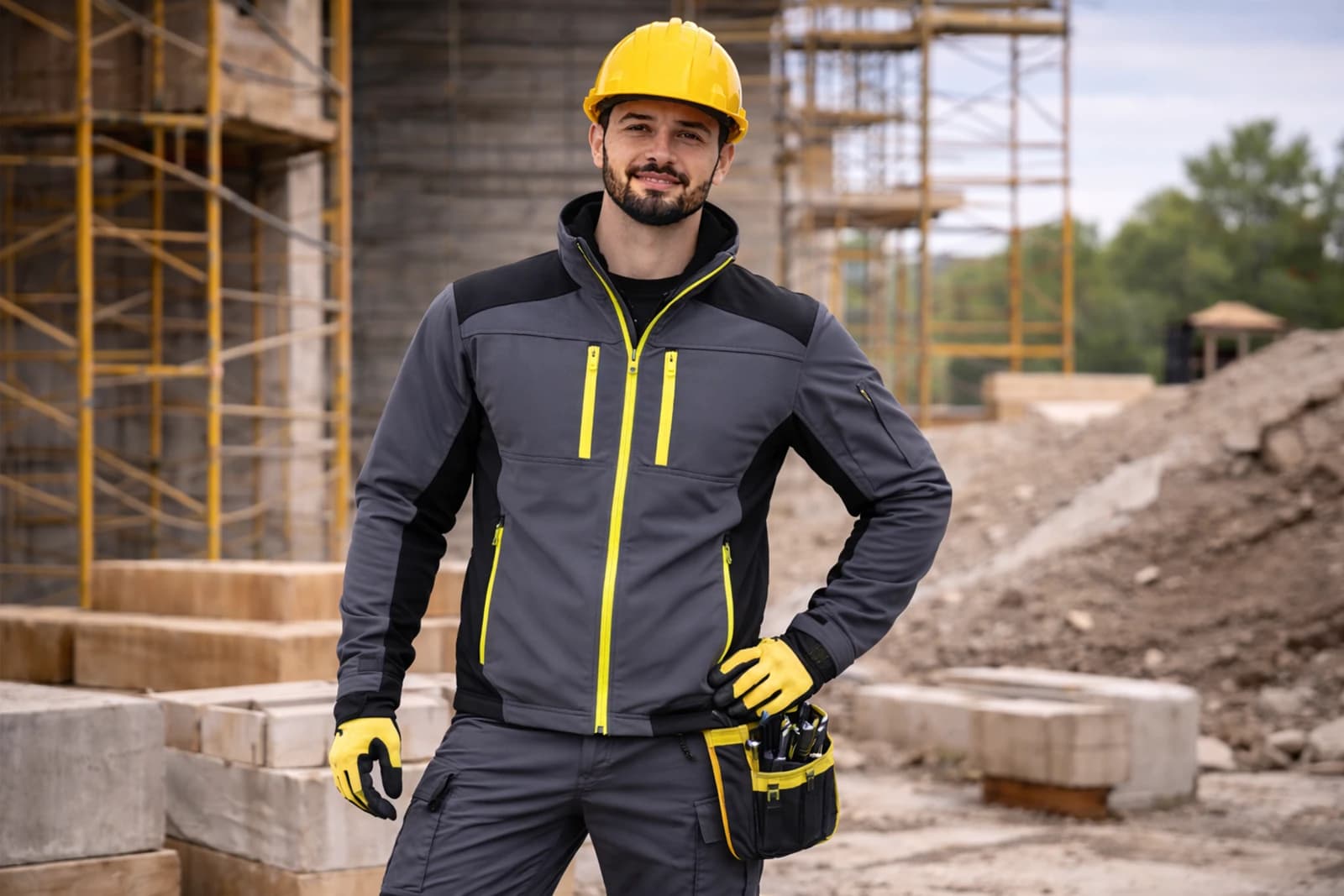
Construction Clothing
Construction Softshell Set
Flexible jacket and trouser set built for crews working across changing weather conditions.

Industrial Workwear
Industrial Coverall Pro
Hard-wearing one-piece coverall for plant, maintenance, and heavy-duty operations.