Choosing the Right Fabric for Workwear in Hot Climates: A Middle East Buyer's Guide
Middle East workers face extreme heat on construction sites, warehouses, and industrial facilities. This guide explains how fabric weight, blend ratios, weave structure, and moisture management affect comfort and durability in hot-climate workwear — so you can specify the right garment for your team or your clients.

Buyer context
What procurement teams run into
<p>You have sourced heavy cotton coveralls for a construction crew in Saudi Arabia. The garments arrived on time and the stitching is solid, but within two hours of the morning shift the workers are drenched in sweat, the fabric is sticking to their skin, and productivity drops visibly by midday. By the afternoon, some workers have removed their hi-vis vests just to stay cool — defeating the purpose of safety workwear entirely.</p> <p>This is not a rare complaint. It is the single most common feedback from end users in Gulf countries, and it creates a real problem for Middle East procurement managers and distributors: specifying workwear that meets safety standards while being wearable at 45 °C ambient temperature is harder than it looks. The same poly-cotton twill that works perfectly for a factory in Northern China or Europe can be unbearable in Doha or Riyadh during July.</p> <p>The temptation is to go as thin and light as possible — a 150 gsm poly-cotton shirt feels cool in the showroom. But thin fabrics tear faster on rebar, lose colour after a few washes in hard water, and fail the tear-strength requirements some Gulf contractors now specify. The trick is not finding the lightest fabric. It is finding the right <em>balance</em> of weight, fibre content, weave, and finish for the specific work environment.</p>
Sourcing approach
How a factory partner can respond
<h2>Fibre Blend: Why Pure Cotton Falls Short</h2> <p>Pure cotton absorbs moisture and holds it against the skin, which is why it feels heavy and sticky when wet. A 65/35 poly-cotton blend is the standard workhorse for hot-climate workwear: the polyester provides wicking — pulling sweat away from the body to the outer surface where it evaporates — while the cotton maintains breathability and a natural hand feel. For maximum cooling in extreme heat, a 50/50 cotton-polyester blend with a ripstop weave offers the best compromise between moisture management and tear resistance.</p> <h2>Fabric Weight: The Goldilocks Zone</h2> <p>For Middle East summer conditions, 210 to 240 gsm is the sweet spot for coveralls and work trousers. Below 200 gsm, the fabric loses too much durability for industrial or construction use. Above 260 gsm, heat retention becomes a problem even with good ventilation features. Shirts and polo uniforms can go as low as 180 gsm when the tasks are light duty — logistics, warehousing, supervision — but should stay above 200 gsm for active construction roles where snagging and abrasion are risks.</p> <h2>Weave and Finish Choices</h2> <p>Twill weave (2/1 or 3/1) offers the best durability-to-weight ratio for hot-climate workwear. It drapes better than plain weave, breathes more than satin, and hides dirt between launderings. For hi-vis applications, the reflective tape must be specified for heat-resistant adhesive — standard tape adhesive softens and peels above 60 °C surface temperature on dark fabric exposed to direct sun.</p> <p>An anti-static carbon fibre grid is worth adding for industrial coveralls in oil and gas environments, even when regulations do not strictly require it — Gulf operators increasingly request it as a default for safety compliance.</p> <h2>Practical Sourcing Advice</h2> <p>When sourcing from a Chinese workwear manufacturer, ask for a <strong>heat-blocking swatch test</strong> before committing to bulk fabric. A reputable supplier will send you five 20×20 cm swatches representing different blend/weight combinations, which your local team in the Gulf can pin to a worker's shirt and assess for moisture absorption rate, drying time, and heat buildup over a 4-hour outdoor shift. This simple test eliminates guesswork and ensures the fabric you specify in China performs as expected in the Middle East.</p> <p>Also verify that the dyeing process uses reactive dyes with a minimum 4.0 rating on the grey-scale for lightfastness — direct sunlight in the Gulf fades cheap disperse dyes within weeks, turning navy blue to purple and black to grey. A good Chinese workwear factory will specify the lightfastness rating on your tech pack if you ask for it.</p>
Recommended Products
Products that fit this use case
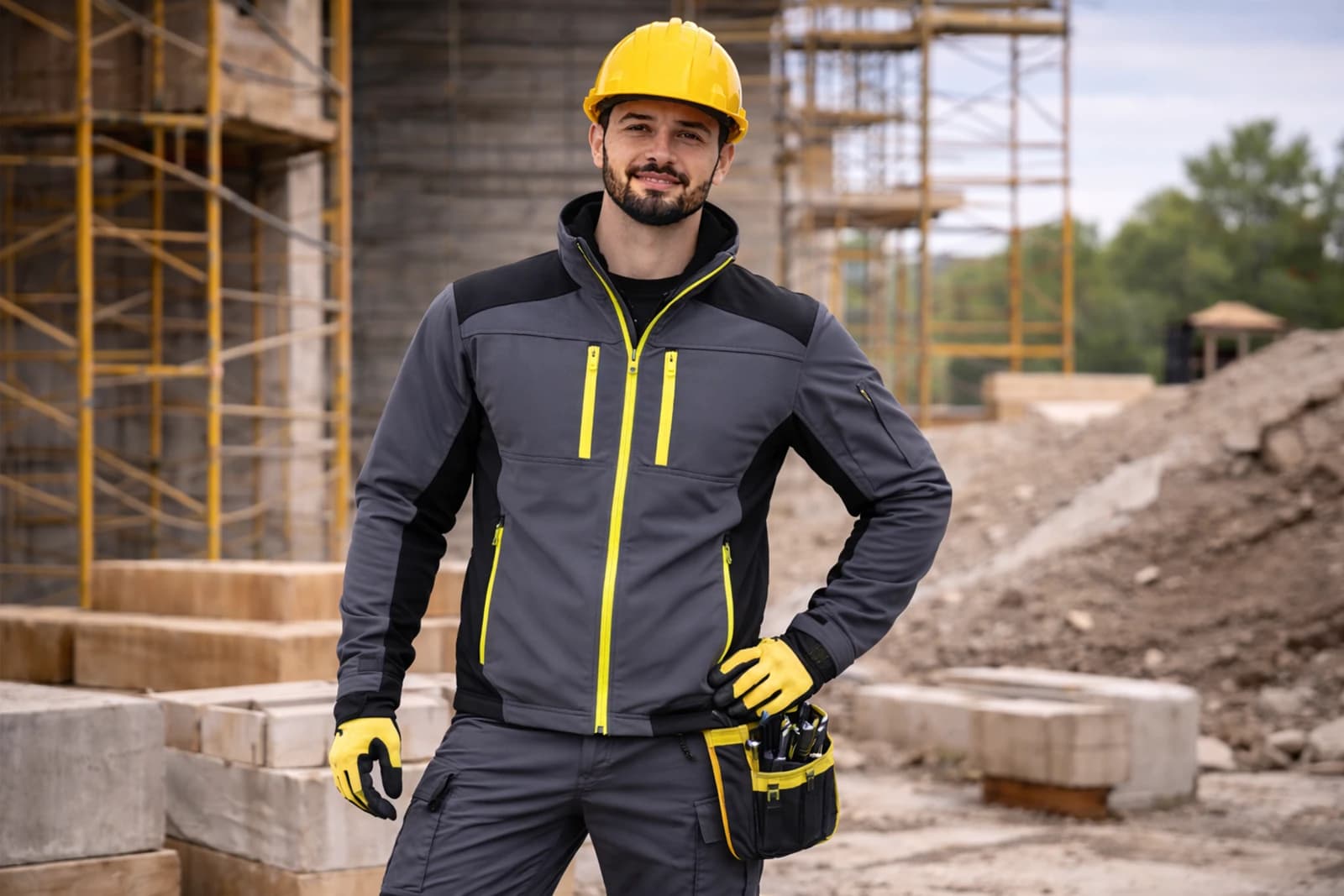
Construction Clothing
Construction Softshell Set
Flexible jacket and trouser set built for crews working across changing weather conditions.
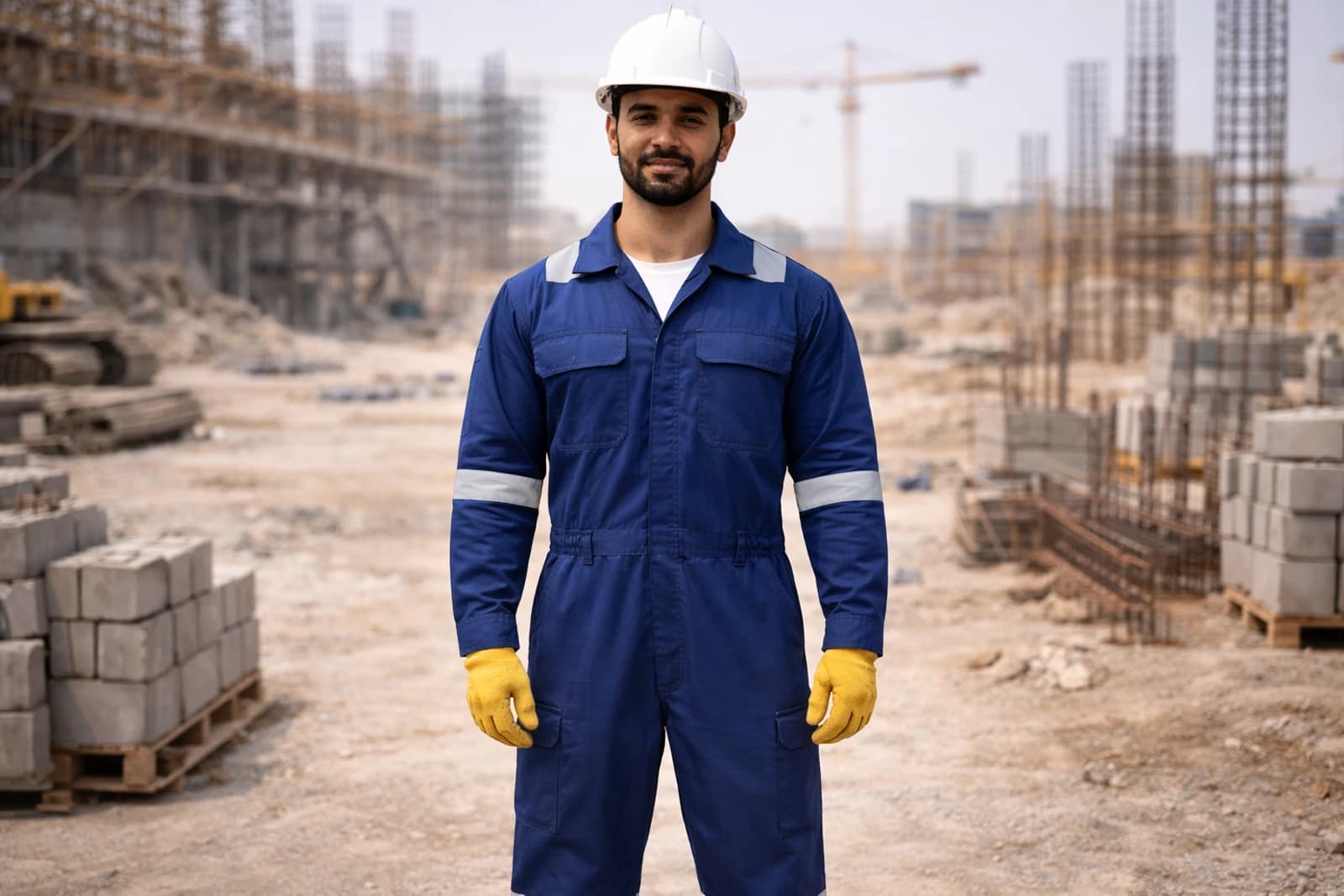
Industrial Workwear
Industrial Coverall Pro
Hard-wearing one-piece coverall for plant, maintenance, and heavy-duty operations.
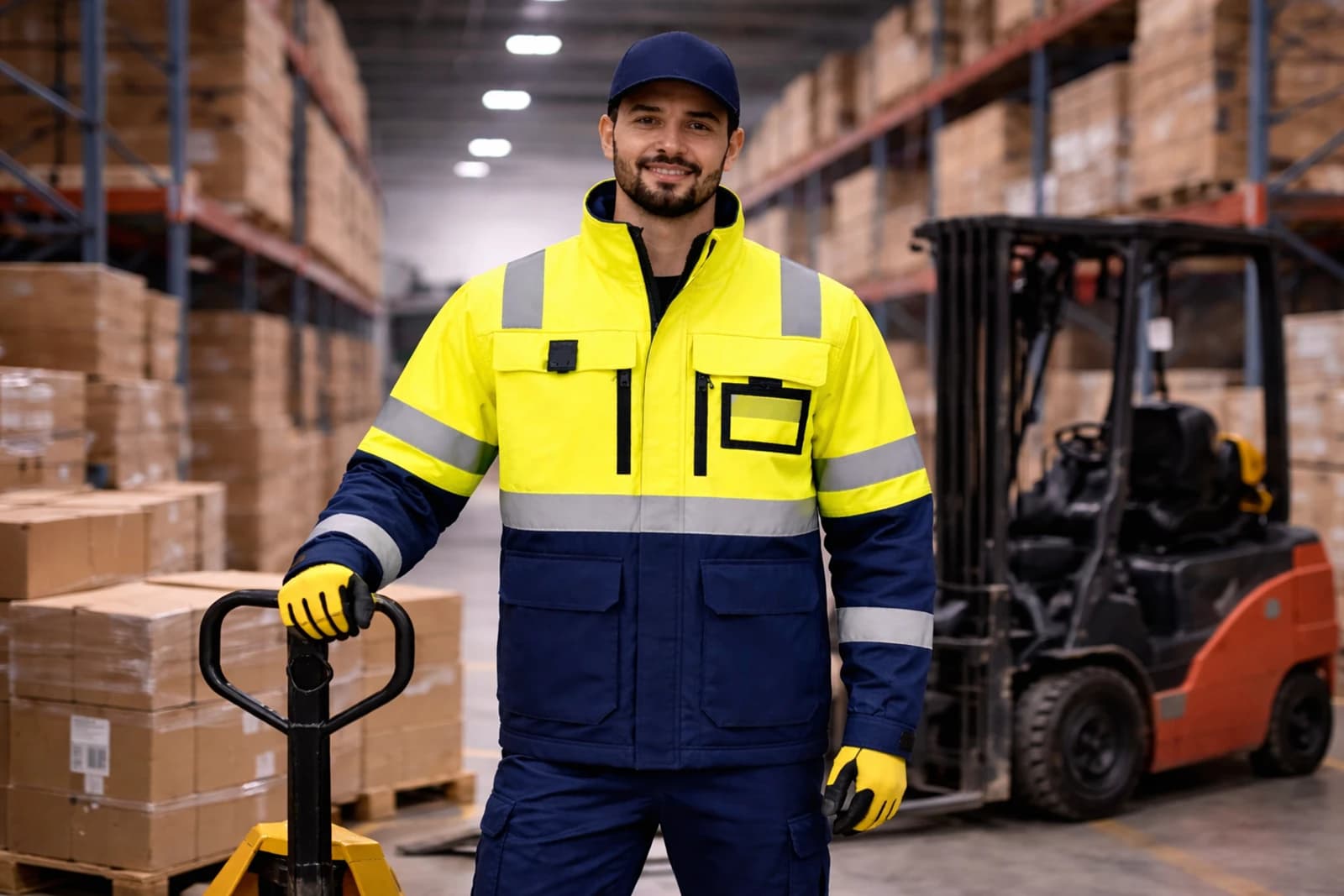
Safety Uniform
Hi-Vis Safety Jacket
Reflective safety jacket for high-visibility site operations and road work crews.

Logistics Uniform
Logistics Polo Uniform
Breathable uniform polo for warehouse, delivery, and last-mile teams.