FR Cotton Versus FR Blend for Glass Plant Heat Zones
Glass manufacturing environments present a specific fabric selection problem that most workwear specifications get wrong. Workers near furnaces, lehrs, and molten glass handling areas face intense radiant heat, spark and spatter from molten glass, and the need for garments that do not melt or adhere to skin. The instinct is to specify 100% FR cotton — because cotton does not melt, and FR treatment provides flame resistance. But 100% FR cotton absorbs sweat, becomes heavy, loses breathability when wet, and provides inadequate protection against sustained radiant heat because the fabric itself heats up and transfers heat to the skin. An FR blend (typically FR modacrylic/cotton or FR aramid/cotton) resists radiant heat better, does not absorb moisture the same way, and maintains protective properties longer — but costs 2–3× more per garment. The procurement decision is not which fabric is "better" — it is which fabric matches the specific exposure conditions of each zone in the glass plant.
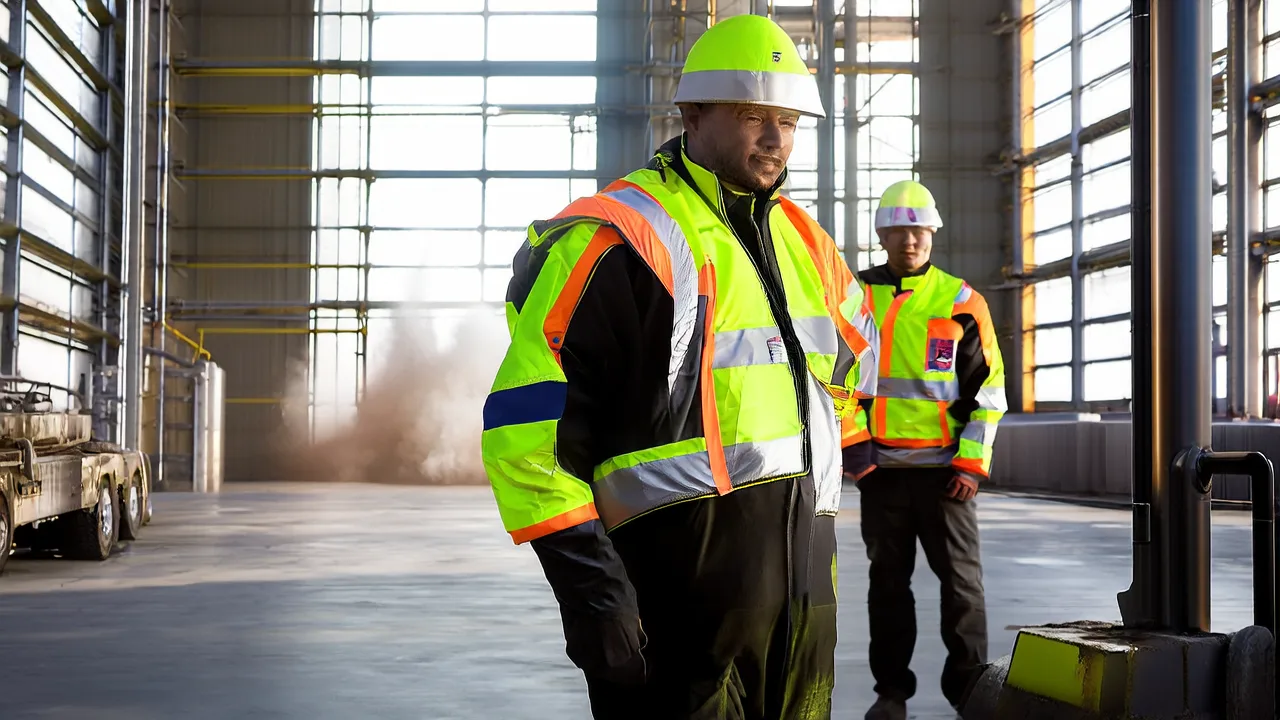
Buyer context
What procurement teams run into
Glass manufacturing environments present a specific fabric selection problem that most workwear specifications get wrong. Workers near furnaces, lehrs, and molten glass handling areas face intense radiant heat (ambient 40–55°C near furnaces, radiant flux 2–5 kW/m²), spark and spatter from molten glass, and the need for garments that do not melt or adhere to skin if contacted by hot material. The instinct is to specify 100% FR cotton — because cotton does not melt, and FR treatment provides flame resistance. But 100% FR cotton absorbs sweat, becomes heavy, loses breathability when wet, and provides inadequate protection against sustained radiant heat because the fabric itself heats up and transfers heat to the skin. An FR blend (typically FR modacrylic/cotton or FR aramid/cotton) resists radiant heat better, does not absorb moisture the same way, and maintains protective properties longer — but costs 2–3× more per garment. The procurement decision is not which fabric is "better" — it is which fabric matches the specific exposure conditions of each zone in the glass plant. **1. The glass plant has three distinct heat exposure zones — and they require different fabric responses** A glass manufacturing plant is not a uniform heat environment. Different areas have different heat exposure profiles, and the fabric selection must match the specific hazard of each zone: - **Furnace and melter area:** Direct radiant heat from the furnace (ambient 45–55°C, radiant flux 3–5 kW/m²), occasional molten glass spatter, high sweat rates. Workers in this area need fabric that resists radiant heat transfer, does not absorb sweat (which reduces breathability and increases heat stress), and does not melt or adhere to skin if contacted by molten glass. - **Lehr and annealing area:** Moderate radiant heat from the annealing lehr (ambient 35–42°C, radiant flux 1–2 kW/m²), no molten glass spatter risk, moderate sweat rates. Workers in this area need fabric that provides moderate heat resistance and breathability, but does not need the full radiant heat protection of the furnace area. - **Cold end, cutting, and inspection area:** Low heat exposure (ambient 28–32°C, minimal radiant flux), no molten glass spatter risk. Workers in this area need standard workwear fabric with good breathability and durability — heat resistance is not a primary concern. Specifying the same FR fabric for all three zones creates two problems: over-specification in the cold end (paying for FR performance that is not needed) and under-specification in the furnace area (using fabric that does not adequately resist radiant heat transfer). **2. 100% FR cotton has specific advantages — and specific limitations — in glass plant heat zones** 100% FR cotton (typically 8–9 oz/yd², treated with a protonated flame retardant) is the traditional choice for heat-exposed workwear. Its advantages are: - **Does not melt:** Cotton is a cellulosic fibre — it chars and burns, but does not melt. If contacted by molten glass spatter, FR cotton will char but will not adhere to the skin (unlike synthetic fabrics that melt and cause burn injuries). - **Breathable when dry:** Cotton fibres absorb moisture and allow air circulation, keeping the worker cooler in hot conditions — when the fabric is dry. - **Lower cost:** 100% FR cotton costs 40–60% less per metre than FR modacrylic or FR aramid blends. But 100% FR cotton has specific limitations in glass plant furnace areas: - **Absorbs sweat and becomes heavy:** Cotton absorbs up to 25% of its weight in moisture. In a furnace area where sweat rates are high, the fabric becomes saturated, heavy, and loses breathability. A wet FR cotton garment traps heat against the body instead of allowing evaporative cooling. - **Transfers radiant heat:** Cotton fabric has relatively low thermal reflectivity — it absorbs radiant heat and transfers it to the skin. In a furnace area with radiant flux of 3–5 kW/m², the fabric itself heats up and becomes a heat source, not a heat barrier. - **FR treatment degrades with washing:** Protonated FR treatments on cotton degrade with repeated washing. After 25–50 wash cycles, the FR performance may drop below acceptable levels — requiring garment replacement. In a glass plant where garments are washed frequently (due to sweat and contamination), garment life is shorter. **3. FR blends (modacrylic/cotton or aramid/cotton) address the limitations of FR cotton — at higher cost** FR modacrylic/cotton blends (typically 60/40 or 70/30 modacrylic-cotton) and FR aramid/cotton blends (typically Nomex-style aramid-cotton) address the specific limitations of FR cotton in glass plant furnace areas: - **Lower moisture absorption:** Modacrylic and aramid fibres absorb significantly less moisture than cotton (modacrylic absorbs <1% of its weight in moisture; aramid absorbs <3%). The fabric does not become heavy and saturated with sweat — it maintains breathability and evaporative cooling even in high-sweat conditions. - **Higher thermal reflectivity:** Modacrylic and aramid fibres have higher thermal reflectivity than cotton — they reflect radiant heat rather than absorbing it. In a furnace area with radiant flux of 3–5 kW/m², an FR modacrylic blend reflects 30–40% of incident radiant heat, reducing the heat transferred to the worker's skin. - **Inherent FR performance:** Modacrylic and aramid fibres are inherently flame-resistant — the FR performance is built into the fibre, not applied as a treatment. The FR performance does not degrade with washing. Garment life is determined by fabric durability (abrasion resistance, tear strength), not by FR degradation — typically 75–100 wash cycles or more. The tradeoff is cost: FR modacrylic/cotton blend fabric costs 2–3× more per metre than 100% FR cotton. An FR coverall made from modacrylic blend costs 2–3× more than an FR cotton coverall. The procurement decision is whether the performance benefit justifies the cost increase — and the answer depends on the specific exposure conditions of each zone. **4. The fabric selection decision must be zone-specific, not plant-wide** The correct approach is not to choose one fabric for the entire glass plant — it is to match the fabric to the heat exposure profile of each zone: - **Furnace and melter area:** Specify FR modacrylic/cotton blend (60/40 or 70/30, 6–7 oz/yd²). The lower moisture absorption, higher thermal reflectivity, and inherent FR performance justify the higher cost in this high-exposure zone. Garment life: 75–100 wash cycles (12–16 weeks at typical wash frequency). - **Lehr and annealing area:** Specify 100% FR cotton (8–9 oz/yd²). The moderate heat exposure does not require the full performance of an FR blend — FR cotton provides adequate protection at lower cost. Garment life: 40–50 wash cycles (8–10 weeks at typical wash frequency). - **Cold end, cutting, and inspection area:** Standard workwear fabric (220 GSM TC blend, non-FR). Heat exposure is low, and FR performance is not required. Standard fabric provides adequate durability and breathability at the lowest cost. Garment life: 75+ wash cycles (3–4 months). The result: the furnace area gets the fabric performance it needs (reducing heat stress and burn risk), the lehr area gets adequate protection at moderate cost, and the cold end gets standard workwear without paying for unnecessary FR performance. **5. The breathability tradeoff is real — and must be managed** FR modacrylic blends are less breathable than FR cotton when dry — modacrylic fibres do not absorb moisture and do not allow air circulation as well as cotton. In a furnace area where workers are sweating heavily, the lower breathability of modacrylic can increase heat stress if the garment is not designed for the conditions. The solution is to specify garment construction that compensates for the lower breathability of the fabric: - **Ventilated construction:** Mesh-lined vents at the back, underarms, and inner leg allow air circulation and evaporative cooling — compensating for the lower breathability of the modacrylic fabric. - **Loose fit:** A slightly looser fit (more ease in the chest, waist, and thigh) allows air circulation between the garment and the skin — improving evaporative cooling. - **Lightweight fabric weight:** Specify 6–7 oz/yd² modacrylic blend (not 8–9 oz/yd²) for furnace area garments — the lighter weight reduces heat retention while maintaining adequate protection. The combination of modacrylic fabric (which resists radiant heat and does not absorb sweat) with ventilated construction (which allows air circulation) provides better heat stress management than FR cotton (which absorbs sweat and becomes a heat source) with standard construction. **6. The procurement specification gap: plant-wide FR cotton without zone-specific requirements** Most glass plant workwear specifications specify 100% FR cotton for all heat-exposed areas — the logic being that cotton does not melt, and FR treatment provides flame resistance. This specification creates two problems: - **Furnace area under-protection:** FR cotton absorbs sweat, becomes heavy, and transfers radiant heat — creating heat stress and inadequate radiant heat protection for furnace workers. - **Cold end over-specification:** Standard workwear areas receive FR cotton at 2–3× the cost of standard fabric — without any performance benefit. The procurement specification must differentiate zones by heat exposure level — specifying FR modacrylic blend for the furnace area, FR cotton for the lehr area, and standard fabric for the cold end. The result is better protection where it is needed, lower cost where it is not, and a garment fleet that matches the actual hazard profile of each zone.
Sourcing approach
How a factory partner can respond
The solution for glass plant workwear is a zone-specific fabric specification that matches the fabric to the heat exposure profile of each area — not a plant-wide specification that over-specifies some zones and under-specifies others. **Step 1: Specify FR modacrylic/cotton blend for the furnace and melter area** For workers in the furnace and melter area (high radiant heat, molten glass spatter risk, high sweat rates): - Fabric: FR modacrylic/cotton blend (60/40 or 70/30 modacrylic-cotton, 6–7 oz/yd²) - Construction: Ventilated coverall with mesh-lined vents at back, underarms, and inner leg; loose fit for air circulation; sealed seams to prevent spatter penetration - FR performance: Inherent FR (does not degrade with washing); validated to NFPA 2112 or EN ISO 11612 for industrial heat exposure - Garment life: 75–100 wash cycles (12–16 weeks at typical wash frequency) - Replace when: Fabric shows visible thinning, seam failure, or spatter damage that compromises integrity The modacrylic blend provides lower moisture absorption (maintains breathability in high-sweat conditions), higher thermal reflectivity (reduces radiant heat transfer), and inherent FR performance (does not degrade with washing). The higher cost per garment is justified by longer garment life and better heat stress management in the furnace area. **Step 2: Specify 100% FR cotton for the lehr and annealing area** For workers in the lehr and annealing area (moderate radiant heat, no spatter risk, moderate sweat rates): - Fabric: 100% FR cotton (8–9 oz/yd², protonated FR treatment) - Construction: Standard coverall or two-piece set; standard construction (ventilation not required for moderate heat exposure) - FR performance: FR treatment validated to NFPA 2112 or EN ISO 11612; require test report confirming FR performance after 25 wash cycles - Garment life: 40–50 wash cycles (8–10 weeks at typical wash frequency) - Replace when: FR performance degrades below acceptable levels (validate by test report) or fabric shows visible wear FR cotton provides adequate protection for moderate heat exposure at lower cost than modacrylic blend. The shorter garment life (due to FR treatment degradation) is acceptable in this zone because heat exposure is lower and the cost per garment is lower. **Step 3: Specify standard workwear fabric for the cold end, cutting, and inspection area** For workers in the cold end, cutting, and inspection area (low heat exposure, no spatter risk): - Fabric: 220 GSM TC blend (65/35 polyester-cotton), non-FR - Construction: Standard two-piece set or coverall; standard construction - Garment life: 75+ wash cycles (3–4 months) - Replace when: Fabric shows visible wear, seam failure, or dimensional change after washing Standard fabric provides adequate durability and breathability at the lowest cost. FR performance is not required in this zone — specifying FR fabric creates unnecessary cost without adding value. **Step 4: Specify garment construction that compensates for fabric breathability limitations** For furnace area garments (FR modacrylic blend): - Ventilated construction: Mesh-lined vents at back, underarms, and inner leg to allow air circulation - Loose fit: More ease in chest, waist, and thigh to allow air circulation between garment and skin - Lightweight fabric: 6–7 oz/yd² (not 8–9 oz/yd²) to reduce heat retention For lehr area garments (FR cotton): - Standard construction: Ventilation not required for moderate heat exposure - Standard fit: Adequate ease for comfort without excess fabric that could snag on equipment **Step 5: Implement condition-based replacement using fabric-specific criteria** Replace garments based on condition, not calendar schedule: - FR modacrylic blend (furnace area): Replace when fabric shows visible thinning, seam failure, or spatter damage that compromises integrity. Garment life is typically 75–100 wash cycles — but inspect every 4 weeks for spatter damage. - FR cotton (lehr area): Replace when FR performance degrades below acceptable levels (validate by test report at 25-wash-cycle intervals) or fabric shows visible wear. Garment life is typically 40–50 wash cycles. - Standard fabric (cold end): Replace when fabric shows visible wear, seam failure, or dimensional change after washing. Garment life is typically 75+ wash cycles. Track each garment's wash cycle count and zone assignment to identify zones where garment life is shorter than expected (indicating higher heat exposure or more frequent washing than anticipated). **Step 6: Pilot the zone-specific specification before full fleet commitment** Before committing to a full fleet order, pilot the zone-specific specification with 10–15 garments per zone for 8–10 weeks of actual use. Collect data on: - Garment condition after 4, 6, 8, and 10 weeks (validate fabric performance in each zone) - Worker feedback on heat stress and comfort (validate that modacrylic blend with ventilated construction provides better heat stress management than FR cotton in the furnace area) - Cost comparison: garment cost per zone versus garment life (validate that zone-specific specification reduces annual workwear cost compared to plant-wide FR cotton) - FR performance validation: test FR cotton garments at 25-wash-cycle intervals to confirm FR degradation rate in actual conditions Use pilot data to adjust fabric weight, garment construction, or replacement intervals before full fleet commitment. **Recommended garments for glass plant workwear:** - **Industrial coverall-pro** — specify the FR modacrylic/cotton blend version (6–7 oz/yd², ventilated construction with mesh-lined vents, loose fit, sealed seams) for furnace and melter area workers. The modacrylic blend provides lower moisture absorption, higher thermal reflectivity, and inherent FR performance that addresses the specific heat exposure conditions of the furnace area. Replace at 100 wash cycles or immediately if fabric shows spatter damage or seam failure. - **Hi-vis safety jacket** — specify the FR version (FR modacrylic blend background material, FR retroreflective tape) for workers who move between furnace/lehr areas and cold end areas where forklift traffic requires hi-vis visibility. The FR hi-vis jacket provides visibility compliance without compromising the FR protection required in heat-exposed areas. Do not specify standard (non-FR) hi-vis for furnace or lehr area workers — the standard hi-vis fabric does not provide adequate FR protection.
Recommended Products
Products that fit this use case
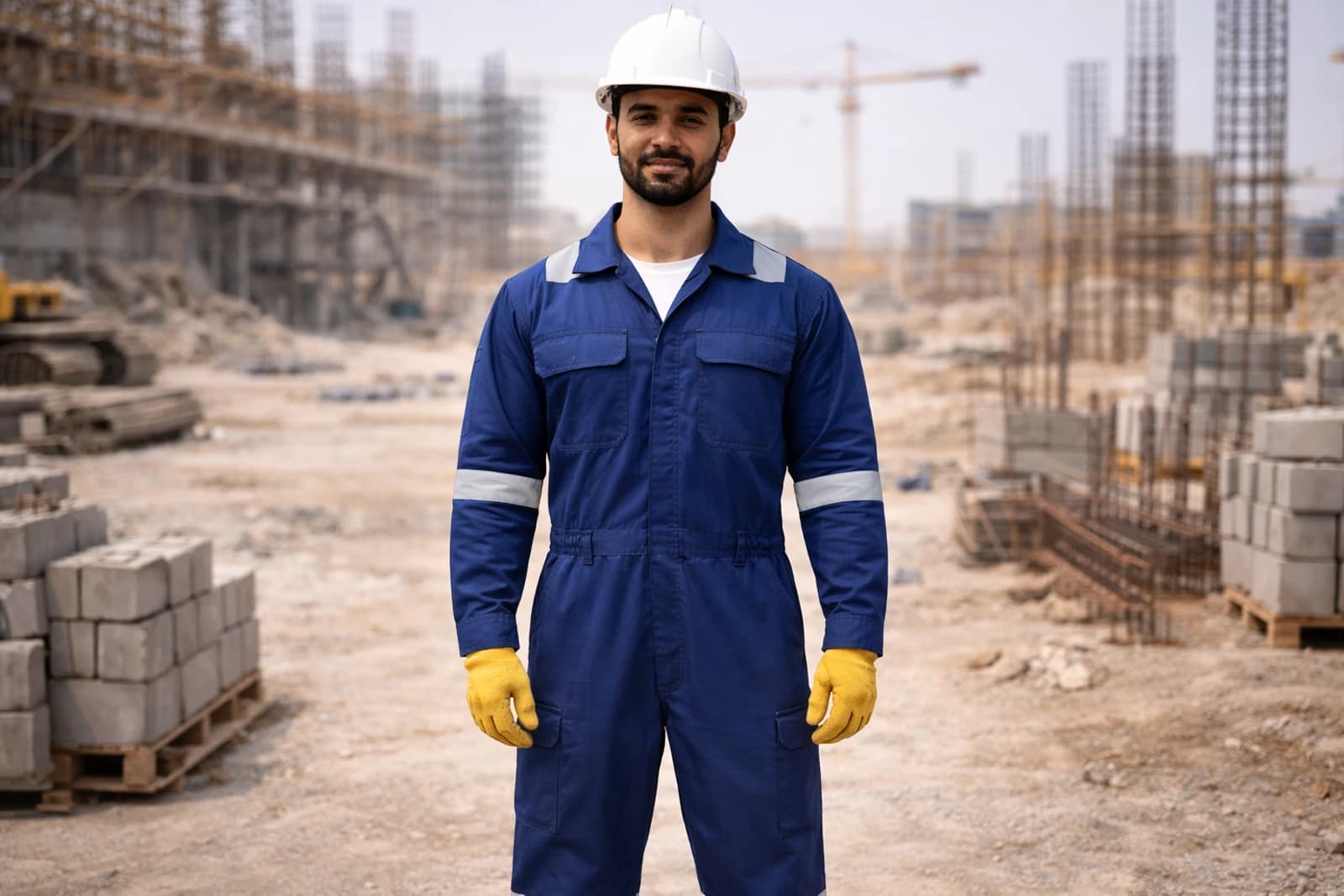
Industrial Workwear
Industrial Coverall Pro
Hard-wearing one-piece coverall for plant, maintenance, and heavy-duty operations.

Safety Uniform
Hi-Vis Safety Jacket
Reflective safety jacket for high-visibility site operations and road work crews.