What a Garage Should Record When an Oil Stain Returns After Laundering
When an oil stain reappears on a garage coverall after industrial laundering, the operator must record four data points before deciding whether to rewash, discard, or return the garment: the stain location on the garment, the laundering cycle count the garment has completed, the detergent chemistry and wash temperature used, and the fabric composition. Without this record, the garage cannot distinguish between a laundering process failure (wrong detergent or temperature) and a fabric absorption failure (oil permanently bonded to fiber), and the garment is either discarded prematurely or reissued with a stain that will return again after the next wash.
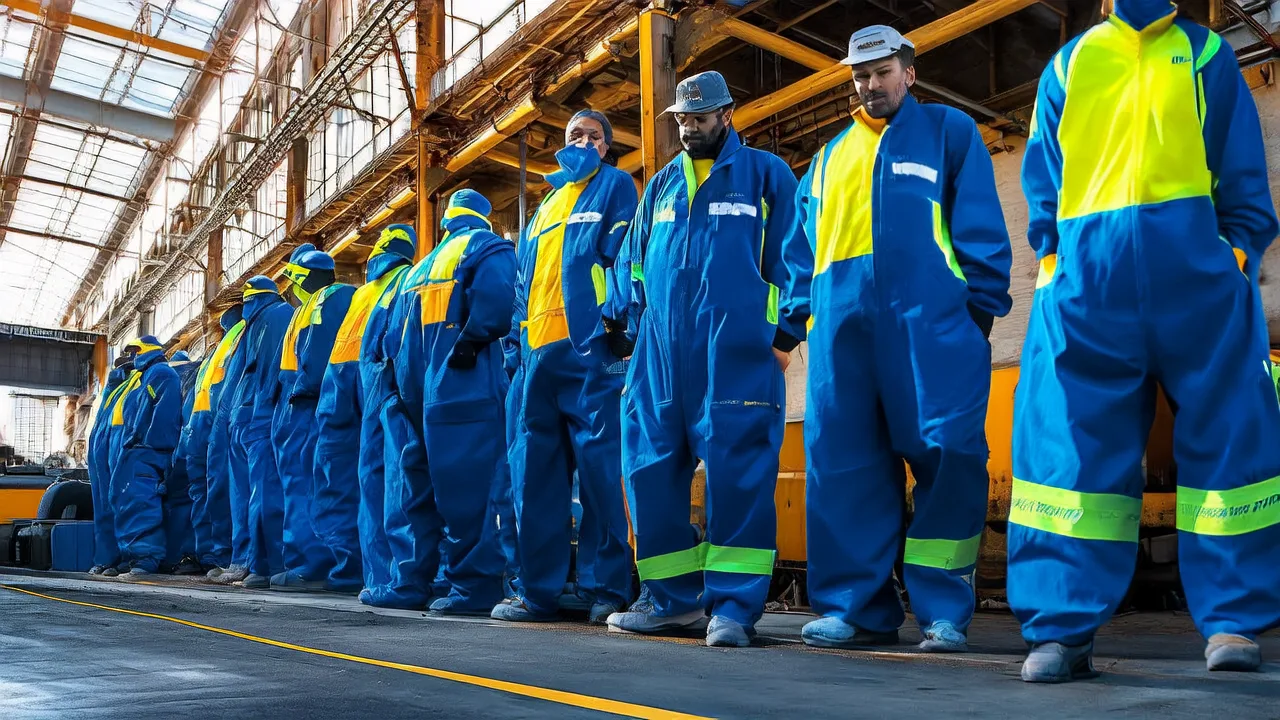
Automotive garages, fleet maintenance workshops, and heavy equipment service facilities generate oil stains on workwear garments daily. Engine oil, gear oil, hydraulic fluid, and grease contact coveralls, trousers, and shirts during every service event. Industrial laundering removes most oil stains — but a significant percentage of stains reappear after washing, typically becoming visible again during the drying cycle or after the garment is worn for one shift. When a stain returns, the garage faces a decision: rewash the garment, discard it, or return it to the supplier. Most garages make this decision without recording the information needed to determine the root cause — and the same garment comes back from laundry with the same stain repeatedly, creating a cycle of rewash costs, premature discards, or worker complaints about stained garments.
The mechanism:
**1. Oil stains reappear after laundering because residual oil migrates to the fabric surface during drying**
When oil-contaminated fabric enters an industrial wash, the detergent and mechanical action remove surface oil from the fabric. But oil that has penetrated deep into the fiber interstices — the spaces between individual yarns and fibers — is not fully removed by a single wash cycle. During the wash cycle, the residual oil remains trapped in the fiber interior. During the drying cycle, heat causes the residual oil to become mobile again. The oil migrates from the fiber interior to the fabric surface, where it becomes visible as a stain that was not present when the garment came out of the wash. The stain reappears not because the laundering failed to remove oil, but because the laundering removed surface oil while leaving residual oil that migrated back during drying.
The root cause: oil stain reappearance is a function of oil penetration depth, not laundering effectiveness. A single wash cycle removes surface oil but not deeply penetrated oil. The stain reappears when residual oil migrates to the surface during drying.
**2. The stain reappearance rate varies by fabric composition and oil type**
Different fabric compositions absorb oil to different depths, and different oil types penetrate fabric to different degrees. Polyester-cotton blend fabric (65/35, the most common workwear construction) absorbs oil moderately — polyester fibers are hydrophobic and resist oil absorption, while cotton fibers are hydrophilic and absorb oil readily. In a polyester-cotton blend, oil penetrates the cotton fibers deeply while remaining more superficial on the polyester fibers. 100% polyester fabric resists oil penetration more effectively — oil remains on the fabric surface and is removed more completely by washing. 100% cotton fabric absorbs oil deeply into the cotton fibers, making oil removal more difficult and stain reappearance more likely.
The oil type also matters: engine oil (SAE 10W-30, 15W-40) is a mineral oil that penetrates fabric moderately. Gear oil (SAE 75W-90, 80W-90) is a heavier mineral oil with extreme pressure additives that penetrate fabric more deeply. Hydraulic fluid (ISO 32, 46, 68) is a light mineral oil that penetrates fabric quickly and deeply. Grease (NLGI Grade 1, 2, 3) is a semi-solid that remains on the fabric surface and is removed more easily than liquid oils.
The root cause: stain reappearance rate is determined by the combination of fabric composition and oil type. A garage that does not record both the fabric composition and the oil type cannot determine why stains are reappearing on specific garments.
**3. Detergent chemistry and wash temperature determine whether residual oil is removed**
Industrial laundering of oil-contaminated workwear requires specific detergent chemistry and wash temperature to remove oil effectively. Standard laundry detergents (alkaline pH 9-10, designed for soil and sweat removal) do not remove oil effectively. Oil-removal detergents contain emulsifiers and surfactants that break oil into small droplets and suspend them in wash water, preventing oil from redepositing on fabric. Oil-removal detergents are typically alkaline (pH 11-12) and contain specific emulsifiers (nonionic surfactants, ethoxylated alcohols) that target mineral oil and grease.
Wash temperature also matters: oil viscosity decreases as temperature increases, making oil more mobile and easier to remove from fabric. Wash temperatures below 60°C do not reduce oil viscosity sufficiently for effective removal. Wash temperatures of 65-75°C reduce oil viscosity enough for emulsifiers to penetrate and remove oil from fiber interstices. Wash temperatures above 80°C provide the best oil removal but increase fabric degradation and energy cost.
The root cause: stain reappearance is often a laundering process failure — the detergent chemistry or wash temperature is insufficient to remove residual oil. A garage that does not record the detergent type and wash temperature cannot determine whether the laundering process is the cause of stain reappearance.
**4. Without a record, the garage cannot distinguish between laundering process failure and fabric absorption failure**
When a stain reappears after laundering, the garage must determine the root cause to make the correct disposition decision. If the root cause is a laundering process failure (wrong detergent, wrong temperature), the solution is to adjust the laundering process — change the detergent, increase the wash temperature, or add a pre-treatment step. The garment can be rewashed successfully with the corrected process. If the root cause is a fabric absorption failure (oil has permanently bonded to the fiber, or the fabric has degraded to the point where oil cannot be removed), the solution is to discard the garment — no laundering process will remove the stain.
Without a record of stain location, laundering cycle count, detergent chemistry, wash temperature, and fabric composition, the garage cannot determine the root cause. The garage defaults to one of three ineffective responses: rewash the garment without changing the process (the stain returns again), discard the garment prematurely (increasing replacement cost), or reissue the garment with the stain (creating worker complaints and unprofessional appearance).
The root cause: the absence of a structured record-keeping protocol prevents the garage from making data-driven disposition decisions, resulting in repeated rewash costs, premature garment discards, or worker dissatisfaction.
**5. The cost of getting it wrong**
The garage that does not record stain reappearance data faces: - Repeated rewash costs (rewashing the same garment 2-4 times without changing the process, spending 2-4x the laundering cost per garment) - Premature garment discards (discarding garments that could be saved with a process adjustment, increasing replacement cost by 15-25%) - Worker complaints about stained garments (reissuing garments with stains that return after the next wash, reducing worker confidence in the uniform program) - No data to support laundering process improvements (the garage cannot identify whether detergent, temperature, or fabric type is the primary cause of stain reappearance)
The garage that records stain reappearance data faces: - Targeted process adjustments (changing detergent or temperature for specific garment types or oil types, reducing stain reappearance rate by 40-60%) - Data-driven garment disposition decisions (rewashing garments with adjusted process, discarding only garments with permanent fabric absorption failure) - Reduced rewash costs (successful first rewash with adjusted process, eliminating 2-4x rewash cycles) - Extended garment life (garments that would have been discarded are saved with process adjustments, reducing replacement cost)
The solution is a structured stain reappearance recording protocol that captures the data needed to determine root cause and make data-driven disposition decisions for oil-stained garments returning from industrial laundering.
**Step 1: Create a stain reappearance record form for each garment**
Create a record form (paper or digital) that captures the following data points for each garment that returns from laundering with a reappeared stain:
- **Garment identification:** garment type (coverall, trousers, shirt), size, and unique identifier (barcode, RFID tag, or sequential number if garments are numbered). - **Stain location:** specific location on the garment (e.g., "right thigh, 10 cm below waist," "left chest panel, 5 cm from center front," "right knee panel"). Stain location indicates the type of oil contact — thigh stains indicate contact with oily surfaces during kneeling, chest stains indicate contact during overhead work, knee stains indicate contact during under-vehicle work. - **Stain appearance:** stain size (measured in cm), stain color (black, brown, reddish-brown), and stain texture (wet, dry, crusty). Stain appearance indicates the oil type — black stains indicate engine oil, reddish-brown stains indicate gear oil with extreme pressure additives, wet stains indicate recent contact, dry/crusty stains indicate older contact or grease. - **Laundering cycle count:** the number of wash cycles the garment has completed since issuance. Track this by recording each wash cycle on the garment's record (or on a batch record if garments are washed in batches). Garments with high cycle counts (20+ washes) may have fabric degradation that increases oil absorption. - **Detergent chemistry used:** the specific detergent product used in the wash cycle, including the product name and the detergent concentration (ml per kg of laundry). Record whether the detergent is a standard laundry detergent or an oil-removal detergent with emulsifiers. - **Wash temperature:** the wash temperature used in the wash cycle (measured in °C). Record whether the temperature was 60°C, 65-75°C, or 80°C+. - **Fabric composition:** the fabric composition of the garment (e.g., 65% polyester / 35% cotton, 100% polyester, 100% cotton). This information is available from the garment specification or label.
The record form captures the data needed to determine whether stain reappearance is caused by laundering process failure (wrong detergent or temperature) or fabric absorption failure (oil permanently bonded to degraded fiber).
**Step 2: Classify each stain reappearance event by root cause**
After recording the data, classify each stain reappearance event into one of three root cause categories:
- **Laundering process failure — detergent:** the detergent used was a standard laundry detergent (not an oil-removal detergent), or the detergent concentration was insufficient for the oil load. Solution: switch to an oil-removal detergent with emulsifiers, or increase the detergent concentration. The garment should be rewashed with the corrected detergent.
- **Laundering process failure — temperature:** the wash temperature was below 60°C, insufficient to reduce oil viscosity for effective removal. Solution: increase the wash temperature to 65-75°C for oil-contaminated garments. The garment should be rewashed at the corrected temperature.
- **Fabric absorption failure:** the garment has completed 20+ wash cycles, and the fabric has degraded to the point where oil is permanently bonded to the fiber. The stain reappears regardless of detergent chemistry or wash temperature. Solution: discard the garment and issue a replacement. The garment has reached the end of its service life for oil-contaminated work.
The classification determines the disposition decision: rewash with adjusted process (for laundering process failures) or discard (for fabric absorption failures).
**Step 3: Track stain reappearance rate by garment type, oil type, and laundering process**
Aggregate the stain reappearance records monthly and calculate the stain reappearance rate (percentage of garments returning from laundering with reappeared stains) by:
- **Garment type:** coveralls, trousers, shirts. Identify which garment types have the highest stain reappearance rates. - **Oil type:** engine oil, gear oil, hydraulic fluid, grease. Identify which oil types cause the most stain reappearance. - **Laundering process:** detergent type, detergent concentration, wash temperature. Identify which laundering process parameters are associated with the highest stain reappearance rates. - **Fabric composition:** polyester-cotton blend, 100% polyester, 100% cotton. Identify which fabric compositions have the highest stain reappearance rates.
The tracking data reveals patterns — for example, gear oil stains on polyester-cotton coveralls washed at 60°C with standard detergent have a 40% reappearance rate, while engine oil stains on 100% polyester coveralls washed at 70°C with oil-removal detergent have a 5% reappearance rate. The patterns identify the specific process adjustments needed to reduce stain reappearance.
**Step 4: Adjust the laundering process based on tracking data**
Use the tracking data to make targeted adjustments to the laundering process:
- If stain reappearance is concentrated in garments contaminated with gear oil or hydraulic fluid (heavy or light mineral oils that penetrate deeply), switch to an oil-removal detergent with emulsifiers and increase wash temperature to 70-75°C for these garments. - If stain reappearance is concentrated in garments with high wash cycle counts (20+ cycles), implement a garment replacement policy that discards garments after 20 wash cycles for oil-contaminated work, preventing fabric absorption failures. - If stain reappearance is concentrated in 100% cotton garments, consider switching to polyester-cotton blend or 100% polyester garments for oil-contaminated work, as these fabrics resist oil penetration more effectively.
The process adjustments reduce the stain reappearance rate, decreasing rewash costs and extending garment life.
**Step 5: Make disposition decisions based on the record and classification**
For each garment that returns from laundering with a reappeared stain, use the record and root cause classification to make the disposition decision:
- **Laundering process failure (detergent or temperature):** rewash the garment with the corrected detergent or temperature. Record the rewash result. If the stain is removed successfully, return the garment to service. If the stain persists after rewash with corrected process, reclassify as fabric absorption failure and discard. - **Fabric absorption failure:** discard the garment and issue a replacement. Record the discard reason (fabric absorption failure after X wash cycles) to support garment life tracking and replacement budgeting.
The disposition decisions are data-driven, reducing premature discards and repeated rewash costs.
**Recommended garments for garage workwear:**
- **Industrial coverall-pro** — specify the coverall for garage mechanics, fleet technicians, and heavy equipment service workers who face daily oil contamination in automotive and heavy equipment service facilities. Specify the coverall with polyester-cotton blend fabric (65/35, 240-280 gsm) for a balance of oil resistance and comfort. The coverall's full-body coverage protects workers from oil contact during engine service, under-vehicle work, and transmission service. Specify the coverall with a smooth-face fabric finish that reduces oil penetration depth, making oil removal during laundering more effective and reducing stain reappearance rate. The coverall's durability and oil-resistant fabric construction make it suitable for garage operations where daily oil contamination creates laundering challenges.
Recommended Products
Products that fit this use case

Industrial Workwear
Industrial Coverall Pro
Hard-wearing one-piece coverall for plant, maintenance, and heavy-duty operations.