Glass Plant Workwear Must Be Replaced by Heat Exposure, Not Calendar Dates
Glass manufacturing workwear degrades from cumulative radiant heat exposure near furnaces, lehrs, and forming stations — not from calendar age. Standard replacement schedules discard lightly-exposed garments prematurely and retain heavily-exposed garments beyond their safe service life. The root cause: replacement is triggered by time, not by the actual degradation mechanism. This article covers the heat-exposure tracking method that replaces calendar-based schedules, the inspection criteria that detect radiant heat degradation, and the pilot protocol that validates heat-cycle garment life before fleet commitment.
Buyer context
What procurement teams run into
Glass manufacturing workwear faces a degradation mechanism that most procurement and operations teams do not track: cumulative radiant heat exposure. Workers in furnace areas — near glass melting furnaces (operating at 1,200–1,600°C), lehrs (annealing ovens at 500–600°C), and forming stations where molten glass is handled — are exposed to intense radiant heat every shift. The garment's fabric, thread, and components degrade from this radiant heat exposure over time, losing their protective properties. But replacement is typically scheduled on a calendar basis (every 3 months, every 6 months) without tracking the garment's actual heat exposure. The result: garments that have been exposed to intense radiant heat for weeks beyond their safe service life remain in use, while garments with minimal heat exposure are discarded prematurely. **1. The radiant heat environment in glass manufacturing** Glass manufacturing workers face radiant heat exposure from multiple sources: - **Furnace areas:** Workers who charge raw materials (silica sand, soda ash, limestone) into melting furnaces, skim dross from molten glass surfaces, or inspect refractory linings face radiant heat from furnace openings and hot glass surfaces at 1,200–1,600°C. Radiant heat intensity at the worker's position is typically 2–5 kW/m², with garment surface temperatures reaching 60–80°C during close-proximity tasks. - **Lehr (annealing oven) areas:** Workers who load formed glass into annealing lehrs, monitor lehr temperature zones, or unload annealed glass face radiant heat from lehr openings and hot glass at 500–600°C. Radiant heat intensity is typically 1–3 kW/m², with garment surface temperatures of 40–60°C. - **Forming stations:** Workers who operate forming machines (press-and-blow, blow-and-blow), handle molten glass gob, or perform manual glass forming face radiant heat from molten glass at 1,000–1,200°C. Radiant heat intensity is typically 2–4 kW/m², with garment surface temperatures of 50–70°C. - **Hot-end coating areas:** Workers who apply hot-end coatings (tin chloride, titanium tetrachloride) to freshly formed glass face radiant heat from the glass surface (500–600°C) combined with chemical exposure from coating vapors. Radiant heat intensity is 1–2 kW/m², with garment surface temperatures of 40–50°C. In all areas, the garment is exposed to repeated radiant heat cycles — heating during tasks near heat sources, cooling during breaks or non-exposure periods. Each cycle degrades the fabric's polymer structure, reducing its thermal protective properties. **2. How radiant heat degrades workwear fabric** Radiant heat degrades workwear fabric through multiple mechanisms: - **Polymer chain scission:** The polyester or cotton-polyester fabric's polymer chains break when exposed to repeated thermal cycling. Each heating cycle breaks a small number of polymer chains, reducing the fabric's tensile strength, tear resistance, and thermal deflection temperature. After 50–100 heat cycles, the fabric's tensile strength may be reduced by 20–40%, making it more susceptible to tearing and puncture. - **Fiber embrittlement:** Repeated thermal cycling causes fibers to become brittle, losing their flexibility and abrasion resistance. The fabric develops a stiff, papery hand feel. Brittle fibers break when abraded against equipment or glass edges, creating holes and thin spots in the fabric. - **Thread degradation:** Sewing thread (typically polyester or cotton-polyester) degrades faster than the main fabric because the thread is thinner and has less thermal mass. Thread degradation causes seam failure — seams split open during normal wear, exposing the worker's skin to radiant heat and molten glass splash. - **Component failure:** Elastic cuffs, hook-and-loop closures, and zipper tapes degrade from radiant heat exposure. Elastic loses its stretch, hook-and-loop loses its grip, and zipper tapes become brittle and crack. Component failure compromises the garment's fit and closure integrity, reducing its protective coverage. The degradation is cumulative — each heat cycle adds to the damage. A garment worn for 30 shifts in a furnace area (with 10–15 heat cycles per shift) accumulates 300–450 heat cycles, far exceeding the fabric's safe service life. But a garment worn for 30 shifts in a cold-end inspection area (with 0–2 heat cycles per shift) accumulates only 0–60 heat cycles and may still have most of its protective properties. Calendar-based replacement treats both garments identically — discarding the lightly-exposed garment prematurely and retaining the heavily-exposed garment beyond its safe life. **3. The procurement mistake: calendar-based replacement without heat-exposure tracking** The most common replacement protocol is calendar-based: garments are replaced every 3 months, 6 months, or 12 months regardless of the worker's actual heat exposure. The logic: "If the garment is 6 months old, it must be degraded." But this logic ignores the actual degradation mechanism — radiant heat exposure — and replaces garments based on time rather than use. The buyer who uses calendar-based replacement faces two problems: - **Premature discard:** Garments worn in low-exposure areas (cold-end inspection, warehouse, finishing) are discarded while still performing. The cost of premature discard includes the full replacement cost of the garment, plus the environmental cost of discarding a garment that still has service life. - **Late discard:** Garments worn in high-exposure areas (furnace, forming, lehr) are retained beyond their safe service life. The cost of late discard includes the safety risk of a garment that has lost its thermal protective properties, the incident risk of a garment that tears or fails during heat exposure, and the regulatory risk of a garment that does not meet the required protection standard. The root cause: replacement is triggered by time, not by the actual degradation mechanism. The procurement and operations teams do not track the garment's heat exposure history and cannot distinguish between a heavily-exposed garment and a lightly-exposed garment of the same age. **4. The heat-exposure tracking protocol** The solution is to replace garments based on cumulative heat exposure, not calendar age. The heat-exposure tracking protocol: - **Define heat exposure units:** One heat exposure unit (HEU) equals one shift-hour of work in a radiant heat zone (furnace area, forming station, lehr area, hot-end coating). Different zones have different heat intensity multipliers: furnace area = 2.0 HEU per shift-hour, forming station = 1.5 HEU per shift-hour, lehr area = 1.0 HEU per shift-hour, hot-end coating = 1.2 HEU per shift-hour. - **Track each garment's HEU accumulation:** Each garment is tagged with a unique ID (barcode or RFID) linked to the worker's assignment record. When the worker completes a shift in a heat zone, the HEU for that shift is added to the garment's cumulative HEU total. The tracking system records the garment's HEU accumulation over time. - **Define the garment's maximum HEU service life:** Based on fabric testing (tensile strength, tear resistance, seam strength after thermal cycling), define the maximum HEU that the garment can safely withstand. For standard polyester-cotton workwear in glass manufacturing, the maximum HEU is typically 200–300 HEU (based on 50–75 thermal cycles to the point where tensile strength is reduced by 30%). For higher-performance fabric (inherent heat-resistant fiber, higher weight construction), the maximum HEU may be 400–600 HEU. - **Trigger replacement at the HEU threshold:** When a garment's cumulative HEU reaches 80% of the maximum HEU service life, the garment is flagged for replacement. The worker is issued a new garment, and the old garment is removed from service. The 80% threshold provides a safety margin before the garment reaches its actual degradation point. **5. The inspection criteria for radiant heat degradation** In addition to HEU tracking, visual and tactile inspection criteria detect radiant heat degradation: - **Fabric stiffness:** A garment that has lost its flexibility and feels stiff or papery has undergone significant fiber embrittlement. The garment must be replaced regardless of HEU count. - **Fabric discoloration:** A garment that has yellowed, browned, or developed dark spots has undergone thermal degradation. Discoloration indicates polymer chain scission and fiber damage. The garment must be replaced. - **Seam integrity:** A garment with split seams, broken thread, or loose stitching has undergone thread degradation. The garment must be replaced immediately — seam failure exposes the worker's skin to radiant heat. - **Component function:** A garment with non-functional elastic cuffs, failed hook-and-loop closures, or cracked zipper tapes has undergone component degradation. The garment must be replaced or repaired (if components are replaceable). The inspection is conducted by the worker before each wear and by the uniform store supervisor during periodic audits (weekly or monthly). Any garment that fails inspection criteria is removed from service immediately, regardless of HEU count. **6. The pilot protocol for heat-exposure-based replacement** Before committing to full fleet implementation, pilot the HEU tracking protocol with 10–15 workers in the highest-exposure areas (furnace, forming, lehr) for 12–16 weeks: - **HEU tracking validation:** Confirm that the HEU tracking system accurately records each garment's heat exposure. Compare the tracked HEU with the worker's actual shift assignment records. Validate that the HEU multipliers for each zone are accurate. - **Garment degradation monitoring:** Monitor garment degradation (fabric stiffness, discoloration, seam failure, component failure) during the pilot. Compare the degradation rate with the HEU accumulation. Confirm that garments reach degradation at the predicted HEU threshold (200–300 HEU for standard fabric). - **Calendar vs. HEU comparison:** Compare the calendar-based replacement schedule with the HEU-based replacement schedule during the pilot. Calculate the cost difference: how many garments are discarded prematurely under calendar replacement, and how many garments are retained beyond safe life. Quantify the cost savings of HEU-based replacement. - **Worker feedback:** Collect worker feedback on the HEU tracking protocol. Confirm that workers understand the HEU system, that the tracking does not create excessive administrative burden, and that the replacement timing is acceptable. **7. Adjusting the specification based on pilot data** After the pilot, adjust the garment specification and HEU protocol: - **If garments degrade faster than predicted:** Investigate whether the fabric construction or heat intensity multipliers are incorrect. Specify a higher-performance fabric (inherent heat-resistant fiber, higher weight construction) or adjust the HEU multipliers. Reduce the maximum HEU service life. - **If garments last longer than predicted:** Confirm with fabric testing that the garment's protective properties are maintained. Increase the maximum HEU service life — but maintain the 80% safety margin. - **If HEU tracking is inaccurate:** Investigate whether the tracking system is correctly recording shift assignments and HEU accumulation. Fix the tracking system before full fleet implementation. - **If worker feedback indicates administrative burden:** Simplify the tracking process — automate HEU recording from shift assignment records, reduce inspection frequency, or delegate tracking to the uniform store supervisor.
Sourcing approach
How a factory partner can respond
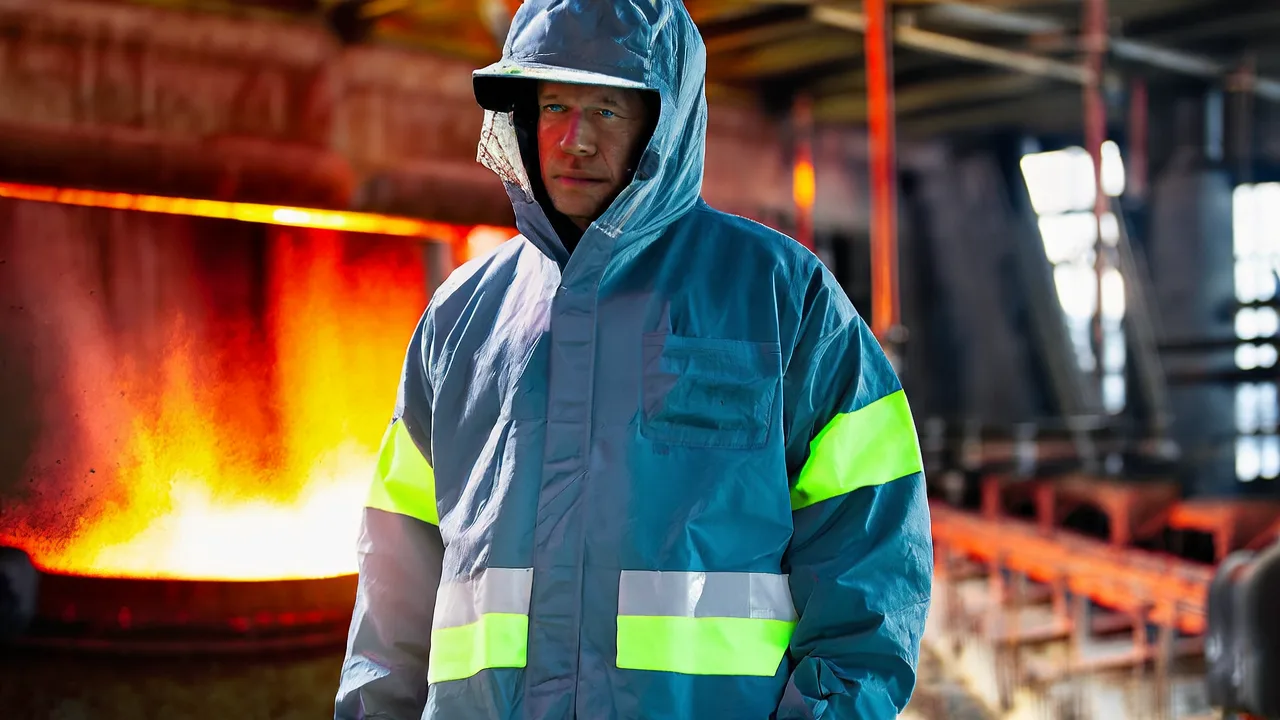
The solution for glass manufacturing workwear is to replace garments based on cumulative radiant heat exposure, implement a heat-exposure tracking protocol, and establish inspection criteria that detect degradation before the garment reaches its failure point. **Step 1: Define heat exposure units and track each garment's HEU accumulation** Define HEU for each work zone based on radiant heat intensity (furnace area = 2.0 HEU per shift-hour, forming station = 1.5 HEU per shift-hour, lehr area = 1.0 HEU per shift-hour, hot-end coating = 1.2 HEU per shift-hour). Tag each garment with a unique ID (barcode or RFID) and track HEU accumulation from shift assignment records. Define the maximum HEU service life based on fabric testing (typically 200–300 HEU for standard polyester-cotton fabric, 400–600 HEU for inherent heat-resistant fiber). **Step 2: Trigger replacement at 80% of maximum HEU** When a garment reaches 80% of its maximum HEU service life, flag it for replacement. Issue a new garment and remove the old garment from service. The 80% threshold provides a safety margin before the garment reaches its actual degradation point. **Step 3: Conduct visual and tactile inspection before each wear** Workers inspect garments for fabric stiffness, discoloration, seam failure, and component degradation before each wear. Remove any garment that fails inspection criteria, regardless of HEU count. The uniform store supervisor conducts periodic audits (weekly or monthly) to confirm inspection compliance. **Step 4: Pilot the HEU tracking protocol before full fleet implementation** Pilot with 10–15 workers in highest-exposure areas (furnace, forming, lehr) for 12–16 weeks. Validate HEU tracking accuracy, monitor garment degradation, compare calendar vs. HEU replacement costs, and collect worker feedback. Require the supplier to provide fabric thermal cycling test data (tensile strength, tear resistance, seam strength after 50, 100, and 200 thermal cycles) to validate the maximum HEU service life. **Step 5: Adjust the specification and protocol based on pilot data** Adjust fabric specification, HEU multipliers, maximum HEU service life, and tracking process based on pilot data. Specify a higher-performance fabric if garments degrade faster than predicted. Increase the maximum HEU if garments last longer than predicted (with fabric testing confirmation). Simplify the tracking process if worker feedback indicates administrative burden. **Recommended garments for glass manufacturing workwear:** - **Industrial coverall-pro** — specify the coverall in heat-resistant fabric (inherent heat-resistant fiber or high-weight polyester-cotton construction of 7–8 oz/yd², 240–270 g/m²) for furnace-area, forming-station, and lehr-area workers who face the highest radiant heat exposure. The coverall provides full-body protection against radiant heat, with heat-resistant thread and components (heat-resistant elastic cuffs, heat-resistant hook-and-loop closures, heat-resistant zipper tape) that withstand thermal cycling. Specify the coverall with thermal cycling test data (tensile strength, tear resistance, seam strength after 50, 100, and 200 thermal cycles) to validate the maximum HEU service life. The coverall's full-body coverage protects workers from radiant heat and molten glass splash during close-proximity tasks. - **Hi-vis safety jacket** — specify the hi-vis jacket for workers in dim furnace areas where visibility is needed near furnace openings, molten glass transport routes, and forming stations. The hi-vis jacket provides high-visibility protection without the full-body coverage of a coverall, for workers who need visibility but not full radiant heat protection (supervisors, inspectors, maintenance workers who enter furnace areas briefly). Specify the hi-vis jacket with heat-resistant reflective tape and heat-resistant components that withstand radiant heat exposure. The hi-vis jacket is also suitable for cold-end warehouse and finishing areas where visibility is needed near forklifts and glass transport vehicles.
Recommended Products
Products that fit this use case

Industrial Workwear
Industrial Coverall Pro
Hard-wearing one-piece coverall for plant, maintenance, and heavy-duty operations.

Safety Uniform
Hi-Vis Safety Jacket
Reflective safety jacket for high-visibility site operations and road work crews.