Gulf Logistics Uniforms: What Last-Mile Delivery Teams Need in Hot Climates
Middle East last-mile delivery companies — serving noon, Amazon AE, Talabat, and local logistics operators — need uniforms that keep riders cool, present a professional brand image, and hold up to daily wear in 45°C heat. This guide covers fabric choices, reflective safety requirements, and what to look for when sourcing logistics uniforms from a Chinese manufacturer.

Buyer context
What procurement teams run into
Middle East last-mile delivery companies face a uniform challenge unlike any other logistics market. A rider on a motorbike in Dubai or Riyadh experiences temperature swings from 45°C midday heat to quick rain showers, all while needing to be visible in heavy traffic, comfortable enough to stay on the road for 8–10 hours, and branded consistently for customer recognition. The wrong uniform choice creates real operational problems. The most common mistake logistics procurement teams make is treating delivery uniforms like standard corporate uniforms. Lightweight poly-cotton polo shirts that work fine for office staff fail within weeks for delivery riders — fabric pills from constant helmet strap friction, collars stretch out from daily wear and wash cycles, and the reflective elements (if any) peel off after the first few washes. A logistics uniform needs to be closer to activewear than officewear: moisture-wicking, stretch-resistant, with bonded or sewn-in reflective tape that survives repeated industrial laundering. A second major problem is heat management. Delivery riders in the Gulf often refuse to wear safety vests over their uniform polo because the extra layer traps heat, especially between 11 AM and 4 PM. Without integrated reflective elements or a lightweight safety jacket that riders actually want to wear, companies either enforce compliance poorly (leading to safety violations) or accept uncovered workers on the road, exposing themselves to liability in the event of an accident. Sizing for delivery workforces also differs from standard logistics uniforms. Riders come from diverse backgrounds — South Asian, Filipino, Arab, and African workers often share the same fleet — and body proportions vary widely. A uniform that fits well on a 170 cm rider is likely too short in the torso for a 185 cm rider, and generic hi-vis vests sized for Western or East Asian frames gap at the sides on broader-shouldered individuals, reducing both comfort and visibility effectiveness. Finally, branding consistency is harder than it seems. Delivery companies need their logo visible from 30+ meters away, both day and night, across polo shirts, safety jackets, and caps — all while maintaining consistent colour across production runs. A fabric colour difference of even one shade between a polo order in June and a jacket order in October creates a visibly mismatched uniform set that undermines the professional image logistics companies work hard to build.
Sourcing approach
How a factory partner can respond
The most practical approach for Middle East last-mile delivery companies is a two-piece uniform system: a moisture-wicking polo shirt as the base layer, paired with a lightweight reflective safety jacket that riders actually want to wear when required, sourced from a Chinese manufacturer experienced with Gulf export requirements. **The base layer: a logistics-grade polo uniform.** Skip standard 65/35 poly-cotton pique polos. For delivery riders, the better choice is a 100% polyester micro-mesh or birdseye knit polo (140–160 gsm) with moisture-wicking and anti-static properties. The micro-mesh structure vents heat through thousands of tiny openings while presenting a clean professional surface for branding. Key design details that matter: reinforced three-button placket that won't stretch out, flat-knit collar that resists curling after washes, side vents for airflow, and a longer tail that stays tucked in while the rider is seated on a motorbike or scooter. For the reflective element on the polo itself, use 2-inch silver reflective piping on the sleeve hems or a reflective chest stripe as secondary visibility (the primary visibility comes from the jacket). This fabric platform lasts 8–12 months of daily delivery use with proper laundering — roughly three times the lifespan of a standard corporate polo in this work environment. **The safety layer: a lightweight summer hi-vis jacket.** The jacket must be breathable enough that riders don't take it off when they hit a traffic stop. The right spec for Gulf last-mile delivery is a 180–200 gsm polyester mesh hi-vis jacket with EN ISO 20471 Class 2 certification, 2-inch silver reflective tape around the body and sleeves, full front zip, and elastic cuffs. Keep it vest-style (no sleeves) for maximum airflow, or sleeved with mesh panels under the arms. The jacket should add minimal weight and bulk — riders need to be able to fold it and store it in a delivery bag when not in use. Add a radio/phone pocket on the chest with a clear window or headset loop so riders can keep their dispatch device accessible. Riders will wear a jacket that doesn't slow them down or make them overheat. **Logistics crew applications beyond riders.** The same uniform philosophy applies to warehouse packers, sortation hub staff, and cross-dock workers, though with different layering. For indoor logistics staff, the polo plus a lightweight safety vest (without the jacket's thermal properties) is sufficient. For loading dock and yard workers who split time between air-conditioned and outdoor areas, the jacket becomes a year-round comfort piece rather than a summer burden. This is why a coordinated two-piece system — rather than a single uniform garment — gives logistics operators the flexibility to match uniform layers to each role without losing brand consistency. **Sourcing from a Chinese manufacturer with Gulf logistics experience.** Look for a manufacturer that can provide: custom sizing tables for multinational delivery workforces (extended size range S–5XL with proportional adjustments), heat-transfer or embroidery logo application that survives 50+ industrial wash cycles, stock fabric programs for popular logistics brand colours (bright orange, lime yellow, royal blue, black with high-contrast reflective taping), and tiered MOQ options (300 units for initial test orders, 500 units for repeat orders). Ask specifically about reflective tape bonding method — sewn tape with bartack reinforcement at stress points outlasts heat-bonded tape by 3–4x in Gulf conditions, where adhesive bonds degrade faster under UV exposure and heat. Request pre-production samples (one polo and one jacket in size L) with the exact logo application and reflective tape configuration before bulk production. Confirm that EN ISO 20471 test reports and certificates are included with each shipment. A manufacturer with regular Gulf logistics export experience will offer this standard; if they seem unfamiliar with the certification requirements for delivery rider safety wear, consider it a red flag.
Recommended Products
Products that fit this use case
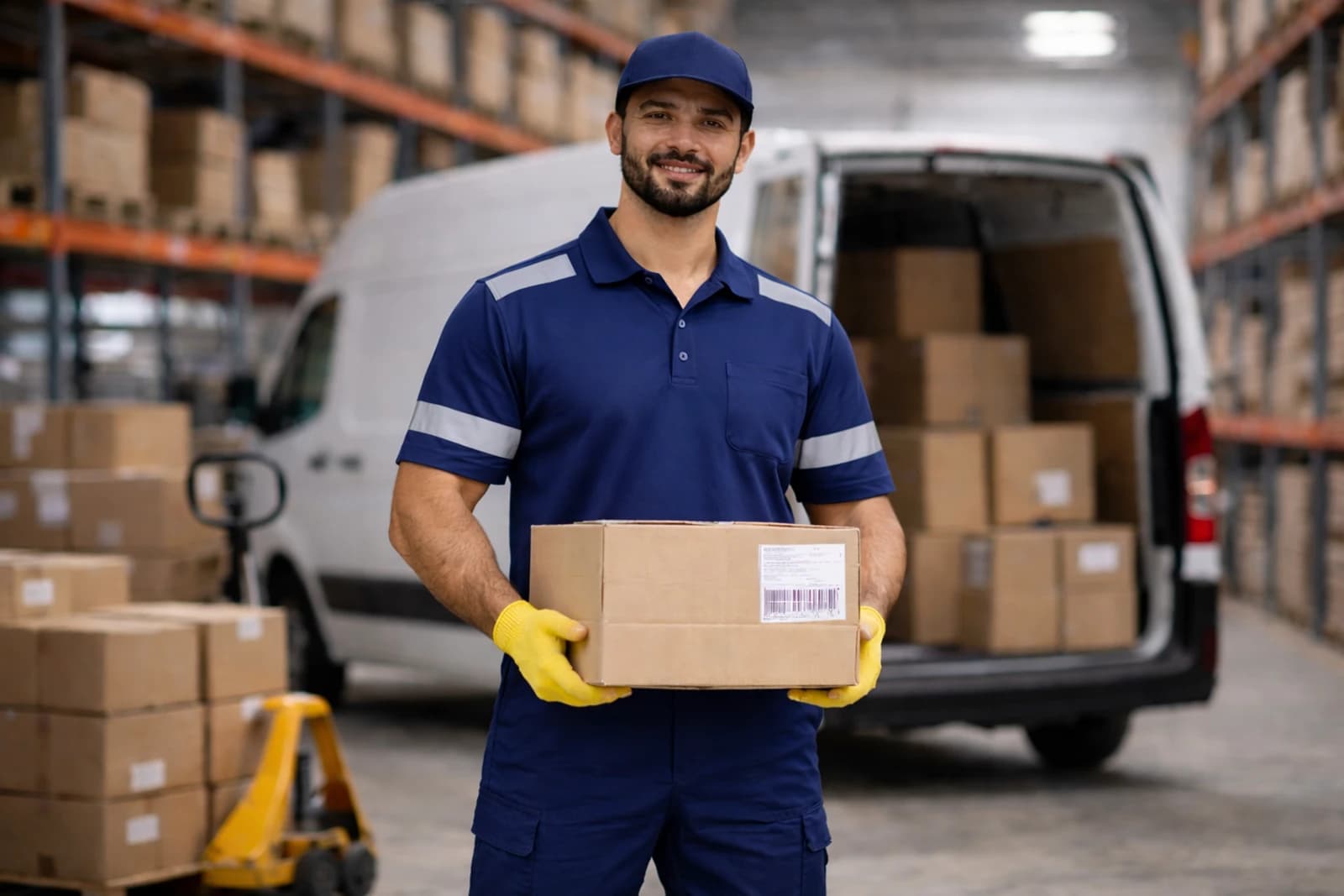
Logistics Uniform
Logistics Polo Uniform
Breathable uniform polo for warehouse, delivery, and last-mile teams.
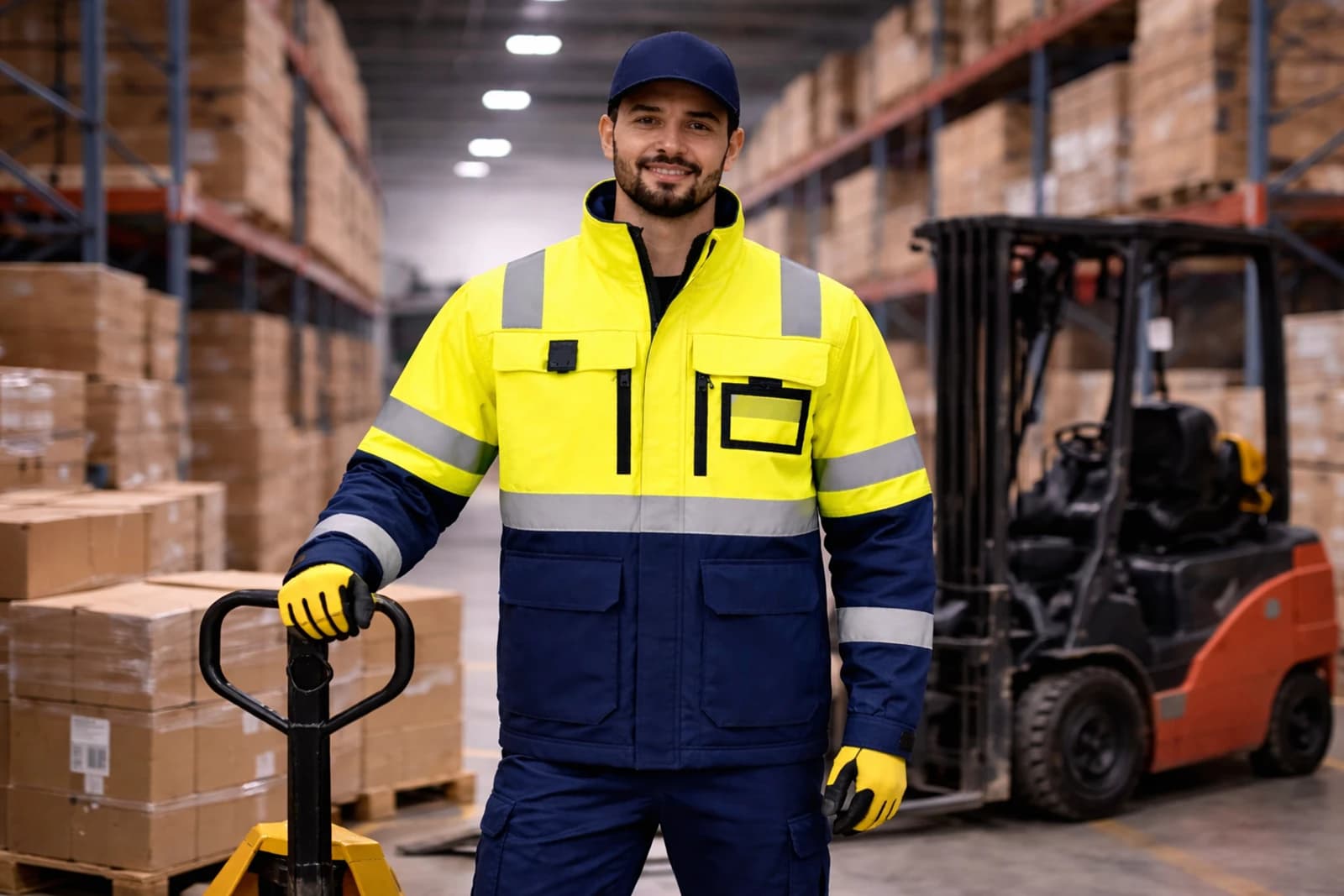
Safety Uniform
Hi-Vis Safety Jacket
Reflective safety jacket for high-visibility site operations and road work crews.