Hi-Vis Workwear Compliance for Middle East Construction & Logistics: EN ISO 20471 and What B2B Buyers Need to Know When Sourcing from China
For Middle East B2B buyers sourcing hi-vis workwear for construction crews and logistics teams, compliance with EN ISO 20471 is non-negotiable. This guide covers the essential classification standards (Class 1, 2, 3), fabric and reflective tape specifications, color options suitable for Gulf environments, and how a Chinese workwear manufacturer can deliver compliant hi-vis gear — with a comparison of the Hi-Vis Safety Jacket for road crews and the Logistics Polo Uniform for warehouse and distribution center workers.

Buyer context
What procurement teams run into
A procurement manager at a construction and logistics conglomerate in Riyadh needs to outfit 1,200 workers across two divisions: 500 road construction crew members working near high-speed traffic (day and night shifts) and 700 warehouse and distribution center staff handling cargo at a new logistics hub. The company has been using unbranded, non-certified yellow safety vests purchased from a local supplier, but a recent safety audit flagged them as non-compliant with SASO (Saudi Standards, Metrology and Quality Organization) requirements, which mandate EN ISO 20471 certification for high-visibility garments used in road and industrial zones.\n\nFor Middle East B2B buyers sourcing from a Chinese workwear manufacturer, the problem is multi-layered:\n\n- **Which class of hi-vis is required?** EN ISO 20471 defines three classes (Class 3 = highest visibility, most reflective tape area). Road construction crews working within 5 meters of traffic traveling over 60 km/h typically require Class 3. Warehouse staff working indoors or in controlled logistics yards may only need Class 1 or Class 2. Buying Class 3 for everyone adds 30–50% cost for no benefit when worn indoors, while buying Class 1 for road crews creates a safety violation that can halt operations and incur fines.\n- **Fabric breathability in Gulf heat** — standard hi-vis polyester fabric (often 100% polyester with a PVC coating) traps heat at 45+ °C. Workers ditch the vest within 20 minutes of a shift. A non-worn hi-vis vest provides exactly zero safety. The vest must be breathable (ventilated mesh panels, lightweight fabric) to have any hope of compliance in practice — not just on paper.\n- **Reflective tape degradation** — many non-compliant vests use reflective tape that peels after 10–15 wash cycles. In the Middle East, where workers often launder garments at high temperatures or with harsh detergents, tape failure can happen within 2–3 months. EN ISO 20471 also requires the garment to maintain its reflective properties after a specified number of washes — typically 25 cycles for certified gear.\n- **Color selection for the environment** — fluorescent yellow-green (lime) is standard for daytime visibility but can blend into sandy/desert backgrounds during dust storms. Fluorescent orange-red offers better contrast in Gulf terrain. Many buyers simply choose "whatever is available" without considering the visual context of their specific work sites.\n- **Dual-purpose vs. dedicated garments** — logistics workers need a uniform that works both as a company-branded shirt and as a hi-vis garment. A dedicated hi-vis vest over a polo shirt creates layering that's hot and impractical in a warehouse. A hi-vis polo or hi-vis vest integrated into the uniform system simplifies compliance.\n\nWithout a clear hi-vis compliance strategy, buyers risk: (a) financial penalties from safety regulators, (b) project suspensions during safety audits, and (c) wasted spend on garments workers won't wear.
Sourcing approach
How a factory partner can respond
The solution is a zone-based hi-vis specification approach: match the EN ISO 20471 class, fabric construction, and garment type to the specific risk zone and work environment. For Middle East buyers sourcing from a Chinese manufacturer, the Hi-Vis Safety Jacket (hi-vis-safety-jacket) and the Logistics Polo Uniform (logistics-polo-uniform) together cover the full spectrum of hi-vis needs across construction and logistics operations.\n\n**When to choose the Hi-Vis Safety Jacket:**\n\nThe Hi-Vis Safety Jacket is the right choice for road construction crews, utility workers, and anyone working in high-risk traffic zones:\n\n- **EN ISO 20471 Class 3 compliance** — the jacket is designed with 0.80 m² of fluorescent background material and 0.20 m² of retroreflective tape (horizontal bands around the torso and vertical stripes over each shoulder), meeting the strictest Class 3 requirements. This is the standard for Saudi Arabia's road maintenance projects (Ministry of Municipal and Rural Affairs specifications) and for Qatar's Public Works Authority (Ashghal) construction zones.\n- **Fabric for Gulf conditions** — the Hi-Vis Safety Jacket uses a breathable 100% polyester microporous fabric (approx. 150 GSM) with taped seams for weather resistance during overnight or early-morning shifts. A mesh-lined vented back panel reduces heat buildup — critical for compliance in 40–50 °C summer conditions where anything less breathable will be abandoned.\n- **Reflective tape specifications** — the retroreflective tape uses microprismatic technology (glass bead technology is available as a lower-cost option). Microprismatic tape offers 2–3x higher reflectivity at wider observation angles, important for highway crews where driver approach angles vary. The tape is heat-sealed (not sewn) for longevity across the required 25-wash-cycle certification.\n- **Design features** — adjustable cuffs with hook-and-loop closures, full front zip with storm flap, detachable hood for variable weather, and multiple pockets (two side pockets with flaps, one chest pocket with pen division). These features matter for workers who carry mobile phones, radios, and small tools while maintaining visibility.\n- **Color selection** — available in fluorescent yellow-green and fluorescent orange-red. For Middle East desert and construction environments, orange-red is strongly recommended — it provides significantly better contrast against sand-colored backgrounds, especially during dust haze and low-light conditions common during early morning and late afternoon shift changes.\n- **Customization** — factory-applied logo embroidery on the chest (left or right) and custom reflective tape colors (e.g., silver tape for standard, yellow or orange tape for additional brand visibility) are available. For government contracts requiring specific emblems or department identifiers, the jacket accepts badge holders on both chest and sleeve positions.\n- **Sizing** — available in S–5XL. For Gulf workforces with diverse body types, request a pre-production sampling run to validate fit across your team before bulk commit. The jacket should allow full arm extension without riding up at the waist — critical for workers operating heavy machinery or lifting and carrying.\n\n**When to choose the Logistics Polo Uniform:**\n\nThe Logistics Polo Uniform (a hi-vis polo shirt with reflective tape elements) is the right choice for warehouse, distribution center, airport ground crew, and logistics yard workers:\n\n- **EN ISO 20471 Class 1 or Class 2 compliance** — the polo can be specified with reflective tape on the torso (Class 1: 0.14 m² background, 0.10 m² tape) or with added sleeve tape for Class 2. For indoor logistics environments where fork-lifts and pallet movers operate, Class 1 is generally sufficient. For mixed indoor/outdoor yards, Class 2 is the safer choice.\n- **Comfort-first design** — the polo uses a cotton-polyester blend (65% polyester, 35% cotton) pique knit at 180 GSM — breathable, moisture-wicking, and comfortable against the skin. Unlike a heavy safety vest worn over a regular shirt, the hi-vis polo is a single-layer garment, which workers consistently prefer for indoor and light outdoor duty.\n- **Reflective tape placement** — horizontal tape bands at chest and waist level. For Class 2 compliance, add sleeve bands. The tape is heat-transferred onto the fabric, which outlasts sewn tape on knit fabrics and sits flatter against the garment (important for workers who also wear harnesses or tool belts).\n- **Color options** — fluorescent yellow-green and fluorescent orange-red in the body, with contrasting collar and cuffs available in navy, black, or grey for a cleaner uniform appearance. Many logistics companies choose yellow-green body with navy collar/cuffs — the contrast allows the garment to serve as both a hi-vis item and a branded company uniform.\n- **Durability in commercial laundering** — the polo is tested for an estimated 50+ industrial wash cycles. The reflective tape remains functional for at least 25 cycles when washed at 60 °C with no bleach — meeting EN ISO 20471 requirements. For Middle East operations that often launder in-houses at higher temperatures, request a wash-test sample before the full production run.\n- **Embellishment** — left-chest logo embroidery, right-chest name embroidery, and optional back printing ("LOGISTICS" or company name with reflective ink) are all available from the factory, eliminating the need for separate branding processes.\n- **Additional features** — three-button placket, rib-knit collar with contrast tipping, side vents for airflow, and a mic clip loop at the shoulder. These small details matter for all-day wear in logistics environments where workers move, lift, and communicate constantly.\n\n**A practical specification strategy for both teams:**\n\nFor the Riyadh conglomerate example (500 road crew + 700 logistics workers):\n\n| Team | Garment | Class | Color | Key Specs |\n|------|---------|-------|-------|----------|\n| Road construction crew | Hi-Vis Safety Jacket | Class 3 | Orange-red | Microprismatic tape, vented back, detachable hood |\n| Logistics / warehouse | Logistics Polo Uniform | Class 2 | Yellow-green, navy collar | Heat-transfer tape, 180 GSM cotton-poly pique |\n\nThis approach: (a) assigns the right level of protection to each risk zone, (b) keeps costs proportionate (no overspend on Class 3 for indoor workers), and (c) ensures actual wear-time through breathable, comfortable fabric choices.\n\n**Quality validation checklist for Middle East buyers:**\n\n1. Request EN ISO 20471 test reports per batch — reputable Chinese manufacturers provide them with every production lot\n2. Order a pre-production sample set in both colors, both classes, and the extreme size range (S, L, 3XL, 5XL) for fit testing\n3. Run 5 wash cycles on the sample with your facility's actual detergent and temperature before approving bulk production\n4. Inspect reflective tape adhesion on seam junctions (armholes, shoulder seams) — this is the most common failure point\n5. Confirm SASO or GSO (Gulf Standardization Organization) marking if shipping to Saudi Arabia, UAE, Qatar, Kuwait, Oman, or Bahrain — some customs authorities reject garments without the proper conformity mark even if EN ISO 20471 certified
Recommended Products
Products that fit this use case
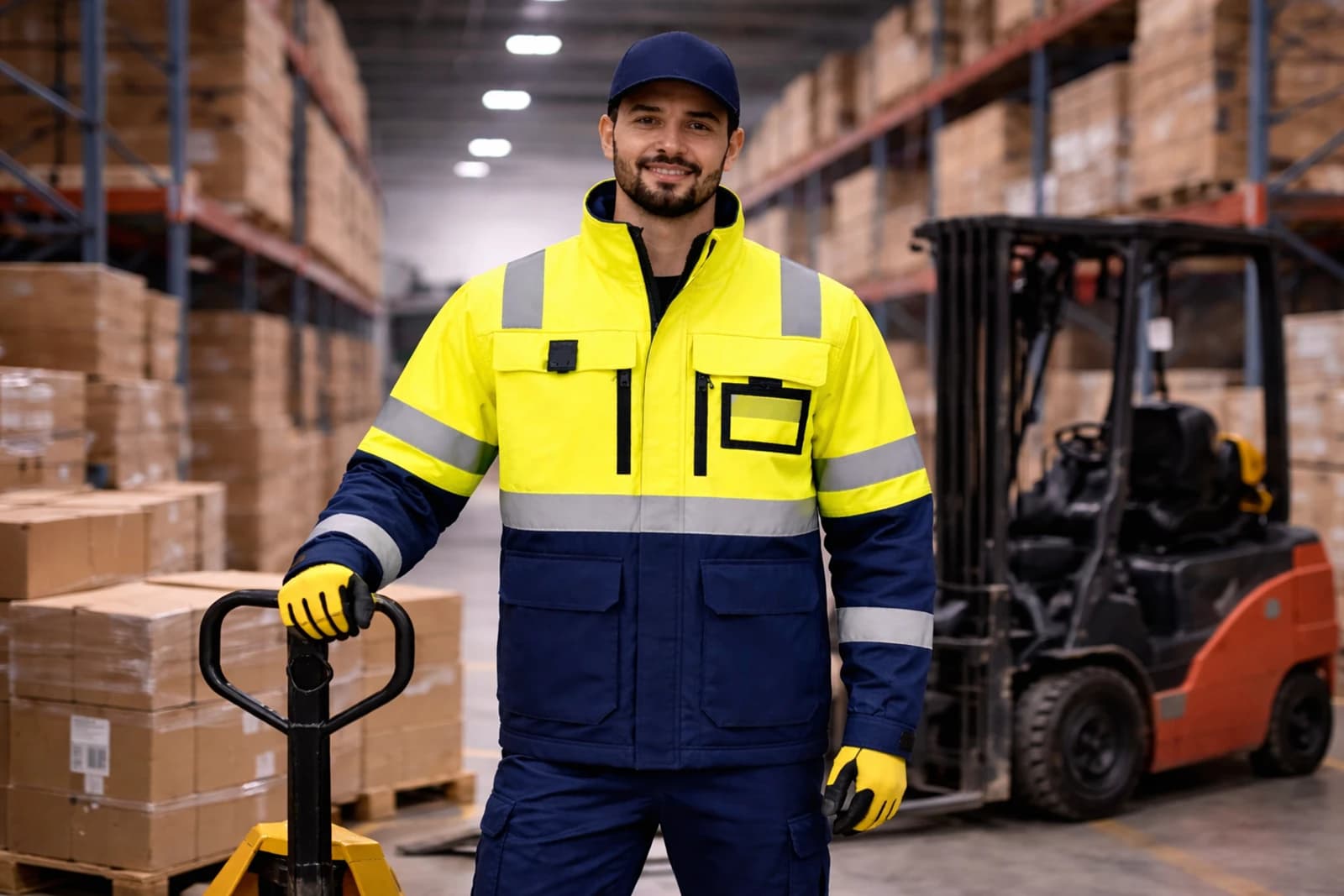
Safety Uniform
Hi-Vis Safety Jacket
Reflective safety jacket for high-visibility site operations and road work crews.

Logistics Uniform
Logistics Polo Uniform
Breathable uniform polo for warehouse, delivery, and last-mile teams.