Hi-Vis Safety Jackets & Logistics Uniforms: Sourcing Guide for Middle East Warehouse & Distribution B2B Buyers
The Middle East's logistics sector is booming — from Jebel Ali, Dubai South, and Khalifa Port to Saudi Arabia's King Abdullah Economic City, NEOM logistics hubs, and the expanding cold-chain networks across the GCC. E-commerce giants, third-party logistics operators, and national postal carriers are hiring warehouse operatives, pickers, dock workers, and delivery drivers by the thousands. Every one of those workers needs certified hi-vis protection and durable, breathable uniforms built for 45°C summer floors. This sourcing guide for Middle East B2B buyers covers EN ISO 20471 compliance, hi-vis jacket and polo uniform specifications for warehouse and distribution environments, fabric selection for Gulf climate, branding and customization options, and volume procurement strategies from a Chinese workwear manufacturer.

Buyer context
What procurement teams run into
Dubai's Jebel Ali is the world's 9th busiest container port. Saudi Arabia's logistics sector is projected to add hundreds of thousands of jobs under Vision 2030. Qatar's Hamad Port and Omani sultanate ports are expanding. And with e-commerce penetration rising across the Gulf, mega-warehouses — many the size of multiple football pitches — now operate around the clock in 45°C summer conditions. Every forklift operator, dock loader, picker, and yard marshal in those facilities needs hi-vis workwear that actually meets EN ISO 20471, plus uniforms that survive industrial laundry and Gulf humidity. Yet too many Middle East buyers source generic, uncertified hi-vis gear that fails compliance audits and leaves workers dangerously invisible in busy distribution yards. **1. EN ISO 20471 — the compliance that matters most** In any GCC logistics facility that operates to international HSE standards, hi-vis garments must meet EN ISO 20471. This standard classifies garments into three classes based on the area of fluorescent background material and retroreflective tape: - **Class 1:** Minimum protection — a small area of fluorescent material with a single band of retroreflective tape. Suitable only for low-risk, low-speed environments with clear separation from traffic. Generally not sufficient for warehouse or yard work. - **Class 2:** Mid-level protection — larger fluorescent area plus retroreflective bands. This is the practical minimum for warehouse operatives who work on floors shared with forklifts, pallet jacks, and order pickers. - **Class 3:** Highest protection — maximum fluorescent and retroreflective coverage, usually with sleeves. Required for workers on public roads, highway yards, and areas with fast-moving vehicles. For Middle East buyers, Class 3 hi-vis jackets are the default choice for dock masters, yard marshals, and drivers who cross between warehouse bays and external roads. The garment's label must show the EN ISO 20471 marking, the class number, and the pictogram. Insist on third-party test reports from accredited labs (SGS, TÜV, Intertek, Bureau Veritas) — not just a printed label. Many "certified-looking" garments from low-cost suppliers fail a simple retroreflective performance test. **2. Fabric and weight — the Gulf climate factor** A hi-vis jacket that's perfectly compliant but unbearable to wear gets left on the hook — and an unworn hi-vis garment protects nobody. In Gulf conditions, fabric choice is everything: - **Polyester-cotton blends (65/35 or 50/50):** The mainstream choice for hi-vis shells. Durable, easy to clean, reasonably breathable. For indoor warehouse work in air-conditioned or shaded facilities, a 200-250gsm blend works well. - **Full polyester mesh:** Maximum airflow for outdoor yard work in summer. Mesh hi-vis vests and jackets are lightweight, dry fast, and are the go-to for dock workers and yard staff. The trade-off is reduced abrasion resistance — not ideal for workers who brush against racking and container edges constantly. - **Breathable microporous membranes:** For the short but intense Gulf rainy season and for air-conditioned cold-chain environments, a hi-vis jacket with a breathable waterproof membrane (10,000mm+ hydrostatic head) provides rain and wind protection without turning into a sweatbox. A smart sourcing strategy: specify two weight classes — a lightweight mesh or thin-blend jacket for summer, and a lined or 300gsm jacket for the brief winter months and cold-store work. Your Chinese manufacturer should be able to supply both from the same colour and branding program so the fleet stays uniform. **3. Design features that warehouse managers actually need** Beyond fabric, the practical features separate a good logistics hi-vis jacket from a budget one: - **Radio and phone pockets:** Warehouse operatives carry radios, scanners, and phones constantly. A chest pocket sized for a radio or scanner, with a secure closure, is a genuinely useful feature — not a gimmick. - **Pen and ID card provisions:** Simple chest-pen pockets and an ID-card sleeve or badge band save workers from clipping lanyards to zips (a snag hazard around moving machinery). - **High-visibility elbow areas and side panelling:** Workers reaching into pallet racks need reflective tape positioned so it isn't obscured when arms are raised. Specify retroreflective tape placement per EN ISO 20471 Class 2 or 3 geometry, and consider extra elbow or shoulder striping for yard workers. - **Zip pullers and closures:** Plastic or coated zip pullers that stay cool to the touch, with a chin guard and storm flap on jackets worn outdoors. - **Reflective tape quality:** Specify glass-bead or microprismatic retroreflective tape with performance verified to EN ISO 20471. Tape brightness degrades over time — plan for jacket replacement on a defined cycle (typically 12-24 months for daily-use garments). **4. The polo uniform — your brand on every worker** For the office, dispatch, and customer-facing staff in a logistics operation, a quality polo uniform does double duty: it's comfortable in Gulf climate and it carries your brand. Key specs when sourcing logistics polo uniforms from a Chinese manufacturer: - **Fabric:** A pique or jersey knit in 65% polyester / 35% cotton, or a moisture-wicking performance knit for outdoor roles. For the Gulf, a fabric with UV protection (UPF 30+) is a genuine advantage for staff who work outdoors. - **Fabric weight:** 180-220gsm is the sweet spot — substantial enough to look professional and hold its shape, light enough for summer wear. - **Embroidery vs. screen print:** For logos and company names, embroidery (flat or puff) lasts longer through industrial laundering. Screen print is cheaper but cracks and fades. Most Middle East logistics companies prefer embroidered chest logos with names on the back or sleeve. - **Colour-fastness:** Specify colours that survive repeated industrial washes and strong sunlight. Saudi and UAE sun fades cheap dyes fast. Ask your manufacturer for colour-fastness test data (ISO 105 series). **5. Procurement strategy — volume, lead time, and sizing** Middle East logistics operators typically staff from a few hundred to tens of thousands of workers. Volume procurement from a Chinese manufacturer unlocks significant savings: - **Sizing:** Gulf workforces include large numbers of South Asian expatriate workers with body shapes that differ from typical Western sizing charts. Source garments with a Middle East / Asia-specific size range (longer body length, appropriate chest and height ratios) and ensure the manufacturer offers a generous size matrix (XS-5XL or beyond). - **Lead times:** Standard production and sea freight from a Chinese manufacturer runs 30-60 days depending on volume and customisation. For fleet-wide rollouts or seasonal hiring surges, plan at least two months ahead. Air freight is available for urgent top-ups but adds 20-40% to landed cost. - **Industrial laundry endurance:** Specify how many industrial wash cycles the garment must survive — 50, 75, or 100 cycles are typical benchmarks. Ask for wash-test evidence. Cheap hi-vis tape can delaminate after 20 washes, rendering the garment non-compliant long before it wears out. - **Spare stock:** Order 5-10% spare stock for new hires and replacements. Reordering a small batch of a custom-branded garment costs far more per unit than including it in the original run. **6. Why source from a Chinese manufacturer** Chinese workwear manufacturers now produce the overwhelming majority of the world's hi-vis and uniform garments, and the best of them combine genuine EN ISO 20471 certification capability, in-house embroidery and print shops, and export experience to the Gulf that spans decades. The key is vetting: request samples, demand third-party test certificates, verify factory audit status, and check references from existing Middle East logistics customers. The right sourcing partner doesn't just ship boxes — they help you specify for compliance, advise on fabric for your climate, and deliver a branded, certified, comfortable workwear programme that keeps your workforce visible, safe, and professional-looking from the loading dock to the delivery van.
Sourcing approach
How a factory partner can respond
The solution for Middle East logistics operators is a two-pronged workwear programme: certified EN ISO 20471 hi-vis jackets for the warehouse floor, yard, and dock, paired with branded, breathable polo uniforms for dispatch and customer-facing staff — all sourced from a vetted Chinese manufacturer who can deliver compliant, Gulf-optimised garments at volume. **Build a compliant hi-vis programme:** 1. **Specify by standard, not by look.** Class 2 for general warehouse floor work, Class 3 for yard, dock, and road-crossing roles. Demand third-party EN ISO 20471 test certificates — not just a printed label. 2. **Right-weight the fabric for the season.** Mesh or lightweight thin-blend hi-vis jackets for Gulf summer, lined or heavier jackets for winter and cold-chain environments. Two weight classes keep the fleet compliant year-round without heat-stress complaints. 3. **Include the features workers genuinely use:** radio/scanner chest pockets, pen and ID provisions, proper tape geometry that stays visible when arms are raised, and quality microprismatic tape that survives 50+ industrial washes. 4. **Plan a replacement cycle.** Hi-vis retroreflective performance degrades with washing and sun exposure — budget for 12-24 month jacket replacement on daily-use items. **Build a professional uniform programme:** 1. **Choose pique or moisture-wicking knit** in 65/35 poly-cotton or performance fabric at 180-220gsm, with UPF 30+ for outdoor staff. 2. **Embroider your branding** for longevity — it outlasts screen print through industrial laundry and harsh sun. 3. **Demand colour-fastness data** so your brand colours don't fade to pastels after a GCC summer. 4. **Order with spare stock** (5-10% over) and a Middle East/Asia-specific size matrix so replacements are a stock item, not a reorder headache. **Work with the right partner:** - Ask for samples, third-party certificates, factory audit reports, and Middle East customer references before committing volume. - Lock in lead times of 30-60 days for custom-branded production by sea freight, or plan air-freight top-ups for urgent hires. - Consolidate hi-vis jackets and polo uniforms into one sourcing contract to reduce per-unit costs and simplify quality control. The result: a workforce that passes HSE audits, stays cool and comfortable through the Gulf summer, and carries your brand with a professional, consistent look from the loading dock to the customer's door.
Recommended Products
Products that fit this use case
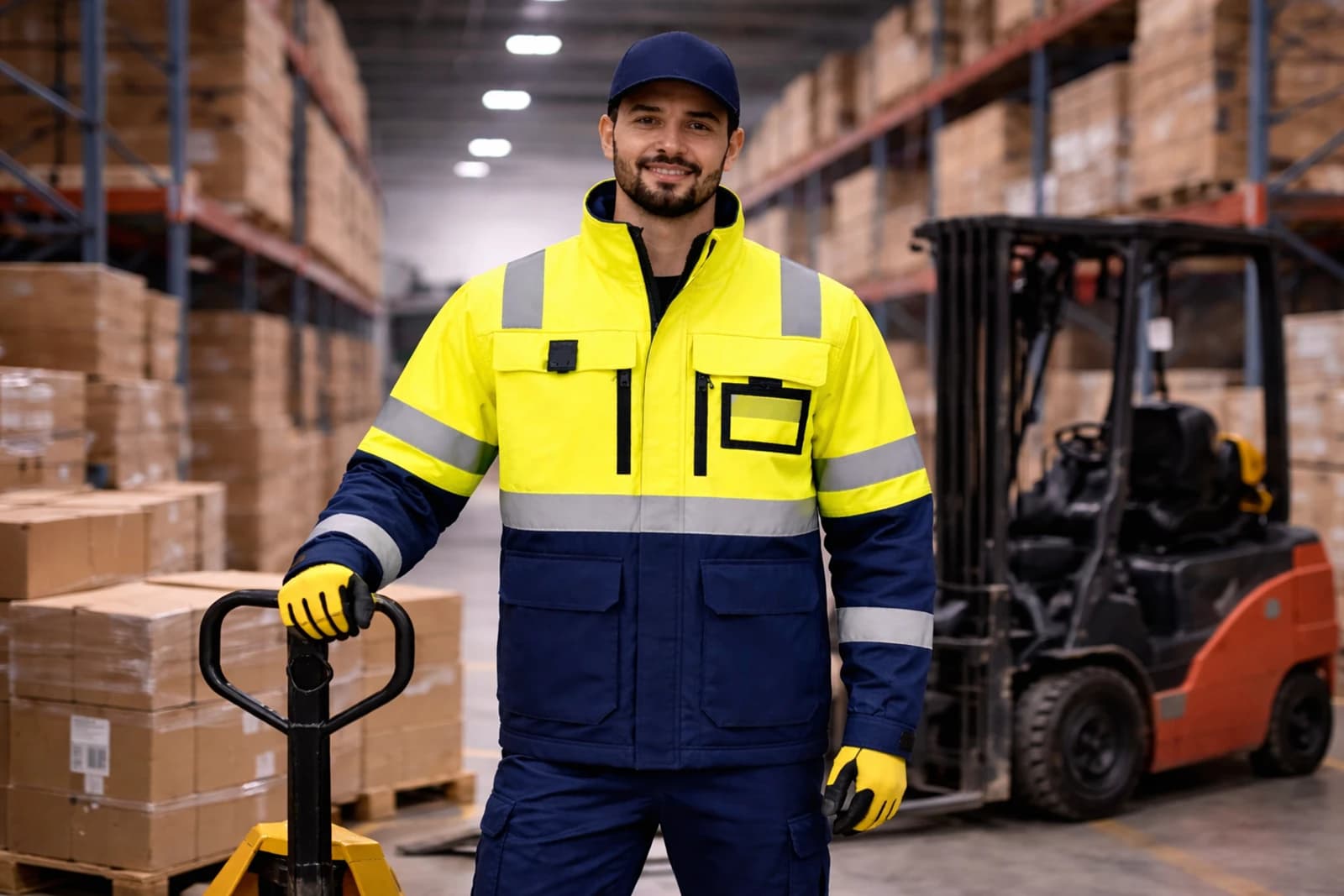
Safety Uniform
Hi-Vis Safety Jacket
Reflective safety jacket for high-visibility site operations and road work crews.

Logistics Uniform
Logistics Polo Uniform
Breathable uniform polo for warehouse, delivery, and last-mile teams.