Hi-Vis Safety Jackets for Middle East Infrastructure Projects — What Buyers Often Get Wrong
Middle East infrastructure buyers sourcing hi-vis safety jackets from China often overlook critical fabric, reflective tape, and certification details that matter for GCC roadworks and construction sites. This guide covers the most common mistakes and how to specify jackets that perform in hot climates and pass site safety inspections.

Buyer context
What procurement teams run into
Procurement managers and safety officers sourcing hi-vis safety jackets for Middle East infrastructure projects — road construction, bridge works, utility maintenance, and airport expansion — frequently encounter problems that only surface after uniforms reach the job site. The most common mistake is selecting European or North American hi-vis jacket specifications that were designed for cold climates and layering systems. A typical EN ISO 20471 Class 3 jacket from a European brand uses thick, multi-layer fabric with heavy reflective striping and a full polyester lining. When worn in 35-45°C Gulf temperatures, workers either remove the jacket — defeating its safety purpose — or suffer heat stress while trying to comply with site safety rules. The second common error is treating all reflective tape as equal. The Middle East sun subjects hi-vis garments to extreme UV exposure that degrades reflective performance over time. Invisible damage to the retroreflective micro-beads or prismatic layers means a jacket that passed initial certification may lose visibility performance after 20-30 washes. Buyers who do not specify UV-resistant reflective tape and request wash-life test data end up with uniforms that look faded and perform poorly on night-shift worksites within months. Heat and dust also accelerate physical wear — standard reflective tape can peel or crack when exposed to repeated 50°C+ surface temperatures and abrasive sand contact. A third recurring problem is fabric weight and breathability mismatches. Many Chinese factories default to 200-240 gsm polyester oxford fabric for hi-vis jackets because it is durable and cost-effective. While this weight works for night shifts and cooler months, it is unnecessarily heavy for daytime infrastructure work in the Gulf during summer. Workers in road construction or utility maintenance end up with dark sweat patches under the jacket, increased fatigue, and a tendency to leave jackets in the vehicle rather than wear them on site. Procurement teams who do not specify fabric weight, breathability ratings, and ventilation features upfront receive generic jackets designed for temperate climates rather than the specific needs of Middle East hot-weather infrastructure projects.
Sourcing approach
How a factory partner can respond
Start by specifying a lighter-weight hi-vis fabric appropriate for hot climates. For Middle East infrastructure projects, look for 120-150 gsm polyester mesh or 130-160 gsm 100% polyester birdseye knit fabric that provides EN ISO 20471 certification compliance while reducing heat retention. Air-mesh constructions with open-weave structures allow continuous airflow while maintaining the background fabric colour required for Class 2 or Class 3 certification. For cooler months or night shifts, a 180-200 gsm fabric weight offers a practical balance of breathability and light wind resistance. Request the manufacturer's fabric test report showing that the background colour (typically fluorescent yellow-green or fluorescent orange-red) meets the minimum chromaticity and luminance factor requirements after simulated sunlight exposure. Reflective tape specification is where most sourcing mistakes happen. For Middle East infrastructure projects, specify segmented reflective tape that allows airflow through the gaps, rather than full-width solid striping. This reduces heat buildup while maintaining Class 2 or Class 3 certified surface area. Demand UV-resistant prismatic or glass-bead retroreflective tape rated for a minimum of 50 industrial wash cycles at 60°C with no more than 15% loss in reflective brightness. Request the manufacturer provide test data per ISO 20471:2013 for both initial reflective values and performance after accelerated UV aging. Silver segmented tape on fluorescent yellow-green or fluorescent orange-red backgrounds provides the best daytime visibility for infrastructure sites where heavy equipment, moving vehicles, and workers share space. Construction details should address Middle East working conditions directly. Ventilation features such as mesh-lined back vents, underarm eyelet gussets, and mesh inner linings instead of solid polyester linings allow heat to escape. For infrastructure projects involving frequent bending and reaching — kerb laying, barrier installation, drainage work — specify hi-vis safety jackets with elasticated or knit waistbands and cuffs that stay in place without trapping heat. Two-way YKK front zippers with reversed coils resist dust ingress and provide ventilation control. For pockets, request welded seam or taped seam construction on chest pockets (with zips or flaps) so that small tools and phones stay secure without collecting fine dust. When evaluating Chinese manufacturers for hi-vis safety jacket orders, request three things in the sampling phase: a full EN ISO 20471:2013 test report covering the complete garment (not just the fabric), a wash-test certificate showing reflective tape performance after 50 washes with Middle East-style industrial laundry temperatures, and a fit trial in actual outdoor summer conditions. Insist on sample jackets that match the final production specifications — fabric weight, tape layout, lining material, and trim colours. The extra 10-14 days spent on sample approval separates manufacturers who understand Gulf infrastructure requirements from those who will ship jackets that fail six months into a two-year project. OEM buyers in Saudi Arabia, UAE, and Qatar should also discuss hi-vis jacket compatibility with existing hard hats, safety harnesses, and tool belts — details that make the difference between jackets worn all shift and jackets hung on a fence.
Recommended Products
Products that fit this use case
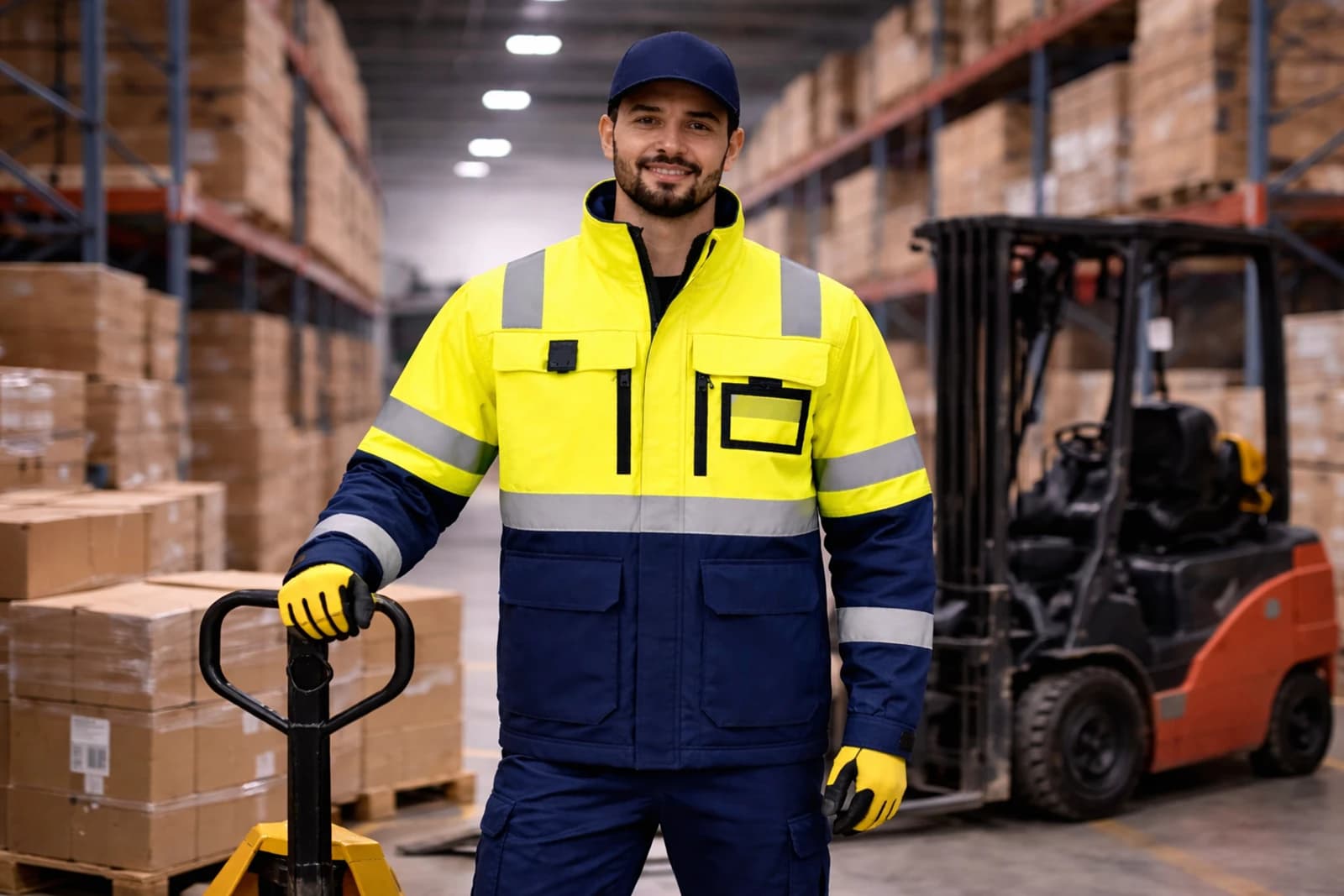
Safety Uniform
Hi-Vis Safety Jacket
Reflective safety jacket for high-visibility site operations and road work crews.
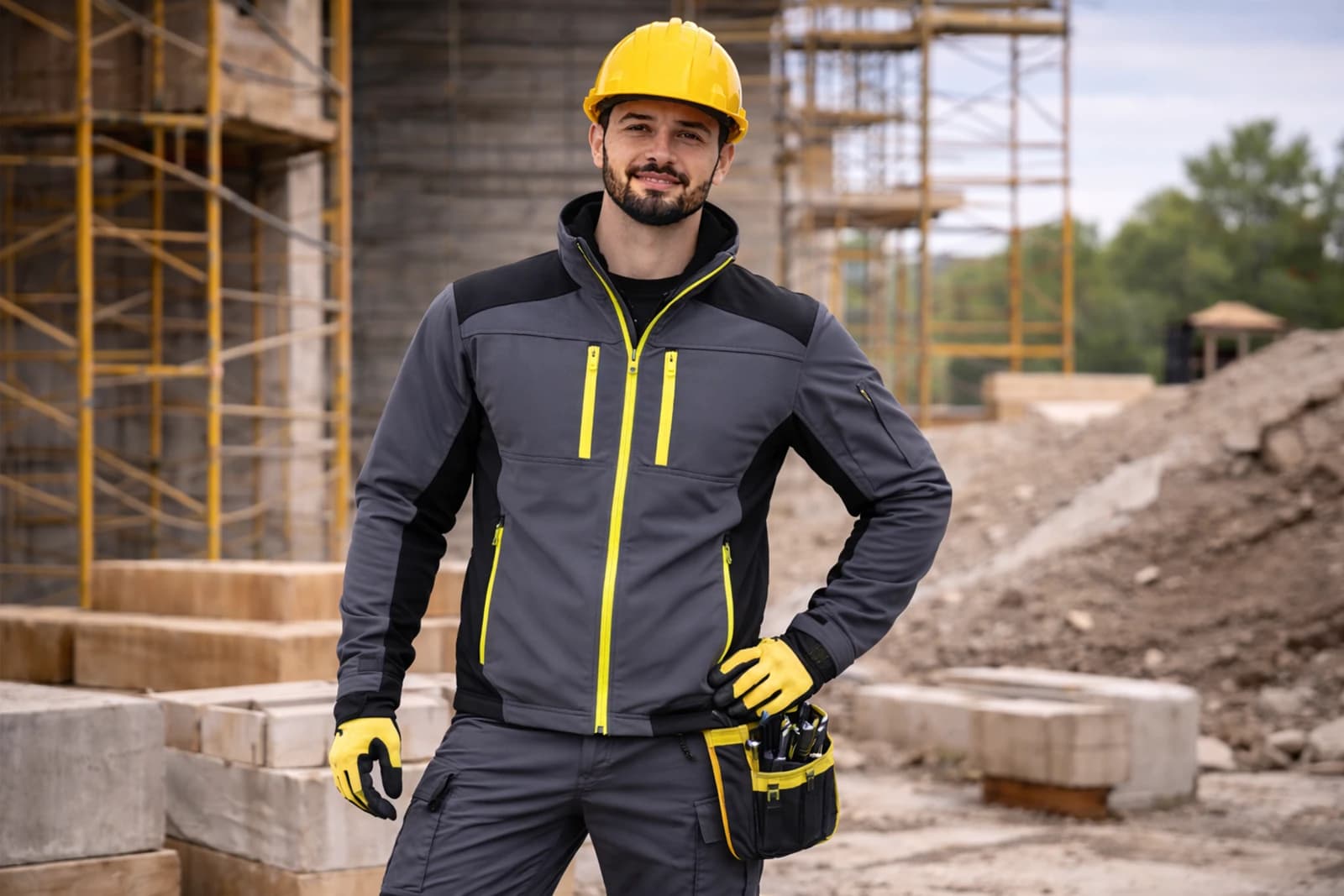
Construction Clothing
Construction Softshell Set
Flexible jacket and trouser set built for crews working across changing weather conditions.