Hi-Vis Safety Jacket & Construction Softshell Set: A Middle East B2B Sourcing Guide for Chinese Workwear in Mega-Project Infrastructure
From Saudi Arabia's NEOM and Red Sea Project to the UAE's Etihad Rail network and Qatar's ongoing Lusail infrastructure buildout, mega-project construction across the Middle East demands multi-layered hi-vis and weather-adaptive workwear. This guide walks B2B procurement managers through sourcing the Hi-Vis Safety Jacket and Construction Softshell Set from a Chinese manufacturer — covering thermal layering strategies, EN ISO 20471 compliance across high-heat and dusty conditions, and cost-efficient bulk procurement for 500–5,000 worker deployments.

Buyer context
What procurement teams run into
A procurement manager at a Saudi Arabian construction contractor responsible for 3,200+ workers across three NEOM sector projects (The Line, Trojena, and Sindalah Island) faces a critical workwear sourcing challenge ahead of the 2026–2027 construction season. The current workwear program — sourcing individual hi-vis vests, non-FR softshell jackets, and separate polo shirts from three different regional suppliers — creates four systemic problems: (1) inconsistent hi-vis compliance across layers — the independently sourced high-visibility vests meet EN ISO 20471 Class 2 while the softshell jackets lack any hi-vis background material or retroreflective tape, creating a compliance gap when workers remove the outer vest during indoor or non-traffic work phases; (2) poor thermal layering performance in Gulf desert conditions — workers wear a cotton T-shirt under a non-breathable softshell jacket under a hi-vis mesh vest, trapping heat and moisture in 35–48°C daytime construction environments, leading to a 22% increase in heat-stress incidents during Q2–Q3 2026; (3) garment incompatibility — the softshell jacket sleeves ride up inside the hi-vis vest, leaving 7–10 cm of exposed forearm skin that contradicts the Saudi Ministry of Municipal and Rural Affairs construction PPE guidelines for full-arm coverage; and (4) fragmented procurement creating administrative overhead — three separate suppliers, two customs clearance processes (Dubai re-export and Saudi direct), incompatible sizing matrices, and inconsistent durability benchmarks (the current softshell loses water repellency after 10–15 industrial washes, while the hi-vis vest fades to sub-compliant luminance after 8–12 washes in the high-sand-abrasion environment).
Sourcing approach
How a factory partner can respond
Chinese workwear manufacturers offer a proven solution: a coordinated two-piece system comprising the Hi-Vis Safety Jacket (EN ISO 20471 Class 3 certified, inherently hi-vis background material with 360° retroreflective taping) and the Construction Softshell Set (a three-layer bonded softshell jacket with integrated hi-vis chest panel, detachable sleeve sections for thermal adaptability, and coordinated tape positioning). B2B buyers can consolidate both products in a single bulk order (500–5,000 sets per SKU) with harmonized sizing, shared fabric sourcing for batch color consistency, and unified compliance documentation — reducing procurement overhead by 30–40% versus multi-supplier sourcing. For Middle East procurement managers sourcing from Chinese manufacturers, here are the technical specifications to demand: **Thermal layering for the Gulf construction cycle** — The ideal system uses a three-layer fabric approach across the two garments. The Hi-Vis Safety Jacket outer shell should use a 300D oxford polyester fabric (280–320 g/m² ±5%) with a PU coating rated to 5,000 mm water column (hydrostatic head) and 5,000 g/m²/24h moisture vapor transmission rate (MVTR). The Construction Softshell Set inner layer should use a 3-layer bonded construction: outer face fabric of 92% polyester / 8% elastane (240–260 g/m²) with a DWR (durable water repellent) C6 finish — note that C6 (fluorocarbon-based) DWR is now globally accepted and preferred over the increasingly regulated C8 formulations; mid-layer of TPU breathable membrane rated to 8,000 mm hydrostatic head and 3,000 g/m²/24h MVTR; and inner fleece backing of micro-brushed polyester (200 g/m²) for insulation without bulk. When worn together, this combination provides: thermal insulation (clo value of 2.1–2.4 at 0.5 m/s wind, sufficient for 10–18°C winter construction conditions in Riyadh, Tabuk, or Al Ula), breathability (composite MVTR of 2,500–3,000 g/m²/24h at 25°C — critical for preventing heat buildup during active work), and rain protection (composite hydrostatic head exceeding 6,500 mm — sufficient for the 8–12 annual rain days in central Saudi Arabia while remaining light enough for the 95% of dry-weather workdays). **Hi-vis compliance across the layering system** — This is the most common compliance failure in multi-supplier procurement. When sourcing as a two-piece system from a single Chinese manufacturer, the buyer must verify: (1) the Hi-Vis Safety Jacket achieves EN ISO 20471 Class 3 independently (minimum 0.80 m² of fluorescent background material in total, with two 50 mm wide retroreflective bands encircling the torso and one over each shoulder); (2) the Construction Softshell Set achieves EN ISO 20471 Class 2 independently (minimum 0.50 m² of fluorescent background, with one 50 mm band around the waist and shoulder stripes) — note that Class 2 on the inner layer is acceptable when the outer jacket provides Class 3; (3) the combined system worn together achieves the highest compliance category (Class 3 overall), with the retroreflective tape aligning between layers to prevent overlaps or gaps that auditors flag; and (4) all fluorescent background materials (lime-yellow to BS EN 471 or orange-red to AS/NZS 1906.04 — specify the Gulf-preferred lime-yellow for desert construction) must have a minimum luminance factor (β) of 0.60 at 30 months storage under Mil-Std-810G Method 505.5 solar radiation testing, because Middle East UV exposure degrades fluorescent pigments 3–4x faster than in European climates. Request a UV-accelerated aging test report (ISO 105-B02, 100-hour exposure) showing maintained β above 0.50 after test cycles. **Dust and sand abrasion resistance** — Gulf construction sites — particularly in the Saudi desert interior (NEOM's Tabuk corridor), the UAE's Al Ain–Dubai highway expansion, and Oman's Duqm SEZAD development — experience ambient respirable dust concentrations of 200–800 μg/m³ (vs. 50–100 μg/m³ in typical European construction zones) and airborne silica levels exceeding 50 μg/m³ in earthworks and foundation phases. The workwear system must feature: abrasion-resistant fabric finishes at critical wear points (elbow and knee reinforcements using 500D CORDURA®-grade fabric patches per ASTM D3884 Taber abrasion test requiring 30,000+ cycles before thread breakthrough), sealed seam construction on the Hi-Vis Jacket (taped or welded seams, not sewn-through, to prevent dust ingress through needle holes), YKK or equivalent metal zippers (not plastic-tooth zippers that wear out after 500–800 cycles in sandy environments), and hook-and-loop fasteners with low-profile hooks and anti-lint backing to prevent sand grain entrapment that degrades closure adhesion. Request dust ingress test results per IP5X (dust-protected) per IEC 60529 for sealed pocket and zipper region performance after 8 hours in a talcum-dust chamber. **Sizing for the multinational Gulf construction workforce** — A typical NEOM or Etihad Rail construction camp includes workers from Saudi Arabia, Egypt, India, Pakistan, Bangladesh, Philippines, Nepal, Sri Lanka, and Sudan — each with distinct body proportion clusters. The Chinese manufacturer should offer a Gulf-specific sizing matrix with the following key differentiators from standard ISO 13688 sizing: extended back length (add 4–6 cm at the center back for Arab-majority body types to prevent garment ride-up during crouching or stair-climbing), broader chest-to-waist ratio (chest 8–12 cm wider than waist vs. the European 6–8 cm, accommodating the broader shoulder girdle common in North African and Levantine male workers), and significantly varied armhole depth (workers who perform overhead rebar tying and formwork operation need 3–5 cm additional armhole depth for unrestricted reach without the jacket body rising). The most effective approach: the manufacturer provides a "first-fit sample set" protocol — 25–50 sets across the 6–8 most common sizes (S–5XL) are shipped for pre-production fit trials on the actual workforce at the construction camp base; after a 14-day fit evaluation period (supervisors document any reach restrictions, ride-up events, or closure discomfort), the manufacturer adjusts pattern blocks for the final production run. This process reduces post-delivery size exchanges from the industry average of 18–22% to under 3% for Gulf construction projects. **Bulk procurement and logistics for mega-projects** — Middle East infrastructure B2B procurement typically involves: direct purchase orders (POs) from EPC contractors (Saudi Aramco, Bechtel, Hyundai E&C, CCC consortiums), government-backed project delivery entities (NEOM Company, Red Sea Global, Msheireb Properties), or regional workwear distributors consolidating for multiple project sites. Key logistics considerations when sourcing from China: (1) sea freight from Shanghai or Ningbo to Jeddah Islamic Port (18–22 days) or to Dubai's Jebel Ali Port (14–18 days) — both viable transit routes for bulk containerized shipment (20–40 HQ containers hold 3,500–8,000 sets depending on packaging density and garment volume); (2) air freight from Guangzhou or Shenzhen to Riyadh King Khalid International Airport (8–12 hours transit) — appropriate for urgent mid-contract reorders when worker counts escalate faster than planned; (3) customs clearance requirements for textile PPE imports into Saudi Arabia — require SASO (Saudi Standards, Metrology and Quality Organization) CoC (Certificate of Conformity) for the HS codes covering workwear (6211.32, 6211.33, and 6210.20 — hi-vis garments), with mandatory lab testing at a SASO-recognized facility in the country of origin (several tier-1 Chinese workwear manufacturers now maintain in-house SASO-accredited testing labs to expedite clearances); and (4) warehousing and JIT distribution — the best Chinese suppliers offer a negotiated 60–90 day warehousing buffer at Jeddah or Dubai bonded warehouses, enabling staged site-by-site releases to match construction phase schedules rather than receiving full bulk inventory at project commencement. **Cost benchmarks and total cost of ownership (TCO)** — For a system combining a Class 3 Hi-Vis Safety Jacket and a Class 2 lined Construction Softshell Set: (a) per-set pricing from Chinese manufacturers typically ranges $28–$42 FOB for a standard 500–2,000 set order with standard color block (lime-yellow/black or orange/navy), 50 mm silver retroreflective tape, and standard Gulf sizing — compare this to $55–$85 per set from European manufacturers and $65–$95 per set from North American suppliers for equivalent specifications; (b) the TCO-saving advantage grows with fast-track desert projects — in high-abrasion, high-UV environments, Chinese-manufactured systems with the fabric specifications described above achieve a 8–12 month functional lifespan (EN ISO 20471 compliance maintained through 35–50 industrial washes per EN ISO 15797), while European and American equivalents at 2–3x the upfront cost deliver 10–14 months in identical conditions — meaning the Chinese option delivers a 40–55% lower cost per compliance-month for mega-project deployments exceeding 1,000 worker sets; and (c) MOQs (minimum order quantities) are a clear advantage — Chinese manufacturers accept 300–500 set MOQs per SKU vs. the European industry standard of 800–1,200 sets per SKU, enabling tiered deployment for phased project mobilization.
Recommended Products
Products that fit this use case
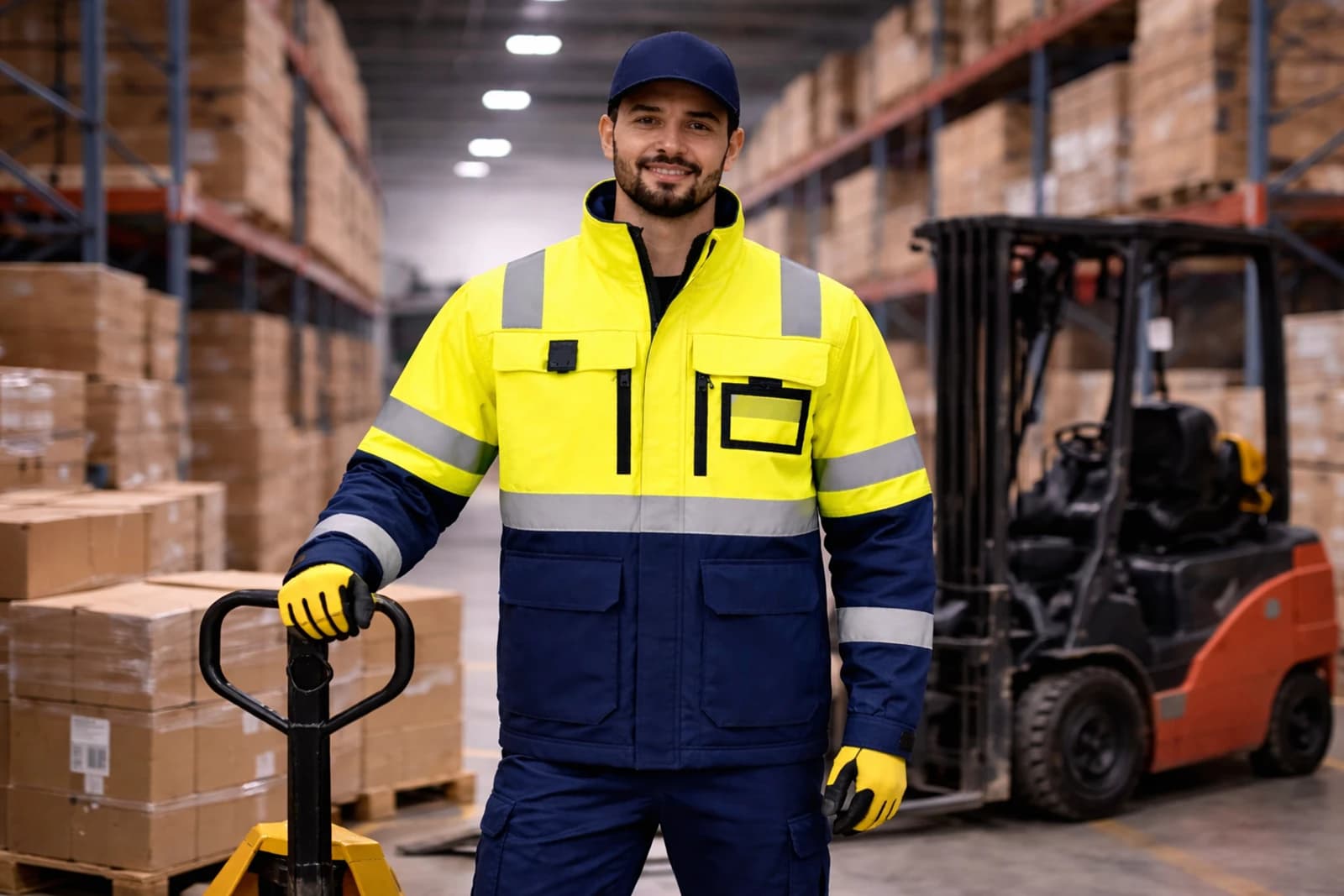
Safety Uniform
Hi-Vis Safety Jacket
Reflective safety jacket for high-visibility site operations and road work crews.
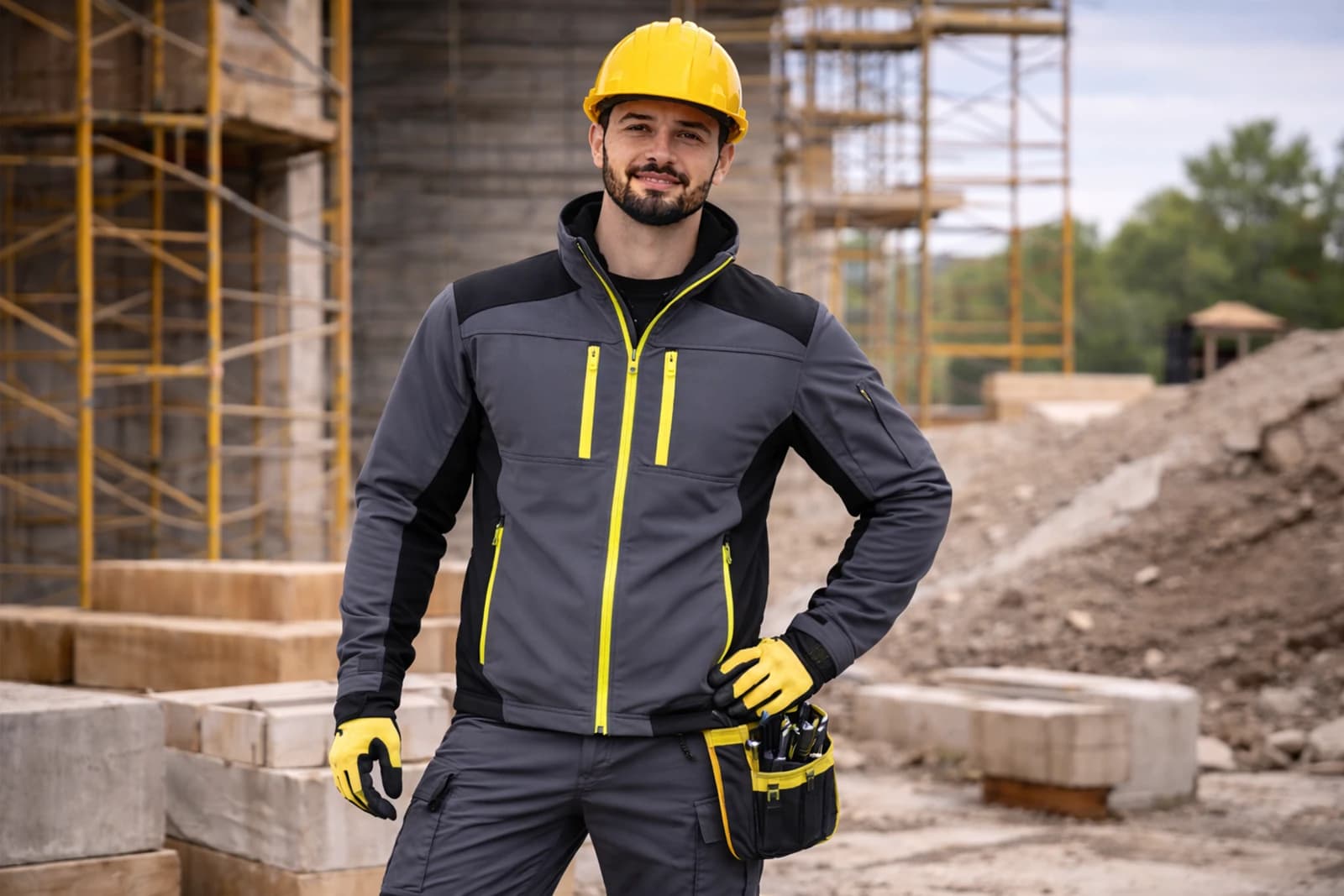
Construction Clothing
Construction Softshell Set
Flexible jacket and trouser set built for crews working across changing weather conditions.