Hi-Vis Safety Jackets & Logistics Polo Uniforms for Middle East: B2B Sourcing Guide from a Chinese Workwear Manufacturer
From Dubai's Jebel Ali port and King Abdulaziz International Airport cargo hubs to Saudi Arabia's new logistics zones and Qatar's 2022-era supply chain legacy, Middle East distribution centers, ports, and airport ground crews run 24/7 in extreme heat, dust, and low-light shift patterns. Hi-vis safety jackets and logistics polo uniforms face demands most temperate-climate suppliers never test: UV 9-11 sun, 45°C+ peak temperatures, salt-laden coastal air, and EN ISO 20471 Class 2/3 compliance. This guide for Middle East B2B buyers sourcing from a Chinese workwear manufacturer covers retroreflective tape placement (EN ISO 20471 vs ANSI/ISEA 107), breathable hi-vis fabrics (mesh vs twill), moisture-wicking polo performance fabrics, forced-cooling design for 50°C warehouse floors, corporate branding with heat-transfer vs embroidery, and bulk order strategies for workforces of 200-10,000+.

Buyer context
What procurement teams run into
The Middle East logistics and distribution sector is expanding faster than almost any region globally. Saudi Arabia's National Transport and Logistics Strategy (NTLS) aims to position the Kingdom as a global logistics hub by 2030, backed by $133 billion in investment targeting 59 new logistics zones. Dubai continues to operate Jebel Ali — the 9th busiest container port worldwide, handling over 13.6 million TEUs annually — while expanding its airport cargo capacity at DWC toward 12 million tonnes. Qatar, Kuwait, and Oman are all upgrading port, free-zone, and distribution infrastructure to support e-commerce, food security stocks, and regional re-export trade.\n\nThis growth means a sustained, large-scale demand for two core uniform categories: hi-vis safety jackets (for dock workers, forklift operators, airport ground crews, and road-side crews) and logistics polo uniforms (for warehouse staff, distribution supervisors, and delivery personnel). For Middle East B2B procurement officers, safety managers, and uniform distributors sourcing from a Chinese workwear manufacturer, the key technical and commercial decisions span six critical areas:\n\n**1. EN ISO 20471 vs ANSI/ISEA 107 — which hi-vis standard to specify**\n\nThe Middle East increasingly defaults to EN ISO 20471 (the European standard) for port, aviation, and government-linked contracts, while private-sector US-linked operators (e.g., US military contractors, some oil majors) may request ANSI/ISEA 107. Key differences every buyer must know:\n\n- **Class structure:** EN ISO 20471 defines Class 1, 2, and 3 based on the area of fluorescent material and retroreflective tape. Class 3 (the highest) requires a minimum 0.80 m² of fluorescent fabric and 0.20 m² of retroreflective material, typically achieved with sleeves plus a full torso garment. Class 2 (0.50 m² fluorescent / 0.13 m² retroreflective) is the standard for many logistics and roadside roles.\n- **Tape width and spacing:** EN ISO 20471 requires retroreflective tape at least 50 mm wide, encircling the torso and each sleeve, with a minimum separation between bands to maintain visibility from all angles — critical for forklift operators and port crane spotters working around moving equipment.\n- **Colour standards:** Fluorescent yellow-green, orange-red, and red hues must meet specific chromaticity and luminance requirements (EN ISO 20471 requires luminance factor ≥ 0.70 for fluorescent yellow-green after testing). In the GCC, fluorescent yellow-green is the dominant fleet choice because it contrasts with the sand-coloured landscape; orange-red is common for road-side crews.\n- **The compliance risk with Chinese suppliers:** Not all 'hi-vis' garments shipped from China actually meet EN ISO 20471. A common issue is tape with insufficient retroreflectivity (measured in cd/(lx·m²) — EN ISO 20471 requires ≥ 330 cd/(lx·m²) initially and ≥ 130 after 5 washes for Class 2/3). Always request third-party test certificates (e.g., from SGS, TÜV, or Intertek) and physical samples verified against the standard before bulk commitment. A single non-compliant batch can stop an entire port operation for re-audit — a costly failure for any GCC operator.\n\n**2. Fabric choices for hi-vis jackets in 50°C heat**\n\nHi-vis jackets in the Middle East face a unique design tension: they must provide retroreflectivity and protection while not inducing heat stress in ambient temperatures above 45°C with direct sun. The workable options:\n\n- **Mesh/air-flow hi-vis vest-jackets:** The most popular GCC choice for port and warehouse roles. Constructed with a fluorescent mesh body (typically 100% polyester, 3-5 mm open structure) that allows 30-50% more air exchange than solid twill. These are worn as a layer over short-sleeved polos. Spec: EN ISO 20471 Class 2 minimum; add EN 343 Class 2 water resistance if worn during winter rain or early-morning condensation shifts.\n- **Solid twill hi-vis jackets:** 200-240 gsm polyester-cotton twill (65/35 T/C or 100% polyester with wicking finish). Suitable for cooler months (November-March), night shifts, and air-conditioned terminals where workers move between -5°C cold storage and 45°C loading bays. For cold-storage logistics (e.g., Saudi Arabia's expanding cold chain for food security), consider adding a detachable fleece or quilted thermal liner rated to -10°C.\n- **UV-stable fabric selection:** GCC UV index peaks at 11-12 in summer. Specify fabrics with UV protection factor (UPF) 40+ and colour-fastness ratings of 4+ (ISO 105-B02, Xenon arc) to prevent fluorescent colours fading from day-glow lime to washed-out green within 3-4 months. Polyester holds fluorescent dye significantly better than cotton and is the standard substrate.\n- **Anti-static option:** For hazardous-area logistics (fuel depots, chemical warehouses, LNG terminals), request EN 1149-5 antistatic treatment on the mesh or twill fabric — the same requirement that applies to coveralls in oil & gas zones.\n\n**3. Retroreflective tape: placement, material, and washing longevity**\n\nTape is where most cost-driven sourcing decisions go wrong. Key specifications:\n\n- **Tape material:** Glass-bead microprismatic tape (the dominant type) vs. plastic metalised microprismatic. For GCC coastal use, specify tape with a protective laminate that resists salt corrosion and UV degradation. Cheaper 'economy' tape can delaminate (peel from the garment) after 15-20 industrial washes.\n- **Tape placement requirements:** EN ISO 20471 demands a continuous horizontal band of retroreflective material around the torso at waist height, a horizontal band at chest height (Class 3), and vertical or horizontal bands on each sleeve fully encircling the arm. Bands must be spaced 50 mm apart minimum and not be covered by pockets, badges, or logos — a common design error that voids compliance.\n- **Wash longevity:** Industrial laundering at 75°C with bleach-based detergents (common in GCC laundries that also handle heavily soiled garments) destroys retroreflectivity faster than domestic washing. Specify tape rated for a minimum of 25 industrial washes (per EN ISO 20471 test method) and ask the supplier for the actual test report, not just the marketing claim.\n- **Reflective trim vs full tape:** Some suppliers offer reflective piping as a decorative alternative — this is NOT compliant retroreflective material and should never be substituted for genuine EN ISO 20471 tape. Verify the tape supplier (3M, Orafol, or equivalent certified brands) in the production sample.\n\n**4. Logistics polo uniforms: performance fabrics for warehouse heat**\n\nLogistics polo uniforms must keep 12-hour shift workers cool, presentable for customer-facing roles (e.g., delivery drivers, reception staff at distribution hubs), and durable through industrial laundering. Key fabric decisions:\n\n- **Moisture-wicking polyester or polyester-cotton blends:** For GCC logistics, 100% polyester performance knits (140-160 gsm with wicking finish) are the most common choice — they dry 2-3x faster than cotton, resist fading, and hold corporate colours well. Humidity-wicking pique knit (with textured surface for airflow) is the premium option for driver and field roles.\n- **Cotton-polyester pique (65/35 or 60/40):** The classic corporate polo fabric at 180-220 gsm. Easier to embroider and print, slightly cooler to the touch, but absorbs sweat and takes longer to dry. Best for air-conditioned office-adjacent roles (supervisors, admin staff at distribution centres).\n- **Anti-odour and anti-bacterial finishes:** In 45°C heat, sweat and microbial growth are inevitable. Specify silver-ion or zinc-based anti-bacterial finishes (e.g., Sanitized® or equivalent) that survive 50+ industrial washes. This is a differentiator for high-end logistics employers competing on staff welfare in the GCC.\n- **Sun and UV protection:** Polo uniform sleeves are the first line of sun defence for drivers and yard staff. Specify UPF 40+ rated fabric (with an approved standard) and consider moving from short sleeves to a both-sleeve option for outdoor-heavy roles, or add a detachable collar flap (safari style) for neck protection.\n\n**5. Branding: embroidery vs heat-transfer for logistics uniforms**\n\nB2B logistics buyers in the Middle East (from Aramex, Agility, and local couriers to port operators and government logistics arms) place heavy emphasis on corporate branding. The choice between embroidery and heat-transfer/print affects durability, comfort, and cost:\n\n- **Embroidery:** Best for polo uniforms — durable, premium look, survives industrial laundering well. Limit embroidery area to 8-12 cm wide on chest to avoid stiffness and skin irritation in heat. For hi-vis jackets, embroidery must NOT be placed on retroreflective tape or reduce the compliant fluorescent/retroreflective area.\n- **Heat-transfer / silicone prints:** Cheaper for large orders, good for gradients and fine detail on polos. However, heat-transfer on hi-vis fabric can compromise breathability in the printed area and may peel after 20-30 washes. Specify vinyl with high wash-fastness (test at 60°C, 25 washes) before bulk order.\n- **Reflective logo printing:** Some logistics brands request reflective company logos on the back of hi-vis jackets (below the compliant tape band). This is acceptable if it does not cover the required retroreflective area, but it adds cost — ensure the supplier uses certified reflective material, not decorative glitter print.\n- **Combination protocol for GCC fleets:** A common standard is embroidery on the left chest (company logo) + heat-transfer ID numbers on the back for hi-vis jackets, with a separate woven label for wash-care instructions. Establish a branding spec sheet with exact Pantone colours and logo file formats (vector AI/EPS preferred) before sampling, as colour matching is a frequent source of rework in cross-border sourcing.\n\n**6. Bulk procurement, sizing, and logistics for GCC orders**\n\nBuyers sourcing from a Chinese workwear manufacturer for Middle East fleets should plan around five factors:\n\n- **Sizing:** GCC workforces are size-diverse (expat-heavy across Indian, Pakistani, Filipino, Egyptian, and Levantine labour pools). Specify a size range of S-5XL with consistent cut across all sizes. Ask for a full graded size set in samples, not just one sample size. Tall, slim cuts are common in the region; avoid US 'boxy' cuts without checking against a local population fitting survey.\n- **Lead times:** Standard hi-vis and polo production from China runs 30-45 days for order quantities of 5,000-50,000 pieces, plus 15-20 days sea freight to Jebel Ali or Dammam, 10-14 days to Jeddah, and 5-8 days to Hamad (Qatar). Custom branding adds 5-10 days. Plan reorders 2-3 months in advance of peak seasons (Qatar and UAE summer building peaks, pre-Ramadan logistics surges, and the November-March 'cool season' when outdoor crews peak).\n- **Minimum order quantities (MOQ):** Most Chinese workwear factories set MOQs of 500-1,000 pieces per colour/size combination for hi-vis jackets and 300-500 per style for polos. For mixed-fleet buyers, negotiate pooled MOQs across styles to spread setup costs.\n- **Quality assurance:** Request AQL (Acceptable Quality Level) inspection at 1.5 or 2.5 (per ISO 2859-1) with pre-shipment inspection by a third party (SGS, Bureau Veritas, Intertek). Verify EN ISO 20471 test certificates and fabric test reports (colour fastness, shrinkage ≤ 3%, tear strength) before shipment.\n- **Certification documents:** For GCC customs clearance, ensure the supplier provides a Certificate of Conformity for EN ISO 20471, plus standard commercial documentation. Some government tenders in Saudi and the UAE require SASO/GSO conformity marks — confirm with your local agent whether the Chinese supplier must register products as well.\n\n**Bottom line for Middle East B2B buyers:** Hi-vis safety jackets and logistics polo uniforms for GCC fleets are not off-the-shelf commodities. The winning sourcing strategy pairs a reputable Chinese workwear manufacturer (with verifiable EN ISO 20471 certification, industrial-wash-retentive tape, and performance fabrics) with a strict specification sheet covering fluorescent colour fastness, retroreflective tape placement, UPF 40+ fabric, anti-odour finishes, and an AQL 1.5 inspection regime. Buying on price alone — without test certificates and physical production samples — is the fastest route to a failed port audit or a warehouse crew sweating through a 50°C shift in non-compliant gear.
Sourcing approach
How a factory partner can respond
For Middle East B2B buyers sourcing from a Chinese workwear manufacturer, here is the practical specification and sourcing blueprint for hi-vis safety jackets and logistics polo uniforms that pass GCC audits and survive 50°C shifts:\n\n**1. Hi-vis safety jacket specification for GCC logistics:**\n- Standard: EN ISO 20471 Class 2 minimum (Class 3 for port, roadside and airport apron crews).\n- Fabric: fluorescent polyester mesh (3-5 mm open structure) for hot-weather roles; 200-240 gsm T/C twill with wicking finish for cold-storage and cooler months. UPF 40+ and colour fastness 4+ (ISO 105-B02, Xenon arc).\n- Tape: certified microprismatic retroreflective tape (3M/Orafol-grade or equivalent), min. 50 mm wide, continuous torso and sleeve bands with ≥ 50 mm spacing, rated for 25+ industrial washes, salt-spray resistant for coastal zones.\n- Optional extras: EN 1149-5 antistatic for hazardous zones, detachable thermal liner for cold storage, EN 343 water resistance for rainy-season shifts.\n- Compliance: insist on third-party EN ISO 20471 test certificates (SGS/TÜV/Intertek) plus physical production samples before bulk order.\n\n**2. Logistics polo uniform specification:**\n- Fabric: 100% polyester performance pique 140-160 gsm with moisture-wicking finish, or 65/35 cotton-polyester pique 180-220 gsm for office-adjacent roles. UPF 40+ for outdoor staff. Silver-ion anti-bacterial finish for odour control.\n- Fit: S-5XL graded range, tall-slim regional cut, consistent sizing across all sizes.\n- Branding: left-chest embroidery (8-12 cm) + heat-transfer back ID; never cover retroreflective tape on jackets. Clarify Pantone colours and provide vector logos before sampling.\n- Wash performance: shrinkage ≤ 3%, colour fastness 4+, certified for 50+ industrial washes at 75°C.\n\n**3. Procurement plan for GCC fleets:**\n- Lead time: 30-45 days production + 15-20 days sea freight to Jebel Ali/Dammam; order 2-3 months ahead of peak seasons.\n- MOQ: negotiate pooled MOQs across hi-vis and polo styles (typically 500-1,000 per colour/size for jackets, 300-500 for polos).\n- QA: AQL 1.5 or 2.5 (ISO 2859-1) with third-party pre-shipment inspection.\n- Documentation: EN ISO 20471 Certificate of Conformity + fabric test reports; check SASO/GSO conformity for Saudi and UAE government tenders.\n- Workforces: scale from 200-person warehouses to 10,000+ port/airport mega-fleets with phased deliveries.\n\nBy standardising on these specs and enforcing third-party testing, Middle East buyers get uniform programmes that pass audits, keep crews cool and visible, maintain brand presentation across 50°C shifts, and minimise reorder risk — delivered reliably from a Chinese workwear manufacturer.
Recommended Products
Products that fit this use case
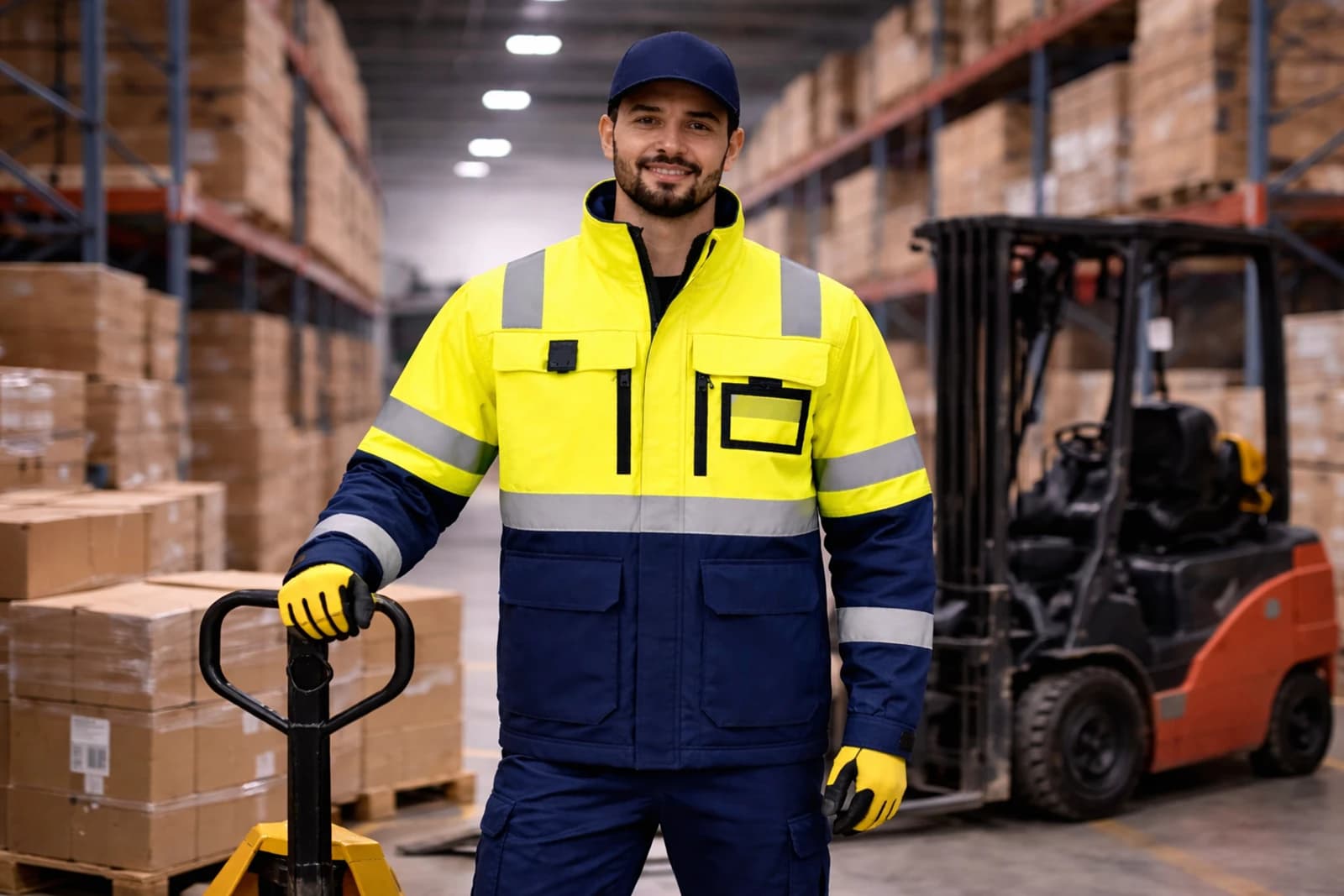
Safety Uniform
Hi-Vis Safety Jacket
Reflective safety jacket for high-visibility site operations and road work crews.

Logistics Uniform
Logistics Polo Uniform
Breathable uniform polo for warehouse, delivery, and last-mile teams.