Hi-Vis Safety Jackets for Middle East Road & Infrastructure Projects: A B2B Sourcing Guide
From Saudi Arabia's NEOM giga-projects to Qatar's expressway expansions and UAE's road network upgrades, hi-vis safety jackets are mandatory PPE for thousands of road and infrastructure workers across the Gulf. This guide helps B2B buyers in the Middle East source high-quality hi-vis jackets from a Chinese manufacturer, covering EN ISO 20471 / ANSI 107 compliance for various risk levels, breathable fabric choices for 50°C heat, reflective tape durability in sandy conditions, and bulk procurement strategies for large-scale infrastructure tenders.

Buyer context
What procurement teams run into
The Middle East is in the midst of an unprecedented infrastructure boom. Saudi Arabia's NEOM — a $500 billion megacity spanning 26,500 km² — requires tens of thousands of construction and road workers who must wear hi-vis safety jackets compliant with SASO or Saudi Aramco standards. Qatar's expressway network expansion (the 42 km Al Majd Road, the 35 km Orbital Highway) continues post-World Cup. The UAE's AED 50 billion road and transport investment program, Oman's National Infrastructure Development Plan, and Kuwait's $30 billion development plan (including the Subiya Causeway and Mubarak Al Kabeer Port) collectively demand millions of hi-vis garments annually. For B2B buyers sourcing hi-vis safety jackets from a Chinese workwear manufacturer, several recurring challenges must be addressed: **EN ISO 20471 Class 2 vs. Class 3 — choosing the right risk level:** The European hi-vis standard EN ISO 20471 (widely referenced across the GCC) defines three classes based on minimum areas of fluorescent background material and retroreflective tape. Class 3 requires at least 0.80 m² of background material and 0.20 m² of reflective tape — covering the torso, arms, and typically including sleeves. Class 2 requires 0.50 m² background and 0.13 m² tape. In practice, many Middle East road projects specify Class 3 for workers active on live highways (where traffic speeds exceed 60 km/h), while Class 2 suffices for site compound work, flagging, and low-speed zones. B2B buyers should confirm which class their end-client specifications require — buying Class 3 when Class 2 is sufficient adds 20–30% cost per jacket unnecessarily. Conversely, under-specifying Class 2 on a high-speed road zone can result in PPE non-compliance and project shutdowns. **Heat management — hi-vis in 50°C Gulf summers:** Standard polyester hi-vis fabric (typically 120–180 gsm for lightweight summer jackets) in a Saudi summer is barely tolerable. Workers at the Riyadh Metro project or NEOM's The Line trench regularly face ambient temperatures of 48–52°C with direct solar radiation exceeding 1,000 W/m². A dark-coloured hi-vis jacket (even with fluorescent yellow or orange background) can raise microclimate temperature inside the jacket by 8–12°C above ambient. Solutions that Chinese manufacturers can offer include: mesh/ventilated panel hi-vis vests (EN ISO 20471 Class 2 vests with mesh backs, 100–120 gsm) instead of fully-bodied jackets for non-rain conditions; hi-vis shirts with reflective tape (EN ISO 20471 Class 2 certified polo shirts) that replace jackets entirely in hot weather; and moisture-wicking fabric finishes (hydrophilic coatings that pull sweat to the outer surface) to reduce heat stress. For jacket-style hi-vis, under-arm mesh gussets and mesh back panels (with fluorescent properties maintained) significantly improve airflow while retaining the required visible surface area. **Reflective tape durability under UV and sand abrasion:** The Middle East's combination of intense UV radiation (UV Index 11+ for 6 months of the year) and airborne silica sand is uniquely destructive to retroreflective tape. Standard microprismatic glass-bead tape can lose 30–50% of its reflective brightness (candela per lux per m², or cd/lx/m²) after 3 months of field use in Saudi Arabia's Eastern Province or UAE's desert road projects. The best-performing reflective tapes for GCC use are: encapsulated lens microprismatic tape (which seals the prismatic layer between a protective film and adhesive, reducing UV degradation); segmented reflective tape (with heat-sealed slits that allow the jacket fabric to breathe and flex, preventing cracking); and tapes with UV-stabilized top films (certified to maintain ≥80% of initial reflectivity after 500 hours of Xenon-arc UV exposure per ISO 105-B02). Buyers should request accelerated UV aging test data from their Chinese manufacturer — not just fresh-tape reflectivity figures. **Fabric colour fastness in direct desert sunlight:** Fluorescent yellow and orange hi-vis fabrics are notoriously prone to fading under intense UV. A standard fluorescent polyester fabric may drop from its initial brightness (close to the minimum luminance factor requirement of ≥0.70 for fluorescent yellow per EN ISO 20471) below compliance threshold within 3–6 months of Gulf outdoor exposure. Chinese manufacturers using vat-dyed fluorescent fabrics (rather than pigment-dyed) achieve significantly better UV fastness, maintaining luminance factors above the EN minimum for 12+ months. Requesting ISO 105-B02 (Xenon arc) test results at 200, 400, and 600 hours of exposure gives buyers confidence that the hi-vis jackets will remain compliant throughout their intended service life — typically 6–12 months for high-use road work garments. **Washing resistance — maintaining hi-vis properties through 25+ industrial launderings:** Hospital-style or home-laundered hi-vis is not the norm in Middle East infrastructure projects. Bulk industrial laundering at 75°C with aggressive detergents (high-alkaline, with optical brighteners that can damage fluorescent dyes) quickly degrades both the background fabric brightness and the reflective tape adhesion. EN ISO 20471 requires that hi-vis garments be tested after 25 cycles of industrial laundering at 75°C per ISO 15797 or equivalent. B2B buyers should request test reports showing that fluorescent luminance and retroreflective tape values remain above compliance thresholds after 25 washes. Additionally, some Chinese manufacturers now offer cold-wash-optimized hi-vis (washable at 40°C with reduced chemical dosages), which can double garment service life in facilities that can accommodate cooler washing protocols. **Sizing for multinational workforces — the Indian driver vs. the European engineer issue:** Road and infrastructure projects across the GCC employ remarkably diverse workforces. On a single Abu Dhabi expressway extension, you may find Indian drivers, Pakistani steel fixers, Bangladeshi concrete workers, Egyptian surveyors, British project managers, and Sudanese labourers — all requiring hi-vis jackets. Standard single-size-range hi-vis from Asian manufacturers typically fits South Asian body types well (shorter torso, narrower shoulders, shorter sleeves) but fits larger-built Europeans or Arab workers poorly — leading to jackets that gap at the waist, ride up when arms are raised, or have sleeves 5–8 cm too short. The safest approach: Chinese manufacturers offering two size matrices (an Asian cut for sizes S–3XL and a Western cut for M–5XL with longer torso and sleeve lengths), with detailed measurement tables for each. Buyers can then map their workforce demographic data to the right size matrix, reducing fit-related exchanges, discomfort, and safety gaps. **Velcro vs. snap closure in sandy environments:** Standard hook-and-loop (Velcro) closures on hi-vis jacket fronts and pocket flaps are a common point of failure in desert environments. Sand particles lodge between the hooks and loops, reducing grip strength by 60–80% within days and requiring manual cleaning with a brush or compressed air. Jackets with full-zip fronts and snap-button closure pockets (metal or high-impact polymer snaps) perform significantly better in sandy conditions. If Velcro must be used (e.g., for adjustable cuff closures), specify high-density hook-and-loop tape (the tighter-loop variant, typically rated for 10,000+ open/close cycles) and request that all Velcro areas be designed for easy brush-cleaning access. **Tender compliance — documentation buyers need from their manufacturer:** Major Middle East infrastructure contractors (Saudi Binladin Group, Bechtel, Larsen & Toubro, China State Construction) require comprehensive compliance documentation at tender stage. For hi-vis jackets, the essential documents include: EN ISO 20471 Type-Examination Certificate (issued by a Notified Body, e.g., BTTG, SGS, or TÜV); Third-party test reports for background fabric luminance factor (ISO 20471 Section 5.2), retroreflective tape coefficient of retroreflection (ISO 20471 Section 5.3), colour fastness to light (ISO 105-B02), and dimensional change after washing (ISO 5077); Country-specific SASO/E SASO certification for Saudi tenders (SASO 2896 or equivalent); and Manufacturer's Declaration of Conformity. Chinese manufacturers who proactively maintain these certifications and provide them upfront — rather than scrambling for them when a tender is announced — save buyers weeks of procurement delays. **Procurement lead times for large tenders (1,000–10,000 jackets):** Typical lead times from a Chinese manufacturer for a 5,000-piece hi-vis jacket order: 1–2 weeks for sample approval (fabric and tape strike-offs, size-set samples), 1 week for pre-production third-party testing (if required by contract), 5–7 weeks for bulk production, and 2–4 weeks for sea freight (Shanghai/Yantian to Jebel Ali, Dammam, or Hamad ports). Total lead time: 9–14 weeks for sea freight, or 5–7 weeks for air freight at 4–6× the shipping cost. Buyers should factor in a 2-week buffer for customs clearance delays at Saudi ports (ZATCA inspections for textile imports are increasingly thorough) and GCC country-specific import documentation (SABER/SASO for Saudi Arabia, ESMA/ECAS for UAE, ministry of commerce registration for Qatar and Kuwait).
Sourcing approach
How a factory partner can respond
Hi-vis safety jackets sourced from a qualified Chinese manufacturer can meet the most demanding Middle East road and infrastructure project requirements when the right specifications are chosen. The key is selecting the correct EN ISO 20471 classification (Class 3 for high-speed highway work, Class 2 for site compound and low-speed operations), breathable fabric with UV-stabilized vat dyes, and encapsulated lens retroreflective tape that withstands 500+ hours of UV exposure without significant brightness loss. Chinese manufacturers experienced in PPE export to the GCC can offer dual-size matrices (Asian and Western fits) to accommodate multinational workforces, sand-resistant snap-closure pocket designs, and full EN ISO 20471 Type-Examination certification supported by third-party test reports critical for tender submissions.
Recommended Products
Products that fit this use case
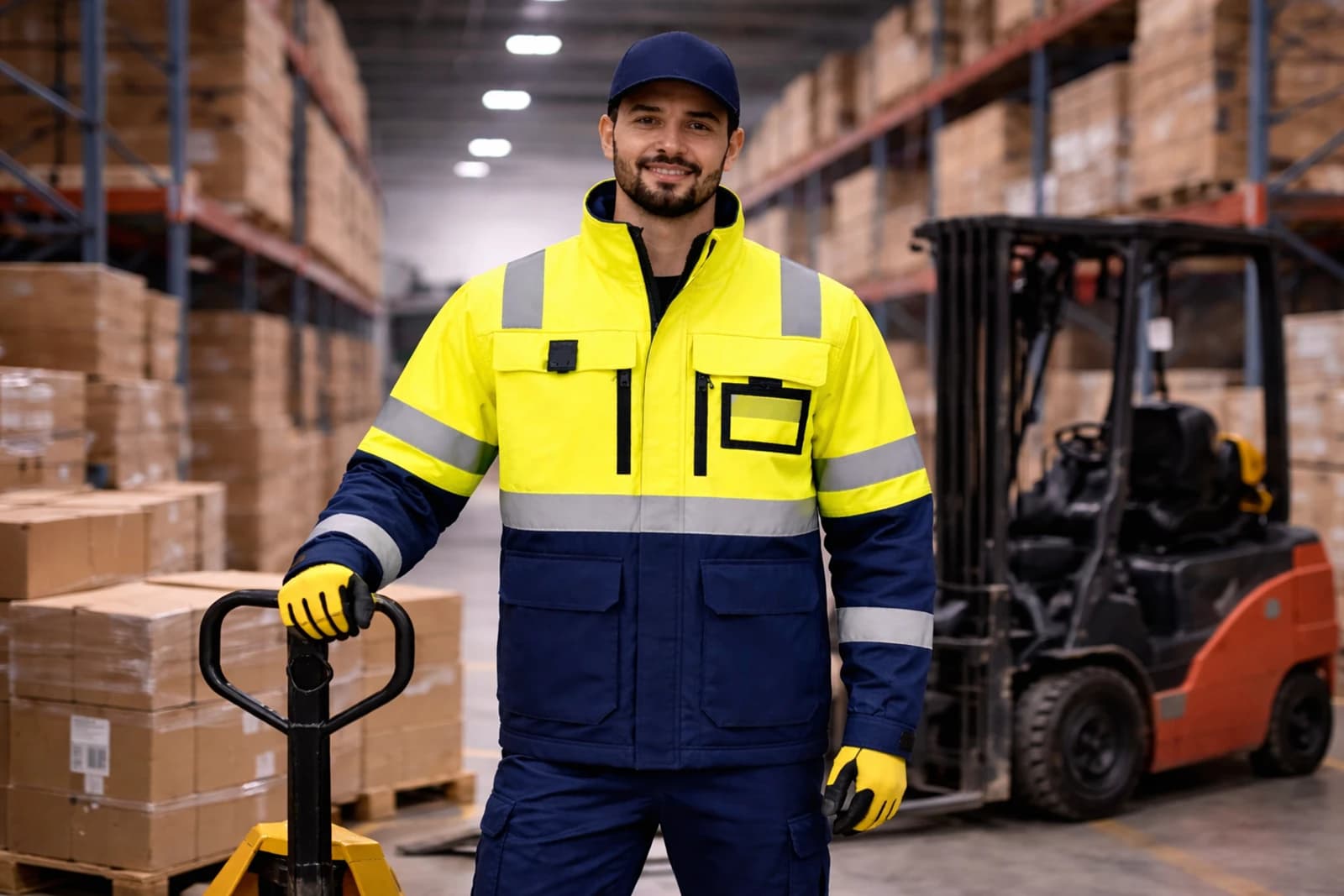
Safety Uniform
Hi-Vis Safety Jacket
Reflective safety jacket for high-visibility site operations and road work crews.
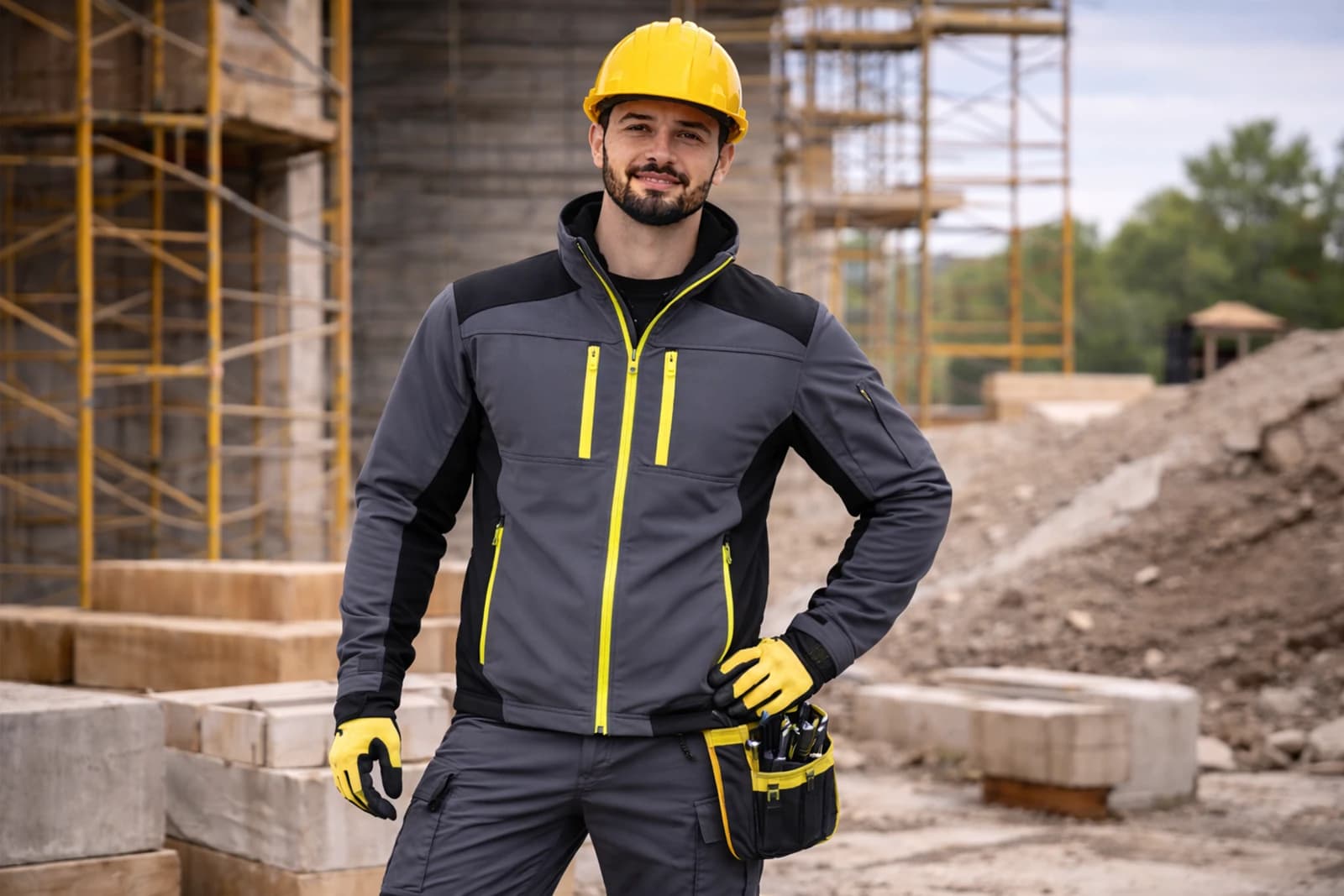
Construction Clothing
Construction Softshell Set
Flexible jacket and trouser set built for crews working across changing weather conditions.