Hi-Vis Safety Jackets for Middle East Infrastructure Projects: A B2B Sourcing Guide for Road, Bridge, and Utility Contractors
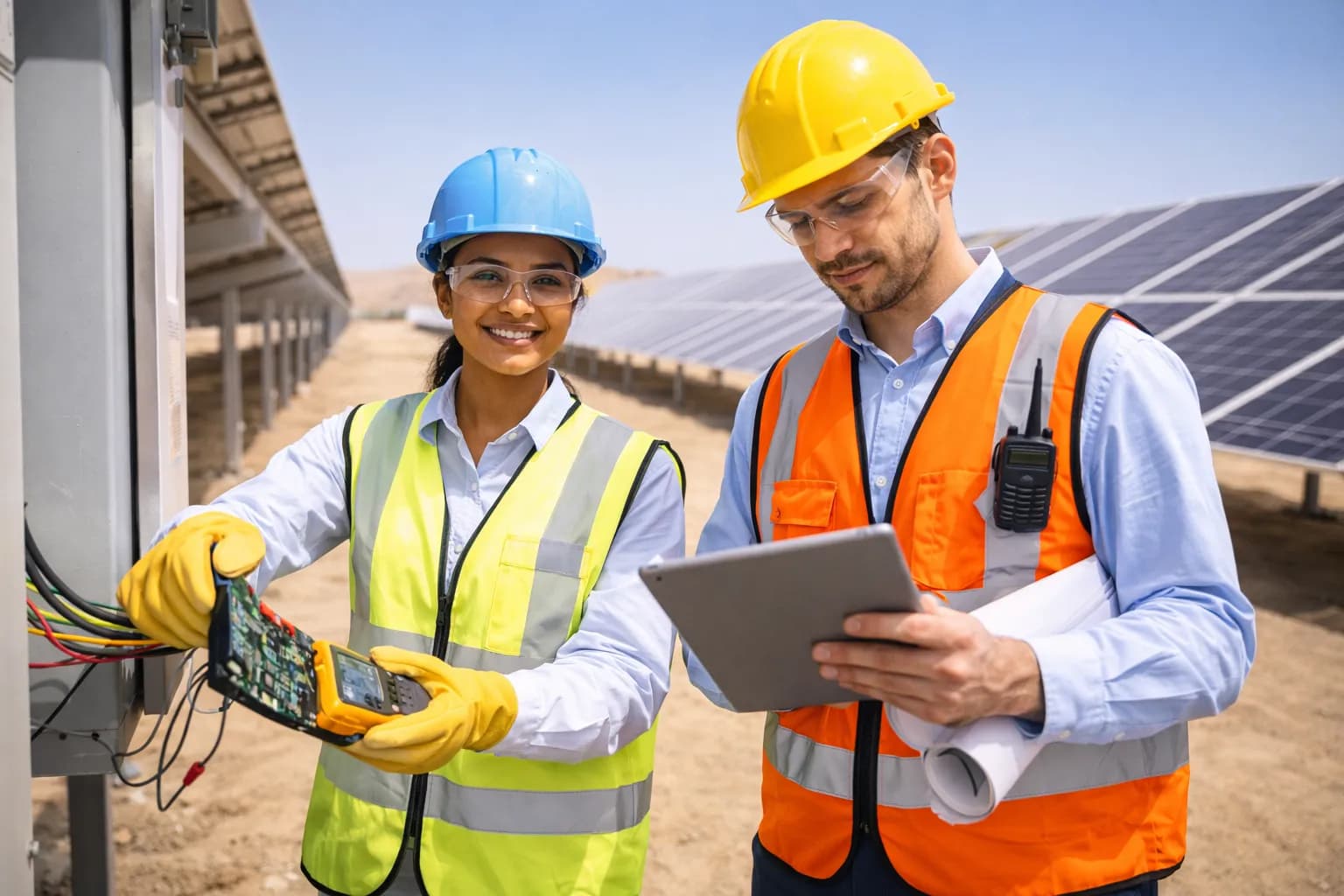
Middle East infrastructure contractors — from highway projects in Saudi Arabia and Qatar to airport expansions in Dubai and Oman — need hi-vis safety jackets that deliver full compliance without causing heat stress in extreme temperatures. This guide covers fabric technology, certification requirements, customization options, and what B2B buyers should know when sourcing hi-vis jackets from a Chinese manufacturer.
Buyer context
What procurement teams run into
<p>Infrastructure projects across the Middle East are accelerating at an unprecedented pace. Saudi Arabia's NEOM and Red Sea giga-projects, Qatar's ongoing road and rail expansions, UAE's airport and port upgrades, and Oman's new industrial zones all require large workforces operating in active traffic zones, near heavy equipment, and in areas with moving vehicles.</p><p>For B2B procurement managers sourcing workwear for these projects, the primary challenge with hi-vis safety jackets is balancing compliance with comfort. Standard hi-vis jackets designed for European or North American climates use heavy polyester fabrics (180–240 gsm) with full linings and multiple layers. When worn in a 45°C midday temperature on a Saudi highway project, these jackets trap heat against the body, causing workers to remove them during active hours — defeating their entire safety purpose.</p><p>Another common issue is fabric degradation. Many budget hi-vis jackets lose their fluorescent brightness after just a few industrial washes, dropping below the minimum luminance required for EN ISO 20471 compliance. In the Gulf's intense UV environment, this degradation happens even faster — some jackets fade to non-compliant levels within 3–4 months of daily outdoor use.</p><p>Contractors also face a fit and sizing challenge. Workforces in the Middle East are often multinational, with workers from South Asia, the Levant, Africa, and East Asia. Standard European sizing charts don't always translate well, leading to jackets that are too long in the body, too narrow in the shoulders, or too tight across the chest for workers who need full range of motion for lifting, bending, and operating machinery.</p>
Sourcing approach
How a factory partner can respond
<p>The most effective hi-vis safety jacket for Middle East infrastructure projects uses a lightweight air-mesh fabric construction rather than a traditional lined jacket. A 3-layer bonded mesh system — fluorescent outer mesh, breathable middle layer, and lightweight inner lining — provides EN ISO 20471 Class 2 or Class 3 compliance at a fraction of the weight (typically 120–160 gsm vs 180–240 gsm for standard fabric jackets). This construction allows maximum airflow through the garment while maintaining the required area of fluorescent and retroreflective material.</p><p>Key specifications to request when sourcing hi-vis jackets for Gulf infrastructure work:</p><ul><li><strong>Lightweight air-mesh or micro-mesh fabric:</strong> 100% polyester air-mesh with breathability rating above 5000 g/m²/24h. This keeps workers significantly cooler than standard fabric jackets, especially during the hottest hours of the day.</li><li><strong>EN ISO 20471 Class 2 or Class 3 certification:</strong> For road and highway work, Class 3 is typically required (minimum 0.80 m² of fluorescent material, 0.20 m² of retroreflective tape). For airport apron or warehouse environments, Class 2 (0.50 m² fluorescent, 0.13 m² retroreflective) may be acceptable — confirm with the project's HSE requirements before ordering.</li><li><strong>UV-stabilised fluorescent fabric:</strong> Request fabric that has been tested for lightfastness to ISO 105-B02 or equivalent. This ensures the garment maintains its fluorescent luminance through extended UV exposure. Some manufacturers offer a UV resistance guarantee of 500+ hours of sunlight exposure without significant degradation.</li><li><strong>Reflective tape with heat-sealed edges:</strong> Sewn-on reflective tape is standard, but for Middle East environments where frequent washing in hot water is required, heat-sealed edges prevent fraying and tape separation. Request segmented tape patterns (rather than continuous) in hot areas — segmented tape allows more airflow through the jacket body.</li><li><strong>Extended sizing options:</strong> Work with your manufacturer to develop a sizing matrix that matches your workforce demographics. Chinese manufacturers experienced with Middle East export typically offer extended size ranges (2XS–5XL) and can adjust proportions — shorter body length, broader chest, or longer sleeves — based on your specific crew profile.</li></ul><p>Customization on hi-vis jackets is straightforward and highly visible — which is the point. Company logos should be placed on the left chest and/or centre back, using silicone heat-transfer or reflective custom printing that does not reduce the compliant area. For large projects, consider adding a worker ID or department strip (e.g., "SURVEY" or "FLAGGER") using a removable velcro patch system — this allows crew reassignment without reordering jackets.</p><p>When sourcing from a Chinese manufacturer, request pre-production samples in the actual Gulf climate conditions. A good manufacturer will send 3–5 size-run samples with fabric swatches and certification copies before committing to full production. Typical MOQ for custom hi-vis jackets starts at 500–1,000 pieces per colour per design, with 35–50 day lead time. For large infrastructure projects with consistent year-round orders, many Chinese manufacturers offer tiered pricing — lower per-unit costs for annual blanket orders with quarterly releases.</p>
Recommended Products
Products that fit this use case
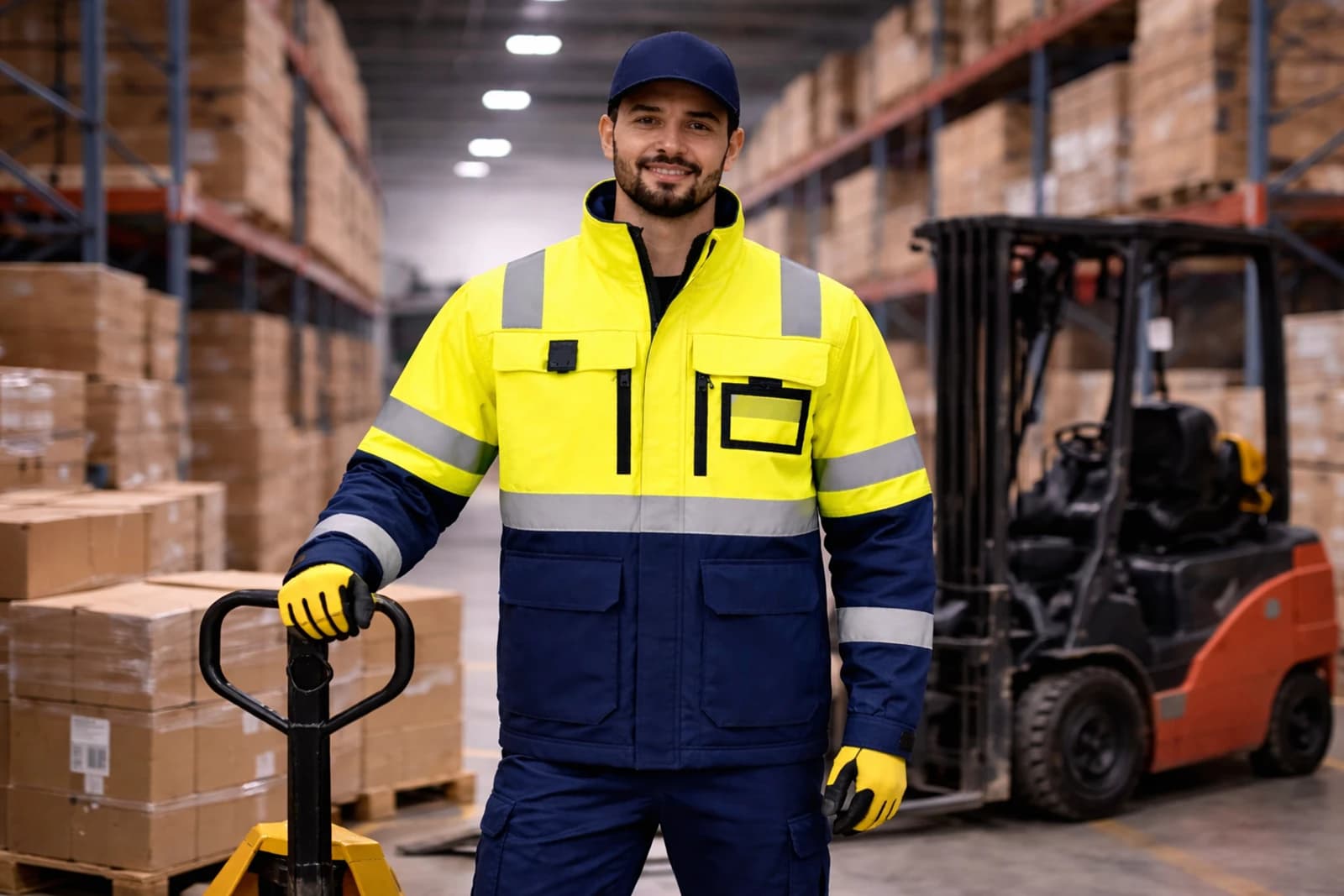
Safety Uniform
Hi-Vis Safety Jacket
Reflective safety jacket for high-visibility site operations and road work crews.
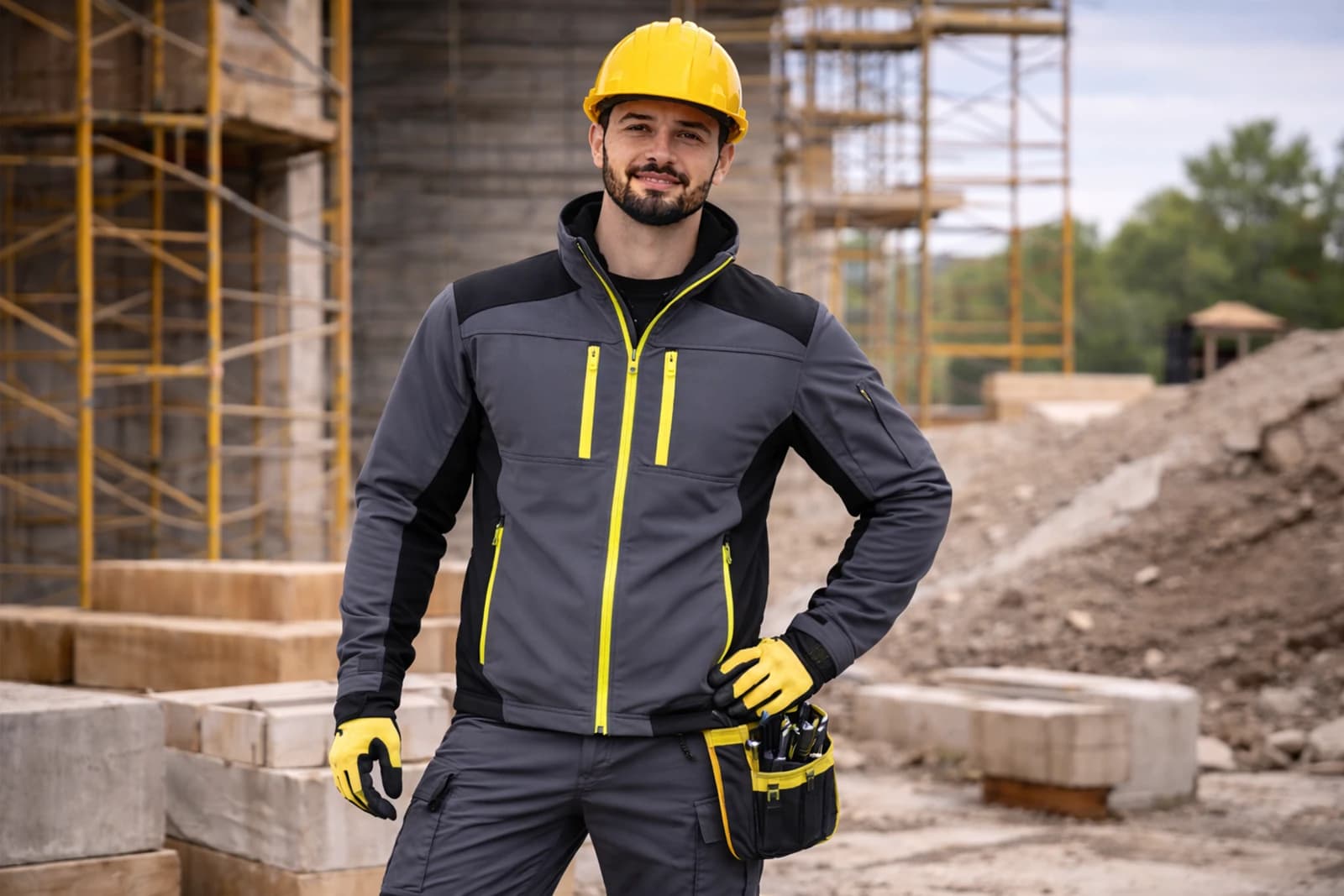
Construction Clothing
Construction Softshell Set
Flexible jacket and trouser set built for crews working across changing weather conditions.