Hi-Vis Safety Jackets for Middle East Logistics & Warehouse Operations: Sourcing Class 3 Visibility Workwear from China
Middle East logistics hubs, warehouses, and distribution centers require hi-vis safety jackets that provide comprehensive visibility protection, durability, and comfort in demanding operational environments. Hi-vis safety jackets with proper reflective technology, certified retroreflective materials, and desert-adaptive designs ensure worker safety and productivity in logistics operations including container yards, cold storage, freight handling, and outdoor loading areas. Learn how to source certified hi-vis safety jackets from Chinese manufacturers with proper ANSI/EN standards compliance, visibility technologies, and logistics-appropriate designs for warehousing teams.

Buyer context
What procurement teams run into
Warehouse and logistics managers in Middle East distribution hubs face significant challenges when sourcing appropriate hi-vis safety jackets for their teams operating in logistics environments. The region's logistics operations—container yards, cold storage facilities, freight handling areas, and outdoor loading zones—require hi-vis safety jackets that provide comprehensive visibility protection, thermal comfort, and durability while maintaining safety compliance during extended shifts. Standard hi-vis jackets designed for highway work or temperate climates often fail in Middle East logistics conditions, with insufficient reflective coverage for complex multi-directional visibility environments, materials that degrade under intense UV exposure in outdoor yards, and designs that restrict movement during material handling tasks.\n\nThe primary challenge lies in balancing visibility performance with thermal management. Hi-vis safety jackets must provide certified retroreflective coverage (ANSI/ISEA 107 Class 3 or EN ISO 20471 Class 3) while offering sufficient breathability for workers moving between temperature-controlled warehouses and hot outdoor environments. Many hi-vis jackets prioritize visibility enhancement with extensive reflective material but neglect ventilation, leading to heat stress risks and reduced wearer compliance. Chinese manufacturers may offer jackets that meet basic EN or ANSI certification requirements but perform poorly in actual Middle East logistics conditions, with reflective materials that delaminate under heat stress or fluorescent fabrics that fade within weeks of intense UV exposure.\n\nAnother critical issue is durability against logistics-specific wear patterns. Middle East logistics operations involve constant movement through tight warehouse aisles, contact with pallet racking and equipment, frequent handling of boxes and containers, and exposure to oils and residues common in freight operations. The fabrics must withstand not only occupational hazards but also physical abrasion from equipment contact, UV degradation in outdoor yard areas, and thermal stress from temperature variations between cold storage (as low as -20°C) and outdoor desert heat (up to 50°C). Many imported hi-vis jackets show premature degradation of reflective tape adhesion, seam failure at stress points like elbows and shoulders, and fabric fraying within months, compromising safety protection and requiring early replacements.\n\nSizing and design for diverse logistics workforces present additional complexities. Middle East logistics centers employ workers from various regions performing different roles—forklift operators, dock workers, pickers, supervisors—each requiring different mobility patterns and layering needs. Hi-vis safety jackets must accommodate varying degrees of under-layer clothing while maintaining proper fit for reflective material positioning and unrestricted movement. Ill-fitting jackets can create snag hazards around moving equipment, limit overhead reach for loading operations, or bunch up under safety harnesses. Standard sizing often doesn't accommodate the range of body types or the need for garment features specific to logistics environments such as radio pockets, D-ring access for fall protection, and tool attachment points.
Sourcing approach
How a factory partner can respond
Begin by understanding the specific visibility and protection requirements for hi-vis safety jackets in Middle East logistics environments. For container yards, cold storage facilities, freight handling areas, and outdoor loading zones, prioritize jackets meeting ANSI/ISEA 107 Class 3 or EN ISO 20471 Class 3 standards with these key features: 360-degree retroreflective coverage including sleeve bands, 0.80 m² minimum fluorescent background material, 0.13 m² minimum retroreflective material (Class 3), and bright fluorescent yellow-green or orange-red background colors for maximum daytime contrast. Look for Chinese manufacturers who specialize in certified hi-vis safety workwear and can provide ANSI/EN certification documentation from accredited testing laboratories for logistics applications in desert environments.\n\nWhen evaluating hi-vis fabrics and reflective materials for Middle East conditions, focus on technologies that address both visibility performance and logistics durability. Modern hi-vis jackets designed for logistics incorporate segmented reflective tape patterns that maintain reflectivity even after repeated flexing and folding—critical for workers who frequently bend and stretch during material handling. Some advanced jackets use micro-prismatic retroreflective materials (instead of glass bead technology) that provide superior brightness at wider observation angles, making workers visible to forklift operators and vehicle drivers approaching from various directions. Fluorescent fabrics should be treated with UV stabilizers to maintain color intensity and brightness after extended exposure to Middle East sunlight, with test data showing less than 15% reduction in fluorescent brightness after 500 hours of accelerated UV exposure.\n\nFor Middle East logistics environments with extreme temperature variations, consider hi-vis safety jackets with modular design features. Jackets combining fluorescent shells with removable insulated liners allow workers to adjust thermal protection as they move between -20°C cold storage and 50°C outdoor loading areas. Ventilation features such as underarm zippers, mesh back panels, and moisture-wicking inner layers help manage heat stress during physical material handling tasks. Jackets designed for logistics should also include practical features: radio/phone pockets with headset wire ports, D-ring access slots for fall protection systems at loading docks, ID badge holders for security purposes, and tool attachment loops for box cutters, gloves, and other frequently used items.\n\nCertification verification remains essential for occupational safety compliance. When sourcing from Chinese manufacturers, request complete test reports from accredited laboratories. Key tests for logistics hi-vis jackets include: retroreflective performance before and after washing (EN 20471 or ANSI 107), color fastness to light (ISO 105-B02/ AATCC 16), abrasion resistance of reflective material (ISO 12947-2), and tensile strength (ISO 13934-1). For logistics environments, also test tear propagation resistance (ISO 4674/ ASTM D1424) to ensure jackets withstand contact with racking and equipment. Ask manufacturers about their quality control processes with documentation of their internal testing for reflective material adhesion and fabric durability throughout production.\n\nImplement a practical evaluation protocol before placing bulk orders for logistics hi-vis jackets. Conduct field tests with sample jackets on actual logistics workers during typical warehouse and yard operations to evaluate mobility, comfort, and practical feature usability. Perform visibility assessments in actual operational lighting conditions including daytime outdoor, nighttime yard areas, and indoor warehouse lighting. Accelerated UV exposure tests simulating 3-6 months of Middle East desert sunlight should verify fluorescent color retention and reflective tape adhesion. Wash and dry jackets according to manufacturer recommendations for 25 cycles to simulate several months of field use, then re-test visibility performance. Request wear trial feedback from different roles (forklift operators, dock workers, pickers) to ensure the design meets varied operational needs. This comprehensive approach ensures the hi-vis safety jackets provide reliable safety protection throughout their service life in demanding Middle East logistics environments.
Recommended Products
Products that fit this use case
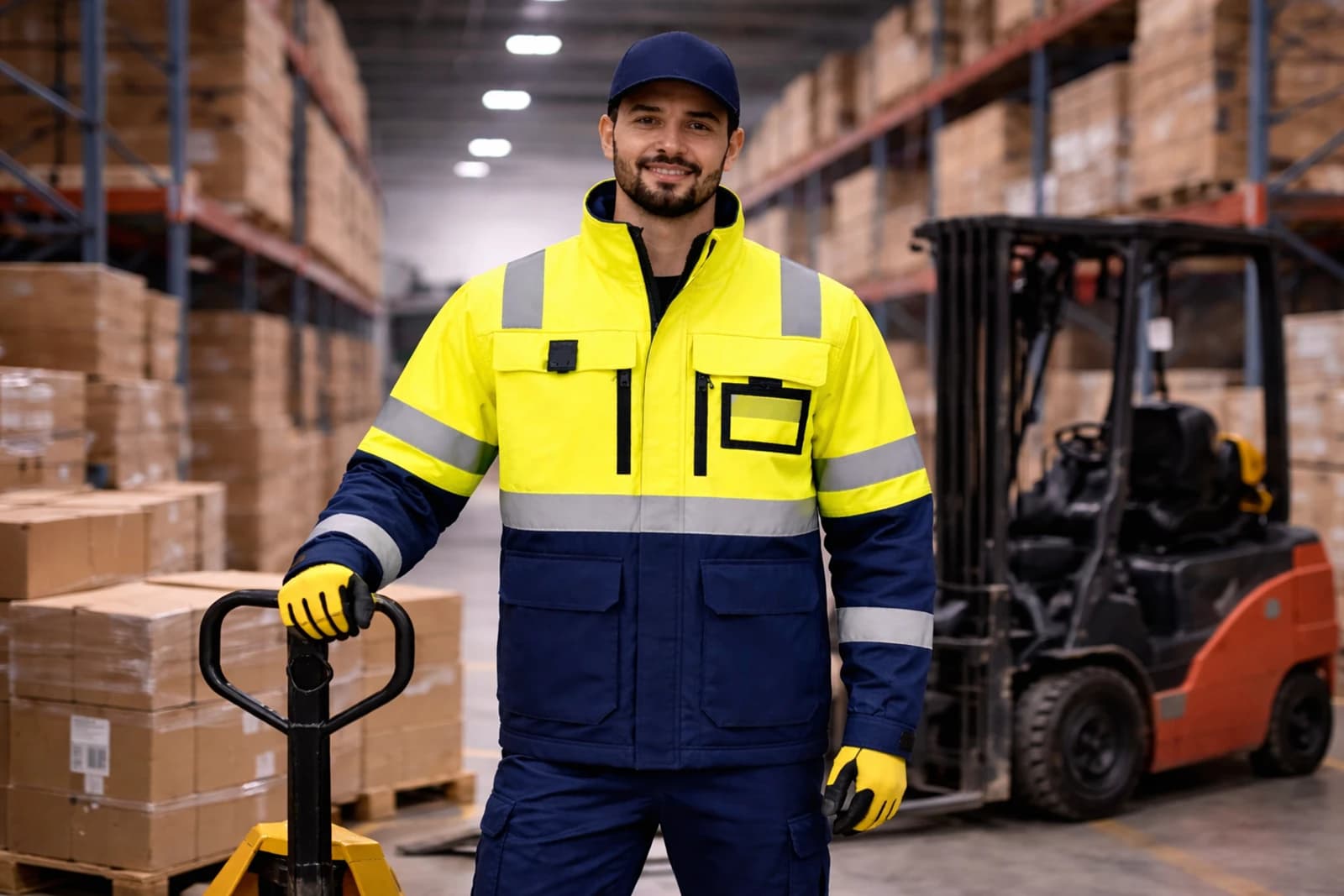
Safety Uniform
Hi-Vis Safety Jacket
Reflective safety jacket for high-visibility site operations and road work crews.

Logistics Uniform
Logistics Polo Uniform
Breathable uniform polo for warehouse, delivery, and last-mile teams.