Hi-Vis Jacket & Softshell Set Layering: Year-Round Construction Workwear for Middle East Contractors
Middle East construction contractors face a unique challenge: workers need hi-vis safety jackets during the 9-month hot season but switch to insulated softshell sets during the brief cooler months. This guide explains how B2B buyers can source a coordinated hi-vis jacket and construction softshell set system from a single Chinese manufacturer — ensuring year-round compliance, consistent branding, and simplified procurement across both garment types.

Buyer context
What procurement teams run into
A construction contractor in Riyadh manages 200+ site workers across three active projects. The work calendar spans all year, but Saudi Arabia's climate is not uniform: from October to March, nighttime temperatures in central regions can drop to 10–15 °C, while the remaining months regularly exceed 45 °C during the day. Currently, the contractor buys hi-vis safety vests from one supplier for summer and insulated hi-vis softshell jackets from another supplier for winter — two separate procurement processes, two different quality standards, and two inconsistent brand logos. This is the core problem faced by Middle East construction companies operating year-round: the wardrobe system is split by season, creating procurement inefficiency, visual inconsistency, and sizing headaches when workers layer the hi-vis vest over the softshell (the vest often fits too tightly over the insulated jacket). The hi-vis vest bought for summer wear (typically a mesh or lightweight shell) measures 58–62 cm chest when sized L, but the softshell jacket (with insulation lining and fleece backing) measures 56–60 cm in the same size — meaning the vest won't close properly over the jacket. For B2B buyers sourcing from Chinese workwear manufacturers, the challenge is specifying two garments — a lightweight hi-vis safety jacket for the hot months (worn alone) and a hi-vis softshell set for cooler months (worn as primary outerwear) — that maintain the same reflective tape pattern, same brand logo placement, and compatible sizing so workers can layer the lightweight jacket over the softshell top on transitional days without restriction. Without coordinated specification, you end up with 50 mm tape on the summer jacket and 70 mm tape on the softshell (different reflective area, different compliance class), or logos positioned at different heights that look misaligned when both garments are visible.
Sourcing approach
How a factory partner can respond
The solution is a coordinated two-garment layering system designed as a single procurement package — a lightweight Hi-Vis Safety Jacket for hot months worn alone, and a Construction Softshell Set for cooler months worn as the primary outer layer, with the lightweight jacket available as a mid-layer on transitional days. When sourced from a single Chinese manufacturer like Sidaier, you specify both garments together so every detail — reflective tape pattern, logo position, sizing scale, and color — is harmonized from the start. **Hi-Vis Safety Jacket (hi-vis-safety-jacket)** — This is the primary warm-weather garment for the majority of the construction year. Specify the 120–150 GSM lightweight hi-vis shell (polyester oxford with PU coating) for breathability during 40 °C+ site work. Key specifications for Middle East construction: internal phone/document pocket with media port for earbud use (essential for site supervisors coordinating on walkie-talkies), detachable hood with drawcord (for rare rain or dust storms), and underarm ventilation zippers with mesh lining. Reflective tape should be 50 mm wide lime-yellow/silver (EN ISO 20471 Class 2) with a consistent tape pattern — e.g., horizontal torso bands, arm bands, and shoulder-to-shoulder back X or horizontal band. For the logo, specify left-chest embroidery 8 cm wide at the same height as the softshell logo (e.g., 12 cm below the collar seam). Request that the jacket pattern allow 2–3 cm extra room in the chest and arms compared to standard sizing — this ensures it can be worn as a mid-layer over the softshell jacket on cooler transitional days without restricting arm movement for concrete work or rebar tying. **Construction Softshell Set (construction-softshell-set)** — This is the cool-weather garment for October–March. Specify a three-layer bonded softshell fabric (outer: 96% polyester / 4% elastane with DWR coating, middle: breathable waterproof membrane, inner: micro-fleece brushed back) in 280–320 GSM weight. The set includes both a jacket and matching trousers. The jacket should feature the same reflective tape pattern as the hi-vis jacket (matching width, color, and placement) — this is critical for visual continuity when crews transition between seasons. The left-chest embroidery position must match the hi-vis jacket logo placement exactly. Include a stand-up collar with chin guard (for wind protection on cold mornings), adjustable cuffs with hook-and-loop tabs (for sealing over work gloves), and two front zip pockets with fleece lining (for warming hands during pre-dawn site starts). The trousers should have side cargo pockets with hook-and-loop closures, knee pad pockets (compatible with standard knee pads), and elasticated waist with belt loops. Provide the softshell in hi-vis orange or hi-vis yellow based on your company's safety color policy, with silver reflective tape matching the jacket. **Procurement tips for B2B buyers sourcing both garments:** 1. **Order as a single SKU family** — when negotiating with the Chinese manufacturer, treat the hi-vis jacket and softshell set as one product system. Request the same logo embroidery file applied to both, same tape supplier for both, and a single dye lot for all fabric colors. This often qualifies for tiered bulk pricing. 2. **Standardize on one tape supplier** — the reflective tape should come from the same manufacturer (e.g., 3M Scotchlite or equivalent) for both garments. Different tape brands have slightly different reflectivity values and degradation rates under UV exposure — important when garments are stored year after year. 3. **Require a layering fit test** — before approving production, ask for a pre-production sample of both garments in the same size. Try the hi-vis jacket ON OVER the softshell jacket to verify that the wearer can fully zip the hi-vis jacket, raise both arms above the head, and bend at the waist without the hi-vis jacket riding up. If the hi-vis jacket sits too tight, request a size-up or pattern adjustment. 4. **Create a seasonal handover plan** — specify in your procurement contract that the hi-vis jacket order and softshell set order should be delivered in two staggered shipments: softshell sets delivered by early September (before October cooldown) and hi-vis jacket replenishments delivered by March (before April heat returns). This prevents inventory piles and ensures workers get the right garment at the right time. 5. **Use color-matched logos on contrasting fabrics** — if the hi-vis jacket is lime-yellow with silver tape, the softshell should also be lime-yellow with silver tape (same color family and tape combination). Brand logo embroidery thread color should be consistent across both — avoid navy logos on the hi-vis jacket and black logos on the softshell. Stick to one thread color for all logo embroidery across the entire garment system.
Recommended Products
Products that fit this use case
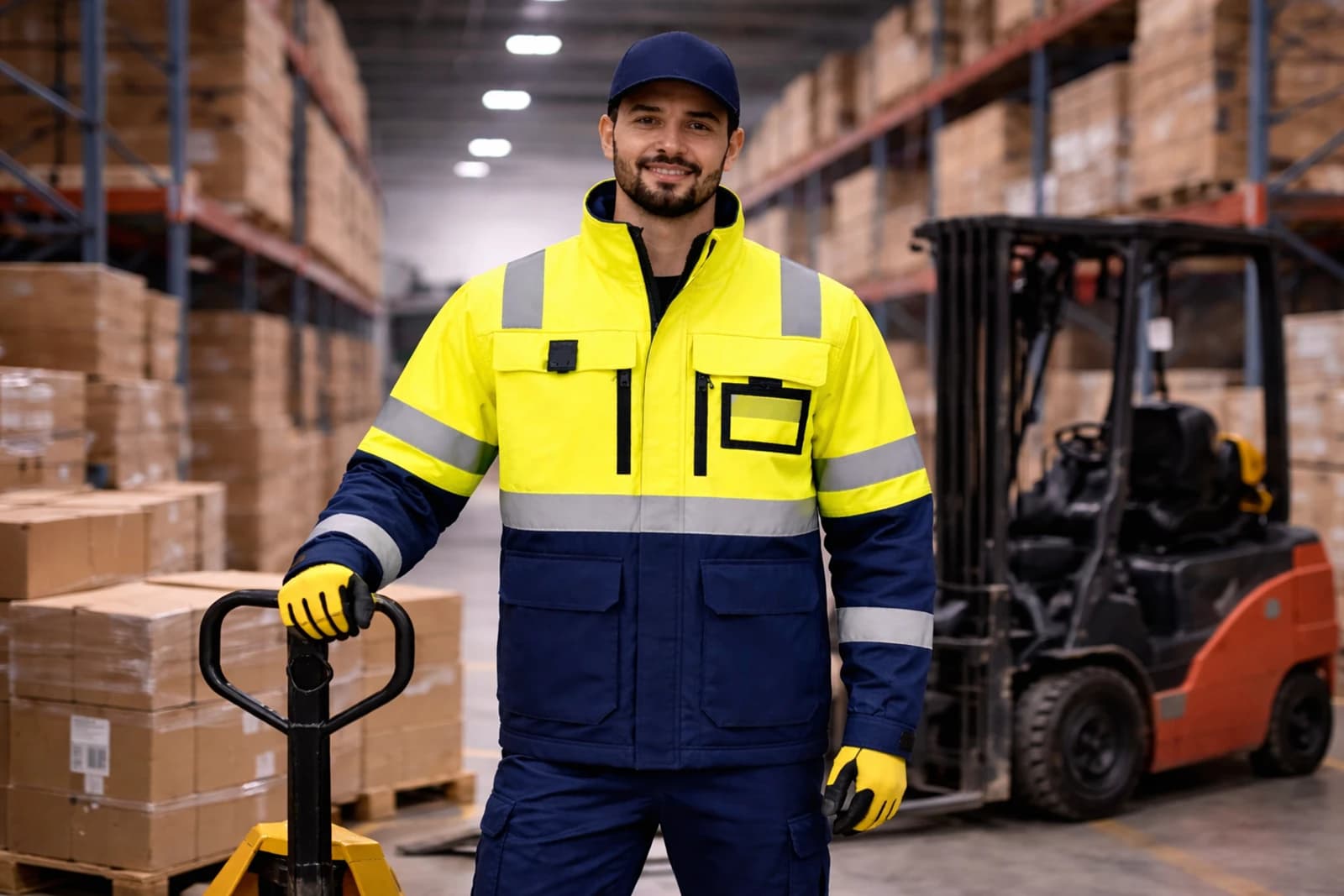
Safety Uniform
Hi-Vis Safety Jacket
Reflective safety jacket for high-visibility site operations and road work crews.
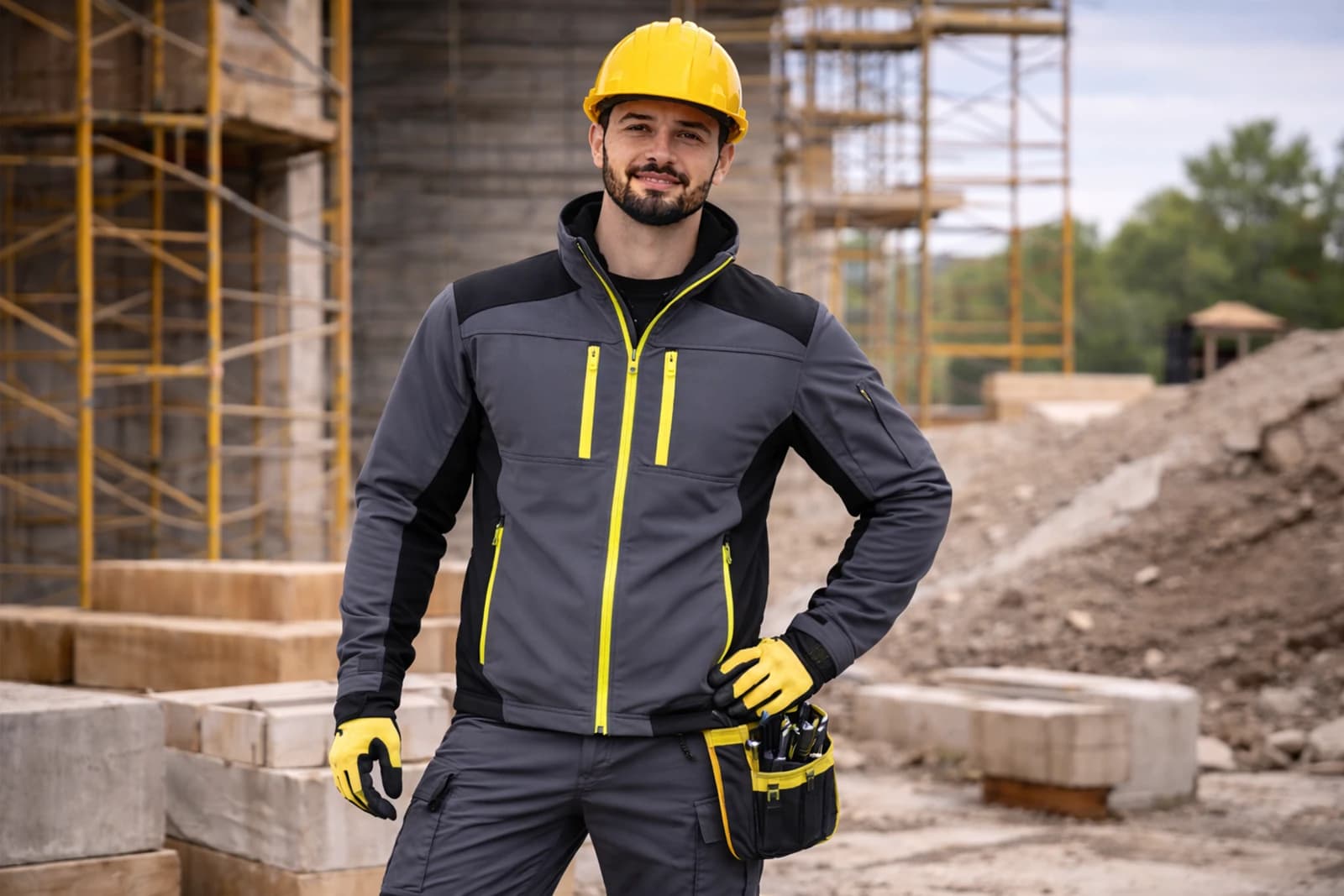
Construction Clothing
Construction Softshell Set
Flexible jacket and trouser set built for crews working across changing weather conditions.