Choosing the Right Workwear Fabric for GCC Climates: Cotton, Poly-Cotton, or Modacrylic?
GCC construction and logistics sites regularly exceed 45°C, yet many buyers import workwear designed for temperate climates. This guide compares cotton, poly-cotton, modacrylic, and moisture-wicking blends for hi-vis jackets, coveralls, polo uniforms, and softshell sets in extreme heat.

Buyer context
What procurement teams run into
<p>A logistics company in Doha orders 2,000 poly-cotton polo uniforms for its warehouse and delivery teams. The first week on the job, drivers report that the collars chafe in air-conditioned trucks and the fabric clings uncomfortably when they step out into 48°C heat. By the third week, three drivers have developed heat rash on their forearms where the polyester-rich fabric traps sweat against the skin. The procurement manager is frustrated — the uniform was chosen based on price and durability, not on how it behaves when a driver alternates between refrigerated storage bays and open delivery docks.</p><p>In Saudi Arabia, a construction contractor sources 5,000 hi-vis safety jackets in a standard 300D oxford poly-cotton blend. The jackets pass all EN ISO 20471 requirements and the price is competitive. But by midday, workers remove the jackets and leave them on scaffolding because the fabric does not breathe. The site safety officer notes that compliance drops sharply above 40°C — not because workers refuse to wear hi-vis, but because the jacket traps heat and becomes unbearable for more than 20 minutes at a time in direct sunlight.</p><p>These are not isolated incidents. Across the GCC, procurement managers and safety officers face the same tradeoff: choosing workwear that meets safety certification standards while remaining wearable in extreme summer conditions. The fabric selection decision is often rushed, treated as a cost exercise rather than a performance specification. The result is lower compliance, shorter garment lifespan, and uncomfortable workers who associate their uniform with discomfort rather than protection.</p>
Sourcing approach
How a factory partner can respond
<h2>Understanding Fabric Performance in Gulf Heat</h2><p>Workwear fabrics behave differently in hot, humid coastal environments such as Dubai or Dammam compared with dry desert heat in Riyadh or interior Kuwait. The key performance factors are moisture management, air permeability, thermal resistance, and UV degradation. A fabric that performs well in air-conditioned warehouses may fail completely in open construction sites or logistics yards where workers are exposed to direct sun and high humidity for consecutive hours.</p><p><strong>Cotton and high-cotton blends</strong> remain a strong option for logistics polo uniforms and general work shirts in the Gulf. Natural cotton fibres absorb moisture and release it through evaporation, providing a cooling effect. The tradeoff is lower durability — 100% cotton workwear may need replacement after 30–40 industrial wash cycles — and longer drying time if soaked through. A 65% cotton / 35% polyester blend (CVC) retains much of the comfort while extending wash durability to 50–60 cycles. For polo uniforms worn by warehouse and service teams that move between conditioned and unconditioned areas, CVC fabric with a pique knit structure offers the best balance of breathability and professional appearance.</p><p><strong>Moisture-wicking performance fabrics</strong> (100% polyester or nylon with engineered knit or weave structures) are increasingly specified for hi-vis safety vests and lightweight summer jackets. These fabrics do not absorb moisture — they transport it across the fabric surface where it evaporates quickly. In extreme Gulf conditions, this wicking effect keeps the garment from sticking to the skin, reducing the heat-stress burden on the wearer. The limitation is that performance fabrics have lower melting points than cotton or modacrylic, so they are unsuitable for roles with arc flash or molten splash risk such as industrial maintenance near furnaces or electrical panels. Many GCC contractors now request hi-vis vests with mesh panel inserts in the back and underarm areas, regardless of the primary fabric, because the increased airflow measurably improves day-long wear compliance on open sites.</p><p><strong>For industrial maintenance coveralls</strong>, the fabric choice depends on the specific hazard environment. Standard poly-cotton (typically 80/20 or 65/35) with a twill weave provides adequate durability and comfort for general maintenance roles in air-conditioned factory settings. For workers who move between indoor production areas and outdoor loading zones — a common pattern in GCC industrial facilities — a coverall with a moisture-wicking lining or vented back panel extends comfortable wear time. When the role involves non-melting fabric requirements (arc flash or weld splash risk), modacrylic/cotton blends with inherent flame resistance are mandatory, though these fabrics are heavier and less breathable than standard poly-cotton, so the design should include ventilation features such as zip vents or mesh gussets to compensate.</p><p><strong>Construction softshell sets</strong> designed for Gulf projects need a different approach than those used in cooler climates. A typical European softshell relies on a fleece inner layer for insulation that is counterproductive in Middle East conditions. For GCC construction and infrastructure projects, specify softshell jackets made with a lightweight stretch woven outer shell and a mesh or tricot lining — not fleece. This configuration provides wind resistance for cooler early mornings and air-conditioned indoor work while avoiding overheating during the active afternoon period. Layered with a moisture-wicking base layer, this type of softshell suits supervisors, engineers, and site managers who move between trailer offices and active work zones throughout the day.</p>
Recommended Products
Products that fit this use case
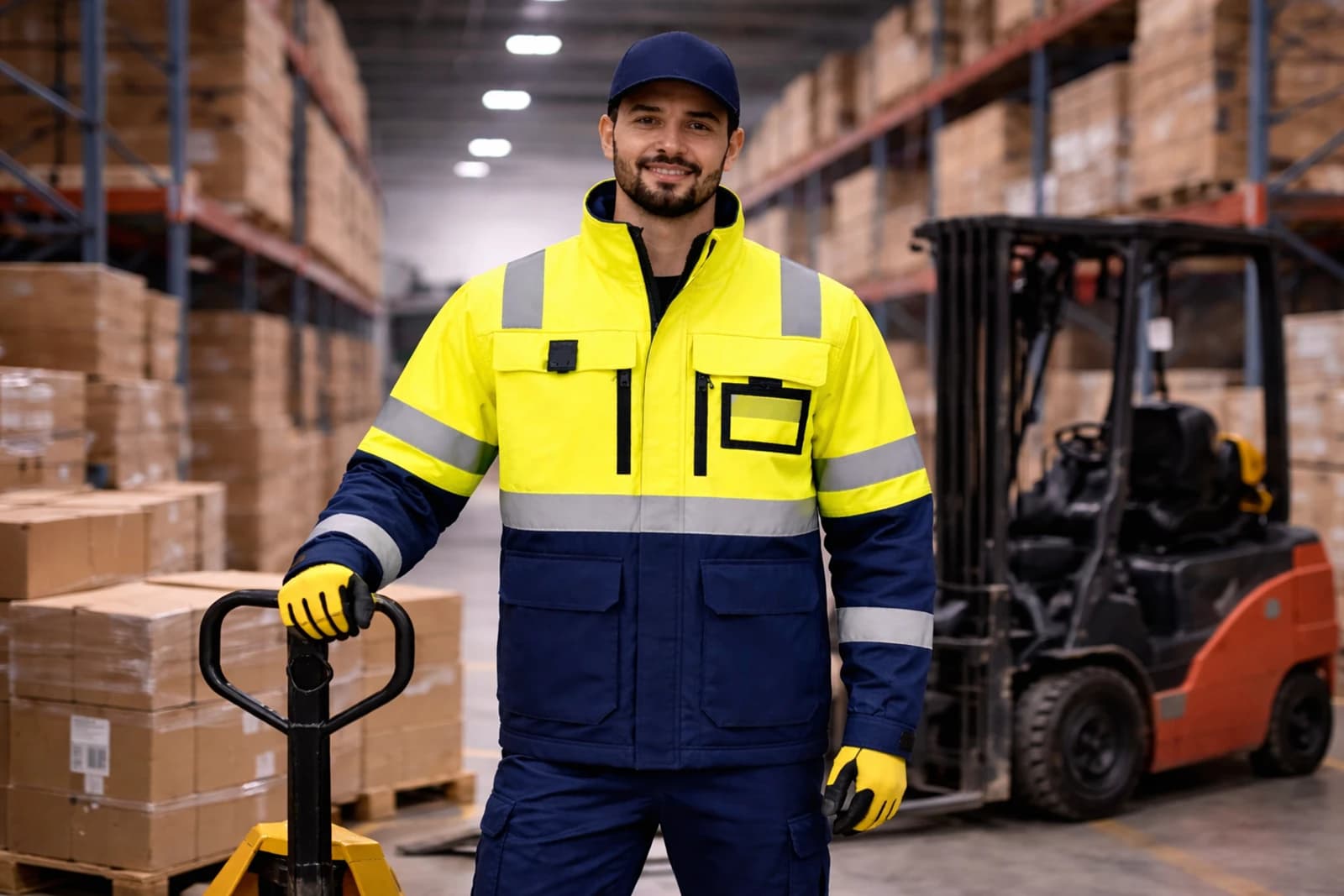
Safety Uniform
Hi-Vis Safety Jacket
Reflective safety jacket for high-visibility site operations and road work crews.
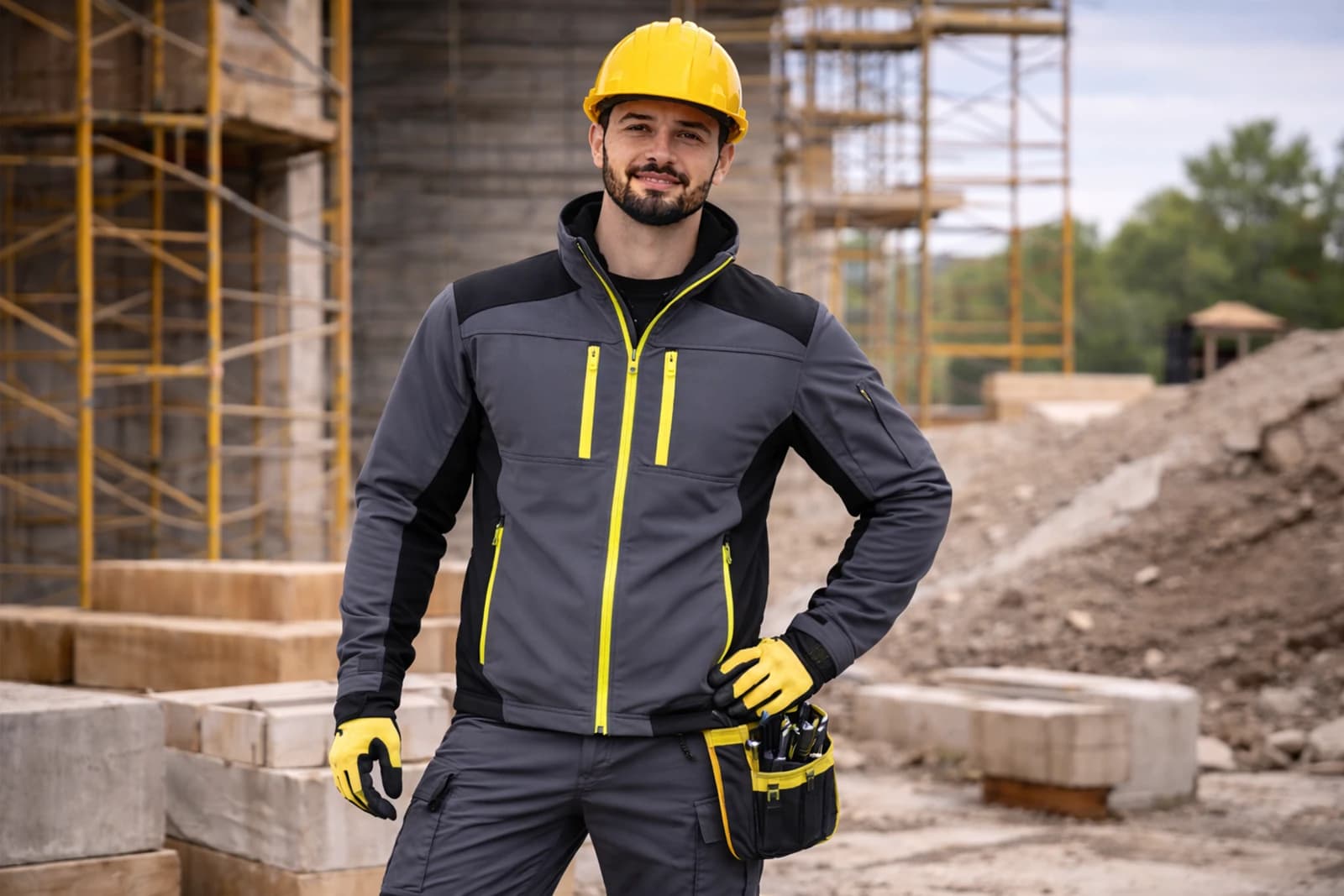
Construction Clothing
Construction Softshell Set
Flexible jacket and trouser set built for crews working across changing weather conditions.
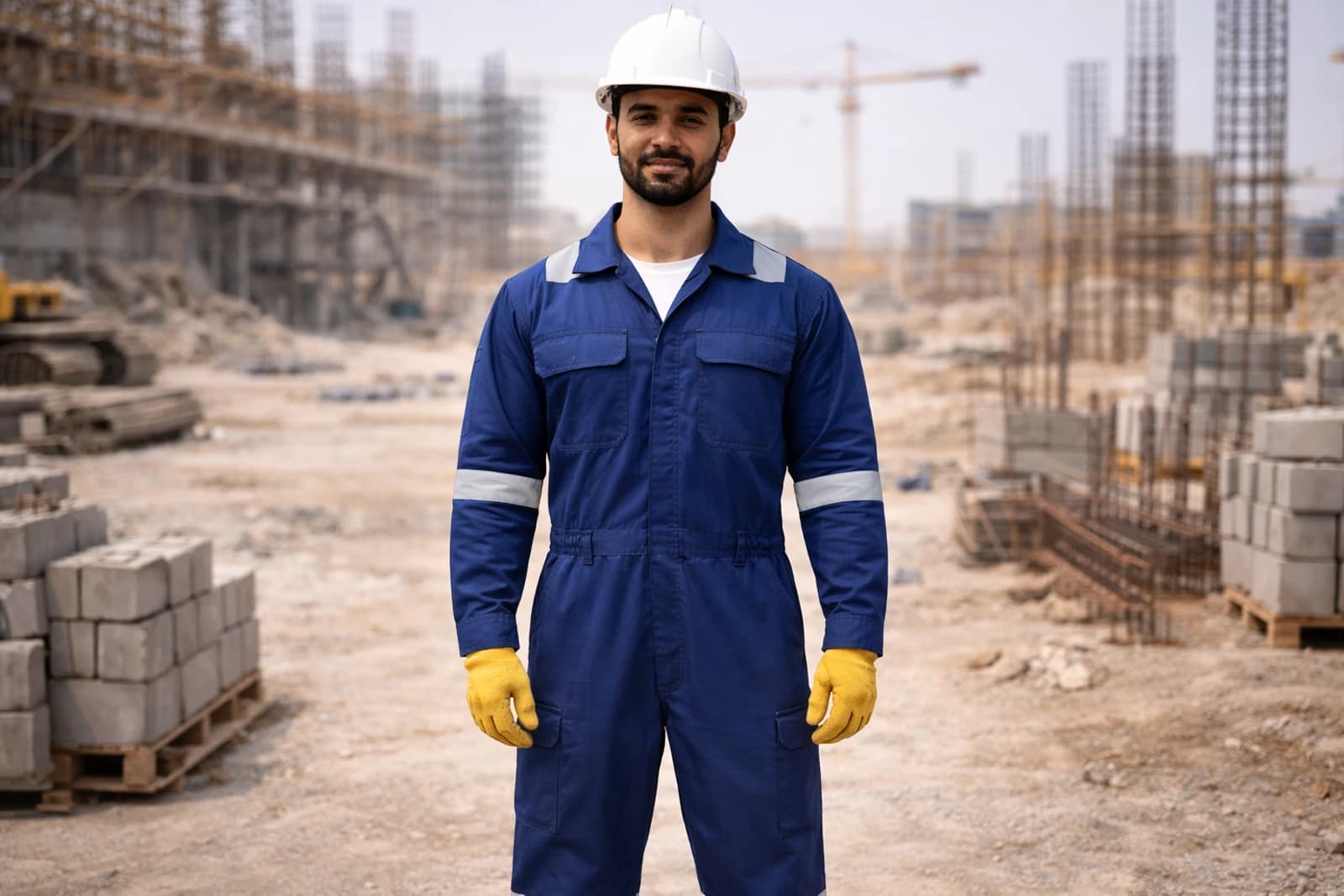
Industrial Workwear
Industrial Coverall Pro
Hard-wearing one-piece coverall for plant, maintenance, and heavy-duty operations.

Logistics Uniform
Logistics Polo Uniform
Breathable uniform polo for warehouse, delivery, and last-mile teams.