How Do Railway Maintenance Crews Maintain Hi-Vis Compliance During Physical Work?
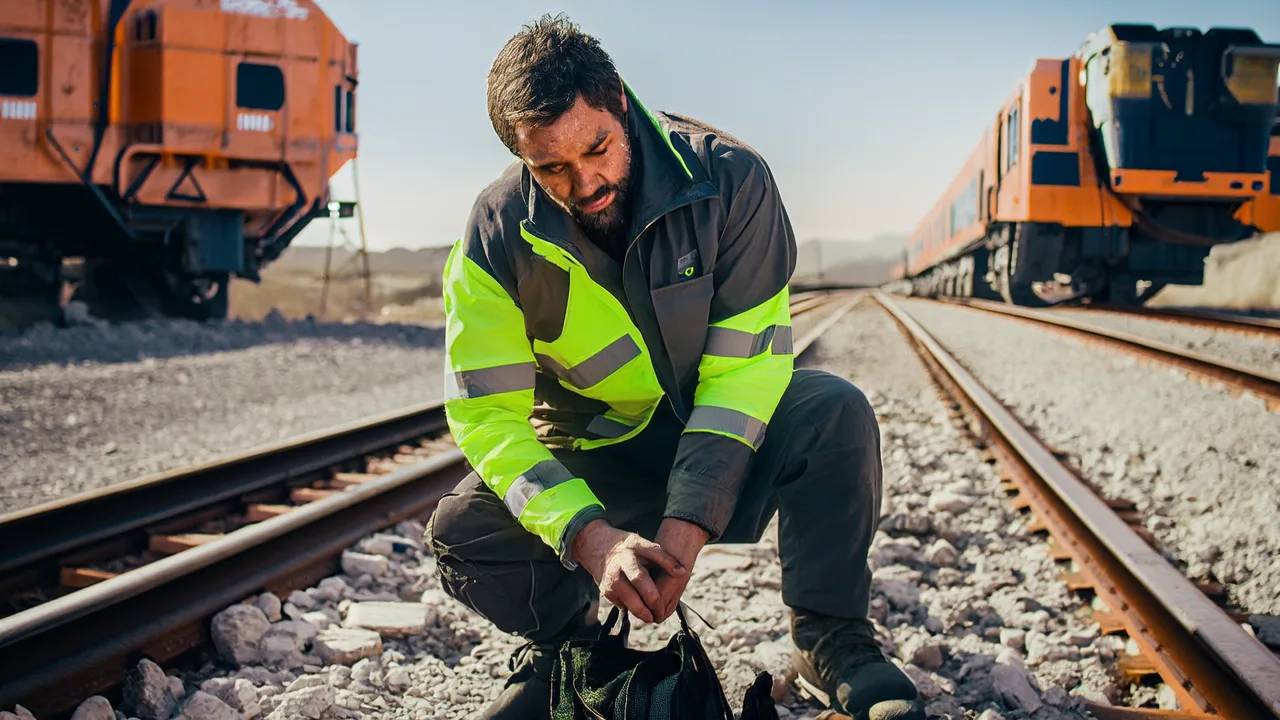
Railway maintenance crews work near live tracks and require hi-vis compliance, but they perform physically demanding tasks—crawling under rolling stock, climbing onto locomotives, handling heavy tools on ballast—that create comfort and mobility challenges. Workers adapt by removing hi-vis layers, rolling sleeves, or wearing personal garments instead of issued ones, creating safety compliance gaps. This article covers the garment specification that maintains hi-vis compliance while addressing the physical demands of railway maintenance work.
Buyer context
What procurement teams run into
Railway maintenance crews work in one of the most visibility-critical environments in industrial operations: near live tracks where trains travel at speed, often in low-light conditions, fog, rain, or dawn/dusk periods when visibility is reduced. The requirement for high-visibility compliance (EN ISO 20471 Class 2 or Class 3, or equivalent national standards) is non-negotiable—workers must be visible to train operators and machine operators at all times when working near tracks. But railway maintenance work is also physically demanding. Maintenance tasks include: - Crawling under rolling stock to inspect underframes, brakes, and bogies - Climbing onto locomotives and wagons to inspect roofs, couplings, and load securement - Walking on ballast (loose crushed stone) for extended distances, which is unstable and demanding on legs and feet - Handling heavy tools and components (track jacks, rail clamps, signalling equipment) - Working in confined spaces between tracks or inside maintenance sheds - Performing repetitive tasks (tightening bolts, lubricating components, testing equipment) for extended periods These tasks create heat, sweat, and physical exertion. Workers need garments that allow freedom of movement, breathe during physical work, and resist abrasion from ballast, grease, and rough surfaces. The tension is clear: hi-vis compliance requires garments that cover the body (long sleeves, high-neck closures, full-length trousers) and include retroreflective tape in specific positions—but these requirements can create discomfort, restrict movement, and reduce breathability during physical work. **1. The compliance gap: workers modify or remove hi-vis garments during physical tasks** When hi-vis garments are not designed for the physical demands of railway maintenance, workers adapt in ways that compromise safety: - Removing hi-vis jackets or vests when crawling under rolling stock (the garment snags on underframe components, or the worker finds it too restrictive) - Rolling up sleeves of hi-vis long-sleeve shirts during warm weather or high-exertion tasks (exposing arms to abrasion, grease, and sharp edges) - Wearing personal short-sleeve shirts under hi-vis vests instead of issued long-sleeve hi-vis shirts (the vest provides some visibility compliance, but the exposed arms do not meet the specification) - Removing hi-vis jackets during breaks or when moving between work areas (creating visibility gaps when the worker is still near tracks) These adaptations are rational individual responses to discomfort—but they create safety compliance gaps. A worker crawling under a locomotive without a hi-vis jacket is not visible to a colleague operating machinery nearby. A worker with rolled-up sleeves is not compliant with the hi-vis specification (which requires full arm coverage). The workwear programme fails not because the hi-vis requirement is wrong, but because the garment does not address the physical demands of the work. **2. The specification gap: hi-vis compliance is specified, but physical performance is not** Most railway maintenance workwear specifications include: - Hi-vis requirement: EN ISO 20471 Class 2 or Class 3 (or ANSI/ISEA 107 Class 2 or Class 3) - Garment type: long-sleeve shirt, trouser, jacket, coverall - Fabric composition: polyester-cotton blend (e.g., 65% polyester, 35% cotton) - Fabric weight: 200–240 GSM - Retroreflective tape: positioned to meet hi-vis standard requirements - Logo and branding Most specifications do not include: - Mobility requirement: range of motion for crawling, climbing, bending, reaching - Breathability requirement: moisture vapour transmission rate for physical work in warm conditions - Abrasion resistance requirement: resistance to ballast, grease, and rough surfaces - Garment design for physical tasks: articulated knees, gusseted crotch, reinforced stress points, ergonomic sleeve design - Layering system for variable conditions: base layer, mid-layer, outer layer that can be adjusted as conditions change The specification controls the garment's visibility compliance but does not control whether the garment performs during the physical demands of maintenance work. The result is a consistent pattern: the garment meets hi-vis compliance on paper, but workers modify or remove it during physical tasks, creating safety gaps. **3. The physical demands of railway maintenance require specific garment design** Railway maintenance work creates specific physical demands that the garment must address: - **Crawling and kneeling:** Workers crawl under rolling stock and kneel on ballast to inspect underframes. The garment must allow full range of motion at the knees and hips, resist abrasion from ballast and grease, and provide comfort when kneeling on hard surfaces. Specify articulated knees (pre-shaped knee panels that reduce fabric bunching when the knee is bent), reinforced knee panels (abrasion-resistant fabric at the knee to resist ballast and grease), and gusseted crotch (extra fabric at the crotch seam that allows full leg movement without strain on the seam). - **Climbing:** Workers climb onto locomotives and wagons using ladders, grab handles, and steps. The garment must allow full range of motion at the shoulders and hips, resist abrasion from rough surfaces, and not snag on ladder rungs or grab handles. Specify ergonomic sleeve design (sleeves cut to allow full arm movement without pulling the garment body), reinforced shoulder and elbow panels (abrasion-resistant fabric at high-wear points), and smooth-surface fabric (fabric that does not snag on rough surfaces). - **Walking on ballast:** Workers walk on loose crushed stone for extended distances. The garment must allow full leg movement, resist abrasion from ballast (which is sharp and abrasive), and provide durability at the hem (which contacts ballast during walking). Specify reinforced hem panels (abrasion-resistant fabric at the trouser hem), and durable fabric that resists ballast abrasion. - **Handling heavy tools and components:** Workers handle track jacks, rail clamps, signalling equipment, and other heavy components. The garment must allow full arm and shoulder movement, resist abrasion from rough components, and provide durability at stress points (shoulders, elbows, chest). Specify reinforced stress points and ergonomic design that allows full movement. - **Working in warm conditions:** Railway maintenance is often performed in warm weather (track work in summer, maintenance sheds with limited ventilation). The garment must breathe during physical work, wick moisture away from the skin, and not trap heat. Specify breathable fabric (moisture vapour transmission rate of at least 5,000 g/m²/24h), moisture-wicking treatment, and ventilation features (mesh-lined vents at the back, underarms, or behind knees). **4. The layering system: maintaining hi-vis compliance across variable conditions** Railway maintenance work is performed in variable conditions: warm sunny days, cold rainy days, foggy mornings, and cold nights. The garment must maintain hi-vis compliance across this range of conditions without requiring the worker to remove layers (which creates visibility gaps). The solution is a layering system where every layer meets hi-vis compliance: - **Base layer:** Moisture-wicking long-sleeve shirt in hi-vis colour (fluorescent yellow or orange). The base layer provides comfort and moisture management during physical work. Specify hi-vis fabric with moisture-wicking treatment. - **Mid-layer:** Insulating layer (fleece or softshell jacket) in hi-vis colour with retroreflective tape. The mid-layer provides warmth during cold conditions. Specify hi-vis mid-layer that can be worn under the outer layer without compromising visibility compliance. - **Outer layer:** Weather-resistant jacket in hi-vis colour with retroreflective tape. The outer layer provides protection from rain, wind, and cold. Specify hi-vis outer layer that is breathable (to prevent overheating during physical work) and water-resistant (to protect from rain). The layering system must be specified as a complete set—every layer meets hi-vis compliance, so the worker can add or remove layers as conditions change without compromising visibility. The worker does not need to remove a hi-vis layer because every layer is hi-vis compliant. **5. The procurement specification gap: no physical performance requirement** Most railway maintenance workwear specifications include hi-vis compliance but do not include physical performance requirements: - Hi-vis requirement: specified ✓ - Mobility requirement (range of motion for crawling, climbing, bending): not specified ✗ - Breathability requirement (moisture vapour transmission rate for physical work): not specified ✗ - Abrasion resistance requirement (resistance to ballast, grease, rough surfaces): not specified ✗ - Garment design for physical tasks (articulated knees, gusseted crotch, reinforced stress points): not specified ✗ - Layering system for variable conditions (every layer hi-vis compliant): not specified ✗ The specification controls the garment's appearance and visibility compliance but does not control whether the garment performs during the physical demands of railway maintenance work. The result is a consistent pattern: the garment meets hi-vis compliance on paper, but workers modify or remove it during physical tasks, creating safety gaps.
Sourcing approach
How a factory partner can respond
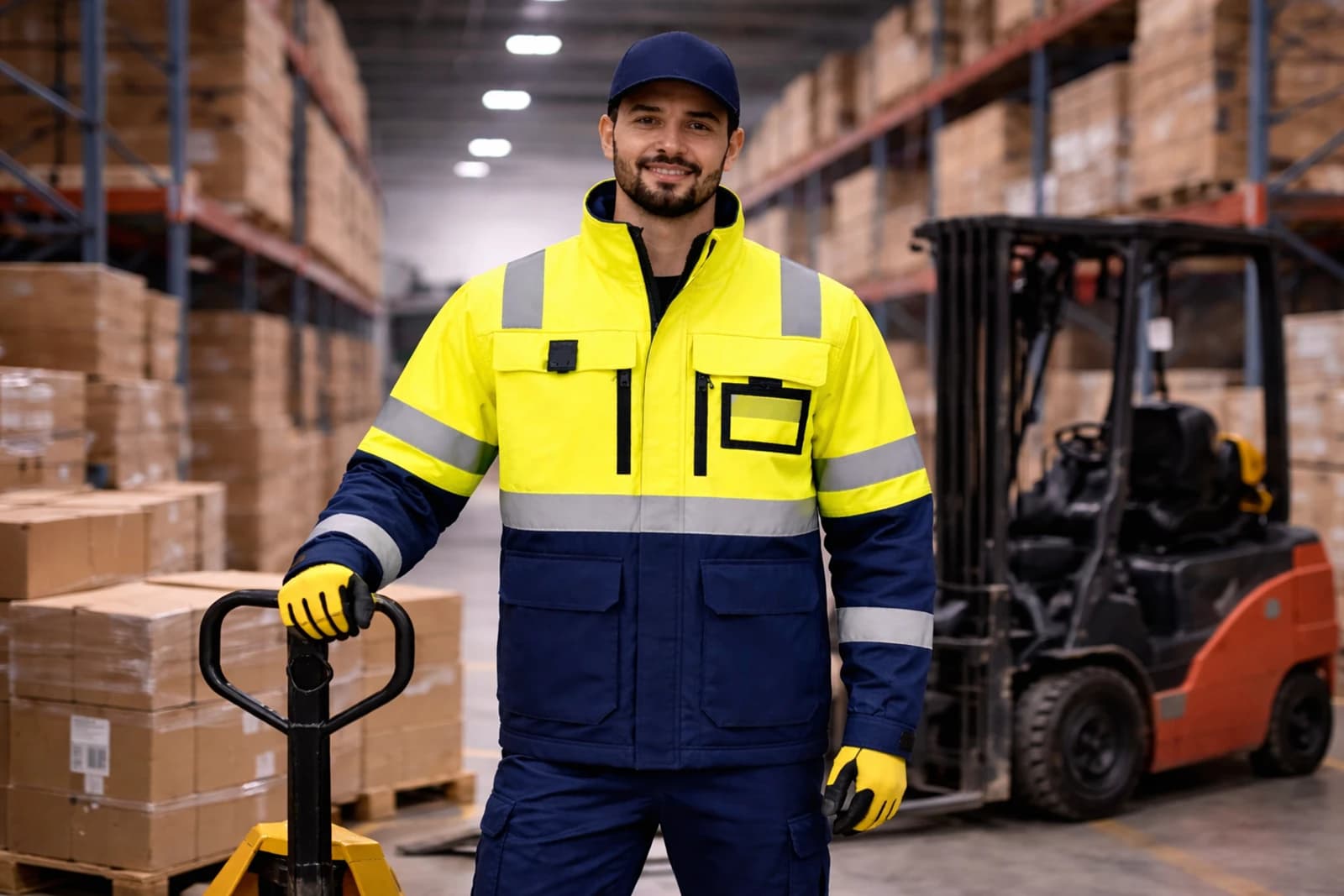
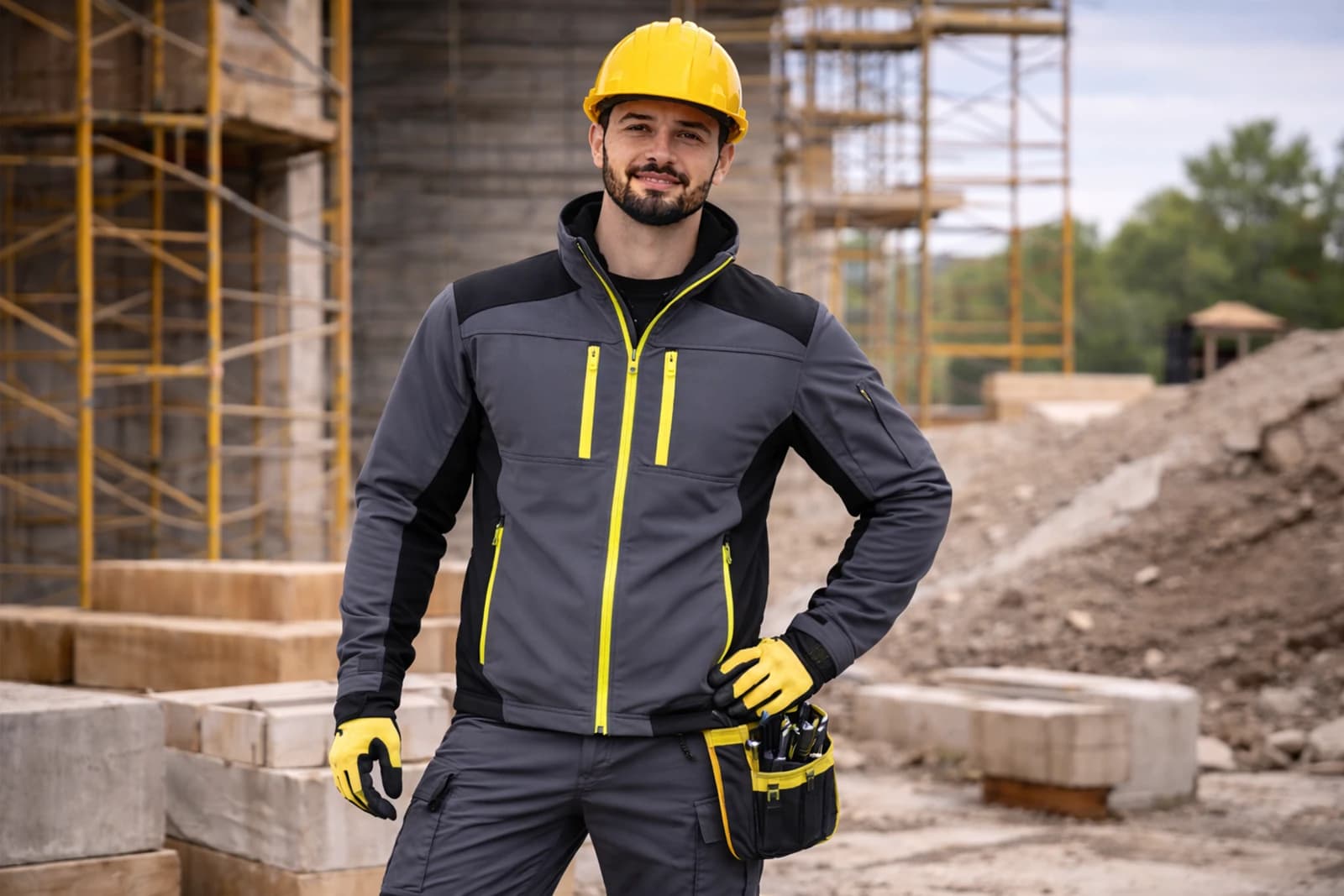
The solution is to specify railway maintenance workwear that meets hi-vis compliance while addressing the physical demands of maintenance work through fabric selection, garment design, and layering systems. **Step 1: Define the physical demands of railway maintenance tasks** Document the specific physical demands of railway maintenance tasks: - Crawling under rolling stock: range of motion at knees and hips, abrasion resistance from ballast and grease - Climbing onto locomotives and wagons: range of motion at shoulders and hips, abrasion resistance from rough surfaces - Walking on ballast: leg movement, abrasion resistance at trouser hem - Handling heavy tools and components: arm and shoulder movement, durability at stress points - Working in warm conditions: breathability, moisture management Use this documentation to define the physical performance requirements for the garment specification. **Step 2: Specify garment design features that address physical demands** For railway maintenance workwear, specify garment design features that address the physical demands: - **Articulated knees:** Pre-shaped knee panels that reduce fabric bunching when the knee is bent, allowing full range of motion for crawling and kneeling. - **Gusseted crotch:** Extra fabric at the crotch seam that allows full leg movement without strain on the seam, critical for climbing and crawling. - **Reinforced stress points:** Abrasion-resistant fabric at knees, elbows, shoulders, and trouser hem to resist ballast, grease, and rough surfaces. - **Ergonomic sleeve design:** Sleeves cut to allow full arm movement without pulling the garment body, critical for climbing and handling tools. - **Ventilation features:** Mesh-lined vents at the back, underarms, or behind knees to provide breathability during physical work in warm conditions. **Step 3: Specify fabric performance requirements** For railway maintenance workwear, specify fabric performance requirements that address the physical demands: - **Breathability:** Moisture vapour transmission rate of at least 5,000 g/m²/24h to allow sweat vapour to escape during physical work, preventing overheating and discomfort. - **Moisture-wicking:** Fabric treatment that wicks moisture away from the skin to the fabric surface where it can evaporate, keeping the worker dry and comfortable during physical work. - **Abrasion resistance:** Fabric that resists abrasion from ballast, grease, and rough surfaces. Specify abrasion resistance test (e.g., ISO 12947-2 Martindale abrasion test) with minimum abrasion cycles (e.g., 20,000 cycles for knees and elbows, 10,000 cycles for other areas). - **Durability:** Fabric weight of 220–260 GSM for durability during physical work, balancing durability with breathability. **Step 4: Specify a hi-vis-compliant layering system** For railway maintenance workwear, specify a layering system where every layer meets hi-vis compliance: - **Base layer:** Hi-vis long-sleeve shirt (fluorescent yellow or orange) with moisture-wicking treatment. Specify EN ISO 20471 Class 1 or Class 2 compliance for the base layer. - **Mid-layer:** Hi-vis insulating layer (fleece or softshell jacket) with retroreflective tape. Specify EN ISO 20471 Class 2 compliance for the mid-layer. - **Outer layer:** Hi-vis weather-resistant jacket with retroreflective tape. Specify EN ISO 20471 Class 3 compliance for the outer layer. The layering system must be specified as a complete set—every layer meets hi-vis compliance, so the worker can add or remove layers as conditions change without compromising visibility. Specify the layering system in the procurement specification, not as individual garments. **Step 5: Pilot the physical-performance workwear before full implementation** Before committing to a full fleet order, pilot the physical-performance workwear with one maintenance crew for 8–10 weeks: - Issue the physical-performance workwear (with articulated knees, gusseted crotch, reinforced stress points, breathable fabric, and hi-vis-compliant layering system) to 10–15 maintenance workers. - Collect data on: worker comfort (survey), garment condition after 4, 6, 8, and 10 weeks (inspect for abrasion, seam failure, fabric degradation), hi-vis compliance (observe whether workers modify or remove garments during physical tasks), and worker feedback on the garment's mobility and breathability. - Compare results to the previous standard garment: did worker comfort improve? Did hi-vis compliance improve (fewer workers modifying or removing garments)? Did garment durability meet expectations? Use pilot data to refine the garment design, fabric selection, and layering system before full implementation across all railway maintenance crews. **Recommended garments for railway maintenance workwear:** - **Hi-vis safety jacket** — specify as the outer layer for railway maintenance workwear. The hi-vis jacket provides EN ISO 20471 Class 3 compliance for work near live tracks, with retroreflective tape positioned to meet the standard. Specify the jacket with breathable fabric (moisture vapour transmission rate of at least 5,000 g/m²/24h) to prevent overheating during physical work, water-resistant fabric to protect from rain, and ergonomic design (articulated sleeves, adjustable cuffs) that allows full arm movement for climbing and handling tools. The jacket is worn over the base layer and mid-layer, completing the hi-vis-compliant layering system. - **Construction softshell set** — specify as the mid-layer for railway maintenance workwear in cold or variable conditions. The softshell set (jacket and trouser) provides thermal insulation and wind resistance for cold conditions, with hi-vis-compliant fabric and retroreflective tape. Specify the softshell with breathable fabric to prevent overheating during physical work, and ergonomic design (articulated knees, gusseted crotch) that allows full range of motion for crawling and climbing. The softshell set is worn under the hi-vis safety jacket, completing the hi-vis-compliant layering system for cold conditions.
Recommended Products
Products that fit this use case
Safety Uniform
Hi-Vis Safety Jacket
Reflective safety jacket for high-visibility site operations and road work crews.
Construction Clothing
Construction Softshell Set
Flexible jacket and trouser set built for crews working across changing weather conditions.