How Should Data Center Workwear Handle Temperature Zone Transitions?
Data centers present a specific workwear constraint that most specifications don't address: workers must operate in static-sensitive environments while moving between temperature zones that can differ by 20°C. Cold aisles (18–22°C) supply chilled air to equipment racks, while hot aisles (30–40°C) collect exhaust heat. Standard ESD-safe garments are designed for stable-temperature cleanrooms and electronics manufacturing — they don't account for the temperature transitions data center technicians experience. The result: workers overheat in hot aisles, feel cold in cold aisles, and adapt in ways that compromise static control — removing ESD-safe layers, wearing personal synthetic clothing that generates static, or using anti-static sprays that degrade fabric performance. This article covers the fabric and layering criteria that maintain ESD control across temperature zones, the zone-based specification that matches garment properties to each area's requirements, and the ESD control program that ensures garments perform throughout their service life.

Buyer context
What procurement teams run into
Data centers are static-sensitive environments. Servers, networking equipment, and storage systems are susceptible to electrostatic discharge (ESD) damage — a static charge as low as 100 volts can damage server cards, memory modules, and storage drives. Workers moving through data center aisles generate static charges through movement and friction. Standard workwear fabrics (especially synthetic materials like polyester) generate static electricity, creating ESD risk for sensitive equipment. The mechanism: **1. Data centers have distinct temperature zones that challenge garment comfort** Data centers use cold aisle / hot aisle containment to improve cooling efficiency. Cold aisles (18–22°C / 64–72°F) supply chilled air to equipment rack fronts. Hot aisles (30–40°C / 86–104°F) collect exhaust heat from equipment rack rears. Workers install, maintain, and troubleshoot equipment in both zones — often moving between cold and hot aisles multiple times per hour. A single garment must be comfortable across a 20°C temperature range. A technician wearing an ESD-safe coverall designed for a stable 22°C cleanroom environment overheats in hot aisles (causing sweat, discomfort, and reduced productivity) and feels cold in cold aisles (where air movement at 18°C creates a wind chill effect). The temperature transition challenge is unique to data centers — most ESD-safe garment specifications assume a stable temperature environment. **2. Standard ESD-safe garments don't account for temperature transitions** ESD-safe garments are typically designed for electronics manufacturing, cleanroom, or pharmaceutical environments where temperature is controlled at 20–24°C with minimal variation. These garments prioritize static control over thermal comfort. The fabric construction (often tight-weave polyester with conductive fibers) minimizes static generation but limits breathability and moisture wicking. When data center technicians wear standard ESD-safe garments: - In hot aisles (30–40°C): the garment traps heat and moisture, causing discomfort, sweat buildup, and heat stress. Workers remove the garment or open closures, compromising ESD control. - In cold aisles (18–22°C): the garment provides insufficient insulation against air movement, causing workers to feel cold. Workers add personal layers (synthetic jackets, hoodies) that generate static, compromising ESD control. The root cause: standard ESD-safe garment specifications don't account for the temperature variation data center workers experience. The specification assumes a stable temperature environment, but data centers have dynamic temperature zones. **3. Workers adapt in ways that compromise ESD control** When garments don't meet comfort needs across temperature zones, workers adapt: - **Removing ESD-safe outer layers in hot aisles:** Workers remove ESD-safe jackets or coveralls when working in hot aisles, exposing personal clothing (often synthetic fabrics that generate static) to the static-sensitive environment. - **Wearing personal synthetic layers in cold aisles:** Workers add personal polyester or nylon jackets, hoodies, or fleece layers when working in cold aisles. These synthetic fabrics generate static charges through movement and friction, creating ESD risk. - **Using anti-static sprays:** Workers apply anti-static sprays to personal clothing or ESD-safe garments to reduce static generation. Anti-static sprays degrade fabric performance, reduce ESD control over time, and may contaminate equipment surfaces. - **Rolling up sleeves or opening closures:** Workers modify garment fit to improve comfort in hot aisles, exposing skin or personal clothing that may generate static. The root cause: the garment specification doesn't meet worker comfort needs across temperature zones, so workers adapt in ways that compromise ESD control. **4. ESD damage is costly and difficult to detect** ESD damage to electronic components can be: - **Catastrophic:** The component fails immediately, requiring replacement. Catastrophic failures are detected during equipment testing and troubleshooting. - **Latent:** The component is damaged but continues to function, with reduced reliability. Latent failures cause equipment instability, intermittent errors, and premature field failure. Latent failures are difficult to detect and attribute to ESD damage. The cost of ESD damage: - Component replacement cost (server cards, memory modules, storage drives) - Equipment downtime during troubleshooting and replacement - Data center availability risk (ESD damage contributing to equipment failure during critical operations) - Warranty and liability issues (if ESD damage is attributed to improper handling) The root cause: ESD control is critical to data center operations, but garment specifications that don't account for temperature transitions create conditions where workers compromise ESD control to meet comfort needs. **5. The cost of getting it wrong** The buyer who specifies standard ESD-safe garments without addressing temperature transitions faces: - Worker discomfort and reduced productivity (overheating in hot aisles, feeling cold in cold aisles) - ESD control compromise (workers removing layers, adding personal synthetic layers, using anti-static sprays) - ESD damage to equipment (catastrophic and latent failures) - Equipment downtime and availability risk - Non-compliance with ESD control standards (ANSI/ESD S20.20, IEC 61340-5-1) The buyer who specifies garments that address both ESD control and temperature transitions faces: - Worker comfort across temperature zones (layering strategy enables adjustment) - ESD control maintained (all layers are ESD-safe, workers don't need to adapt) - Reduced ESD damage risk (proper garment use maintained) - Compliance with ESD control standards
Sourcing approach
How a factory partner can respond
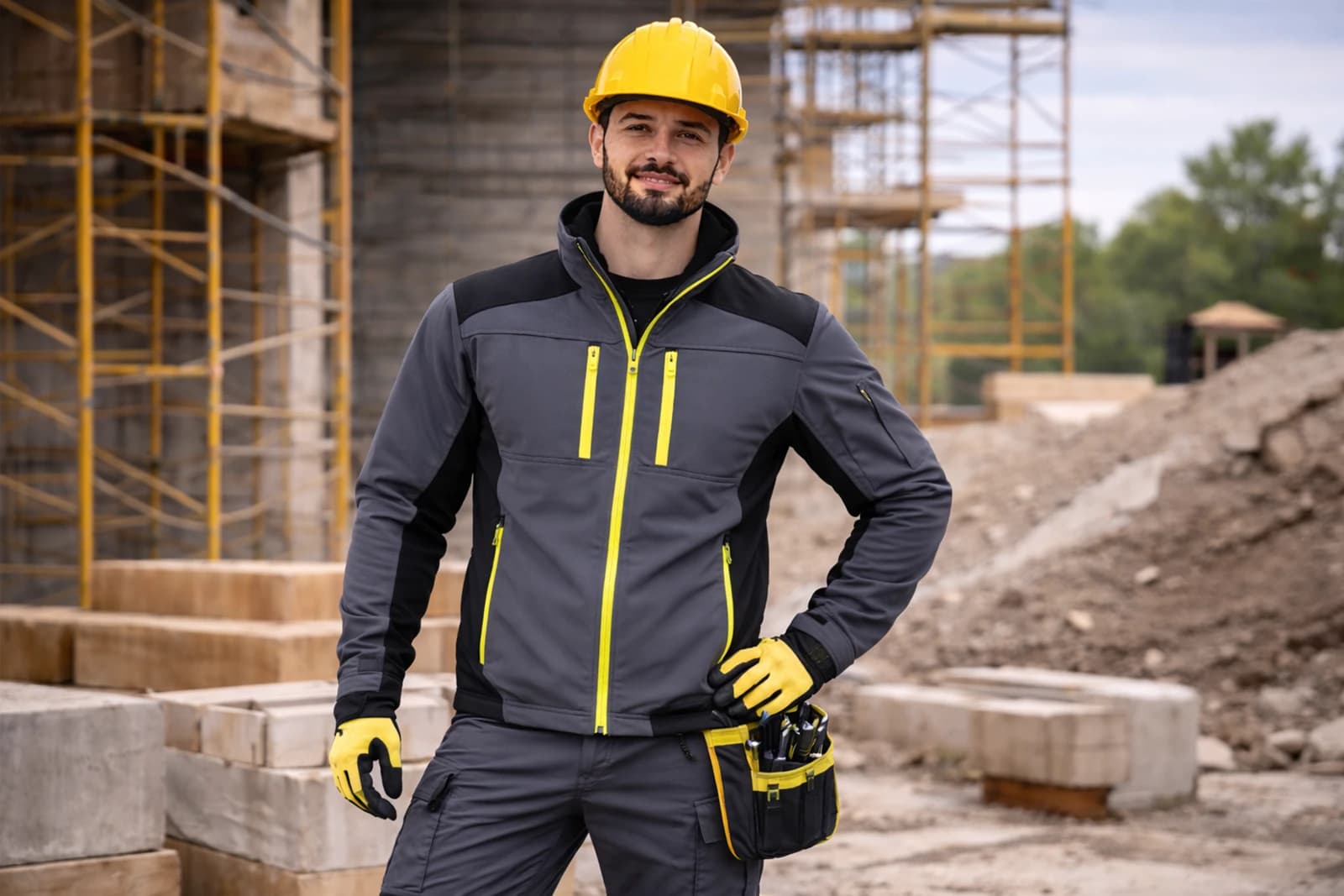
The solution is a data center workwear specification that maintains ESD control across temperature zones through fabric selection, layering strategy, zone-based specification, and an ESD control program that ensures garments perform throughout their service life. **Step 1: Specify ESD-safe fabrics with appropriate static control and comfort properties** For data center workwear, specify fabrics that meet both ESD control requirements and comfort requirements across temperature zones: - **Surface resistivity:** Fabric must have surface resistivity of 10^9 to 10^11 ohms per square (per ANSI/ESD S20.20 and IEC 61340-5-1). This resistivity range dissipates static charges without generating static electricity through movement and friction. - **Conductive fiber integration:** Specify fabrics with conductive fibers (carbon fibers, stainless steel fibers) integrated into the fabric structure. Conductive fibers provide permanent ESD control that withstands washing and wear — unlike topical anti-static treatments that degrade over time. - **Breathability and moisture wicking:** Specify fabrics with breathable construction (open-weave or mesh panels in non-critical zones) and moisture-wicking finishes that move sweat away from the skin. Breathability and moisture wicking improve comfort in hot aisles and reduce heat stress. - **Low particulate shedding:** Specify fabrics with low lint and particulate shedding. Data centers require clean environments to prevent dust accumulation on equipment. Low-lint fabrics maintain clean room conditions. - **Wash durability:** Require supplier testing data confirming that fabric maintains ESD control properties (surface resistivity within specification) after 25, 50, and 75 wash cycles. Topical anti-static treatments degrade through washing; conductive fiber integration provides permanent ESD control. The fabric specification ensures that garments control static generation while providing comfort across temperature zones. **Step 2: Design a layering strategy for temperature zone transitions** Data center workers move between temperature zones (cold aisles at 18–22°C, hot aisles at 30–40°C, ambient areas at 22–26°C). A single garment cannot provide comfort across this range. Design a layering strategy that enables workers to adjust: - **Base layer:** ESD-safe polo shirt or shirt with moisture-wicking properties. The base layer provides ESD control and comfort in warm aisles and ambient areas. Specify the base layer in a lightweight, breathable fabric (150–180 gsm) with moisture-wicking finish. - **Mid layer:** ESD-safe softshell jacket or sweater for cold aisle work and external plant areas. The mid layer provides insulation against air movement in cold aisles and weather protection for external areas. Specify the mid layer in a medium-weight fabric (250–300 gsm) with wind-resistant and water-resistant properties. - **Layering protocol:** Train workers to wear the base layer in warm aisles and ambient areas, and add the mid layer when working in cold aisles or external plant areas. Workers can remove the mid layer when returning to warm areas. All layers must be ESD-safe. The layering strategy enables workers to adjust garment insulation across temperature zones while maintaining ESD control. Workers don't need to remove ESD-safe layers or add personal synthetic layers. **Step 3: Create a zone-based specification that matches garment properties to each area** Data centers have areas with different temperature and ESD control requirements. Specify different garments for each zone: - **IT halls and warm aisles (22–27°C):** Specify ESD-safe polo uniform as the base garment. The polo provides ESD control, breathability, and comfort in warm environments. Specify the polo in a lightweight, moisture-wicking fabric with company branding for professional appearance in client-facing areas. - **Cold aisles (18–22°C):** Specify ESD-safe polo uniform plus ESD-safe softshell jacket. The polo provides base ESD control and comfort; the softshell provides insulation against air movement. Specify the softshell with wind-resistant and water-resistant properties for cold aisle air movement. - **External plant areas (variable temperature):** Specify ESD-safe softshell set (jacket and trouser) with weather protection. External areas (loading docks, generator yards, cooling tower areas) have variable temperature and weather conditions. The softshell set provides ESD control, weather protection, and durability for outdoor work. - **Electrical and mechanical rooms:** Specify ESD-safe coverall for additional protection. Electrical rooms (UPS systems, switchgear) and mechanical rooms (cooling plants, fire suppression systems) may require additional protection against arc flash, chemical exposure, or abrasion. The coverall provides full-body ESD control and additional protection. The zone-based specification matches garment cost and performance to each area's temperature and ESD control requirements. The buyer doesn't over-specify workwear for warm areas (paying for insulation not needed) and doesn't under-specify workwear for cold or external areas (creating comfort issues). **Step 4: Specify ESD-safe components and construction** Garment components (zippers, snaps, thread, labels) must be ESD-safe or non-sparking to prevent static generation at component points: - **Zippers:** Specify non-metallic zippers (plastic or coated metal zippers) that don't generate static through movement. Metallic zippers can generate static charges through friction. - **Snaps and closures:** Specify non-metallic snaps (plastic or coated metal snaps) or hook-and-loop closures that don't generate static. - **Thread:** Specify conductive thread or ESD-safe thread for seam construction. Standard polyester thread can generate static. - **Labels:** Specify printed labels or low-lint, ESD-safe sewn labels. Standard labels can shed lint and generate static. - **Construction:** Specify flat-felled seams or bound seams that enclose raw fabric edges and minimize static generation points. Avoid loose threads or dangling components that can generate static. The component specification ensures that all garment elements maintain ESD control, not just the base fabric. **Step 5: Implement an ESD control program that includes garment monitoring** ESD-safe garments are one element of a comprehensive ESD control program. Implement a program that ensures garments perform throughout their service life: - **ESD-safe footwear or heel grounders:** Require workers to wear ESD-safe footwear or heel grounders that dissipate static charges to ground. Footwear is critical — workers standing on insulated footwear can accumulate static charges even when wearing ESD-safe garments. - **Periodic garment ESD testing:** Test garment ESD performance (surface resistivity) periodically — at receipt, after 10 wash cycles, and quarterly during use. Remove garments from service if surface resistivity falls outside the 10^9 to 10^11 ohms per square specification. - **Worker training:** Train workers on ESD hazards, the importance of ESD-safe garments, proper garment use (no removing layers, no adding personal synthetic layers), and the layering strategy. Train workers to recognize when garments are damaged or degraded and may not provide ESD control. - **Prohibit personal synthetic clothing:** Prohibit workers from wearing personal synthetic clothing (polyester, nylon) under or over ESD-safe garments. Personal synthetic clothing generates static and compromises ESD control. Provide ESD-safe base layers and mid layers that workers can wear. - **ESD incident tracking:** Track ESD incidents (equipment failures attributed to ESD damage) and correlate with garment condition, worker garment use, and zone. Use incident data to improve garment specifications, worker training, and ESD control procedures. The ESD control program ensures that garments maintain ESD performance throughout their service life and that workers use garments correctly to maintain ESD control. **Step 6: Track garment performance and use data to improve specifications** Record garment performance data: - Garment type, zone, worker, issue date, replacement date - Garment ESD test results (surface resistivity at receipt, after wash cycles, during use) - Worker comfort feedback (overheating in hot aisles, feeling cold in cold aisles) - ESD incidents correlated with garment condition and worker garment use Use the data to: - Identify garments that lose ESD control prematurely (adjust fabric specification or supplier selection) - Identify zones where workers report comfort issues (adjust layering strategy or garment weight) - Forecast garment replacement cycles based on ESD performance degradation - Negotiate with suppliers using garment performance data (demonstrate that garments losing ESD control after 25 wash cycles don't deliver acceptable value) The data tracking turns garment performance into procurement intelligence, enabling continuous improvement in workwear specification and supplier selection. **Recommended garments for data center workwear:** - **Logistics polo uniform** — specify the polo as the base layer for IT halls and warm aisles. The polo's lightweight, breathable fabric provides ESD control and comfort in warm environments. Specify the polo with conductive fiber integration for permanent ESD control, moisture-wicking finish for comfort, and low-lint construction for clean environment maintenance. Specify the polo in company-branded colors for professional appearance in client-facing areas. The polo's ESD-safe properties, comfort, and professional appearance make it suitable for data center technicians working in IT halls and warm aisles. - **Construction softshell set** — specify the softshell set as the mid layer for cold aisles and external plant areas. The softshell's medium-weight fabric provides insulation against cold aisle air movement and weather protection for external areas. Specify the softshell with conductive fiber integration for permanent ESD control, wind-resistant and water-resistant properties for cold aisle and external area protection, and breathable construction for comfort during variable activity levels. The softshell set's ESD-safe properties, insulation, and weather protection make it suitable for data center technicians working in cold aisles and external plant areas.
Recommended Products
Products that fit this use case

Logistics Uniform
Logistics Polo Uniform
Breathable uniform polo for warehouse, delivery, and last-mile teams.
Construction Clothing
Construction Softshell Set
Flexible jacket and trouser set built for crews working across changing weather conditions.