Incoming Workwear Inspection for Pharmaceutical Cleanrooms: Critical Checkpoints
Pharmaceutical cleanrooms require workwear that meets strict contamination control standards. But buyers often assume that if the garment meets the specification on paper, it's ready to issue. The gap is that garments can have manufacturing defects—loose threads, incomplete seams, dimensional errors, closure failures—that compromise cleanroom performance. Without incoming inspection, these defects go undetected until the garment is in use, creating contamination risk, compliance gaps, and worker frustration. This article covers the incoming inspection protocol that closes the gap between specification compliance and actual garment readiness for cleanroom use.
Buyer context
What procurement teams run into
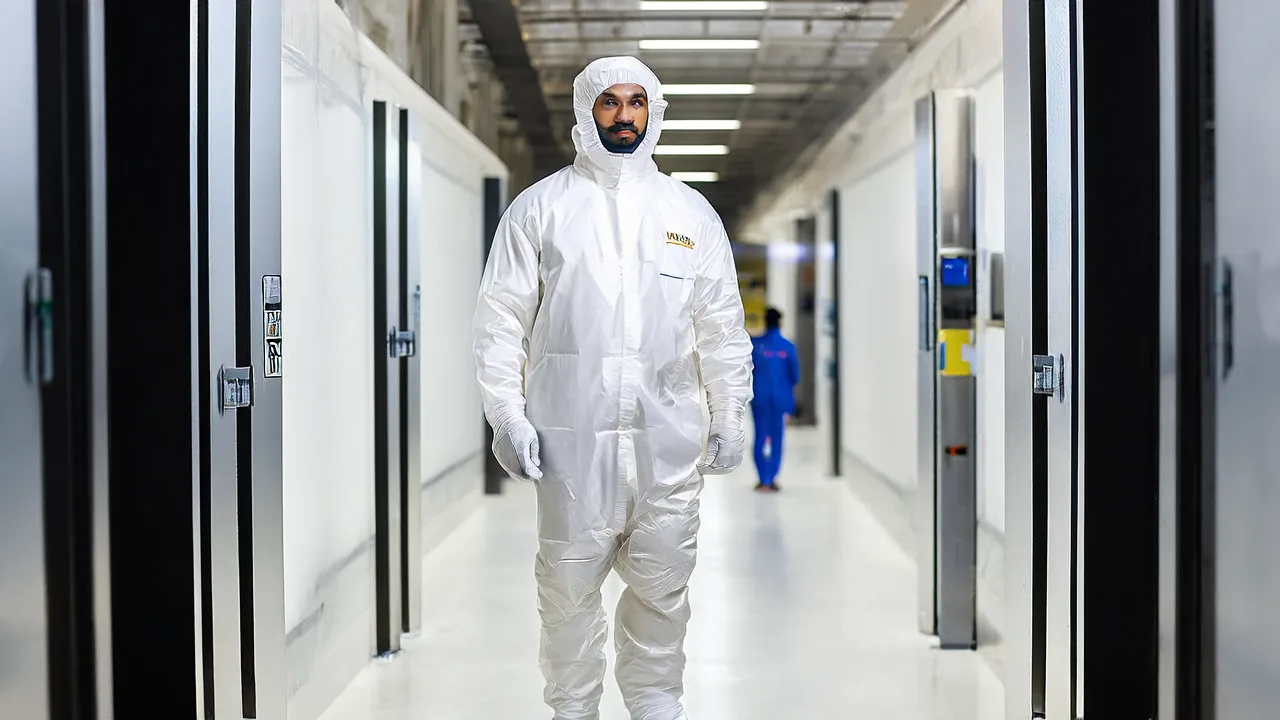
Pharmaceutical cleanrooms require workwear that meets strict contamination control standards: low particulate shedding, smooth fabric surfaces that don't trap or release particles, sealed seams that prevent fibre escape, and closures that function reliably through repeated gowning and degowning cycles. Buyers specify these requirements in the procurement specification, approve a pre-production sample, and assume bulk production will match. But the gap between specification compliance and actual garment readiness for cleanroom use is larger than most procurement processes acknowledge. **1. The specification controls the design, not the manufacturing quality** The procurement specification defines what the garment should be: fabric type (low-shedding polyester or polyester-blend), fabric weight, seam construction (sealed or bound seams to prevent fibre escape), closure type (zippers, snaps, or hook-and-loop), and dimensional tolerances. The pre-production sample is checked against this specification and approved. But the specification does not control whether the bulk production garments are actually manufactured to the specification. Manufacturing defects occur in bulk production even when the pre-production sample is perfect: - **Loose threads:** Sewing machines with incorrect tension leave loose threads at seam endpoints. In a cleanroom, loose threads shed fibres and create particulate contamination. - **Incomplete seam sealing:** Sealed seams require heat sealing or ultrasonic welding to enclose raw fabric edges. If the sealing process is incomplete (partial seal, weak bond), the raw edge is exposed and sheds fibres. - **Dimensional errors:** Cutting or sewing errors cause garments to fall outside dimensional tolerances. A coverall that is 2 cm too short in the inseam creates comfort problems and may not fit correctly over cleanroom boots. - **Closure failures:** Zippers with misaligned teeth, snaps that don't engage fully, or hook-and-loop that doesn't hold create gowning difficulties and compromise the garment's contamination barrier. - **Surface contamination:** Garments packed in non-cleanroom conditions accumulate dust, lint, or biological contaminants before they reach the cleanroom. The garment is manufactured correctly but is not cleanroom-ready when issued. **2. The "specification compliance" assumption creates a false sense of security** Most procurement processes treat specification compliance as a binary condition: the garment either meets the specification or it doesn't. The pre-production sample is checked and approved, so the buyer assumes bulk production will match. But specification compliance is not binary—it is a distribution. Even if 95% of bulk garments meet the specification, 5% may have defects that compromise cleanroom performance. Without incoming inspection, the buyer has no way to detect the 5% defect rate. The defects are discovered only when the garment is in use: - A worker gowns up and notices loose threads inside the coverall—fibres are shedding onto the worker's clothing and will transfer to the cleanroom environment. - A worker notices that the seam at the underarm is not fully sealed—raw fabric edge is exposed and shedding fibres. - A worker tries to close the zipper and finds it jams—the zipper teeth are misaligned and the garment cannot be worn. - A worker issues a coverall from the packaging and notices dust on the fabric—the garment was packed in a non-cleanroom environment and is contaminated. Each of these defects creates a problem: the garment must be rejected, the worker must be re-issued, and the defect must be investigated. But the real cost is the contamination risk: if the defect is not detected before the garment enters the cleanroom, the defect becomes a contamination source. **3. Incoming inspection checks four critical areas before garment issuance** Incoming inspection is the quality control step that closes the gap between specification compliance and actual garment readiness. The inspection checks four critical areas: - **Particulate shedding validation:** The garment is checked for loose threads, unsealed seams, and fabric surface defects that could shed particles. The inspector runs a clean gloved hand over the garment surface (especially at seams, cuffs, and closures) and checks the glove for fibre transfer. Garments with visible loose threads or unsealed seams are rejected. For critical cleanroom applications (ISO Class 5 or better), a sample of garments from each batch is tested in a particle counter chamber to quantify particulate shedding—garments that exceed the shedding threshold are rejected. - **Dimensional accuracy:** Critical dimensions (chest, waist, inseam, sleeve length, rise) are measured and compared to the size specification. Garments outside tolerance (typically ±1.5 cm for cleanroom garments) are rejected. Dimensional errors are common in bulk production because fabric shrinkage varies by dye lot—garments made from fabric with higher shrinkage end up smaller after the first wash, even if pre-wash dimensions are correct. - **Seam and closure integrity:** Seams are inspected for complete sealing (no exposed raw edges), consistent stitch density (no skipped stitches), and adequate seam strength (no weak bonds). Closures (zippers, snaps, hook-and-loop) are tested for function: zippers must zip smoothly without jamming, snaps must engage fully and hold, hook-and-loop must hold with adequate strength. Garments with seam or closure defects are rejected. - **Cleanliness and packaging:** Garments are checked for surface contamination (dust, lint, stains, biological contaminants) and packaging integrity (sealed bags, no tears, no contamination inside the bag). Garments with visible contamination or compromised packaging are rejected. For critical cleanroom applications, garments are required to be individually packed in cleanroom-grade packaging (sealed polyethylene bags, packed in a controlled environment) to maintain cleanliness until issuance. **4. The decision framework: accept, reject, or return for rework** Incoming inspection produces one of three outcomes for each garment: - **Accept:** Garment passes all four checks (particulate shedding, dimensional accuracy, seam and closure integrity, cleanliness). The garment is cleanroom-ready and can be issued to the worker. - **Reject:** Garment fails one or more checks and cannot be reworked. For example: fabric has visible defects (slubs, holes, contamination that cannot be removed), seams are incompletely sealed and cannot be resealed, or dimensions are outside tolerance and cannot be adjusted. The garment is rejected and returned to the manufacturer for credit or replacement. - **Return for rework:** Garment fails one check but can be reworked to meet the standard. For example: loose threads can be trimmed, minor surface contamination can be removed by cleaning, or a zipper can be replaced. The garment is returned to the manufacturer (or to an in-house rework team) for rework, then re-inspected before issuance. The decision must be documented: record the garment ID, the inspection result for each criterion, the disposition (accept, reject, return for rework), and the reason for disposition. This documentation creates a traceable record that supports quality management and identifies patterns (e.g., a specific manufacturer that consistently produces garments with loose threads, indicating a sewing machine tension problem). **5. The inspection must be performed in a controlled environment** Incoming inspection for cleanroom garments cannot be performed in a standard warehouse or office environment—the inspection environment itself can contaminate the garments. The inspection must be performed in a controlled environment: - **Cleanroom-grade inspection area:** For critical cleanroom applications (ISO Class 5 or better), the inspection area must be a cleanroom (ISO Class 7 or better) with controlled temperature, humidity, and particulate levels. The inspector must wear cleanroom gowning (coverall, gloves, mask, booties) to prevent contamination during inspection. - **Controlled environment for less critical applications:** For less critical cleanroom applications (ISO Class 7-8), the inspection area does not need to be a full cleanroom, but must be a clean, low-traffic area with minimal dust and lint. The inspector must wear clean gloves and avoid touching the garment surface with bare hands. The inspection environment must be documented: record the inspection area classification, the inspector's gowning, and the environmental conditions (temperature, humidity, particulate count) at the time of inspection. This documentation confirms that the inspection was performed under controlled conditions and that the inspection result is valid. **6. The procurement specification gap: no incoming inspection requirement** Most workwear procurement specifications for pharmaceutical cleanrooms include a pre-production sample approval step but do not include an incoming inspection requirement: - **Pre-production sample:** Required and approved. ✓ - **Incoming inspection:** Not required. ✗ - **Inspection criteria (particulate shedding, dimensional accuracy, seam integrity, cleanliness):** Not specified. ✗ - **Decision framework (accept, reject, return for rework):** Not specified. ✗ - **Inspection environment (cleanroom-grade or controlled environment):** Not specified. ✗ The procurement specification controls the garment design (through the approved sample) but does not control the manufacturing quality of bulk production. The result is a consistent pattern: the sample is approved correctly, but bulk garments have manufacturing defects that compromise cleanroom performance—defects that are discovered only when the garment is in use, creating contamination risk, compliance gaps, and worker frustration.
Sourcing approach
How a factory partner can respond
The solution is to add incoming inspection to the procurement specification for pharmaceutical cleanroom workwear—closing the gap between specification compliance and actual garment readiness for cleanroom use. **Step 1: Define incoming inspection criteria** Create a written inspection checklist that covers four critical areas: - **Particulate shedding validation:** Check for loose threads, unsealed seams, and fabric surface defects. Run a clean gloved hand over the garment surface and check for fibre transfer. For critical cleanroom applications (ISO Class 5 or better), test a sample of garments from each batch in a particle counter chamber to quantify particulate shedding. - **Dimensional accuracy:** Measure critical dimensions (chest, waist, inseam, sleeve length, rise) and compare to the size specification. Acceptable tolerance: ±1.5 cm for cleanroom garments. - **Seam and closure integrity:** Inspect seams for complete sealing, consistent stitch density, and adequate strength. Test closures (zippers, snaps, hook-and-loop) for function. - **Cleanliness and packaging:** Check for surface contamination (dust, lint, stains) and packaging integrity (sealed bags, no tears). For critical cleanroom applications, require garments to be individually packed in cleanroom-grade packaging. **Step 2: Implement the decision framework: accept, reject, or return for rework** Train inspectors to apply the decision framework: - **Accept:** Garment passes all four checks. Issue to the worker. - **Reject:** Garment fails one or more checks and cannot be reworked. Return to the manufacturer for credit or replacement. - **Return for rework:** Garment fails one check but can be reworked (e.g., trim loose threads, clean surface contamination, replace zipper). Return for rework, then re-inspect before issuance. Document every inspection: record the garment ID, inspection result for each criterion, disposition, and reason for disposition. Use the data to identify patterns (e.g., a specific manufacturer that consistently produces garments with loose threads). **Step 3: Perform inspection in a controlled environment** For critical cleanroom applications (ISO Class 5 or better), perform the inspection in a cleanroom-grade inspection area (ISO Class 7 or better). The inspector must wear cleanroom gowning (coverall, gloves, mask, booties) to prevent contamination during inspection. For less critical cleanroom applications (ISO Class 7-8), perform the inspection in a clean, low-traffic area with minimal dust and lint. The inspector must wear clean gloves and avoid touching the garment surface with bare hands. Document the inspection environment: record the inspection area classification, the inspector's gowning, and the environmental conditions (temperature, humidity, particulate count) at the time of inspection. **Step 4: Specify incoming inspection requirements in the procurement specification** The procurement specification must include: - **Incoming inspection requirement:** All garments must pass incoming inspection before issuance to cleanroom workers. - **Inspection criteria:** Particulate shedding validation, dimensional accuracy (±1.5 cm tolerance), seam and closure integrity, cleanliness and packaging. - **Decision framework:** Accept, reject, or return for rework. Document every inspection. - **Inspection environment:** Cleanroom-grade inspection area for critical applications (ISO Class 5 or better), controlled environment for less critical applications (ISO Class 7-8). - **Sampling plan:** For large orders (500+ garments), inspect a statistical sample (e.g., 10% of each size) using ANSI/ASQ Z1.4 or equivalent sampling standard. If the sample fails, inspect 100% of the batch. **Step 5: Require cleanroom-grade packaging from the manufacturer** The procurement specification must require the manufacturer to pack garments in cleanroom-grade packaging: - **Individual packaging:** Each garment must be individually packed in a sealed polyethylene bag to maintain cleanliness until issuance. - **Cleanroom packing environment:** Garments must be packed in a controlled environment (ISO Class 7 or better) to prevent contamination during packing. - **Packaging material:** Packaging material must be low-shedding (polyethylene, not paper or cardboard) and must not introduce contaminants into the cleanroom. Garments that arrive in compromised packaging (torn bags, open seals, visible contamination) must be rejected—do not issue garments with compromised packaging to cleanroom workers. **Step 6: Pilot the incoming inspection process before full implementation** Before requiring incoming inspection for all cleanroom garment orders, pilot the process with one order: - Inspect every garment using the four-criteria checklist. - Record the inspection result and disposition for each garment. - Track the outcome: how many garments were accepted, rejected, or returned for rework? What was the defect rate? Did any accepted garment create a contamination or compliance issue in the cleanroom? Use pilot data to refine the inspection criteria, decision framework, and documentation process before full implementation across all cleanroom garment orders. **Recommended garments for pharmaceutical cleanroom workwear:** - **Industrial coverall-pro** — specify with cleanroom-grade construction: low-shedding polyester fabric (minimum 220 GSM), sealed or ultrasonically welded seams to prevent fibre escape, smooth-surface zippers with flap closures, elasticated cuffs and waist for secure fit. Require incoming inspection for particulate shedding, dimensional accuracy, seam integrity, and cleanliness. Require cleanroom-grade packaging (individually sealed in polyethylene bags, packed in a controlled environment). The coverall is the primary contamination barrier in the cleanroom—incoming inspection ensures that every coverall issued to a cleanroom worker meets the required standard. - **Logistics polo uniform** — specify for non-cleanroom areas (warehousing, administration, utility rooms) where cleanroom-grade construction is not required but durability and comfort are still important. The polo's polyester-cotton blend provides adequate durability for general work areas, and the polo's knit construction provides better breathability than a coverall for workers in non-classified areas. Incoming inspection is still recommended (check for dimensional accuracy, seam integrity, and cleanliness) but the inspection criteria are less stringent than for cleanroom garments.
Recommended Products
Products that fit this use case

Industrial Workwear
Industrial Coverall Pro
Hard-wearing one-piece coverall for plant, maintenance, and heavy-duty operations.

Logistics Uniform
Logistics Polo Uniform
Breathable uniform polo for warehouse, delivery, and last-mile teams.