Industrial Coveralls for Maintenance & Oil/Gas Technicians in the Middle East: A B2B Sourcing Guide from a Chinese Manufacturer
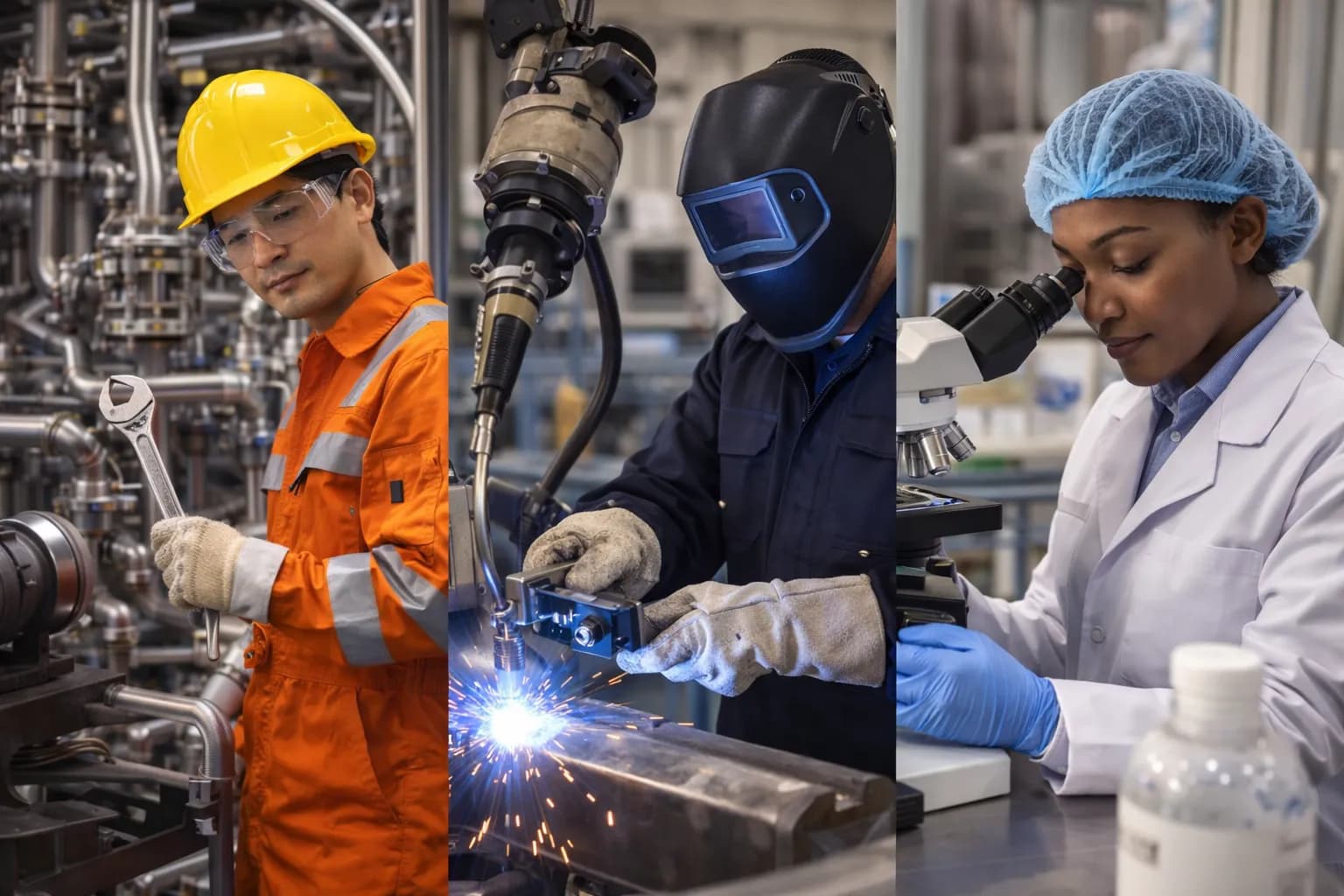
The Middle East's oil and gas, utilities, and heavy industry sectors employ tens of thousands of maintenance technicians who need durable, compliant workwear. Unlike logistics or construction roles, maintenance work in refineries, power stations, desalination plants, and industrial facilities demands coveralls that handle heat, flame risk, chemical exposure, and constant bending and kneeling. This guide for Middle East B2B buyers sourcing from a Chinese workwear manufacturer covers coverall fabric selection for GCC industrial climates, compliance with EN ISO 11612 (flame-resistant) and NFPA 2112, seam construction, closure systems, pocket placement for tools, seasonal layering with softshell sets, and bulk procurement strategies for maintenance crews of 50-5,000+ workers.
Buyer context
What procurement teams run into
Industrial maintenance is one of the GCC's largest employment categories. Saudi Aramco alone employs over 70,000 people, and the wider Gulf oil and gas ecosystem — including ADNOC, QatarEnergy, and KOC — supports a sprawling network of contractors and maintenance service providers. Add in power generation, water desalination, petrochemicals, and manufacturing, and you have hundreds of thousands of technicians across the region who need proper industrial coveralls. Maintenance workwear is fundamentally different from logistics or construction uniforms. Technicians spend their days crawling under equipment, bending over pumps, kneeling on concrete, working near heat sources, and handling tools that snag on pockets and seams. The wrong coverall isn't just uncomfortable — it's a safety hazard and a replaceable-consumable expense that drains procurement budgets when it fails prematurely. **1. Fabric selection — balancing Gulf heat with industrial durability** The biggest fabric challenge for Middle East industrial coveralls is the climate. Gulf summer temperatures routinely exceed 45°C, and technicians working outdoors or in non-air-conditioned process areas need garments that shed heat. But maintenance work also demands abrasion resistance, durability, and — in certain zones — flame resistance. Common coverall fabric options from Chinese manufacturers: - **65/35 polyester-cotton twill (240-260 gsm):** The GCC industrial workhorse. Good durability, decent breathability, and cost-effective at scale. The polyester content adds abrasion resistance and reduces shrinkage; the cotton provides comfort and absorbency. Most Gulf industrial buyers standardise on this blend for general maintenance work. - **100% cotton twill (300-340 gsm):** Preferred for welding and hot-work environments where polyester can melt onto skin. Heavier and hotter to wear, but necessary where the risk assessment demands it. In the Gulf, this is typically specified only for dedicated welding crews, not general maintenance. - **Flame-resistant fabrics (modacrylic/cotton, aramid blends, or FR-treated cotton):** Mandatory for oil and gas zones with flash-fire risk. EN ISO 11612 is the governing standard for heat and flame protection in the EU/Gulf markets; NFPA 2112 is the US equivalent that some international operators specify. FR coveralls are 3-5× the cost of standard poly-cotton, so buyers need to be precise about which zones require them. - **Anti-static treated fabrics:** Required for hazardous atmospheres per EN 1149-5. Many Gulf petrochemical plants mandate anti-static properties even in general maintenance zones. Specify carbon-fibre or conductive-thread construction for permanent protection — topical anti-static sprays wash out after a few cycles. **2. Closure systems that survive real work** Maintenance coveralls see more mechanical stress than almost any other garment type. The closure system is where cheap manufacturing fails first: - **Two-way brass or zinc-alloy zippers** with a protective flap covering the full length of the zip. The flap prevents snagging and — critically — protects the wearer's chest from the cold metal zip in winter and from spark ingress in hot-work areas. - **Concealed snaps or studs** at the collar, cuffs, and pocket flaps. Plastic studs fracture in the Gulf heat; specify zinc-alloy or stainless hardware rated for repeated industrial laundering. - **Reinforced crotch and stress points:** The crotch seam and the area around the knees are the first to blow out on maintenance coveralls. Require bar-tacking at all stress points (belt loops, pocket corners, zipper base) and double-needle or safety-stitch seams on all major panels. A good Chinese manufacturer will double-stitch the crotch seam; a bad one will save ₹0.30 there and make you repurchase the garment after 20 washes. **3. Pocket placement — the tool-carrying system** Maintenance technicians carry more on their person than any other category of worker: wrenches, screwdrivers, phones, radios, notepads, marking pens, gloves. The pocket system is a functional requirement, not a design afterthought: - **Patch pockets on the chest** with a three-needle reinforced opening, sized to hold a phone or small tools. Flap or button closure prevents items from escaping when bending. - **Two reinforced cargo pockets on the thighs or hips** with side expansion gussets — deep enough for a full hand to retrieve a small wrench without pulling the whole pocket inside out. - **Interior or hip pockets** for a notepad or small meter. Many technicians prefer a dedicated phone pocket with a headphone port on the thigh — increasingly common in Gulf maintenance specs. - **Tool loops** on the left thigh or utility belt slots for hanging small tools. - **A hidden zippered pocket** for personal valuables (phone, wallet) that stays protected from splash and dirt. The key principle: every pocket must be bar-tacked at minimum at the four corners plus the opening edges, and any point load must have a reinforcing patch behind it. **4. Seasonality — the GCC maintenance wardrobe cycle** GCC industrial maintenance runs year-round, but the wardrobe needs to flex across two very different seasons: - **Summer (April-October):** Lightweight coveralls in 240 gsm poly-cotton or, for the hottest zones, a ventilated mesh-back version with underarm gussets. Some Gulf operators now specify zip-off sleeve coveralls that convert to a short-sleeve shirt for the July-August peak. - **Winter (November-March):** Standard-weight coveralls stay in service, but outdoor maintenance crews need an insulating layer underneath. A **construction softshell set** (jacket + trousers in a breathable, water-repellent softshell fabric) worn under or over the coverall is becoming the standard winter layering solution in GCC industrial tenders. The softshell provides wind resistance and mild insulation without the bulk of a padded jacket, which binds when technicians need to reach into machinery. - **Rain and humidity:** Coastal facilities (Ras Laffan, Jubail, Fujairah) deal with humidity and occasional winter rain. Specify a DWR (durable water repellent) finish on the coverall shell or a dedicated rain over-jacket for outdoor crews. **5. Compliance and certification — what Gulf buyers must demand** The Gulf industrial standards ecosystem is well-established, and buyers should insist on documented certification from their Chinese manufacturer: - **EN ISO 11612** for heat and flame protection (all FR coveralls). - **EN 1149-5** for anti-static properties where hazardous atmospheres exist. - **EN ISO 20471** if the coverall includes hi-vis panels — some Gulf sites require visible tape on coveralls for technicians working near vehicle traffic within the plant. - **CE marking** where applicable for PPE classification. - **Wash-test documentation:** Request a third-party wash test report showing the garment maintains its properties (FR, anti-static, colour fastness) after 50 industrial washes at 75°C. This is the single most important document a Gulf procurement officer can request — it separates compliant manufacturers from those cutting corners. **6. Sourcing and bulk procurement from China** When tendering coveralls for 50-5,000+ maintenance technicians, Gulf buyers should: - **Request sample sets first.** A garment that looks good on a spec sheet often fails in the field. Order 3-5 pieces per fabric/closure configuration and run a 30-day wear trial with actual technicians before committing to bulk. - **Specify industrial laundering compatibility.** Gulf industrial laundries wash at high temperatures with aggressive detergents. Confirm the fabric, thread, and hardware survive ISO 15797 (industrial washing) procedures. - **Negotiate on gsm, not just price.** A 240 gsm fabric at $8 is a better deal than a 200 gsm fabric at $6.50 if the thinner fabric fails at 30 washes. Chinese manufacturers will happily quote multiple gsm options — get the full range and do the lifecycle maths. - **Plan for seasonal ordering.** Chinese manufacturing capacity for workwear peaks in Q1-Q3. For winter softshell layering sets, order in Q2; for summer lightweight coveralls, order in Q4 to lock in capacity and avoid the peak-season price premium. - **Check the factory's export compliance.** Ensure the manufacturer holds the relevant export documentation (CE, ISO 9001, and any GCC-specific certifications like SASO for Saudi Arabia). A manufacturer with Gulf export experience will know the paperwork and the customs requirements — this alone is worth a premium.
Sourcing approach
How a factory partner can respond
The correct approach to sourcing industrial coveralls for Middle East maintenance and oil/gas technicians is a three-layer strategy: **1. Core garment — the industrial coverall.** Specify a 65/35 poly-cotton twill coverall at 240-260 gsm for general maintenance, or a certified flame-resistant coverall (EN ISO 11612) for oil and gas hot zones. Demand reinforced seams (bar-tacked crotch, knees, pockets), a full-length zipper with protective flap, zinc-alloy hardware, and a functional pocket system designed for real tool-carrying. Request third-party wash-test documentation proving the garment holds up to 50+ industrial washes. **2. Seasonal layering — the softshell complement.** For winter outdoor maintenance (November-March), pair the coverall with a breathable construction softshell set that provides wind and mild-weather protection without restricting movement. The softshell goes over the coverall for outdoor work and comes off in workshops or warm process areas — a flexible system that Gulf procurement teams increasingly standardise on. **3. Compliance documentation.** Work with a Chinese manufacturer who can provide full certification evidence: EN ISO 11612 for FR garments, EN 1149-5 for anti-static zones, EN ISO 20471 for hi-vis requirements, and independent wash-test reports. Request physical samples and run a 30-day wear trial with actual technicians before committing to bulk. This lifecycle approach — quality fabrics, reinforced construction, documented compliance, and proper seasonal layering — cuts total cost of ownership by 30-50% versus buying the cheapest garment and replacing it constantly.
Recommended Products
Products that fit this use case
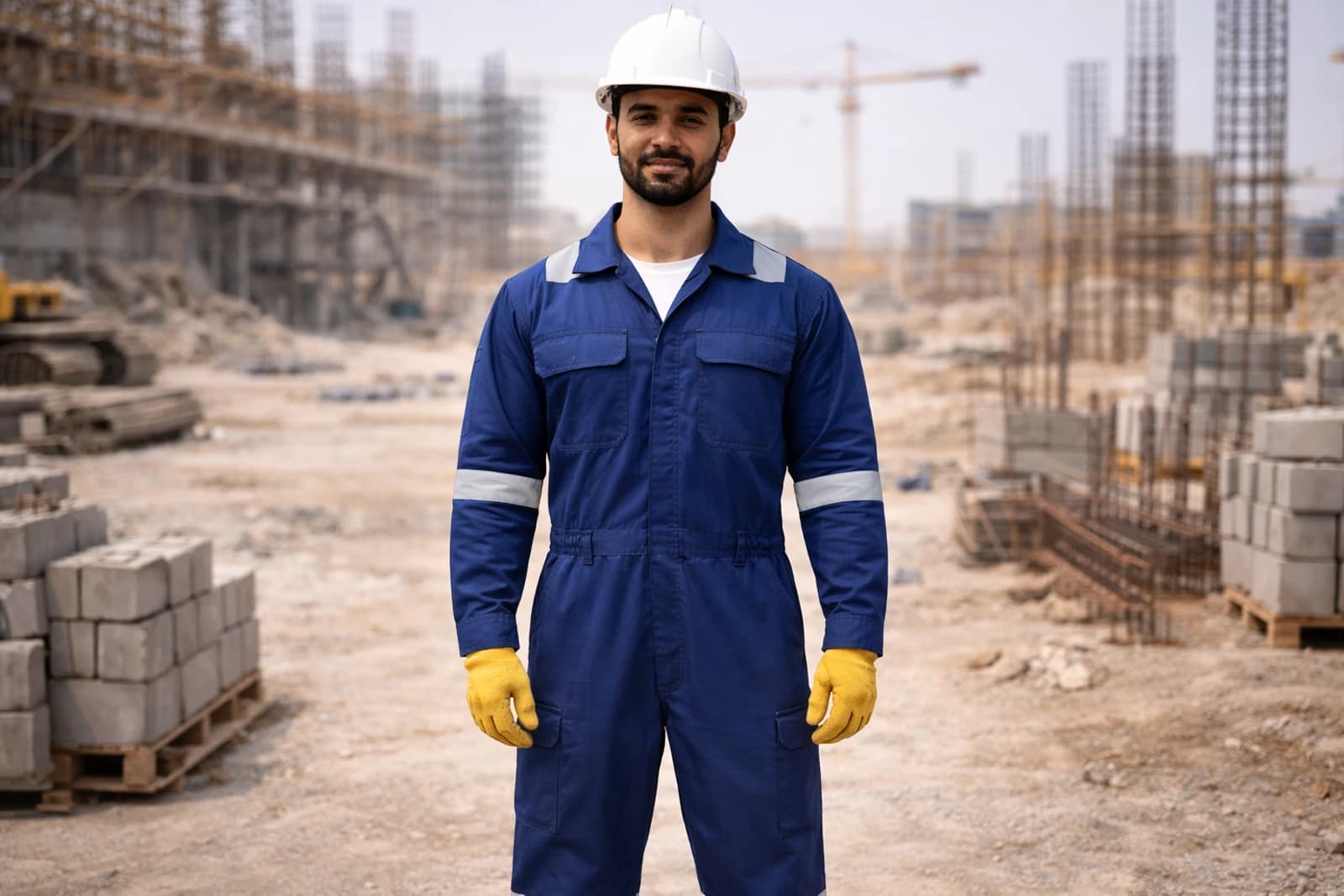
Industrial Workwear
Industrial Coverall Pro
Hard-wearing one-piece coverall for plant, maintenance, and heavy-duty operations.
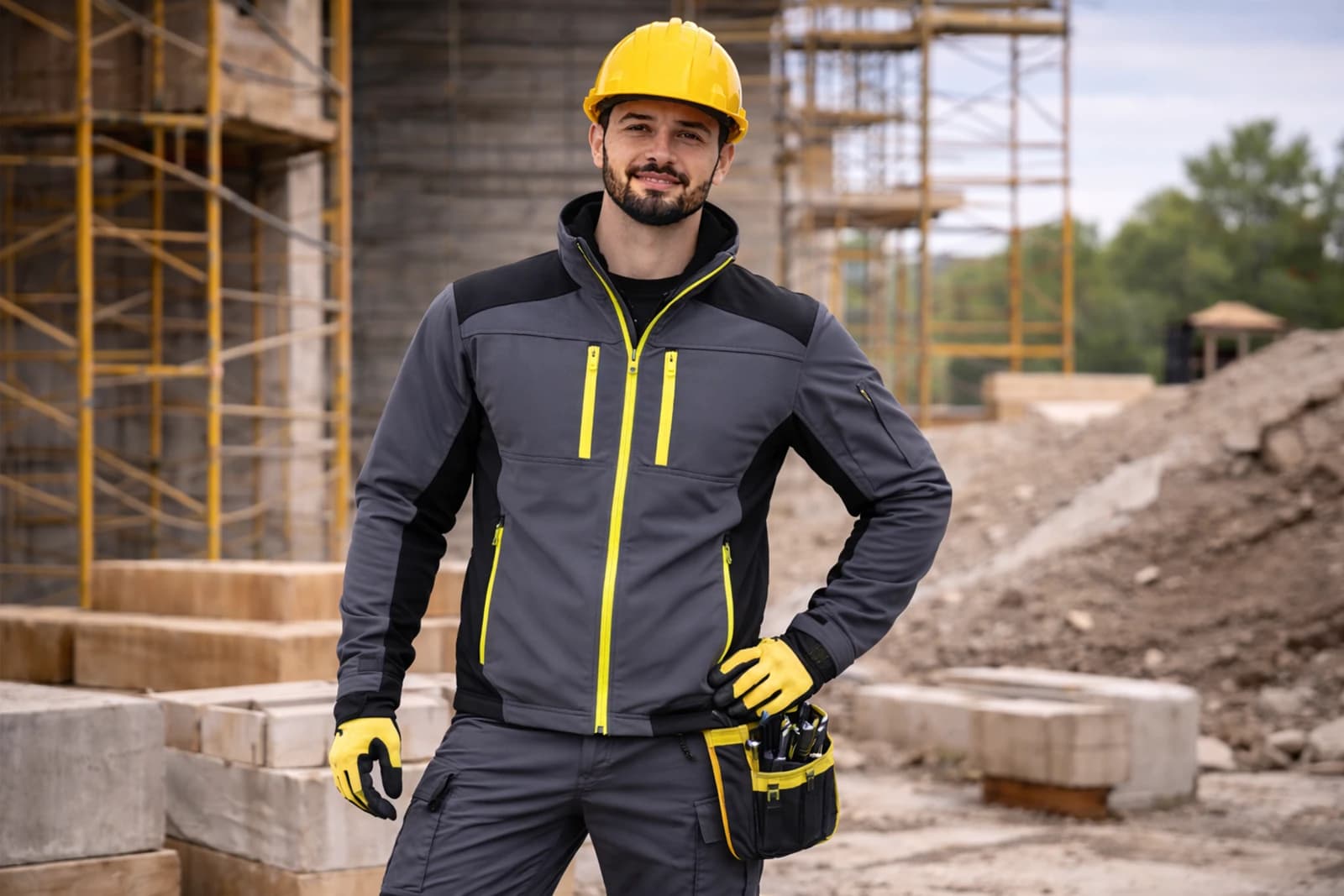
Construction Clothing
Construction Softshell Set
Flexible jacket and trouser set built for crews working across changing weather conditions.