Industrial Coveralls for Oil & Gas: Flame-Retardant & Comfort Specs for Middle East B2B Buyers
The Middle East oil and gas sector — from Saudi Aramco's Ghawar field to Qatar's North Field and ADNOC's onshore and offshore operations — runs on one of the most demanding workwear environments on the planet. Refinery technicians, drilling rig crews, pipeline maintenance teams, and plant operators work in close proximity to hydrocarbons, extreme heat, and flash-fire hazards every shift. This B2B sourcing guide for Middle East buyers explains what to specify when procuring industrial coveralls from a Chinese manufacturer: flame-retardant standards (EN ISO 11612, NFPA 2112), fabric weight and breathability for Gulf heat, closure and pocket design for refinery work, hi-vis integration for plant traffic zones, anti-static requirements for hazardous atmospheres, and volume procurement strategies for workforces from 200 to 20,000+.

Buyer context
What procurement teams run into
The Gulf region produces roughly a third of the world's crude oil, and its refineries, petrochemical complexes, and gas plants employ hundreds of thousands of workers who face flash fire and arc flash hazards daily. When a hydrocarbon leak ignites, a standard cotton coverall becomes a torch. That's why flame-retardant (FR) workwear is not optional — it's mandated by operators and regulators alike. But here's the tension every Middle East procurement manager knows: FR coveralls are hot. A 330gsm FR cotton coverall worn at 45°C ambient temperature on a summer day in Jubail or Mesaieed is a recipe for heat stress, dehydration, and reduced productivity. Getting the balance right between protection and comfort is the core challenge of industrial workwear sourcing in this region. **1. The standards maze — what to actually specify** Before comparing fabrics, you need to know which standards your workers must meet. Middle East operators typically enforce one of two systems: - **EN ISO 11612 (European system):** The dominant standard across the Gulf, used by Aramco, ADNOC, QP, and most international EPC contractors. It rates heat and flame protection with codes like A1 (flame spread), B1 (convective heat), C1 (radiant heat), and E (molten metal splash). Most Gulf refinery coveralls are specified to at least A1 + B1, with C1 for workers near furnace and heater units. - **NFPA 2112 (American system):** Required by US-headquartered operators and contractors (Chevron, ExxonMobil, some JV projects). NFPA 2112 is more prescriptive about fabric performance in flash-fire simulation testing. If your workforce includes workers under US-style HSE programs, you may need dual-certified garments. The critical procurement error: buying "FR coveralls" without specifying WHICH standard. A garment certified to EN ISO 11612 alone is not automatically NFPA 2112-compliant, and vice versa. Ask your Chinese manufacturer for third-party test reports (SGS, TÜV, Bureau Veritas) showing the specific standard and classification level — not just a marketing claim of "flame retardant." **2. Fabric weight — the Gulf heat trade-off** FR fabrics come in a range of weights, and weight directly affects heat stress: - **220-250 gsm lightweight FR:** The future of Gulf workwear. Aramid blends and treated FR cotton/polyester mixes in the 220-250gsm range are significantly cooler than traditional heavyweight fabrics. They still meet EN ISO 11612 A1/B1 for most roles. For indoor plant work and moderate tasks, this is the sweet spot. - **260-300 gsm standard FR:** The workhorse category. Most conventional FR coveralls from Chinese manufacturers sit here. Good protection, acceptable comfort in air-conditioned control rooms and for less physically demanding roles, but heavy and hot for sustained outdoor work. - **300+ gsm heavyweight FR:** Only for high-risk roles — welding, furnace maintenance, molten metal areas. In Gulf summer heat, a 340gsm FR coverall worn for eight hours is genuinely dangerous from a heat-stress perspective. Reserve this weight for short-duration, high-hazard tasks. **3. Aramid vs. treated cotton — the material decision** Two broad fabric families dominate FR workwear: - **Inherent FR (aramid-based: Nomex, Kevlar, or blends):** The fibre itself is flame-resistant — protection never washes out, no matter how many industrial wash cycles. Aramid is lighter for equivalent protection, more breathable, and holds its integrity at higher temperatures. Cost is 2-3x higher than treated cotton. For offshore rigs, gas plants, and high-risk refinery roles, aramid is the responsible choice. - **Treated FR (FR-treated cotton, FR viscose blends):** Flame resistance comes from a chemical treatment applied to the fabric. Much cheaper, comfortable, and widely used across Gulf refineries for lower-risk roles. The catch: the treatment degrades with washing, especially in the harsh industrial laundries common in the GCC. Garment life and protection require careful laundry management and regular testing. Some operators replace treated-FR coveralls on a fixed schedule (typically 50-75 industrial washes). Many Middle East buyers use a tiered strategy: aramid for offshore and high-risk onshore roles, treated FR for general refinery and plant maintenance work — and save substantial budget without compromising safety. **4. Design details that matter in a refinery** Beyond fabric, the cut and features make the difference between a compliant garment and one workers actually wear: - **Closure system:** Zip-front coveralls are standard, but the zip itself matters. Specify a metal or high-temperature polymer zip with a protective flap covering the teeth — an exposed zip can transfer heat directly to the skin and is a common flash-fire burn point. Double-slider zips let workers open the legs without removing the garment. - **Pockets:** Critical but dangerous. Pockets on FR coveralls must have closures (flaps or zips) — an open pocket catches sparks and molten material. Button-flap chest pockets, zip leg pockets, and a secure tool pocket on the thigh are the practical minimum for refinery work. Ensure all pocket hardware is non-metallic or protected, since metal in contact with the body conducts heat and can cause arc-flash burns. - **Seams and construction:** FR coveralls from reputable Chinese manufacturers use FR thread and bar-tacked stress points. Specify double-needle or French seams at critical load areas. A rip in a seam in a flash event becomes an entry point for flame to the body. - **Ventilation features:** Mesh-lined underarm vents, back cape vents, and breathable lining panels dramatically reduce heat stress in Gulf conditions. Many modern FR fabric blends include modacrylic or FR-viscose components that wick moisture while the outer face resists flame. Specify ventilation features for outdoor plant work. - **Cuff and flap closures:** Elasticated cuffs can melt or degrade. Specify adjustable button cuffs that seal against sparks but can be released quickly. Similarly, front placket flaps should close securely to prevent ember entry. **5. Hi-vis integration for plant traffic** In any operating refinery or plant, workers share space with moving equipment — forklifts, man-lifts, mobile cranes, and heavy transport. EN ISO 20471 hi-vis coverage is often required for all workers in traffic zones, on top of FR protection. The challenge: combining hi-vis with FR in a single garment. The fluorescent background material and retroflective tape must themselves be FR-rated and certified to the relevant standards. Chinese manufacturers can produce FR coveralls with integrated hi-vis panels — typically a fluorescent chest panel and retroreflective tape across the torso and down the arms — that meet both EN ISO 11612 (or NFPA 2112) and EN ISO 20471 simultaneously. Specify this in the initial tender rather than trying to layer a hi-vis vest over an FR coverall — the vest approach adds a bulky layer, increases heat stress, and creates a compliance gap if the vest isn't FR-rated. **6. Sizing and fit for a diverse Gulf workforce** Gulf plants employ a mix of nationalities — Indian and Pakistani technicians, Filipino operators, Egyptian planners, Saudi and Emirati engineers. Sizing is never one-size-fits-all: - Require a size range of S to 6XL with graded measurements verified on a size specification table from your Chinese manufacturer. - Specify relaxed fit with articulated knees and elbows — workers bend, climb, and stretch constantly, and a tight coverall restricts movement and tears at stress points. - Consider separate trouser-length options within sizes to accommodate different height profiles. Many Chinese manufacturers offer short/regular/tall options for key sizes at minimal cost. - Ask for a fit sample per size before bulk production — the cost of a few fit samples is a fraction of reworking 5,000 ill-fitting coveralls. **7. Volume procurement from a Chinese manufacturer** When sourcing FR coveralls from China for Gulf operations, structure your procurement to protect quality: - **Third-party testing:** Insist on certificates from accredited labs for every production lot, not just the initial sample. FR performance can vary between batches, especially for treated fabrics. Budget for per-lot testing. - **Specification lock:** Write the exact fabric weight, blend ratio, thread type, zip specification, and hardware material into the contract. Verbal agreements on "industrial quality" evaporate when 10,000 coveralls arrive. - **Sample loop before bulk:** Order production approval samples in the actual fabric, with the actual embroidery/reflective tape placement, from the actual production line. Sign off on these before bulk production starts. - **Consignment options:** For large Gulf operators, many Chinese workwear manufacturers offer consignment storage in Dubai or Jeddah, with just-in-time release against fluctuating workforce counts. This reduces your warehousing burden and cash-flow strain. - **Lead time planning:** FR fabric is a specialty product. Chinese manufacturers typically need 45-75 days from fabric ordering to delivered goods, plus shipping (2-3 weeks sea freight to Jeddah, Dubai, or Doha). Plan seasonal flows accordingly — many Gulf operators re-stock before the summer shutdown season and winter turnaround windows. **The takeaway for Middle East buyers** The oil and gas workwear market doesn't tolerate shortcuts. Specify explicit standards, choose the right fabric weight for the Gulf climate, integrate hi-vis where traffic demands, and structure your Chinese sourcing with third-party testing and sample loops. Done right, FR coveralls protect your workforce and your compliance record — and a reliable Chinese manufacturer becomes a long-term partner rather than a one-off supplier.
Sourcing approach
How a factory partner can respond
For Middle East B2B buyers sourcing flame-retardant workwear, the path forward is clear. Pair a certified industrial coverall that meets EN ISO 11612 or NFPA 2112 with a lightweight approach to fabric weight that keeps Gulf workers cool. The industrial-coverall-pro is engineered for the refinery floor — flame-retardant certified, with proper closure systems, secure pockets, ventilation features, and the right sizing spread for a diverse workforce. Layer in the hi-vis-safety-jacket where plant traffic zones demand EN ISO 20471 visibility, and you have a complete protective system that satisfies both safety audits and worker comfort. Work with a Chinese manufacturer that provides third-party test certificates, production approval samples, and per-lot quality verification so your FR program stands up to inspection — and your team stays safe through every shift.
Recommended Products
Products that fit this use case
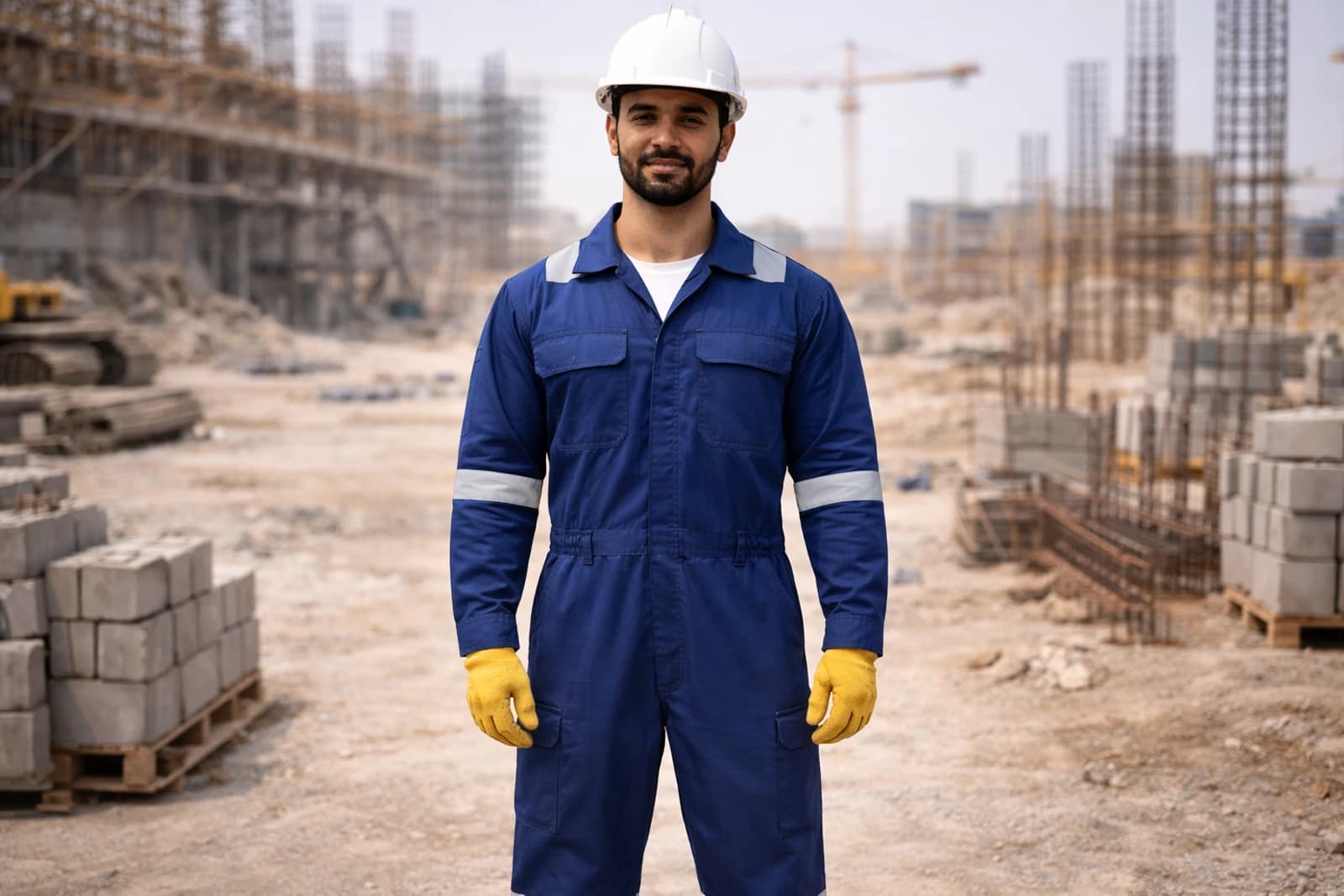
Industrial Workwear
Industrial Coverall Pro
Hard-wearing one-piece coverall for plant, maintenance, and heavy-duty operations.
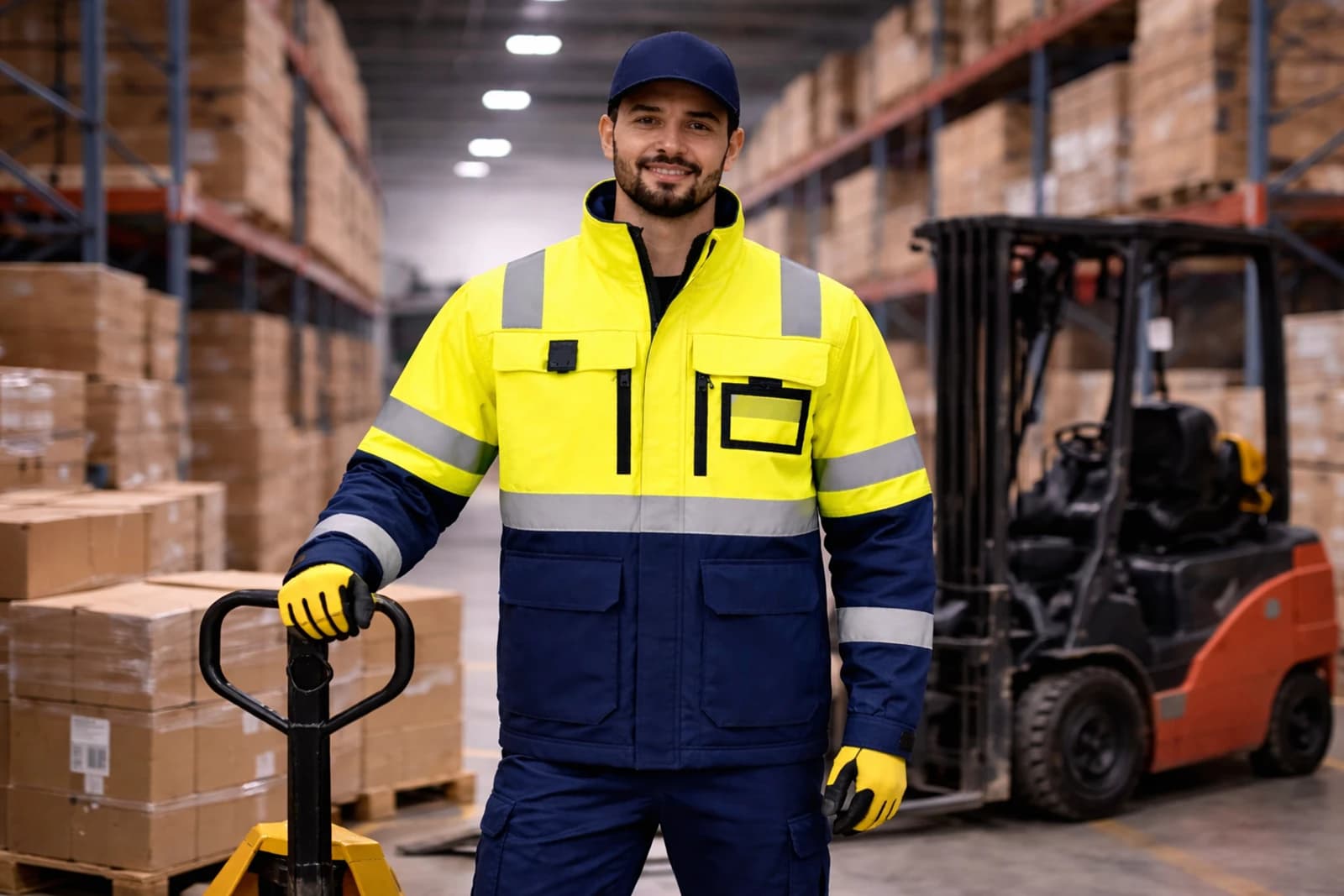
Safety Uniform
Hi-Vis Safety Jacket
Reflective safety jacket for high-visibility site operations and road work crews.