Industrial Coverall for Oil & Gas: B2B Sourcing Guide for Middle East Buyers from China
The Middle East oil and gas sector demands workwear that withstands extreme heat, flash fire risks, and heavy industrial use. This guide helps B2B procurement managers in the GCC source FR-rated, durable, and compliant industrial coveralls for refinery, rig, and petrochemical workers from a Chinese workwear manufacturer. Covers fabric standards (NFPA 2112, EN ISO 11612), climate-adapted design for Gulf operations, and bulk procurement strategies for 500–5,000+ worker deployments.

Buyer context
What procurement teams run into
The Middle East oil and gas industry is the backbone of the Gulf economy — Saudi Aramco alone employs over 70,000 workers across upstream, midstream, and downstream operations. ADNOC in the UAE, QatarEnergy, Kuwait Petroleum Corporation, and Oman's Petroleum Development Oman collectively operate hundreds of rigs, refineries, petrochemical complexes, and pipeline networks. Each facility requires industrial coveralls as standard-issue personal protective equipment (PPE) for operators, maintenance crews, rig hands, and contractors. For B2B buyers sourcing from a Chinese workwear manufacturer, recurring challenges arise in this demanding environment: **Extreme heat and prolonged wear:** Gulf summer temperatures regularly exceed 50°C on rig decks and refinery yards. Workers in industrial coveralls often endure 10–12 hour shifts in direct sun. A standard 245 gsm cotton coverall becomes soaked with sweat within 30 minutes, creating a sauna-like microclimate inside the garment. The physical strain of wearing heavy, non-breathable PPE in 50°C heat accelerates fatigue, increases heat stress risk, and reduces productivity. According to a 2023 study published in the Journal of Occupational and Environmental Hygiene, workers wearing non-breathable FR coveralls in hot environments showed a 22% reduction in task completion rate by the third hour of a shift. **Flash fire and arc flash protection requirements:** Refineries, gas plants, and wellheads carry inherent flash fire risks — hydrocarbon vapours can ignite with catastrophic speed. NFPA 2112 (US) and EN ISO 11612 (EU) set the standards for flame-resistant (FR) coveralls. Many Middle East operators now mandate compliance with one or both standards for all personnel entering hazardous areas. A coverall that fails to meet ATPV (Arc Thermal Performance Value) minimums or exhibits excessive afterflame time (the number of seconds the fabric continues to burn after the ignition source is removed) puts workers at risk and exposes the company to regulatory penalties. Common failure points: FR-treated fabrics that lose flame resistance after 25–50 industrial launderings, mismatched thread that burns through before the fabric, and zippers that melt or deform under heat exposure. **Sweat dissipation and moisture management in FR fabrics:** Most inherently FR fabrics (meta-aramid, para-aramid blends, modacrylic) are inherently less breathable than standard cotton or poly-cotton. In the Gulf climate, a worker in an FR-rated coverall can lose 1.5–2 litres of sweat per hour during moderate activity. If moisture vapour cannot escape, the worker experiences heat accumulation and risk of heat exhaustion. The challenge is finding an FR fabric that balances thermal protection with moisture vapour transmission rate (MVTR). Many budget Chinese FR coveralls use aramid blends with a high (30%+) para-aramid content for low-cost certification compliance, but these fabrics have poor moisture management — workers in Gulf refineries often open their coveralls to the waist during breaks just to cool down, defeating the protective purpose. **Durability under industrial conditions:** Oil and gas work is hard on clothing. Refinery operators brush against pipes, valves, and steel structures. Rig hands handle rough tools and equipment. Pipeline workers kneel, crawl, and slide against abrasive surfaces. Common failure points: seam splitting at the crotch and underarm (high-stress areas), knee patches delaminating after 3 months, zipper failure (especially brass zippers in corrosive H₂S environments), pocket bags tearing from heavy tools (wrenches, radios, gauges), and elastic in cuffs and waists losing tension after repeated heat exposure. An industrial coverall that lasts 12 months in a European petrochemical plant may last only 4–6 months in a Saudi refinery due to the combination of heat, sand abrasion, and harsh chemicals. **Chemical and hydrocarbon resistance:** Oil and gas environments expose coveralls to crude oil, diesel, lubricants, drilling muds, and chemical treatments. Some Chinese FR coveralls use fabric finishes that are not hydrocarbon-resistant — oil and grease soak through the fabric, transfer to the worker's skin, create fire hazards (oil-soaked fabric burns more readily), and leave permanent stains that make the garment appear unprofessional and unhygienic. Buyers need a fabric that resists oil and water penetration (testing per AATCC 118 or ISO 14419) without compromising breathability or FR performance. **Sizing across diverse workforces:** Gulf oil and gas workforces are predominantly expatriate — South Asian engineers and technicians, Filipino and Indonesian operators, Western contractors, and local national staff. Body types range from 160 cm/55 kg Asian frame to 190 cm/100 kg Western frame. A standard Asian fit coverall that fits a Pakistani operator well is likely too short in the body and sleeve for a Canadian contractor. A Western fit coverall may be baggy and unsafe (excess fabric catching on equipment) for a Filipino technician. Sizing must account for both proportions and the fact that FR coveralls must be worn snug — loose fabric in a flash fire increases burn injury area. **Compliance verification and certification documentation:** Middle East oil majors — Saudi Aramco, ADNOC, QatarEnergy — maintain stringent supplier qualification processes. Aramco's Inspection and Testing Requirements (ITR) for PPE require factory test reports, third-party certification, and sometimes on-site audits. ADNOC's HSE requirements demand compliance with UAE standards and international norms. A Chinese manufacturer's claim of "FR certified" must be backed by verifiable test reports from accredited laboratories (SGS, Bureau Veritas, UL, TÜV). Buyers have received samples from Chinese suppliers where the FR finish was surface-applied rather than inherent — failing after the first industrial wash. Without proper documentation, a shipment can be held at Dubai Customs or rejected at the Aramco gate.
Sourcing approach
How a factory partner can respond
**1. Fabric Selection: The Optimal FR Blend for Gulf Oil & Gas** For Middle East oil and gas industrial coveralls, the recommended fabric specification is a **88% modacrylic / 12% para-aramid blend, 230–260 gsm, woven twill 2/1 construction**: **Why this blend works:** - **Modacrylic (88%):** Provides inherent flame resistance that is woven into the fibre — it cannot wash out or wear off. Modacrylic self-extinguishes when the flame source is removed (afterflame time under 2 seconds per EN ISO 15025), produces minimal heat shrinkage, and forms a char layer that insulates the wearer from heat. It is inherently more breathable than high-para-aramid blends, with an MVTR typically 15–20% higher. - **Para-aramid (12%):** Adds tensile strength and abrasion resistance to the fabric — critical for workers crawling through pipe racks and climbing rig structures. The para-aramid content provides the mechanical durability that pure modacrylic blends lack. - **Twill 2/1 weave:** Twill construction provides better abrasion resistance than plain weave, drapes better for comfort, and hides minor dirt better than a tight satin weave. The diagonal rib pattern also allows slight fabric stretch across the back for better range of motion during overhead tasks. **Fabric treatment recommendations:** - **Oil- and water-repellent (OWR) finish:** Specify a fluorocarbon-free OWR finish (C6 or C8-free) that meets AATCC 118 Grade 3+ oil repellency and AATCC 22 spray rating of 90+. This prevents hydrocarbon absorption while maintaining fabric breathability. - **Antistatic treatment:** For hydrocarbon environments where static discharge can ignite vapours, specify carbon filament or stainless steel fibres woven into the fabric at 12.5 mm spacing per EN 1149-5. Many Middle East oil majors now mandate antistatic properties in all FR coveralls for classified zone areas. - **UV-resistant dyeing:** Gulf summer sun degrades fabric colour and strength. Specify vat dyes or reactive dyes with lightfastness rating 6+ (ISO 105-B02) to prevent the shoulder-and-cap fading pattern common after 6 months of outdoor exposure. **2. Design Features for Oil & Gas Industrial Environments** **Extended zipper and storm flap:** Standard front zippers on industrial coveralls typically end at chest height. For Gulf oil and gas use, specify a two-way brass or nickel-plated zipper that extends from 3 cm below the collar stand to 10 cm above the crotch. The extended length allows workers to ventilate while keeping the garment closed — critical for allowing heat escape during short rest breaks without removing the coverall. The storm flap should be 5 cm wide with concealed snap closure to prevent zipper contact with hot surfaces. **Articulated knee construction with internal padding pockets:** Pipeline workers, rig hands, and maintenance crews spend significant time kneeling. A standard single-layer knee blowout after 2 months is unacceptable. Specify articulated knees with a two-piece darted construction and internal knee pad pockets. Recommend closed-cell foam knee pads (12 mm thickness, 200×170 mm) as a separate line item — they slide into the internal pockets and are removable for washing. The fabric at the knee should have an additional patch layer of the same FR fabric, stitched with a 5-panel darted design for mobility. **Tool pockets and utility integration:** Oil and gas workers carry tools: adjustable wrenches, radios, gas detectors, glasses, pens, notebooks, and sometimes tablets. Standard chest pockets are insufficient. Specify: - Left chest: Radio pocket with pen division and headset cord port (5 mm grommet) - Right chest: Document pocket with vertical zip closure and flap for passport or permit-to-work cards - Side cargo pockets: Bellows-style with gusseted expansion, flap closure with hook-and-loop, angled for easy access while seated or standing - Right thigh: Embedded tool holder sleeve for a standard 25 cm adjustable wrench or multi-tool pouch - Back waist: Practical for rig workers who need quick access to gloves or rags without bending **High-visibility integration:** Many Middle East oil and gas sites now require at least Class 2 hi-vis compliance (EN ISO 20471 Class 2 or ANSI 107 Class 2) for all personnel in active work zones. Integration of fluorescent background material and retroreflective tape onto an FR coverall adds complexity because the retroreflective tape must also be FR-rated. Specify 50 mm silver segmented retroreflective tape (FR-rated, certified to EN 20471 or ANSI 107) placed: - Around the torso at waist and chest levels (two horizontal bands) - Around each arm at bicep level - Vertical stripes over each shoulder (from front chest band over the shoulder to back chest band) Some Gulf operators prefer adding "OIL & GAS" or the company logo in FR-rated heat-transfer film on the back between the chest and waist bands for identification on expansive refinery sites. **Adjustable cuff and ankle closures:** Standard elastic cuffs lose tension after heat exposure. Specify adjustable tab-and-snap closures at both wrists and ankles, allowing workers to tighten the garment around gloves and boots. This prevents the bellows effect (hot air and debris entering through open cuffs) and reduces the risk of sleeves catching on rotating equipment. **Action back and gusseted crotch:** For workers climbing rig ladders, reaching overhead to operate valves, or crawling through confined spaces, specify: - Full action back pleat: a deep box pleat across the upper back, providing 10–15 cm of extra reach for overhead tasks - Gusseted crotch: a diamond-shaped insert that reduces stress on the crotch seam during squatting and climbing — the single most common failure point in standard coveralls - Two-piece set-in sleeves with underarm gussets for full shoulder range of motion without pulling the body of the coverall out of position **3. Sizing Strategy for Gulf Workforces** For ethnically diverse Gulf workforces, a dual-sizing system works well: - **Asian Fit (S–4XL):** Shorter body length (relative to chest), shorter sleeves, narrower shoulders. Fits workers of South Asian, Southeast Asian, and East Asian proportions. - **International Fit (S–4XL):** Longer body, longer sleeves, broader shoulders. Fits workers of Middle Eastern, Western, African, and Eastern European proportions. Key measurements to verify with samples: - Sleeve length from centre back: Asian fit (76–86 cm across sizes), International fit (81–91 cm) - Body length from high shoulder: Asian fit (66–81 cm), International fit (71–86 cm) - Chest circumference range should cover 90–145 cm (XS–4XL) for Asian fit and 95–150 cm for International fit **4. Certification and Documentation Checklist** For Middle East oil major compliance, ensure your manufacturer provides: - **NFPA 2112 certification** (for Aramco, ADNOC, and international operators) — third-party tested to ASTM F1930 (instrumented manikin flash fire test) demonstrating <50% predicted body burn - **EN ISO 11612 certification** (for QatarEnergy, KPC, PDO) — including limited flame spread (A1/A2), convective heat (B), radiant heat (C), and molten metal splash (D/E/F) as applicable - **ATPV rating** — minimum 8.0 cal/cm² per NFPA 70E for arc flash protection (provide test report) - **EN 1149-5 antistatic test report** — surface resistance < 2.5 × 10⁹ ohms - **Wash durability test report** — after 50 industrial launderings per ISO 15797, demonstrating retained FR performance (afterflame time, char length, ATPV) - **SGS or Bureau Veritas laboratory test report** — verify that the **inherent** FR fibre content matches specification (not surface-applied coating) - **Country of origin documentation** — GCC countries apply 5% customs duty on Chinese-manufactured PPE (HS Code 6210.20 / 6211.33); ensure the commercial invoice correctly states CFR Jebel Ali or CFR Dammam with proper HS classification **5. Recommended Product from a Chinese Manufacturer** For Middle East oil and gas buyers, the **Sidaier Industrial Coverall Pro** is a proven solution. Key specifications: - 88% modacrylic / 12% para-aramid 245 gsm twill - Certified to NFPA 2112 and EN ISO 11612 - ATPV rating: 8.5 cal/cm² (Category 2 arc flash) - OWR finish (AATCC 118 Grade 4) - Antistatic per EN 1149-5 - Articulated knees with internal pad pockets - Action back with gusseted crotch - Tool-ready pocket configuration: 6 functional pockets + radio loop + utility tool sleeve - Adjustable cuff and ankle tab closures - Dual fit option (Asian Fit / International Fit) - Sizes S–5XL Paired with the **Sidaier Hi-Vis Safety Jacket** (Class 3, FR-rated, with segmented retroreflective tape and detachable sleeves), this creates a complete PPE system for multi-season Gulf operations.
Recommended Products
Products that fit this use case
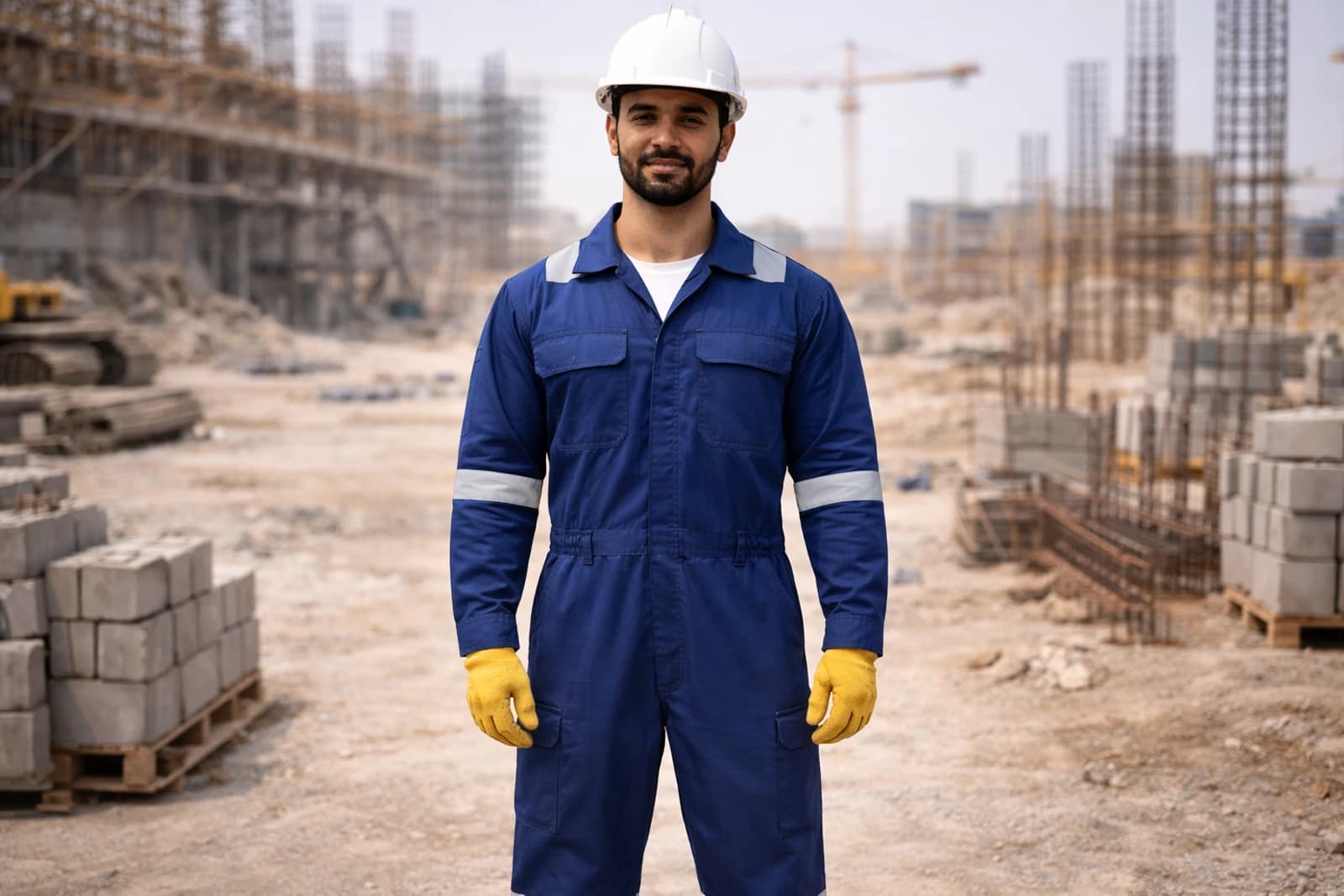
Industrial Workwear
Industrial Coverall Pro
Hard-wearing one-piece coverall for plant, maintenance, and heavy-duty operations.
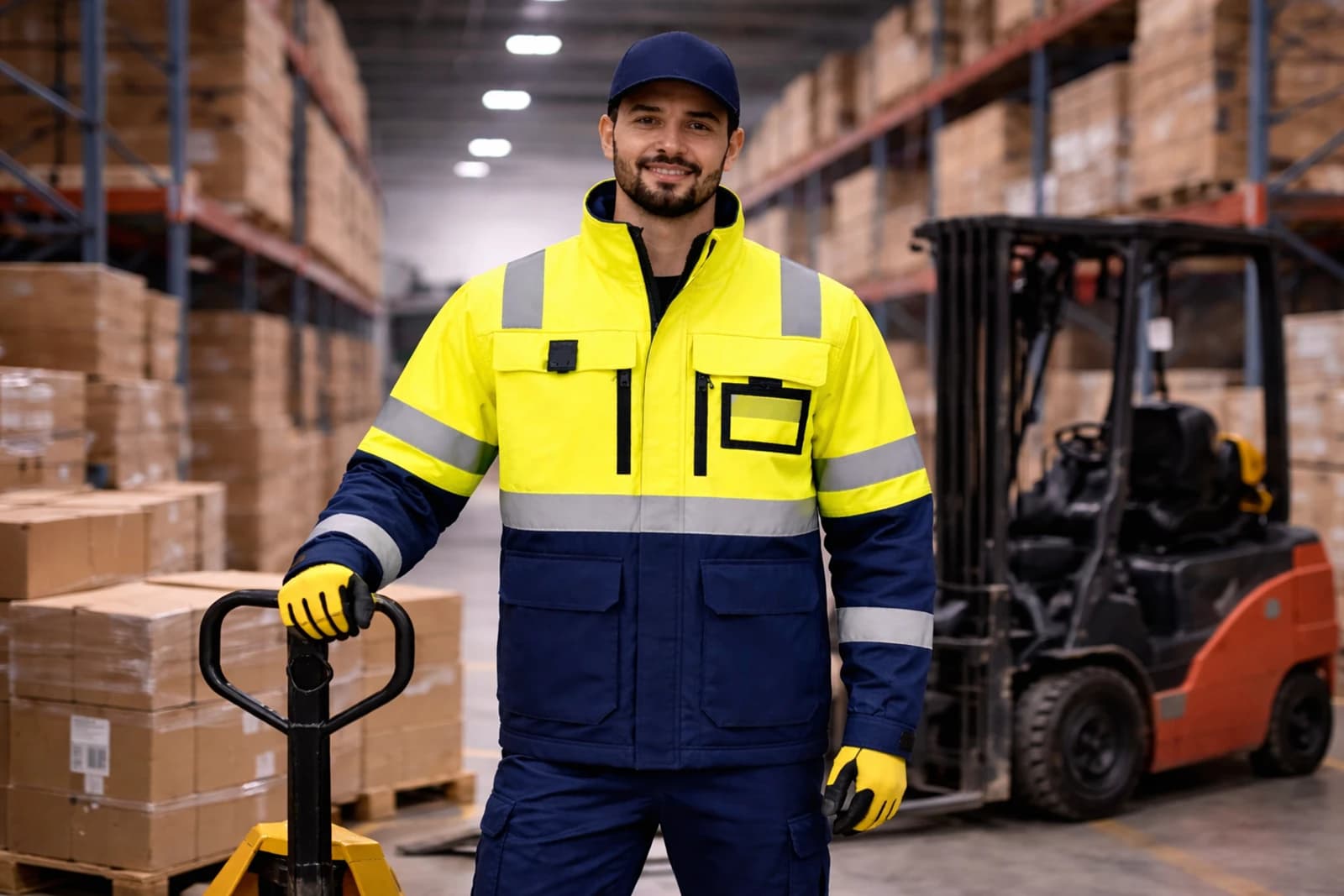
Safety Uniform
Hi-Vis Safety Jacket
Reflective safety jacket for high-visibility site operations and road work crews.