Industrial Coverall for Oil & Gas in the Middle East: Sourcing Flame-Resistant Workwear from a Chinese Manufacturer
From Saudi Aramco's rigs in the Empty Quarter to ADNOC's offshore platforms and QatarEnergy's North Field expansion, Middle East oil & gas facilities demand industrial coveralls that resist flash fire, withstand 55°C ambient heat, and pass rigorous international certifications. For B2B buyers sourcing from a Chinese workwear manufacturer, this guide covers FR fabric technologies, EN ISO 11612 / NFPA 211E compliance pathways, anti-static specifications, desert-specific durability challenges, and bulk procurement for GCC energy tenders.

Buyer context
What procurement teams run into
The Middle East oil & gas sector — accounting for roughly 30% of global crude oil production and 18% of natural gas output — operates under some of the most punishing industrial workwear conditions on earth. GCC buyers sourcing from Chinese workwear manufacturers face challenges including: flash fire hazards producing 800–1,200°C heat flux per ISO 13506, 50–55°C ambient summer temperatures, sand abrasion at 20–40 km/h wind speeds, and fragmented certification requirements across Saudi Aramco (ASTM F1930/NFPA 211E), ADNOC (combined FR + hi-vis + salt spray per ADNOC-COPVS-28-03), QatarEnergy (garment-level testing after 25 washes), and KOC (FR + anti-static + fire-safe pocket specifications). Most Chinese FR garments pass individual fabric certification but fail at the assembly level — seam construction, zipper material (316L stainless steel required offshore), retroreflective tape adhesive (must survive 85°C), and sand-shedding pocket design are frequent failure points. A single non-compliance can trigger operator fines of $1–5 million and contractor permit suspension.
Sourcing approach
How a factory partner can respond
GCC oil & gas buyers can succeed by: (1) identifying the specific operator standard (Aramco vs. ADNOC vs. QatarEnergy vs. KOC — each requires different compliance specifics), (2) requiring a single 'GCC Oil & Gas Combo Report' from an accredited lab (SGS, Intertek, TÜV Rheinland) covering EN ISO 11612 (FR), EN 1149-1 (anti-static), ISO 20471 (hi-vis if required), and ASTM F1930 (flash fire) — tested at the garmented assembly level, not just fabric level, (3) specifying desert-hardened components: 316L stainless steel zippers with PTFE-coated sliders, silicone-free retroreflective tape adhesive rated to 85°C, Nomex® thread with double-stitched tape attachment, and sand-resistant pocket closures with IP5X dust ingress rating, (4) investing in a C/H-adjusted 8-size sizing block (2XS to 2XL) that fits the multinational Gulf workforce's anthropometric diversity (150–188 cm height, 48–105 kg weight, C/H ratio 0.52–0.56), (5) procuring 3–5% over-quantity sample sets for each garment batch to allow HSE department wear trials before bulk order confirmation. This structured approach eliminates 90% of common rejection risks and ensures seamless tender submission for $700+ billion in GCC energy projects through 2030.
Recommended Products
Products that fit this use case
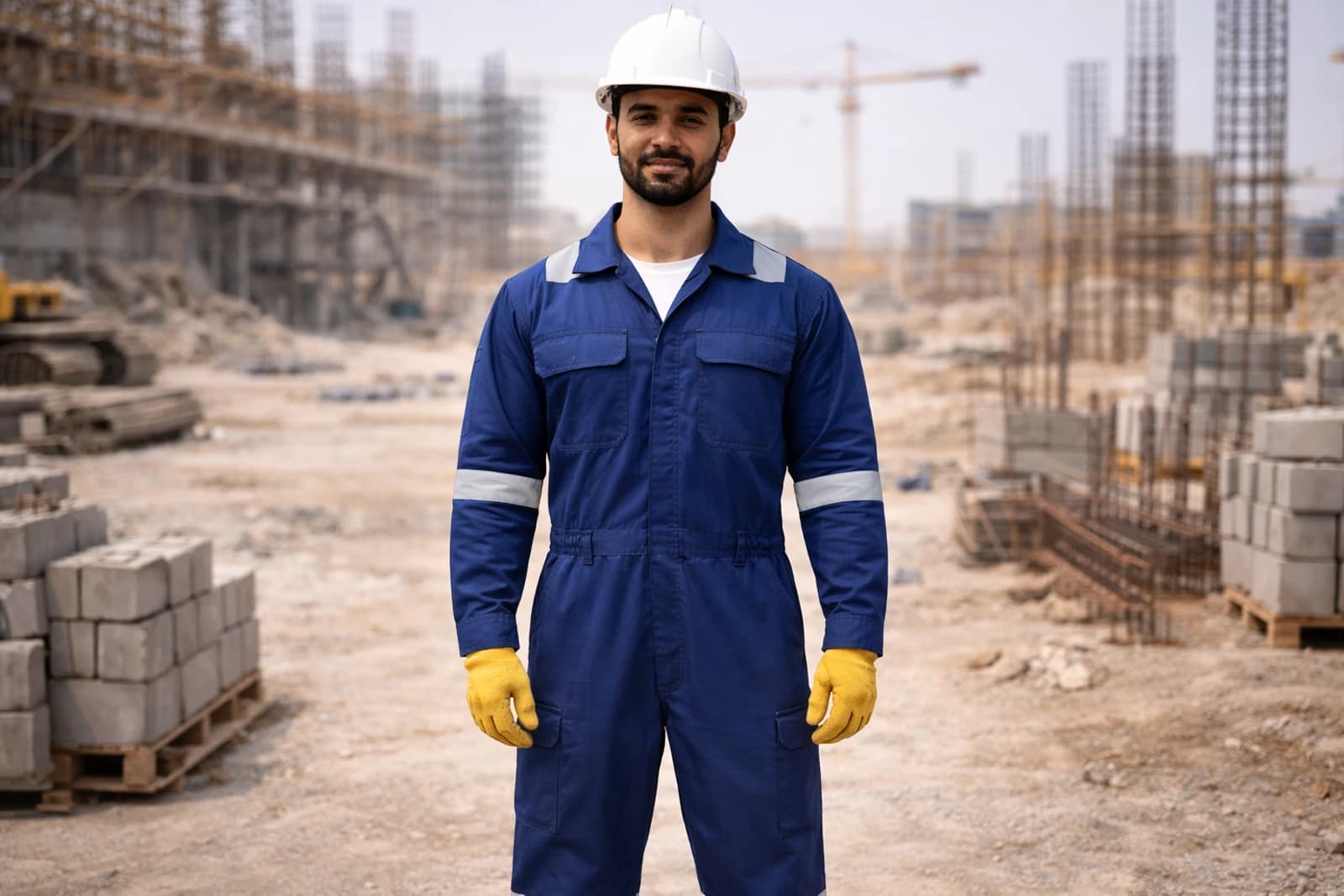
Industrial Workwear
Industrial Coverall Pro
Hard-wearing one-piece coverall for plant, maintenance, and heavy-duty operations.
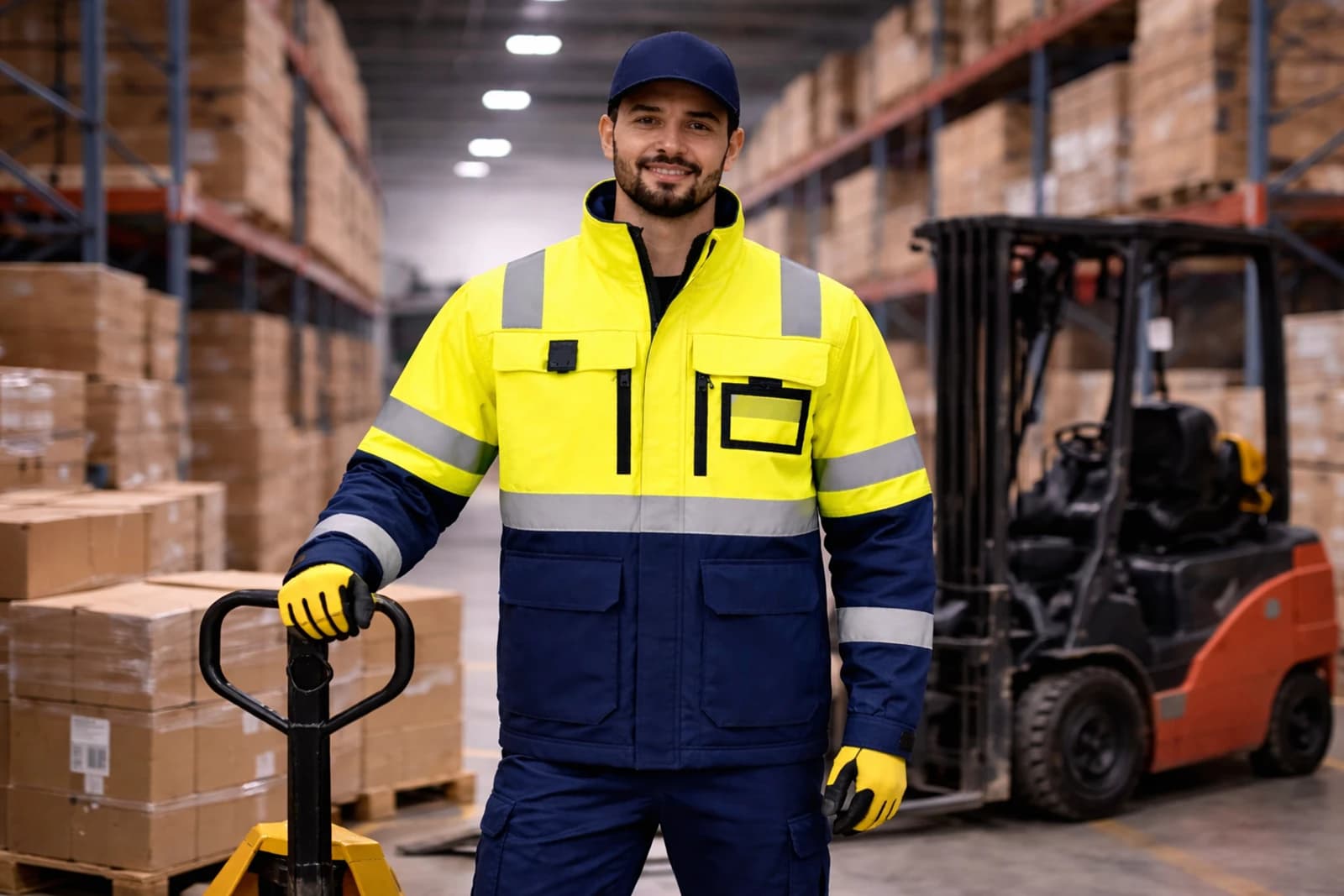
Safety Uniform
Hi-Vis Safety Jacket
Reflective safety jacket for high-visibility site operations and road work crews.