Industrial Coverall for Middle East Oil & Gas: Sourcing from a Chinese Workwear Manufacturer
The Middle East oil and gas sector—from Saudi Aramco's massive expansion at Jafurah, ADNOC's $150 billion capex plan, QatarEnergy's North Field LNG buildout, to Iraq's Zubair field rehabilitation—demands industrial coveralls that withstand extreme heat, flash fire risks, chemical exposure, and harsh desert conditions. For B2B buyers sourcing from a Chinese workwear manufacturer, this guide covers fabric technology for flame-resistant and anti-static compliance, heat-sealed vs. stitched seam construction for chemical protection, certification navigation across GCC end-user standards (Saudi Aramco, ADNOC, QP, KOC), and bulk procurement strategies for 10,000–100,000+ unit annual contracts.

Buyer context
What procurement teams run into
The Middle East oil and gas industry is entering its most aggressive expansion cycle in decades. Saudi Aramco is executing a $50 billion capex plan centered on the Jafurah unconventional gas field (the largest liquid-rich shale gas development outside North America), necessitating an estimated 200,000+ new workers across exploration, drilling, and processing. ADNOC's $150 billion five-year spending plan targets 5 million barrels per day capacity by 2027, driving massive upstream and downstream hiring across Abu Dhabi's onshore and offshore fields. QatarEnergy's North Field LNG expansion—the single largest LNG project in history—will boost production from 77 million to 142 million tonnes per annum by 2030, requiring thousands of workers in Ras Laffan and offshore platforms. Iraq aims to increase oil production to 8 million barrels per day by 2028 through projects like the $27 billion Zubair field integrated development. Kuwait Petroleum Corporation's $110 billion strategic plan includes heavy oil extraction in northern Kuwait and refinery upgrades at Al-Zour. Collectively, GCC national oil companies (NOCs) will require an estimated 400,000 new industrial workers by 2028, each needing multiple sets of industrial coveralls. For Middle East B2B buyers sourcing industrial coveralls from Chinese workwear manufacturers, the specific technical challenges are formidable: **Flame-resistant fabric selection for extreme ambient heat:** The Middle East presents a unique contradiction—workers need FR protection against flash fire and hydrocarbon ignition hazards (typically tested at 5–7 seconds flame exposure per ISO 15025 or ASTM F1930 instrumented manikin test), yet they work in ambient temperatures reaching 55°C. Traditional heavy-duty FR cotton or 88/12 cotton-nylon blends (270–350 gsm) commonly manufactured by Chinese factories create dangerous heat stress conditions. Buyers must specify inherently FR fabric systems (not treated FR, which degrades under GCC washing conditions) using either: - Meta-aramid/nominally FR rayon blends (93% meta-aramid / 5% para-aramid / 2% antistatic fiber) at 200–230 gsm for lightweight flash fire protection - Or FR modacrylic/cotton/nylon blends (50% modacrylic / 36% cotton / 13% nylon / 1% carbon fiber) providing Arc Thermal Performance Value (ATPV) of 8–12 cal/cm² with superior moisture management Few Chinese workwear factories manufacture inherently FR fabrics in-house; most source from Yantai Tayho (China's largest meta-aramid producer), Shanghai Textile Research Institute, or international suppliers like DuPont Nomex. Buyers need to verify the complete supply chain and obtain fabric mill certificates for each production batch. **Anti-static performance in low-humidity desert environments:** The GCC has ambient relative humidity of 10–30% in summer (vs. 40–60% typical in most global industrial settings). In low-humidity conditions, electrostatic discharge (ESD) risks increase exponentially, especially in hydrocarbon processing zones where a single spark from synthetic clothing can trigger a catastrophic VCE (vapor cloud explosion). Standard EN 1149-5 testing is performed at 25°C / 30% RH—conditions more favorable than GCC reality. Buyers must require Chinese suppliers to test anti-static performance of coverall fabric and finished garments at 50°C / 10% RH for 72 hours, then verify surface resistivity remains below 10⁸ ohms per square and vertical resistance below 10⁷ ohms. Additionally, carbon fiber grid integrity must be verified after 50 industrial wash cycles at 75°C with hard water (200+ ppm TDS) and with aggressive caustic detergents used in GCC industrial laundries. **Seam construction for chemical splash and hydrocarbon resistance:** Many Middle East NOCs require coveralls with chemical splash protection certified to EN 13034 Type 6, with specific resistance to crude oil, diesel, and hydrocarbon solvents. The weakest point in any Chinese-manufactured coverall is seam construction. Most factories use standard double-needle lockstitch seams with thread density of 3–4 stitches per centimeter—these leave needle holes that create chemical wicking pathways. Buyers must specify: - Heat-sealed or welded seam tape construction (polyurethane or PVC tape applied at 140–180°C) over all stitched seams - Minimum 5 stitches per centimeter with bonded seam reinforcement - Seam tensile strength tested per ISO 13935-2: minimum 300 N for all major seams - Chemical penetration testing per EN 368: chemical repellency for crude oil, diesel, and 30% sulfuric acid (commonly handled in oilfield maintenance) Many Chinese factories do not offer heat-sealed seam options as standard and require tooling investment of $8,000–$15,000 for ultrasonic welding or hot-air seam sealing equipment. **Certification maze across GCC NOCs:** Unlike the European market where a single EN ISO 11612 (heat and flame) + EN 1149-5 (anti-static) certification satisfies most general requirements, each Middle East NOC imposes its own specific standards: - Saudi Aramco: Mandates SAEP-3263 coverall specification requiring combined FR + chemical resistance + anti-static. Requires IECEx or ATEX zone certification for gas group IIA/IIB. Aramco conducts random factory audits of approved suppliers. Additionally, coveralls for onshore use must comply with SABIC's HSE chemical management requirements for hydrocarbon splash zones. - ADNOC (UAE): Requires ADNOC OSHMS 2.0-compliant coveralls with specific approval through ADNOC's Approved Suppliers List (ASL) system. Coveralls must meet UAE.S 11612:2019 (local adoption of ISO 11612) plus ADNOC-specific requirements for: 200 psi burst strength for sleeve-to-shoulder seams, brass zippers (not nickel-plated—allergic reactions in Gulf worker populations), and embedded RFID tags for PPE asset tracking across ADNOC's digital inventory system. - QatarEnergy (formerly Qatar Petroleum): Mandates QP SPEC-04-0001 for FR coveralls, requiring coverall-specific certification through Qatar's Ministry of Labour (MOL) approved laboratories. Key difference: QP requires coveralls with calf-length zippers for doffing without pulling over the head (reducing contamination transfer risk), a feature that most Chinese factories do not offer as standard. - Kuwait Oil Company (KOC): Requires KOC Specification H-001 with coverall design including radio pocket placement on the upper left chest (for KOC's specific two-way radio model), pen pockets on both sleeves, and 45-degree tool pocket angles (to prevent tools from falling out during bending work in wellhead maintenance). - Iraq's Basra Oil Company / ExxonMobil operated West Qurna: Mixed international standards typically requiring NFPA 2112 or ASTM F1506 plus EN 11612, plus specific importation documentation via Iraq's Central Organization for Standardization and Quality Control (COSQC). B2B buyers must negotiate with Chinese manufacturers for each endorsement—each NOC-approved coverall variant typically requires separate fabric colorways (Saudi Aramco's dark green, ADNOC's light gray, QatarEnergy's bright orange, KOC's navy blue—all with specific Pantone codes specified in procurement documents), separate pocket/placket configurations, and separate certification testing ($3,000–$8,000 per variant per certification body).
Sourcing approach
How a factory partner can respond
While the challenges above may seem overwhelming, Chinese workwear manufacturers have been rapidly upgrading capabilities to serve the Middle East NOC market—and several practical solutions now exist for B2B buyers navigating this landscape. **Supply chain solution: Pre-qualified inherently FR fabric sourcing.** Rather than leaving fabric selection to individual factories, experienced Chinese manufacturers now maintain pre-qualified supply agreements with certified FR fabric mills. The most reliable approach is specifying a certified fabric substrate from Yantai Tayho's Eversafe™ meta-aramid line or DuPont Nomex IIIA (both maintaining mill certifications valid for GCC NOC audits). By fixing the fabric specification upfront, buyers eliminate the single greatest variable in coverall performance—fabric substitution (a common issue where factories swap to cheaper treated FR fabrics costing 40–60% less). A simple test: ask the factory to provide fabric mill certificates for three consecutive production batches. Factories that can trace each roll back to the mill with lot numbers and third-party testing reports are ready for NOC-tier supply. **Design solution: Integrated garment specification template.** Instead of sending separate RFQs with different requirements to multiple factories, create a single master specification template that includes: - Fabric: Inherently FR, 220 ± 10 gsm meta-aramid/FR rayon blend with ATPV ≥ 8 cal/cm² (ASTM F1959) - Seams: Heat-sealed tape over double-needle stitched construction, seam strength ≥ 300 N - Fasteners: Brass two-way zipper (YKK or equivalent), heat-resistant plastic buttons (130°C minimum) - Pockets: 8-pocket configuration standard (2 chest, 2 front waist, 2 rear, 1 radio on left chest, 1 pen/small tool on right sleeve) - Closure: Full-front brass zipper with storm flap and snap closure, calf-length doffing zippers per QP spec - Sizing: 2XS–4XL with C/H ratio 0.50–0.58 to cover South Asian and African worker populations - Certification: EN ISO 11612 A1 B1 C1 F1 + EN 1149-5 + EN 13034 Type 6 + specific NOC addendums Factories with existing NOC approval (listed on Saudi Aramco's Approved Manufacturer List, ADNOC ASL, or QatarEnergy's Qualified Vendors List) are able to offer pre-certified variants, reducing lead time from 16–20 weeks to 8–12 weeks and saving $5,000–$12,000 in certification costs per variant. **Quality solution: Third-party surveillance inspection protocol.** The most successful B2B buyers implement a stage-by-stage quality protocol: 1. **Fabric stage:** Pre-production sample testing of fabric at SGS, Bureau Veritas, or Intertek in China before bulk production begins 2. **In-process inspection:** Mills inspection during production (35–50% completion) checking stitch count, seam tape application, and zipper alignment 3. **Pre-shipment inspection:** AQL 2.5 normal inspection per ISO 2859-1 with additional specific checks for: tape adhesion cross-cut tape test (ISO 2409), zipper cycling (500 open/close cycles), seam strength sampling on 10 random units 4. **Destination testing:** Upon arrival in GCC, random sample batch testing at local NOC-approved lab (SASO in Dammam, ADNOC-approved lab in Abu Dhabi, or QP-approved lab in Doha) **Procurement solution: Phased tender with factory audit.** Rather than placing one massive order, phase the approach: - Phase 1 (8 weeks): Sample development—send detailed spec + have factory produce 10 sample units per size for dimensional verification and anthropometric fitting trial - Phase 2 (4 weeks): Certification—factory submits samples to NOC-approved certification body; buyer coordinates factory audit for NOC compliance verification - Phase 3 (12–16 weeks): Pilot order of 500–1,000 units for workforce trial (worker feedback on comfort, durability, fit—collect via structured survey) - Phase 4 (12+ months): Master supply agreement with annual volumes of 10,000–100,000+ units, with 90–120 day payment terms and 10% performance bond Chinese workwear manufacturers investing in NOC-specific production lines—dedicated sew lines for each NOC variant with color-coded thread and hardware, separate fabric cutting schedules to prevent cross-contamination of oil/dirt from non-FR fabrics, and local certification partnerships in Saudi Arabia, UAE, and Qatar—are increasingly the first choice for Middle East oil and gas procurement teams, replacing traditional European suppliers (Uvox, Carhartt, Fristads Kansas) that can't match Chinese production scale and lead times. The Chinese workwear manufacturing ecosystem in Jiangsu, Shandong, and Zhejiang provinces now includes factories producing 500,000+ industrial coveralls annually for export, with dedicated GCC NOC production lines, in-house FR fabric testing labs, and full certification traceability. For Middle East B2B buyers, the decision is no longer whether to source from China—it's which Chinese partner has the specific NOC certifications, fabric expertise, and production capacity to meet each end-user's unique specifications.
Recommended Products
Products that fit this use case
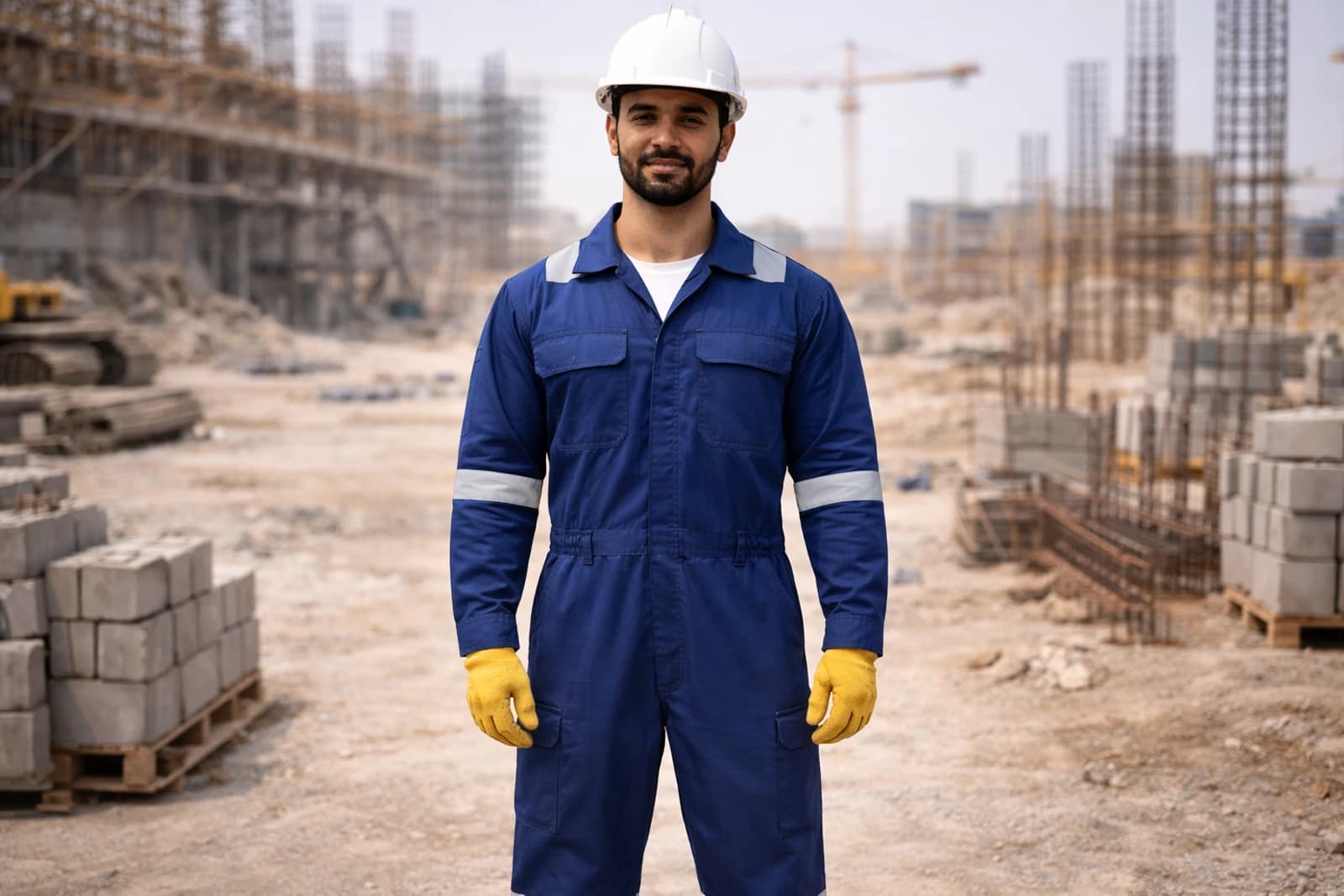
Industrial Workwear
Industrial Coverall Pro
Hard-wearing one-piece coverall for plant, maintenance, and heavy-duty operations.
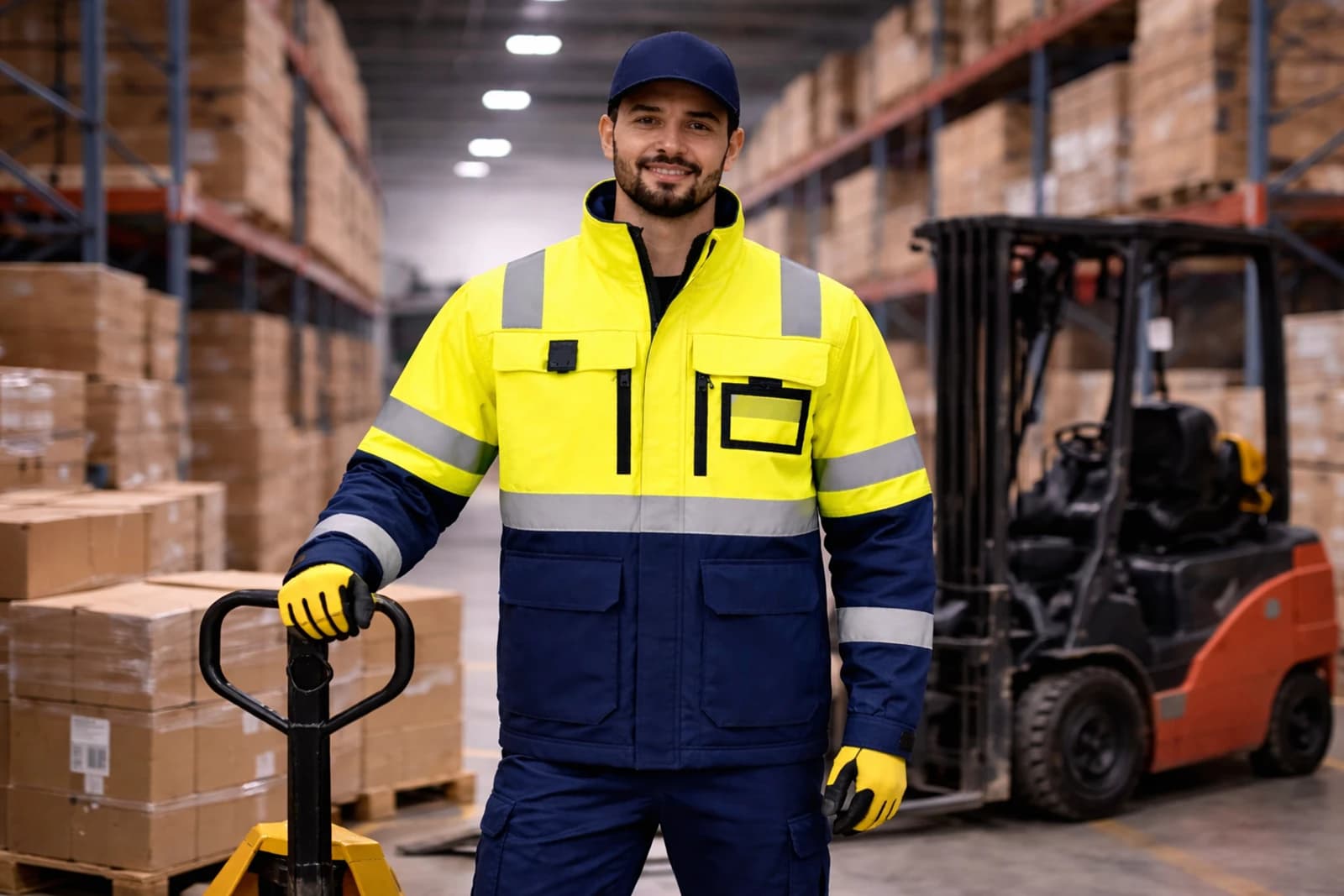
Safety Uniform
Hi-Vis Safety Jacket
Reflective safety jacket for high-visibility site operations and road work crews.