Industrial Coveralls & Hi-Vis Safety Jackets: Sourcing Workwear for Middle East Mining & Quarrying Operations
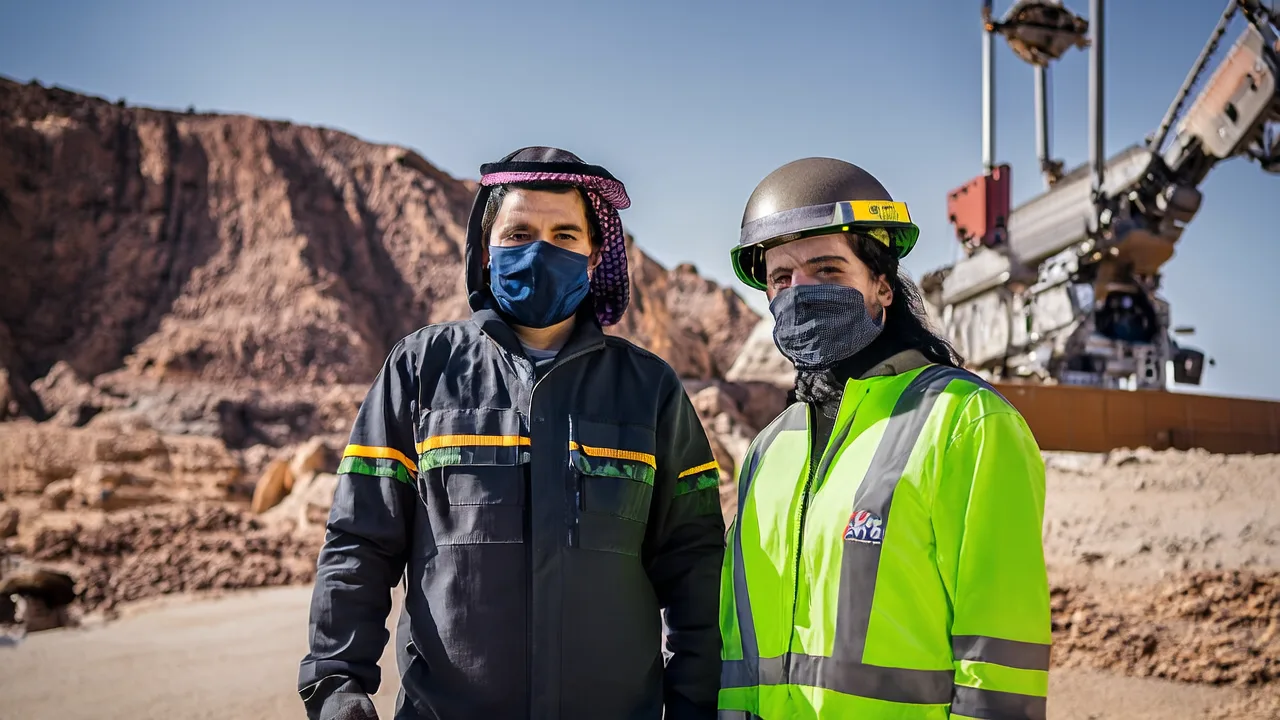
Saudi Arabia's mining sector is entering a new era under Vision 2030. Maaden is expanding gold, copper, and phosphate operations, new mining licenses are being issued across the Arabian Shield, and the Kingdom targets mining to contribute SAR 24 billion to GDP by 2035. Oman, Jordan, and Egypt are also scaling up mining and quarrying. Workers in these operations — drillers, blasters, crusher operators, haul truck drivers, maintenance fitters, and geologists — face some of the harshest working conditions on earth: abrasive rock dust, extreme heat, heavy machinery, and remote desert locations. This sourcing guide for Middle East B2B buyers covers industrial coveralls and hi-vis safety jackets for mining and quarrying, fabric specifications for abrasive desert conditions, compliance considerations, and volume procurement from a Chinese workwear manufacturer.
Buyer context
What procurement teams run into
The Middle East's mining and quarrying sector is undergoing a transformation. Saudi Arabia's Ministry of Industry and Mineral Resources has issued over 300 new mining licenses since 2020, targeting gold, copper, phosphate, bauxite, and industrial minerals across the Arabian Shield — one of the world's most geologically prospective and underexplored mineral belts. Maaden (Saudi Arabian Mining Company) is expanding its gold mine at Mahd Ad Dhahab, operating the world's sixth-largest phosphate mine at Wa'ad Al Shamal, and developing the Mansourah Massarah gold mine. Oman's mining sector is growing with limestone, gypsum, and chromite operations. Jordan's phosphate and potash mines remain major employers. Egypt's gold mining sector is attracting international investment with new concessions in the Eastern Desert. Mining and quarrying workers operate in one of the most demanding industrial environments on earth: **1. The mining and quarrying environment is uniquely punishing** A hard-rock mine or limestone quarry combines multiple hazards in one location: - **Abrasive rock dust.** Drilling, blasting, crushing, and conveying generate constant fine rock dust that infiltrates every seam, pocket, and zipper. Dust accelerates fabric wear, causes skin irritation under sweat-soaked clothing, and clogs zippers and closures. - **Sharp edges and pinch points.** Workers handle drill steel, rebar, rock bolts, screen panels, and crusher wear parts with sharp edges. Forearms, thighs, and chest contact abrasive surfaces repeatedly during maintenance and operations. - **Heavy machinery and vehicle traffic.** Haul trucks (often 100–400 tonne capacity), excavators, loaders, drill rigs, and graders operate in close proximity to workers on foot. Visibility is critical — a worker in standard clothing is hard to see against rock faces, dust clouds, and low-light conditions at dawn, dusk, or in deep pit operations. - **Extreme heat and sun exposure.** Open-pit mines and quarries offer no shade. Workers face ambient temperatures of 45–50°C in Gulf summers plus radiant heat from rock surfaces that absorb and re-radiate solar energy. Underground mines add geothermal heat and humidity. - **Chemical exposure.** Leaching operations (gold cyanidation, phosphate acid processing), diesel exhaust, blasting fumes, and dust suppressants expose workers to chemical contaminants that garments must resist or be laundered from regularly. - **Remote locations.** Many mines are hours from the nearest town. Workers live in camp villages and work 8–12 hour shifts, 4–6 days per week. Garments must withstand daily industrial washing and hard wear for months. **2. Industrial coveralls for drillers, blasters, crusher operators, and maintenance fitters** For workers who spend significant time at the rock face, in the processing plant, or maintaining heavy equipment, the one-piece industrial coverall is the primary work garment. It eliminates the waist gap where dust and debris enter, protects the full torso from sharp edges and abrasive surfaces, and presents a professional appearance on site. Key specifications when sourcing coveralls for mining and quarrying from a Chinese manufacturer: **Fabric weight and composition.** Specify 260–280gsm poly-cotton twill (65/35 or 80/20 blend) for general mining duties. The polyester content provides abrasion resistance against rock edges, dimensional stability after industrial washing, and faster drying than pure cotton. For heavy-duty roles (blasters, drillers, crusher maintenance), specify 300–320gsm duck canvas or ripstop weave — these fabrics resist tearing and last significantly longer in high-abrasion zones. **Reinforcement at high-wear zones.** Double-layer knees with internal knee-pad pockets (maintenance fitters kneel constantly on rock and gravel). Reinforced elbows for drilling and bolting work. Cordura or similar abrasion-resistant patches at cuffs, hem, and pocket corners. Bar-tacked stress points at all seam intersections — mining coveralls face more physical stress than almost any other industrial garment. **Pocket configuration.** Chest pockets with flaps and snap closures (for phones, radios, and blasting certificates). Thigh cargo pockets with secure closures for tools and measuring devices. Dedicated pen and marker pockets. Rule pockets for surveyors and geologists. All pockets must close cleanly — open pockets collect rock dust and drop small components into machinery. **Ventilation features.** Mesh-lined back vents, underarm eyelets, or half-mesh linings that allow heat escape during physical work. For summer operations, consider coveralls with articulated sleeves and a two-way front zip that can be opened from the bottom for sitting and bending comfort. **Colour.** Dark colours — navy, charcoal, dark green — hide rock dust and stains better than light colours. However, dark colours absorb more radiant heat. Many mining operations specify dark coveralls for underground and processing plant work, and light colours (khaki, sand) for open-pit summer operations. Confirm ISO 105-B02 xenon-arc fade testing so colours don't bleach to an inconsistent patchwork after months of desert sun. **Flame resistance (optional).** For workers near blasting operations, fuel storage, or leaching circuits, specify FR (flame-resistant) treatment or inherent FR fibres. FR coveralls meet EN ISO 11612 for protection against heat and flame. This is a premium upgrade but critical for safety in hydrocarbon-adjacent or chemical processing zones. **3. Hi-vis safety jackets for haul road workers, surveyors, and mobile plant zones** For workers who spend time on haul roads, near mobile plant, or in shared vehicle-pedestrian zones, the hi-vis safety jacket is a life-saving garment. Haul trucks in open-pit mines have blind spots extending 30+ metres around the vehicle — a worker in standard clothing is virtually invisible to the operator. Key specifications when sourcing hi-vis jackets for mining from a Chinese manufacturer: **Fabric weight and composition.** Specify lightweight polyester 210–240gsm with mesh lining for Gulf conditions. Heavy hi-vis jackets are unbearable in 45°C summer heat — workers will remove them, defeating the safety purpose. A mesh-lined jacket allows air flow while keeping retroreflective tape visible. **EN ISO 20471 Class 3.** Class 3 offers the highest retroreflective coverage and is the right call for workers who spend significant time near moving haul trucks, excavators, and graders — surveyors, blast crews, haul road maintenance teams, and mobile plant spotters. Confirm the jacket meets EN ISO 20471 minimum retroreflective intensity (typically 330 cd/lx/m² for Class 3). **Fluorescent background and retroreflective tape.** Specify fluorescent yellow-green or orange fabric with retroreflective tape positioned to EN ISO 20471 geometry. The tape must be on the torso, arms, and around the shoulders for full-class coverage. For dusty mining environments, specify tape with good adhesion that resists peeling from dust abrasion and frequent washing. **Practical details for mining work.** Two-way front zip (workers bend, crouch, and climb constantly), zipped side pockets that close securely so phones and tools don't fall out (lost tools on haul roads are a safety hazard for tyres), adjustable cuffs, and a DWR finish with 5,000mm+ hydrostatic head for dust suppression water spray and brief rain. **Durability.** Mining hi-vis jackets face more abrasion than almost any other workwear — workers lean against rock faces, crawl under equipment, and handle abrasive materials. Specify reinforced shoulders and elbows, and confirm the retroreflective tape maintains performance after 25+ industrial wash cycles. **4. The coverall-and-hi-vis system for complete mining site uniform** The smartest procurement approach treats coveralls and hi-vis jackets as a unified uniform system: **Open-pit operations:** All field workers in coveralls. Haul truck spotters, surveyors, and blast crews in coveralls with hi-vis jackets over the top. Maintenance fitters in coveralls (dark colour to hide grease and dust). Supervisors and safety officers in coveralls with hi-vis vests or jackets for instant recognition. **Processing plant:** Crusher operators, screen maintainers, and conveyor technicians in coveralls (dark colour to hide dust). Plant supervisors and coordinators in coveralls with hi-vis vests for visibility in mobile plant zones around the plant. **Underground operations (if applicable):** All workers in coveralls with hi-vis elements integrated into the garment (reflective tape on shoulders and arms). Additional hi-vis jackets for surface-level transit zones. **Exploration and drilling camps:** Geologists and drillers in coveralls. Camp managers and HSE officers in coveralls with hi-vis jackets. Visitors and contractors in hi-vis jackets over their own clothing. This system means one colour palette for coveralls, one hi-vis standard, one manufacturer, and one procurement process covering the full mining operation from exploration through production. **5. Compliance and testing for mining workwear** Relevant standards for Middle East mining operations: - **EN ISO 13688** — general requirements for protective clothing (ergonomics, sizing, ageing, marking). Applies to both coveralls and hi-vis jackets. - **EN ISO 20471** — high-visibility clothing. Class 3 for workers near mobile plant. Insist on third-party test reports from accredited labs (SGS, TÜV, Intertek, Bureau Veritas) covering retroreflective performance after washing and fabric colour fastness. - **EN ISO 11612** — protection against heat and flame. Required for FR coveralls worn near blasting, fuel, or chemical processing. - **EN 1149-3 / EN 1149-5** — anti-static properties. For workers near explosives or sensitive electrical equipment. - **ISO 105-B02** — colour fastness to light (xenon arc). Critical for Gulf mining sites where garments face 8–10 hours of direct UV daily. - **ISO 15797** — industrial laundering durability. Mining coveralls are washed at 60–75°C in industrial machines. Specify dimensional change ≤ 3% after 25+ wash cycles. - **OEKO-TEX Standard 100** — restricted substances. Workers in extreme heat sweat heavily; skin contact with harmful chemicals is a real concern. Insist on third-party test reports from accredited labs for the exact garment and batch you're buying — not generic marketing certificates. **6. Procurement strategy for mining and quarrying buyers** Mining operations have distinctive procurement patterns: **Volume and frequency.** A mid-size open-pit mine employs 200–800 workers. Order coveralls in bulk (500–2,000 units) for initial fleet outfitting, then reorder quarterly for replacements (mining coveralls typically last 3–6 months in heavy abrasion). Order hi-vis jackets in smaller volumes (100–300 units) with semi-annual reorders. **Consolidate orders.** Order coveralls and hi-vis jackets in one shipment to reduce freight costs and simplify customs clearance at Dammam, Jebel Ali, or Sokhna ports. A Chinese manufacturer with in-house capability for both garment types can produce and ship them together. **Plan for seasonal timing.** Order coveralls 3–4 months before mobilisation or expansion. Avoid ordering for summer delivery during Ramadan production slowdowns. Mining operations often scale up in autumn (September–November) when temperatures become tolerable — plan production accordingly. **Stock buffer.** Order 20–25% buffer stock above annual requirements. Mining coveralls wear out quickly — abrasion, tearing, and staining are constant. Reordering small batches of custom garments costs far more per unit than including them in the original production run. **Pilot before full volume.** Order 50–100 coveralls and 50–100 hi-vis jackets for a trial fitting before committing to the full fleet order. Adjust sizing, fabric weight, or pocket placement based on field feedback from drillers, fitters, and haul truck crews.
Sourcing approach
How a factory partner can respond
The solution for Middle East mining and quarrying operations is a two-garment workwear system — heavy-duty industrial coveralls for drillers, blasters, crusher operators, and maintenance fitters working at the rock face and in processing plants, paired with EN ISO 20471 Class 3 hi-vis safety jackets for haul road workers, surveyors, and mobile plant zones — sourced from a single Chinese workwear manufacturer for consistent quality, consolidated shipping, and volume pricing. **For industrial coveralls (mining field workers):** - 260–280gsm poly-cotton twill (65/35 or 80/20 blend) for general duties; 300–320gsm duck canvas or ripstop for high-abrasion roles (blasters, drillers, crusher maintenance) - Double-layer reinforced knees with knee-pad pockets, reinforced elbows, Cordura patches at cuffs and hem - Dark colours (navy, charcoal, dark green) for underground and plant work; light colours (khaki, sand) for open-pit summer operations - Mesh-lined back vents and underarm eyelets for heat escape; two-way front zip for comfort - Secure-closure pockets: chest with flaps, thigh cargo, pen/marker/rule pockets - Optional FR treatment (EN ISO 11612) for workers near blasting, fuel, or chemical processing - EN ISO 13688, ISO 15797 industrial wash durability (≤ 3% dimensional change after 25+ cycles), OEKO-TEX Standard 100 **For hi-vis safety jackets (haul road and mobile plant zones):** - Lightweight polyester 210–240gsm with mesh lining for Gulf heat - EN ISO 20471 Class 3 with fluorescent yellow-green or orange fabric - Retroreflective tape on torso, arms, and shoulders (330 cd/lx/m² minimum) - Two-way front zip, zipped side pockets, adjustable cuffs, DWR finish (5,000mm+ hydrostatic head) - Reinforced shoulders and elbows for abrasion resistance - Third-party test reports from SGS, TÜV, Intertek, or Bureau Veritas **Procurement strategy:** - Treat coveralls and hi-vis jackets as a unified uniform system across open-pit, processing plant, and exploration operations - Consolidate both garments into one shipment to reduce freight and simplify customs - Order 3–4 months before mobilisation or expansion; avoid Ramadan production slowdowns - Stock 20–25% buffer for replacement cycles (mining coveralls last 3–6 months in heavy abrasion) - Pilot 50–100 units per garment type before full fleet commitment
Recommended Products
Products that fit this use case
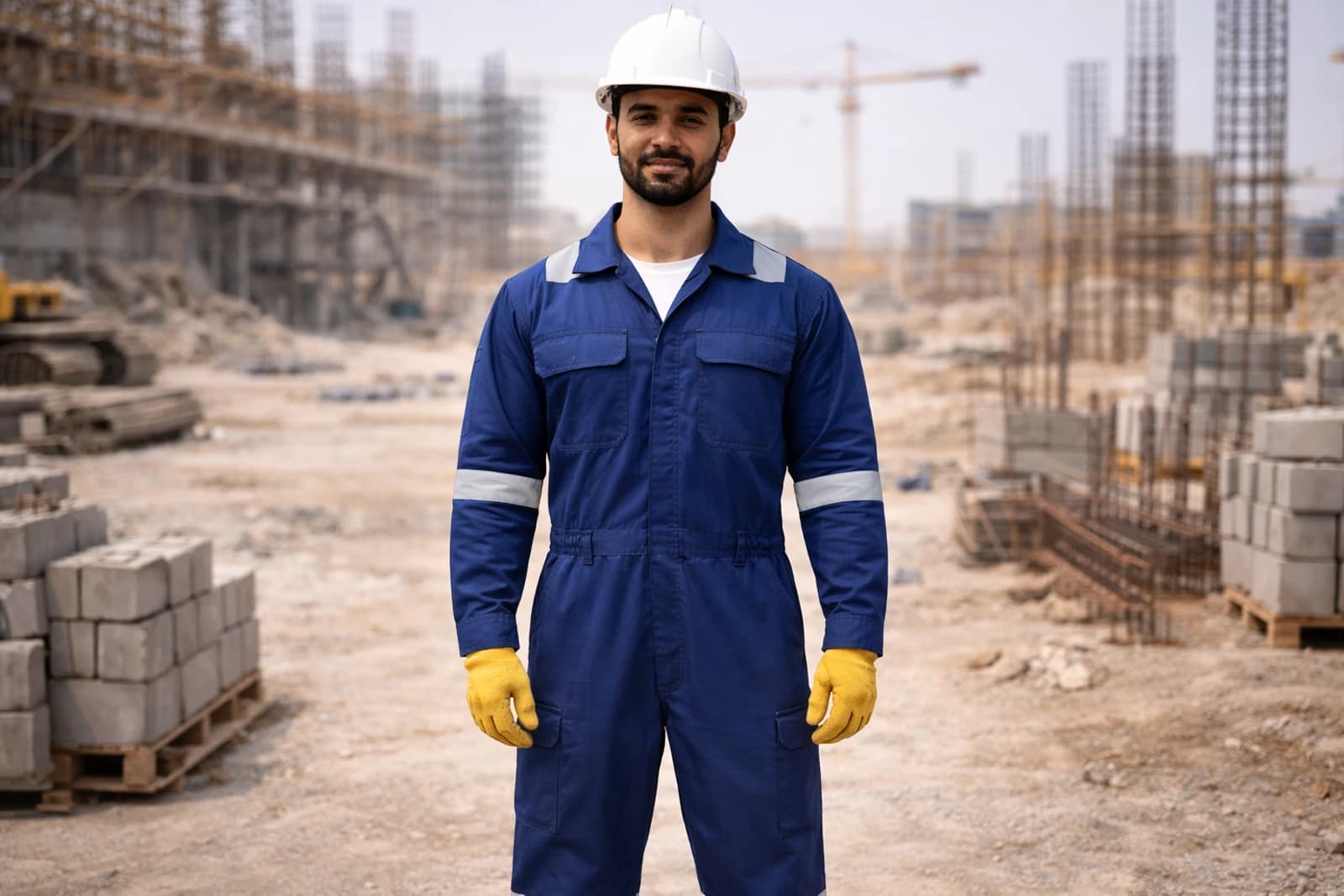
Industrial Workwear
Industrial Coverall Pro
Hard-wearing one-piece coverall for plant, maintenance, and heavy-duty operations.

Safety Uniform
Hi-Vis Safety Jacket
Reflective safety jacket for high-visibility site operations and road work crews.